If you’re asking, “what is my Fiat 500e worth?”, you’re not alone. The 500e has had one of the strangest journeys of any EV: early cars were compliance specials that tanked in value, while the latest generation is a stylish city EV with very different pricing. The good news is that by 2026 there’s enough market data to pin down realistic numbers, and to understand when your 500e is worth more than the generic pricing tools suggest.
Quick context: why 500e values are weird
Fiat 500e value at a glance
Where Fiat 500e values sit in 2026 (big picture)
These are directional snapshots, not quotes for your specific car. Your number will swing up or down based on year, mileage, battery health, options, condition, and where you live. Let’s walk through how those pieces add up so you’re not flying blind when you list your car, or when a dealer throws out a trade‑in number that doesn’t feel right.
How much is my Fiat 500e worth today?
You can think of Fiat 500e value in three bands. These aren’t offers, but realistic 2026 ballparks for U.S. retail asking prices if the car is in good shape with a healthy battery. Subtract a bit for trade‑in, add a bit if your car is unusually clean or low‑mileage.
Typical Fiat 500e value ranges by generation
Approximate 2026 retail price ranges for common 500e model years with average miles and good battery health. Trade‑in offers will usually be lower.
| Model years | Generation | Typical mileage range | Approx. retail asking range | What this usually buys you |
|---|---|---|---|---|
| 2013–2015 | 1st‑gen 500e (early compliance) | 50,000–90,000+ miles | $8,000–$13,000 | Basic commuter, older tech, battery warranty likely expired, good for short city hops. |
| 2016–2019 | 1st‑gen 500e (late) | 40,000–80,000 miles | $11,000–$16,000 | Slightly newer hardware, often better cosmetic condition, still best as a city/second car. |
| 2024–2025 | New 500e (current U.S. model) | 5,000–25,000 miles | $22,000–$28,000 | Modern interior and safety tech, still under factory warranty, feels more like a mini‑lux city EV. |
Use this table as a starting point, then adjust for mileage, battery, and condition.
Important pricing disclaimer
Key factors that change your 500e’s value
Six levers that move your Fiat 500e’s price
Get these right, and you won’t leave money on the table.
1. Model year & generation
The market treats a 2015 500e and a 2024 500e like completely different cars. Shoppers know the older ones were cheap lease cars; the new ones are more premium and still rare used.
2. Mileage
Lower miles still matter, even on an EV. A 2017 with 35k miles will usually beat a similar 80k‑mile car by several thousand dollars.
3. Battery health
Because the 500e’s original pack was relatively small, losing even a few kilowatt‑hours of capacity hits real‑world range hard, and buyers notice.
4. Location
In EV‑mature markets (California, the Pacific Northwest, parts of the Northeast), there’s more demand, and more price competition. In areas with little charging, EVs can sit longer and sell cheaper.
5. Condition & history
Scrapes, worn interiors, and accident history pull values down fast on a tiny city car. On the flip side, documented service, a clean Carfax, and one‑owner stories help you defend your price.
6. How you sell it
Trade‑in values prioritize speed and convenience. Private‑party listings can bring more money but take more work. An EV‑focused marketplace can split the difference by reaching the right buyers faster.
Set your expectations before you get quotes
Battery health: why your 500e isn’t a typical used car
With a gas car, a healthy engine is mostly a yes‑or‑no question. With an EV like the 500e, the battery is more like a sliding dimmer switch. It still “works” as it ages, but you gradually lose capacity and range. For a small‑battery car that started around the mid‑20‑kWh range in the first generation, every few percent of loss really matters.
How battery health shows up in value
- Range on the dash: Shoppers who know 500e’s often look at the "guess‑o‑meter" and compare it with what the car showed when new.
- Fast‑charge behavior: On newer 500e models that offer DC fast charging, a pack that quickly throttles down or overheats is a red flag.
- Warranty status: Many EVs launched with an 8‑year/100,000‑mile battery warranty window. Once you’re past that, buyers price in the risk.
Why a real battery test helps
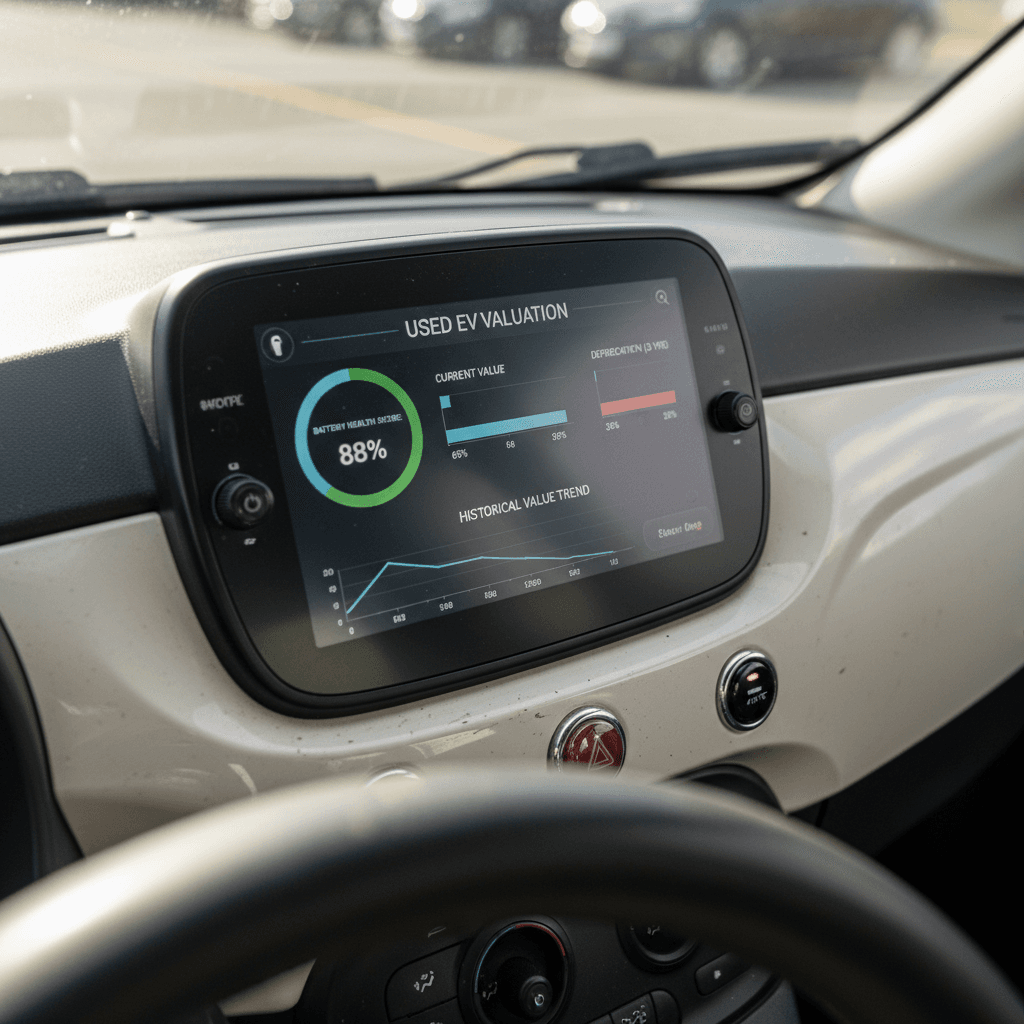
Generic appraisal tools can’t see whether your car is still close to its original battery capacity or has lost a big chunk of it. A shop or marketplace that can read the pack directly, cell voltages, usable kWh, state of health, can often justify a better price for a healthy car, or at least give you a clear picture of reality before you list it.
At Recharged, every car gets a Recharged Score report with verified battery health, so sellers and buyers aren’t guessing from range estimates alone.
Don’t hide weak range
Old 500e vs. new 500e: how values differ
When someone says “Fiat 500e,” they might mean a 2015 California lease return that once sold for less than a used Civic, or the sleek new 2024+ model that carries a sticker more like a mini‑lux hatchback. The market treats these two generations very differently.
First‑gen vs. new‑gen Fiat 500e values
Same nameplate, very different price stories.
1st‑gen 500e (2013–2019)
- Originally sold mainly as a compliance car in a few states.
- Small battery, shorter real‑world range; ideal as a city runabout.
- Heavier early depreciation; infamous cheap used prices.
- By 2026, many are out of battery warranty, which keeps values modest.
Reality check: Great for inexpensive EV commuting, but don’t expect it to fund your next car.
New 500e (2024+)
- Higher original MSRP with more modern tech and safety.
- Improved efficiency and range for city and suburb duty.
- Still within factory warranties, which boosts buyer confidence.
- Early used values have already dropped sharply from MSRP but are holding better than the earliest cars.
Reality check: If you bought one new, you’ve felt the depreciation. If you’re selling used, you’re in a sweet spot for buyers hunting a modern EV under new‑car prices.
Why generic pricing tools can misread 500e values
How to estimate your own Fiat 500e value
DIY checklist: get to a realistic price range in under an hour
1. Nail down the basics
Write down your <strong>model year, mileage, trim, and options</strong>. For older cars, note anything unusual: winter package, upgraded wheels, recent tires, or a replaced battery pack.
2. Check current listings, not just guides
Search for similar Fiat 500e listings within a few hundred miles: same generation, close in mileage, comparable condition. Ignore obviously mispriced outliers. This shows you what real shoppers are seeing.
3. Look up guide values for a sanity check
Use a mainstream valuation tool (KBB, Edmunds, etc.) to find trade‑in and private‑party ranges. Treat these as a <strong>starting point</strong>, not gospel, especially for oddball EVs.
4. Be honest about condition
If your car has cosmetic damage, warning lights, cheap tires, or a spotty service history, you’re in the lower half of the range. If it’s unusually clean with fresh maintenance, you can aim higher.
5. Consider battery reality
Compare your current real‑world range or a formal battery report with what the car did when new. If you’ve lost a big chunk of usable range, expect the upper end of online value ranges to be out of reach.
6. Decide on your selling channel
If you plan a <strong>quick trade‑in</strong>, expect to be closer to the low end of your range. If you’re willing to market the car well or use an EV‑focused marketplace, you can usually split the difference between guide trade‑in and private‑party values.
Selling options: trade-in, private party, and EV marketplaces
Once you have a realistic number in mind, the way you sell your 500e determines how much of that you actually see. Each path has trade‑offs in time, hassle, and dollars.
Traditional trade‑in
- Best for: Speed and simplicity.
- Pros: One‑and‑done transaction when you buy your next car; no strangers at your house.
- Cons: Dealers often undervalue niche EVs, especially if they don’t specialize in them.
Think of trade‑in as selling your time and convenience, not just your car.
Private‑party sale
- Best for: Maximizing price when you’re patient.
- Pros: You can usually capture the full retail value if your price and photos are right.
- Cons: Messaging, test drives, no‑shows, paperwork, and explaining EV basics to first‑timers.
Great for popular models; more work for niche city EVs in areas with low EV awareness.
EV‑focused marketplace (like Recharged)
- Best for: Balancing price and effort.
- Pros: Buyers who are already shopping used EVs, battery‑health reporting, guidance on pricing and photos.
- Cons: You may pay a fee or accept a price slightly below top‑end private‑party to get a faster, smoother sale.
Recharged, for example, can give you an instant offer or consignment option and handle nationwide buyers, not just whoever happens to be in your ZIP code.
When a trade‑in can actually make sense
How Recharged values a Fiat 500e
Because Recharged focuses on used EVs, the Fiat 500e is right in our wheelhouse, quirks and all. When we look at your car, we’re not just typing a VIN into a generic box and hoping the algorithm knows what to do with a city EV that was once a $7,000 bargain bin special and is now a cult favorite.
What goes into a Recharged 500e valuation
More than just year and miles.
1. Verified battery health
We use our Recharged Score battery diagnostics to see how much usable capacity your pack really has, not just the range estimate on a good day. A healthier‑than‑average pack can support a higher offer.
2. Real‑world market data
We look at actual sales and live listings for comparable 500e models nationwide, then factor in your region, seasonality, and overall used‑EV trends.
3. Vehicle history & condition
Clean history, good tires, recent service, and tidy cosmetics all help. Accident damage, lemon‑buyback history, or signs of abuse push values down.
4. How we’ll sell it
Some 500e examples are perfect for our nationwide digital storefront; others may be better suited to specific regions. That strategy influences what we can reasonably pay today and still stand behind the car for the next owner.
Ready to find your next EV?
Browse VehiclesYou don’t have to be in Virginia to use Recharged
Fiat 500e value FAQ
Frequently asked questions about Fiat 500e value
Bottom line: is it a good time to sell your 500e?
Used EV values, including the Fiat 500e, have come down from their pandemic‑era highs and then bounced around with incentives, interest rates, and new‑car price wars. In early 2026, that volatility mostly benefits buyers, but sellers who understand how year, mileage, and especially battery health work together can still get a fair number for a well‑kept car.
If your 500e still fits your life and the battery’s in good shape, squeezing a few more years out of a car that’s mostly finished depreciating can be very smart. If it no longer matches your range needs, or you’re eyeing a newer EV with more space, this is a reasonable moment to test the market, just make sure you walk in with realistic expectations and real data, not guesses.
Either way, don’t let the question “what is my Fiat 500e worth?” hang over you. Spend an hour with the steps in this guide, look at live listings, and, if you want a value backed by a full battery‑health report, start a valuation with Recharged. Knowing exactly what you’re working with makes every decision, from keeping your quirky city EV to trading it for something newer, much easier.