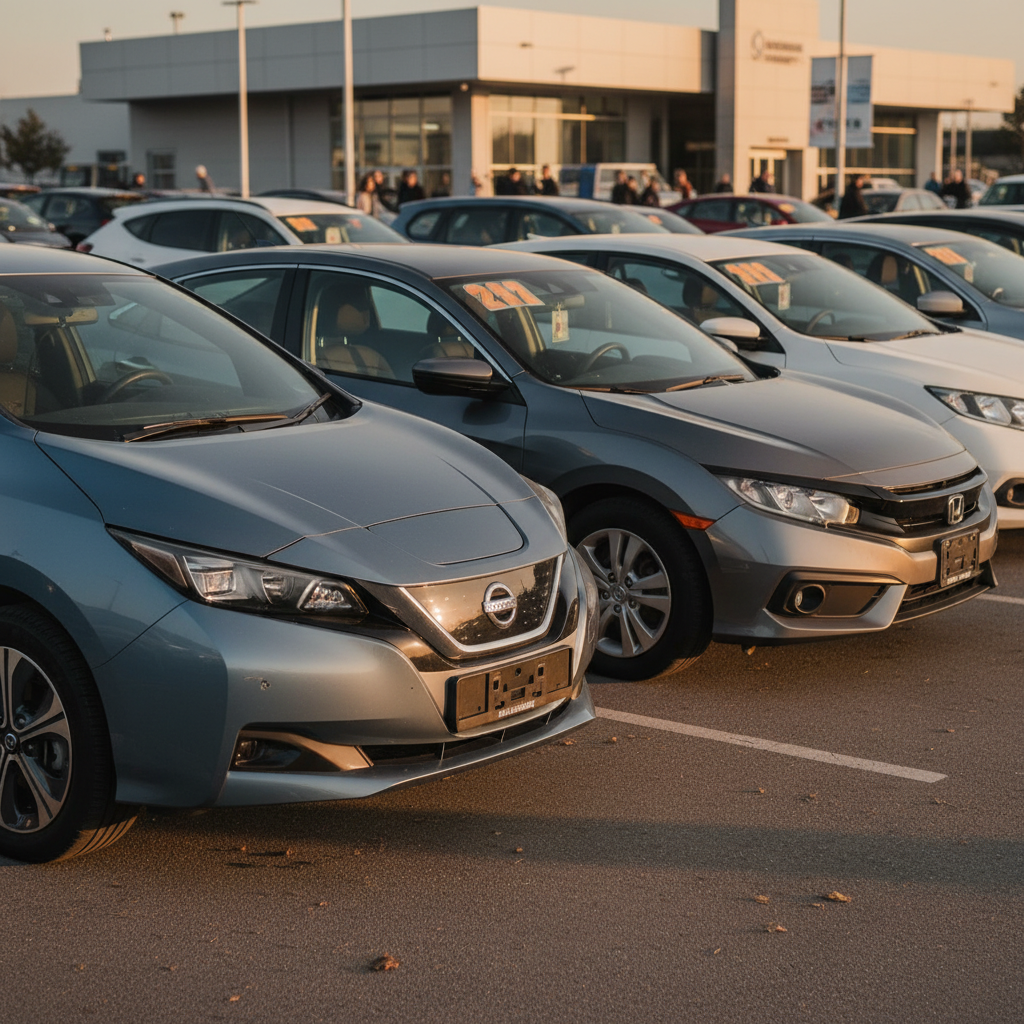
You’re not the only one asking, “What is my Chevrolet Bolt EV worth?” Between steep EV price cuts, the Bolt battery recall, and GM briefly canceling then reviving the model, Bolt values have been on a roller coaster. The good news: if you understand a few key levers, model year, mileage, battery health, and recall status, you can pin down a realistic number and avoid leaving thousands on the table when you sell.
Quick answer
How much is my Chevy Bolt EV worth today?
Chevy Bolt EV value snapshot for 2025
Those numbers are broad averages. To get closer to the answer for your car, start with three basics: model year, mileage, and trim. A 2017 LT with 95,000 miles lives in a different universe than a 2022 2LT with 18,000 miles and the big infotainment bundle. In general, later model years (especially 2020+ with the 259‑mile range), lower mileage, and higher trims are worth more, but the Bolt’s story has a few quirks you won’t see on a typical compact hatchback.
Use a range, not a single number
Why Bolt EV values dropped so fast
If you feel like your Bolt lost value faster than a normal car, you’re not wrong. Several big forces piled on at once: price cuts, recalls, and changing EV incentives. Put together, they pushed the Bolt into the “great used deal, painful if you bought new” category.
Four big forces behind Bolt depreciation
Why your Bolt is worth less than you think, and why buyers love it
1. Massive new-car price cuts
In 2022–2023, Chevrolet slashed new Bolt EV and EUV MSRPs by thousands of dollars, turning them into some of the cheapest new EVs in America. That instantly undercut used prices, why pay $26,000 for a 2‑year‑old Bolt when a brand‑new one sat on the lot for not much more?
2. High-profile battery recall
The well‑publicized LG battery recall, from early build years through 2022, spooked some shoppers and lenders, even though many packs were replaced outright. Cars with unclear recall status or capped charging lost the most value, while those with documented new packs became quietly desirable.
3. Small car in an SUV world
The Bolt EV is a compact hatchback in a market addicted to crossovers. That alone pushes used values down compared with similarly priced, similarly ranged electric crossovers and SUVs that families find easier to live with.
4. Incentives and policy whiplash
Federal and state incentives, for both new and used EVs, have shifted repeatedly. When a new Bolt qualified for a big credit and yours didn’t, that often translated into lower resale value, even if the underlying car was excellent.
Don’t confuse price with quality
What buyers actually pay by year and mileage
Every pricing site and marketplace will quote you something slightly different, but real‑world transactions for clean‑title Bolts in early 2025 tend to cluster in fairly predictable bands. Think of the numbers below as ballparks for private‑party or online‑marketplace sales in an average U.S. market, assuming good condition, documented recall work, and no major accidents.
Approximate Chevy Bolt EV value ranges (early 2025)
Typical private‑party / online marketplace asking ranges for clean‑title Bolt EVs. Battery health, options, and local demand can push you above or below these bands.
| Model year | Typical mileage | Rough value range | Notes |
|---|---|---|---|
| 2017–2018 | 70,000–120,000+ miles | $8,000–$13,000 | Earlier packs, more wear; big bump if battery was recently replaced under recall. |
| 2019 | 60,000–100,000 miles | $10,000–$15,000 | Sweet spot for budget buyers; condition and battery reports matter a lot. |
| 2020 | 40,000–80,000 miles | $12,500–$18,000 | Longer 259‑mile range helps; nice ones with options push to the top of the band. |
| 2021 | 30,000–60,000 miles | $14,000–$19,000 | Transitional year; pricing overlaps with early refreshed 2022s. |
| 2022 (refresh) | 20,000–45,000 miles | $16,000–$22,000 | Updated interior and low original MSRP support stronger resale percentages. |
| 2023 | 10,000–30,000 miles | $18,000–$24,000 | Often still under warranty; condition and trim level drive big swings. |
Use this as a directional guide, then refine using recent local listings and a professional battery health report.
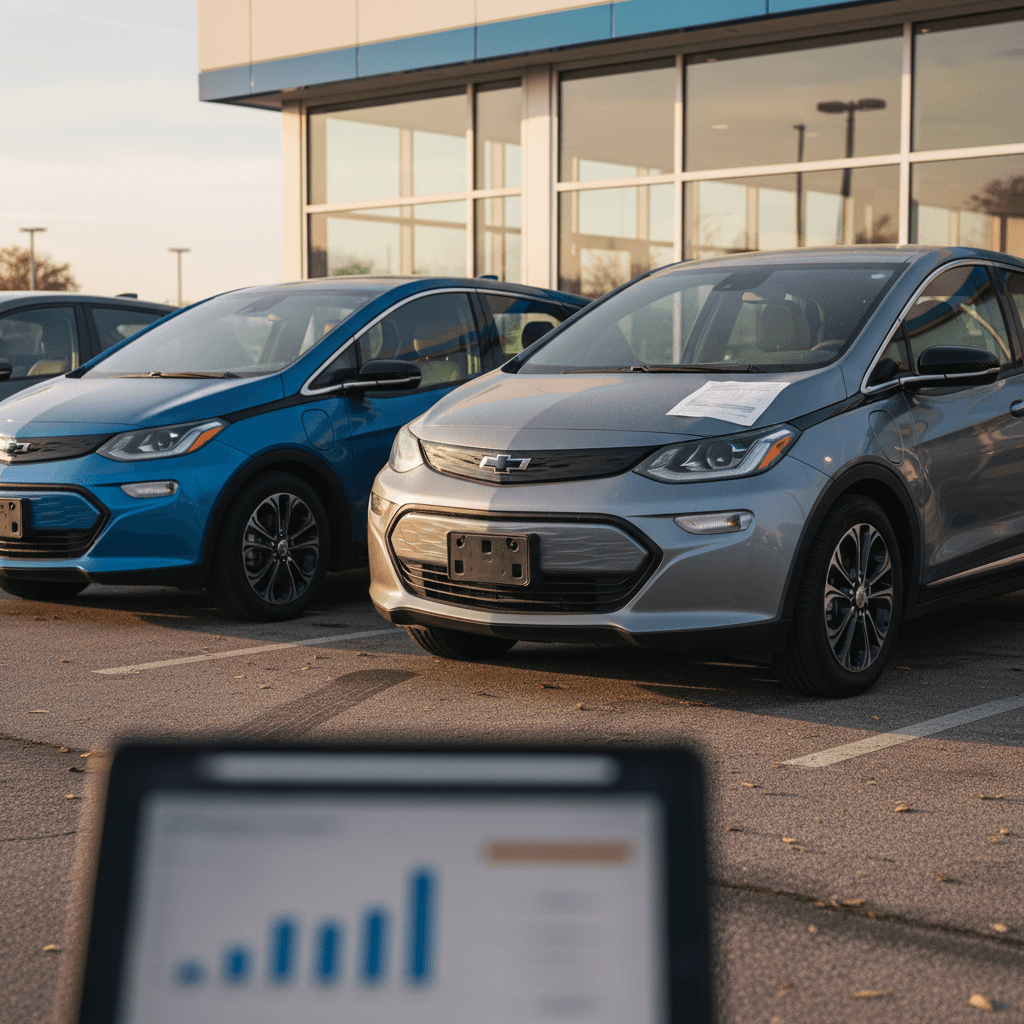
Bolt EV vs. typical EV depreciation
Battery recall and battery health: how much it moves the needle
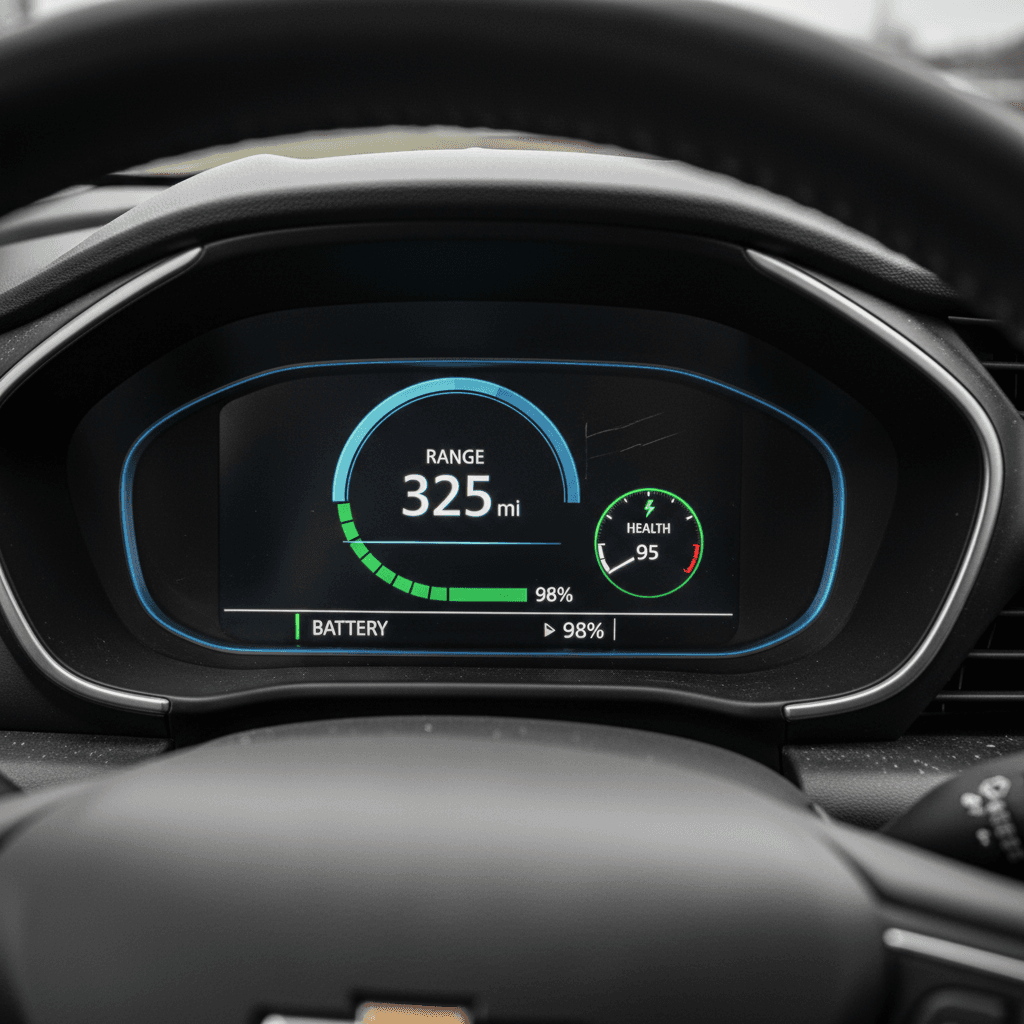
On a used Bolt, your battery is your blue‑chip asset. Chevy’s recall saga means you might actually be sitting on a pack that’s newer than the rest of the car, which is catnip for the right buyer. On the flip side, vague documentation, lingering software caps, or early signs of degradation can shave thousands off what people are willing to pay.
Best case: documented new or healthy pack
- Recall completed with full pack replacement and paperwork to prove it.
- Recent independent battery state of health (SOH) report in the 80–90%+ range.
- No history of charge limits or “park outside” warnings.
In this scenario, your Bolt can command top‑of‑market pricing, especially if the rest of the car is clean. Many buyers will happily pay a premium for a small EV with a basically “new” battery and low running costs.
Risk flags: unclear recall or weak SOH
- Recall shows as open, partially complete, or confusing in Chevy’s system.
- Software‑capped to 80% with no follow‑up documentation.
- Battery test shows noticeably reduced capacity versus similar‑age Bolts.
Here, buyers and lenders get nervous. Expect lower offers and a smaller pool of shoppers, or plan to invest in getting the battery situation clarified before you sell.
Why a Recharged Score matters
Other factors that change your Bolt EV’s value
- Trim and options: Premier and 2LT trims with DC fast charging, Driver Confidence packages, and nice wheels are worth more than base LTs, sometimes by several thousand dollars on otherwise similar cars.
- Accident and title history: Even a well‑repaired accident can knock 5–15% off what buyers are comfortable paying. Salvage or branded titles live in an entirely different price universe.
- Region and climate: In some coastal and West Coast markets, used Bolts are more plentiful and cheaper; in places where EVs are still rare, a clean Bolt can fetch a premium.
- Color and cosmetic condition: Cosmetic neglect, curbed wheels, worn seats, mismatched paint, hurts an EV more than you’d think. Shoppers assume “if they didn’t care about the outside, they probably didn’t baby the battery.”
- Charging behavior history: You can’t turn daily DC fast‑charging into a scarlet letter, but buyers increasingly ask about how the car was charged, home Level 2 with sensible charge limits is a selling point.
Be honest about cosmetic fixes
How to estimate your own Bolt’s value, step by step
Online instant‑value tools are a starting point, not gospel. To get a number you can actually negotiate around, you need to blend hard data with what’s happening in your local market and what your specific Bolt brings to the table.
DIY valuation checklist for your Chevrolet Bolt EV
1. Decode your exact spec
Write down your <strong>model year, trim (LT, Premier, 1LT, 2LT)</strong>, and key options like DC fast charging, Driver Confidence packages, and notable features. These are the knobs that move value the most on paper.
2. Pull the real mileage and history
Note current <strong>odometer mileage</strong> and run a vehicle history report. Clean, one‑owner, no‑accident Bolts routinely outperform the pricing‑guide averages.
3. Verify recall and battery status
Check Chevy’s recall lookup for your VIN and gather any dealer paperwork about pack replacement or software updates. If possible, invest in a <strong>professional battery health test</strong> so you can show buyers hard numbers.
4. Scan your local market
Search within 100–250 miles on major listing sites and marketplaces for Bolts that match your year, mileage, and trim. Ignore obvious outliers and pay attention to the <strong>cluster of asking prices</strong> where cars are actually selling.
5. Adjust for condition and options
If your car is cleaner, better equipped, or has a fresher battery than the local average, you’re justified in aiming near the top of the range. If it’s rougher, older, or missing fast charging, price more conservatively.
6. Pressure‑test with instant offers
Get a few <strong>no‑obligation online offers</strong> from dealers, instant‑offer services, or a marketplace like Recharged. They’ll usually land below private‑party value but help you confirm whether your expectations are realistic.
Pro move: bring documentation
Selling options: dealer trade, private sale, or Recharged
Once you have a sense of what your Chevrolet Bolt EV is worth, the next decision is how to turn that value into money. Each path has its own trade‑offs in convenience, control, and net proceeds.
Traditional trade‑in
Fast and simple: you hand over the keys and the dealer handles everything. On a Bolt, though, many franchise dealers bid conservatively, especially if they’re not EV‑savvy or still nervous about the recall history.
Best when you value convenience over squeezing out every dollar.
Private‑party sale
Typically yields the highest top‑line price, but you’re doing the work, marketing the car, answering battery‑recall questions, meeting strangers for test drives, and handling paperwork.
Worth it if you’re patient, detail‑oriented, and comfortable fielding EV questions.
Sell with Recharged
Recharged focuses on used electric vehicles, so we understand why a well‑sorted Bolt is more valuable than generic pricing tools suggest. We can make an instant offer or help you consign the car, market its battery health with a Recharged Score, and reach buyers nationwide.
A middle path: more money than a typical trade‑in, far less friction than going it alone.
Think in “net,” not just price
How Recharged values a Chevy Bolt EV
Because Recharged specializes in used EVs, we don’t treat your Bolt like just another compact hatchback with a Kelley Blue Book printout. We look under the skin, starting with the one component that defines an electric car’s future: the battery.
What goes into a Recharged offer on your Bolt EV
Beyond blue‑book: why two identical‑looking Bolts can be worth very different amounts
Verified battery health
We run a Recharged Score battery health diagnostic to see how your pack stacks up against similar Bolts. A strong SOH, no hidden faults, and clean charging history support a higher number than a generic guide would suggest.
Recall & service history
We confirm recall completion, look for pack replacements, and review service records. Clear documentation can move your car from “question mark” to “turn‑key” in a buyer’s mind, and in our valuation.
Real market demand
We track live transaction data across the country: what Bolts are actually selling for, how long they sit, and which configurations are hot. If your spec is in demand, say, a low‑mile 2022 2LT, we reflect that.
Condition, photos, and logistics
Detailed photos, honest condition reports, and your location all feed into our math. Because Recharged offers nationwide delivery and a fully digital experience, we can match your Bolt with the right buyer even if they’re three time zones away.
Ready to find your next EV?
Browse VehiclesWhere Recharged fits in your sale decision
FAQs: what your Chevrolet Bolt EV is worth
Chevy Bolt EV value: frequently asked questions
Bottom line: what your Bolt EV is worth
Your Chevrolet Bolt EV doesn’t live on a tidy depreciation curve; it lives at the intersection of battery chemistry, corporate strategy, and America’s shifting appetite for EVs. That’s why you’ll see a 2018 with a new pack and 70,000 miles sell for more than a 2019 with murky recall status and the same odometer reading. To answer “What is my Chevrolet Bolt EV worth?” with confidence, you need to look beyond generic guides and focus on what actually matters: year, mileage, trim, verified battery health, and the story your paperwork tells.
Do that homework, and you’ll land on a realistic range you can live with, whether you sell privately, trade at a dealer, or work with an EV‑focused marketplace like Recharged. And if you’d rather skip the guesswork entirely, Recharged can value your Bolt based on real data, market demand, and a Recharged Score battery report, then help you turn that number into a smooth, transparent sale.