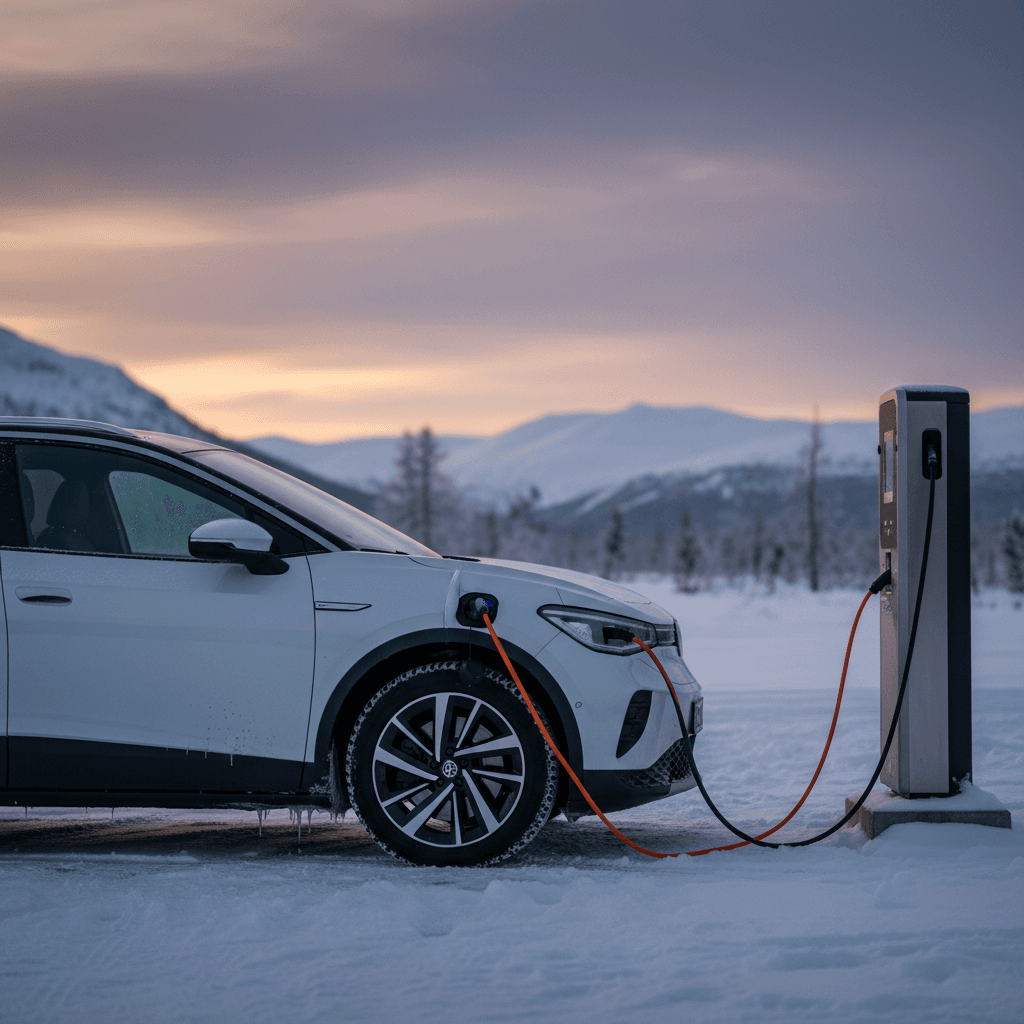
If you’re looking at a VW ID.4 and you live where winter is real, you’re probably wondering: **what is VW ID.4 winter range in the real world**, not just on a window sticker? The good news is that the ID.4 remains a very usable electric SUV in the cold. The catch is that you need realistic expectations and a few smart habits, especially if you’re shopping used.
Key takeaway in one minute
VW ID.4 winter range at a glance
Volkswagen ID.4 winter range in real‑world use
Those numbers are **not** a sign that your ID.4’s battery is failing. They’re mostly physics: cold battery chemistry, thicker air, snow and winter tires increasing rolling resistance, and the big one, cabin and battery heating. The upside is that once you understand those forces, you can plan around them and still use an ID.4 confidently all winter.
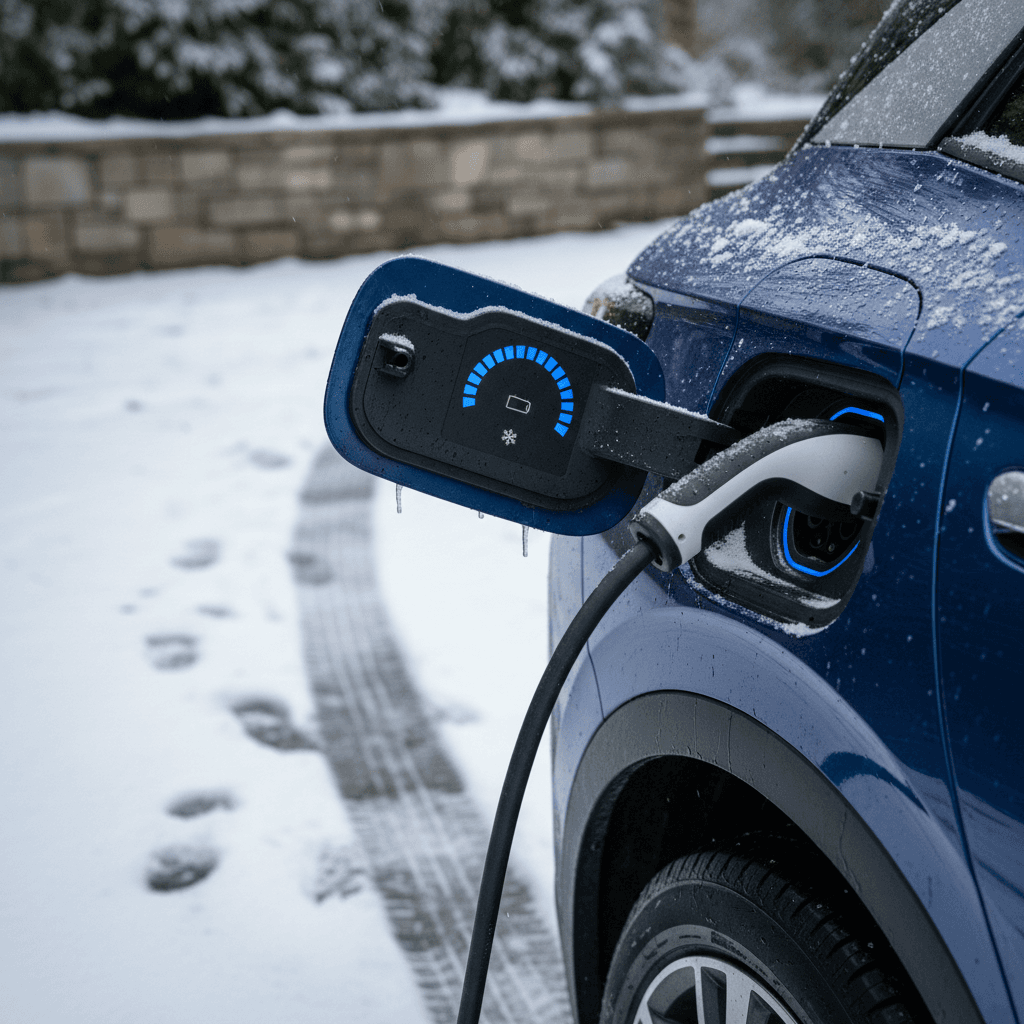
EPA vs real‑world ID.4 range in winter
On paper, recent VW ID.4s look strong. Depending on model year and trim, **EPA range ratings run from roughly 200 to 291 miles**. Big‑battery rear‑wheel‑drive Pro models sit near the top of that band, while the 62 kWh Standard/Pure models cluster around the 200–210 mile mark.
Typical VW ID.4 EPA vs winter real‑world range
Approximate winter outcomes for common U.S. ID.4 configurations. These are **illustrative real‑world bands**, not guarantees, assuming mixed winter driving and temps roughly 10–32°F (‑12–0°C).
| Model / Battery | EPA rated range | Mild cold (32–45°F) | Deep cold (10–25°F) | Typical loss vs EPA |
|---|---|---|---|---|
| ID.4 Pro / Pro S (82 kWh, RWD) | ~275–291 mi | ~210–240 mi | ~160–190 mi | ~20–40% |
| ID.4 AWD Pro / Pro S (82 kWh, AWD) | ~245–263 mi | ~195–220 mi | ~150–185 mi | ~20–40% |
| ID.4 Standard / Pure (62 kWh, RWD) | ~200–210 mi | ~150–170 mi | ~115–140 mi | ~20–40% |
Use these numbers for **conservative trip planning**, not as a promise of what your car will always do.
At **moderate cold** (around freezing) on longer trips with steady speeds and modest heat, you can often keep winter losses closer to **15–25%**. At **deep‑winter temps** (teens °F and below) with short trips and a toasty cabin, losses can climb toward **35–45%**. That spread is why owner stories and independent tests sometimes sound wildly different, you’re really hearing about different use cases, not different cars.
Don’t over‑interpret the “guess‑o‑meter”
How much winter range loss to expect
Common VW ID.4 winter scenarios
Where drivers actually land between "almost EPA" and "wow, that dropped fast"
1. Short city trips, very cold
Scenario: 5–10 minute errands, 0–20°F, full cabin heat and defrost.
- Battery and cabin never really warm up.
- Heater overhead dominates energy use.
- Loss: Often 35–45% vs EPA, sometimes more.
2. Mixed driving, typical winter
Scenario: 30–60 minute commutes, 20–35°F, normal heat, some highway.
- Battery gets warm enough to be efficient.
- Heater load spread over more miles.
- Loss: Commonly 25–35% vs EPA.
3. Gentle highway cruising
Scenario: 150+ mile trip, 25–40°F, 60–70 mph, preconditioned car.
- Stable speeds, warm pack, smart climate use.
- Cabin heat still hurts, but less dramatically.
- Loss: Often 20–30% vs EPA.
- For **day‑to‑day commuting**, assume you reliably have **about 60–75% of EPA range available**.
- For **long highway trips in real winter**, plan stops using **50–60% of EPA range** to give yourself margin for headwinds, snow, and elevation.
Heat pump vs no heat pump: how big is the difference?
Volkswagen has offered the ID.4 with and without a **heat pump**, depending on market and model year. In simple terms, a heat pump recycles ambient and drivetrain heat more efficiently than a resistive heater, so you use fewer watt‑hours per mile to stay warm.
How much does the heat pump help?
- Independent tests and owner reports suggest **roughly 5–15% better winter efficiency** in real use when a heat pump is doing most of the cabin heating.
- That translates into **an extra 10–25 miles** of winter range on a larger‑battery Pro model, depending on temperature and speeds.
- The benefit is biggest in mild to moderate cold (20–40°F) on longer trips where the cabin stays warm for hours.
Limitations and myths
- The ID.4’s heat pump doesn’t eliminate winter range loss; it just trims it.
- Very deep cold can reduce its advantage, and some early‑production systems weren’t dramatically more efficient than resistive heat in certain tests.
- The **battery is still warmed with a resistive element**, even on heat‑pump cars, so fast‑charging in the cold is limited more by pack temp than by cabin tech.
Heat pump vs no heat pump: how to think about it
Short trips vs winter road trips in an ID.4
The single biggest real‑world factor in VW ID.4 winter range is **trip pattern**. The same car can feel disappointing on a week of 2‑mile errands and totally fine on a 250‑mile ski weekend.
How trip type changes VW ID.4 winter range
1. Short, cold‑start errands
Every time you remote‑start or hop in the car cold, the ID.4 has to dump energy into heating the cabin and battery. On a 5‑minute drive, that overhead is spread over just a few miles, so your displayed efficiency looks terrible and winter range feels tiny.
2. Commuter‑length drives
On **20–40 minute** drives, the battery and cabin have time to stabilize. Your miles‑per‑kWh improves significantly vs. short hops, and winter losses tend to sit in the mid‑20 to low‑30% range compared with EPA.
3. Highway road trips
On multi‑hour drives with a preconditioned car, you’re finally playing to an EV’s strengths. You still take a 20–30% hit from cold air, snow, and cabin heat, but your ID.4 behaves much more predictably, especially if you stop frequently enough that the pack never freezes.
4. Parked outside vs garaged
Parking in a **garage, even unheated**, can make a meaningful difference. Starting with a less‑cold pack and cabin means less energy spent on warm‑up, better early‑drive efficiency, and faster DC fast‑charging at your first stop.
Real owner examples of ID.4 winter range
If you scroll VW ID.4 owner forums and winter test results, a few consistent patterns emerge. Here are some anonymized composite examples that line up with broader data and testing:
- A driver with a **2023 ID.4 Pro S RWD (big battery)** in a mild‑winter U.S. state reports around **275 miles on a full charge in winter** vs about 315 miles in summer on similar mixed routes, roughly a 13% seasonal drop on their use case, a bit better than the average because of moderate temperatures.
- Canadian owners of **AWD Pro models with heat pumps** commonly report **30–40% loss** on weeks of sub‑freezing, heater‑heavy driving, landing around **180–220 miles between charges** on the highway when starting from a full battery.
- Owners of the **62 kWh Standard/Pure models** in colder states often see dash estimates in the **150–170 mile** range at 100% on cold mornings, and real highway legs of **115–140 miles** when they drive at 70–75 mph with full heat. For many commuters that’s still plenty; for winter road‑trippers it’s restrictive.
Bottom line from real‑world data
Ready to find your next EV?
Browse Vehicles7 ways to improve your ID.4 winter range
Think in efficiency, not just miles
Practical ways to stretch VW ID.4 winter range
1. Precondition while plugged in
Use the VW app or in‑car scheduling to warm the cabin and (when possible) the battery <strong>before</strong> you leave, while you’re still plugged in. This shifts some of the heavy heating load to grid power instead of your battery.
2. Start trips right after charging
In winter, try to **time departures for shortly after a charging session**, when the pack is naturally warmer. A warm battery delivers better efficiency and charges faster at your first DC fast‑charging stop.
3. Use seat and wheel heaters first
In any EV, gently lowering cabin temperature and leaning on heated seats and steering wheel can save meaningful energy. You stay comfortable while the HVAC system works less hard, especially on the highway.
4. Watch your speed on the highway
Aerodynamic drag rises with the square of speed. In cold, dense air, the difference between <strong>65 mph and 75 mph</strong> can easily be 10–15% of your consumption. Slowing down a little is one of the cheapest “range upgrades” you can buy.
5. Minimize roof racks and boxes
Ski boxes, bike racks, and crossbars all hurt winter efficiency by increasing drag and, in deep snow, collecting slush and ice. Take off what you don’t need and pack heavier items inside the cabin when possible.
6. Keep tires properly inflated
Cold air drops tire pressure. Under‑inflated winter tires add rolling resistance and can easily cost you several percent in range. Check pressures regularly and adjust to the door‑jamb spec when tires are cold.
7. Avoid frequent deep discharges
From a battery‑health perspective, it’s still smart to avoid routinely running down to low single‑digit state of charge in harsh cold. Plan winter charging stops so you typically arrive with at least **10–15%** remaining.
Planning a winter road trip in a VW ID.4
Winter road‑tripping in an ID.4 is completely doable, but it rewards a bit more planning than a summer drive. You’re managing both **range** and **charging speed**, because cold batteries accept fast‑charge power more slowly.
Step 1: Use conservative range assumptions
- Take your trim’s **EPA range and multiply by ~0.55–0.65** to set planning legs for a true winter highway trip.
- Example: An AWD Pro S rated around 260 miles EPA, plan winter legs of roughly 140–170 miles between fast chargers.
- This gives margin for headwinds, elevation, and slower‑than‑ideal fast‑charging if the pack is cold.
Step 2: Prefer more frequent, shorter stops
- EVs charge fastest between roughly **10–60% state of charge**.
- In winter, plan to stop a bit earlier and charge more often, rather than running down to near‑zero and trying to blast to 100%.
Step 3: Precondition and time your fast‑charges
- If your route planner or car software allows, aim to arrive at DC fast chargers with a warm pack.
- Longer highway stints before the charger, or timing a Level 2 top‑up at a hotel stop, help the ID.4 reach better charge speeds.
- Build in extra time on your first winter fast‑charge of the day; that’s when the pack tends to be coldest.
Step 4: Have a Plan B
- In very cold or rural areas, always know your next‑closest charger.
- Apps like PlugShare and ABRP help you sanity‑check the network on top of VW’s built‑in planner.
Watch out for snow‑covered chargers
Buying a used VW ID.4 for cold climates
If you’re shopping a **used ID.4** and you live in a colder part of the U.S. or Canada, winter range should be part of your decision, not just the sticker EPA number. The right configuration and clear data on battery health can make the difference between a car that feels comfortable year‑round and one that feels tight on every January highway drive.
What to prioritize in a used ID.4 for winter
Trim, options, and data that matter more when temperatures drop
Battery size & drivetrain
- If you regularly drive long winter distances, look for a **big‑battery Pro / Pro S** rather than a 62 kWh Standard/Pure.
- In snowbelt regions, **AWD adds traction and confidence**, though it costs a bit of range vs RWD.
Heat pump & winter options
- Where available, a **heat pump** is a nice‑to‑have for frequent winter road‑trippers.
- Heated seats, heated steering wheel, and good winter tires are more important than any single range number.
Verified battery health
- A healthy pack is the foundation for usable winter range.
- On Recharged, every ID.4 comes with a Recharged Score Report that includes instrumented battery diagnostics, so you’re not guessing about degradation before your first winter.
How Recharged helps winter shoppers
VW ID.4 winter range: FAQ
Frequently asked questions about VW ID.4 winter range
When you cut through the hype and the complaints, **VW ID.4 winter range in the real world is predictable and manageable**, as long as you set expectations correctly. Plan for about 60–75% of EPA range in cold mixed driving, use a few simple efficiency tricks, and the ID.4 becomes a genuinely capable four‑season family EV. And if you’re weighing which ID.4 to buy used, focusing on **battery size, traction, winter equipment, and verified battery health** will matter more to your January experience than any single spec‑sheet headline.