If you own a Volkswagen ID.4 and you’re wondering about its trade‑in value, you’re not alone. Early‑generation EVs like the ID.4 have seen some sharp price swings, and it’s not always obvious whether you’re getting a fair offer, especially if you’re walking into a traditional dealership that still thinks in gas‑car terms.
Quick take
Overview: How VW ID.4 Trade‑In Value Works
At a high level, your VW ID.4 trade‑in value is just what a buyer, usually a dealer or marketplace, is willing to pay you for the car today, minus their risk and profit margin. With EVs, that “risk” piece looms much larger because buyers worry about battery health, software support, and shifting incentives. That’s why two ID.4s that look identical on paper can get wildly different offers.
- Traditional books (Kelley Blue Book, Edmunds, etc.) start with nationwide auction and retail data to generate a baseline value by year, trim, and mileage.
- Dealers then adjust those book values up or down for your car’s actual condition, options, and reconditioning costs.
- With EVs, serious buyers also consider battery state of health, local demand for used EVs, and current new‑car incentives that might undercut used prices.
Don’t anchor only on book values
Current VW ID.4 Trade‑In Values & Price Ranges
Exact VW ID.4 trade‑in value will depend on your ZIP code and vehicle details, but recent data points give us a realistic ballpark for the U.S. market as of early 2026:
Recent VW ID.4 Value Benchmarks (U.S.)
Older 2021 ID.4s with higher mileage and basic trims can fall into the low‑$20,000s or even high‑teens for trade‑ins, while late‑model Pro S or Pro S Plus examples with low mileage can still command offers in the mid‑$20,000s or higher, especially if battery health is verified and strong.
Reality check your number
8 Factors That Affect Your VW ID.4 Trade‑In Value
With an EV like the VW ID.4, the usual used‑car factors still matter, but battery and software add new layers. Here are the eight levers that most strongly move your trade‑in value up or down.
Key Drivers of VW ID.4 Trade‑In Value
Some you can’t control, but several you definitely can influence before you get an offer.
1. Model year & refresh
2. Mileage & usage pattern
3. Battery health & fast‑charging history
4. Condition & cosmetic damage
5. Maintenance & software updates
6. Local demand for used EVs
7. Trim, options & color
8. Incentives & new‑car pricing
Watch your warning lights
Why Battery Health Matters More Than You Think
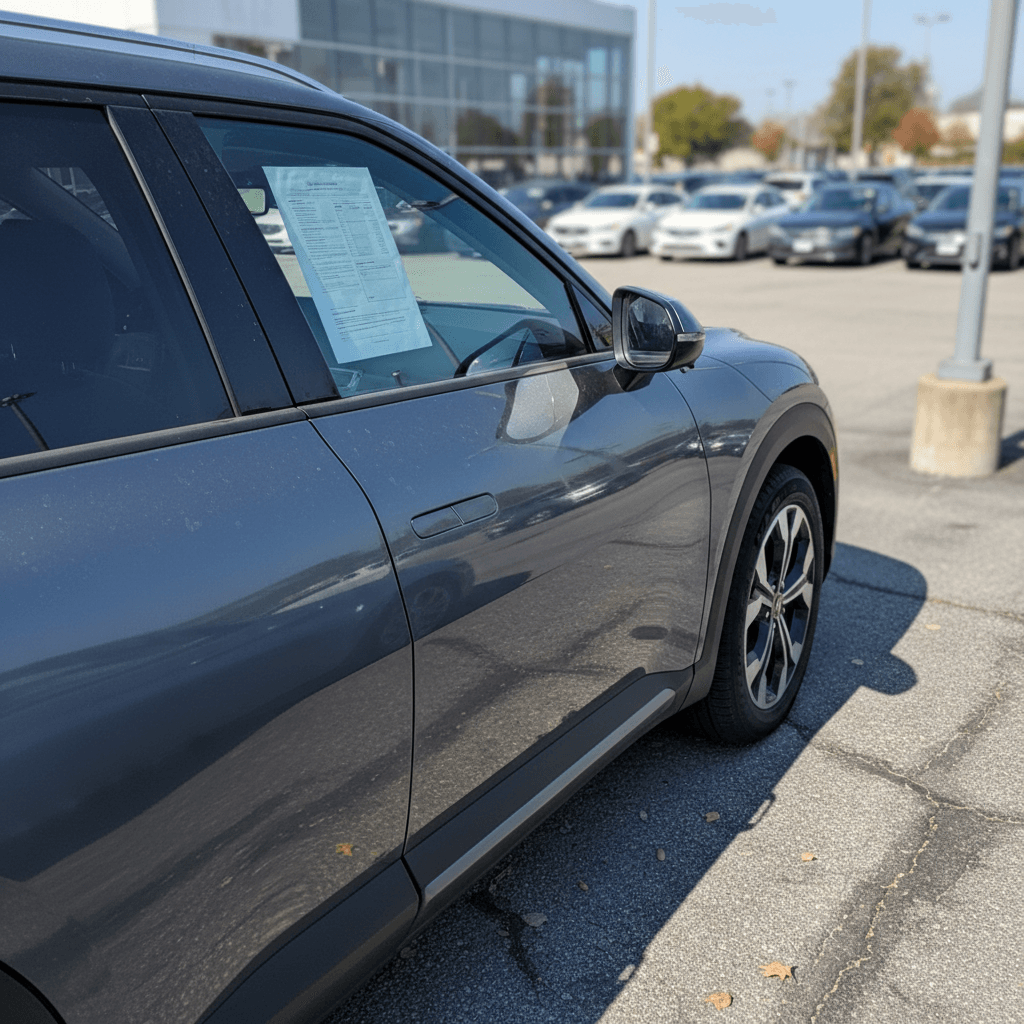
On a gas SUV, an engine problem is scary but at least conceptually familiar. With an EV, the battery pack is the car. It’s also the single most expensive component in your ID.4, which is why any uncertainty about long‑term range or degradation gets priced aggressively into trade‑in offers.
How buyers think about your battery
- Capacity loss: If your ID.4 originally had ~250+ miles of EPA range but now only comfortably does 180, that’s real value lost.
- Charging behavior: Cars that lived on DC fast chargers are often treated as higher risk than those charged mostly at home on Level 2.
- Warranty runway: A pack still well within VW’s 8‑year / 100,000‑mile battery warranty is worth more than one close to expiration.
Why generic tools fall short
Most instant trade‑in tools don’t actually read your battery data, they assume an “average” EV. If your pack is healthier than average, you’re leaving money on the table.
Recharged uses a Recharged Score battery health diagnostic to quantify real‑world capacity and fast‑charging history, so both you and the next buyer can see how your pack is actually performing.
Leverage a real battery report
How Dealers and Marketplaces Calculate ID.4 Trade‑In Offers
Behind the scenes, most trade‑in offers follow a similar playbook: start with data, subtract risk and costs, then add a margin. Where EV‑specialist buyers differ is how they quantify that risk, especially around the pack and charging hardware.
How Different Buyers Approach VW ID.4 Trade‑In Pricing
Not all offers are created equal. Here’s how common buyer types typically think about your ID.4.
| Buyer type | How they value your ID.4 | When you’ll see the best number |
|---|---|---|
| Traditional franchised dealer | Leans heavily on book values and auction data; often discounts extra for “EV risk” or if they don’t retail many EVs. | When they’re short on clean used inventory, or you’re also buying a high‑margin vehicle from them. |
| Big national used‑car chain | Algorithmic pricing from centralized systems; may not fully credit great battery health but will punish visible defects. | When your car matches a high‑demand configuration they know they can retail quickly. |
| EV‑focused retailer like Recharged | Weights battery health, charging history, and transparent pricing more heavily, since their buyers care about those details. | When your ID.4 has strong battery health, clean history, and you’re open to digital retail options. |
| Private buyer (selling yourself) | Less sophisticated pricing model; values cosmetic condition and visible range more than auction metrics. | When you’re willing to do the legwork (photos, listing, test drives) and you’re patient on timing. |
Use this table as a framework, then compare it to the offers you see in the real world.
Margin isn’t the enemy, it’s how the business works
7 Ways to Improve Your VW ID.4 Trade‑In Offer
You can’t change your model year overnight, but you can influence how attractive your ID.4 looks to any professional buyer. Think of it as reducing their list of excuses to discount your car.
Pre‑Trade‑In Checklist for Your VW ID.4
1. Get a battery health assessment
If possible, obtain a recent battery health report or use an EV‑specialist marketplace like Recharged that includes a <strong>Recharged Score</strong> with verified pack health. This can tighten the spread between lowball and strong offers.
2. Fix cheap cosmetic issues first
Touch up curb rash, replace cracked plastic trim, fix small windshield chips, and remove vinyl decals. $200–$400 in minor cosmetic work can easily add $500–$1,000 in trade‑in value.
3. Clear warning lights & complete recalls
Handle any open recalls, software updates, or obvious issues before appraisal. A dealer will always assume the worst‑case repair cost if they see a warning light.
4. Gather service and charging documentation
Printed or digital records of routine service, tire rotations, and mostly home Level 2 charging paint a lower‑risk story to the buyer, and justify a tighter margin.
5. Detail the car inside and out
A thorough wash, interior clean, and odor removal won’t turn a rough ID.4 into a cream puff, but it signals care. Appraisers are human; first impressions set their mental anchor.
6. Get multiple offers within a short window
Values move with market conditions. Shop your ID.4 to several buyers (including at least one EV‑specialist) over the same 48–72 hours so you’re comparing apples to apples.
7. Separate trade‑in from new‑car negotiations
If you are buying something else, negotiate your new‑car price and your trade‑in value as <strong>two separate conversations</strong>. That prevents dealers from hiding a weak trade in a seemingly great monthly payment.
Know your walk‑away number
Trade In vs Sell vs Consign Your VW ID.4
You don’t have to accept the first trade‑in number you see. Depending on your timeline and tolerance for hassle, you can choose between a quick trade‑in, a more involved private sale, or a consignment/marketplace model that splits the difference.
Your Main Exit Options for a VW ID.4
Each path balances convenience, control, and final sale price differently.
Traditional trade‑in
Best for: Convenience and speed.
- One‑stop transaction: hand over keys, drive away in something else.
- Often the lowest net value, especially if the dealer discounts for EV risk.
- Good if time matters more than squeezing out top dollar.
Private party sale
Best for: Maximizing price if you’re willing to work.
- Potentially several thousand more than a trade‑in.
- You handle listings, inquiries, test drives, and paperwork.
- Buyers will ask detailed questions about range and charging; be prepared.
Consignment or EV marketplace
Best for: Balancing price and effort.
- Specialist handles marketing, financing, and often reconditioning.
- You usually net more than a simple dealer trade‑in.
- Timeline can be longer than an instant offer, shorter than DIY private sale.
Where Recharged fits
How Recharged Handles VW ID.4 Trade‑Ins Differently
Because Recharged focuses strictly on used EVs, VW ID.4s aren’t just another oddball trade on a lot full of gas SUVs. They’re a core part of the inventory. That changes how value is calculated, and how comfortable we are paying up for a well‑cared‑for example.
1. Battery‑centric valuation
Every vehicle includes a Recharged Score Report with verified battery health diagnostics. For an ID.4, that means we’re not guessing about your pack, we’re measuring it. If your battery is healthier than “book average,” the value conversation reflects that.
2. Transparent, fair‑market pricing
Recharged benchmarks live ID.4 pricing across the country and publishes fair‑market ranges, so you can see how our offer or listing price stacks up against similar vehicles.
3. EV‑specialist support end to end
From appraisal through paperwork, you work with EV‑savvy specialists, either fully online or at our Experience Center in Richmond, VA. They understand questions about range, home charging, and incentives.
4. Multiple exit options
Trade in your ID.4 toward another EV, request an instant cash offer, or have Recharged list it on consignment with nationwide delivery. That flexibility lets you prioritize speed, price, or a mix of both.
Why this matters for trade‑in value
VW ID.4 Trade‑In Value: Frequently Asked Questions
Common Questions About VW ID.4 Trade‑In Value
Conclusion: Getting Fair Value for Your VW ID.4
Your VW ID.4’s trade‑in value isn’t just a single number printed in a book; it’s the intersection of market data, battery health, local demand, and how well you prepare the car before it’s appraised. In a segment where depreciation headlines can be scary, the owners who do best are the ones who treat valuation like a process rather than a surprise.
Start by grounding yourself in realistic ranges from multiple sources, then tighten that range by documenting your battery, tidying up condition issues, and getting several offers in a short window. If you want EV‑specific expertise and a more transparent process, consider having your VW ID.4 evaluated by an EV‑focused retailer like Recharged, where battery diagnostics, fair‑market pricing, and EV‑savvy support are built into every transaction.