If you’re shopping a Volkswagen ID.4, you’ll almost immediately run into the alphabet soup of trims: Standard, Pro and Pro S (plus S and Pro S Plus in some years). The differences aren’t just cosmetic. They change the battery size, range, charging speed and how upscale the cabin feels, especially if you’re buying a used ID.4 and trying to decide what’s worth paying for.
Model years this guide covers
VW ID.4 Standard vs Pro vs Pro S: Quick Overview
VW ID.4 core specs by trim (typical 2024 U.S. models)
Think of the trims this way:
- ID.4 Standard: Smaller 62‑kWh battery, lower price, shorter range, but still well-equipped.
- ID.4 Pro: Bigger 82‑kWh battery, more range and faster DC charging; equipment is similar to Standard.
- ID.4 Pro S: Same big battery as Pro, but adds an upgraded interior, comfort and convenience features.
Trim names vs battery size
Battery size and range: 62 kWh vs 82 kWh
The single biggest difference between the VW ID.4 Standard vs Pro vs Pro S is the battery pack and the range that comes with it. That choice affects not just how far you can go, but also how confident you’ll feel on road trips and how often you’ll need to fast‑charge.
Typical battery and range by VW ID.4 trim (recent U.S. models)
Approximate EPA range figures; exact numbers vary slightly by model year, wheels and options.
| Trim | Battery size | Drive type | Approx. EPA range | Max DC fast charge |
|---|---|---|---|---|
| ID.4 Standard | ~62 kWh | RWD | ≈ 206 mi | ≈ 140 kW |
| ID.4 S | ~62 kWh | RWD | ≈ 206 mi | ≈ 140 kW |
| ID.4 Pro | ~82 kWh | RWD | ≈ 291 mi | Up to ≈ 170–175 kW |
| ID.4 Pro S | ~82 kWh | RWD | ≈ 291 mi | Up to ≈ 170–175 kW |
| ID.4 Pro (AWD) | ~82 kWh | AWD dual‑motor | ≈ 263 mi | Up to ≈ 170–175 kW |
| ID.4 Pro S (AWD) | ~82 kWh | AWD dual‑motor | ≈ 263 mi | Up to ≈ 170–175 kW |
Use this as a directional guide when you compare ID.4 listings or window stickers.
ID.4 Standard / S: 62‑kWh pack
- Good fit for shorter commutes, mostly city driving and home charging.
- Lower purchase price, especially on the used market.
- Needs more planning for frequent highway trips or cold‑weather driving.
If most of your driving is under 40–50 miles a day and you can charge overnight, the Standard’s smaller battery can be perfectly adequate.
ID.4 Pro / Pro S: 82‑kWh pack
- Range jumps into the high‑200s for rear‑wheel‑drive models.
- Higher peak DC fast‑charge rate for quicker road‑trip stops.
- Heavier and slightly more expensive, but much more versatile.
If you road‑trip a few times a year or want more buffer for winter range loss, the 82‑kWh pack in the Pro and Pro S is worth hunting for.
Winter and highway range reality check
Performance and driving feel across trims
Under the skin, most recent ID.4 trims share the same basic platform. What changes is battery size and, if you pick all‑wheel drive, power output. Here’s how Standard vs Pro vs Pro S typically stack up.
How the trims drive
All feel like an EV, but power and traction vary by battery and motor setup.
Standard / S (RWD, 62 kWh)
- Single rear motor, about 201 hp.
- 0–60 mph in the mid‑7 to low‑8 second range.
- Smooth, quiet and plenty for everyday driving.
Pro / Pro S (RWD, 82 kWh)
- Updated rear motor in later years, roughly mid‑200s hp.
- Noticeably stronger mid‑range punch.
- Same relaxed, comfortable ride tuning.
Pro / Pro S AWD (82 kWh)
- Dual‑motor all‑wheel drive with ~335 hp.
- 0–60 mph roughly in the 5‑second range.
- More grip in bad weather and higher towing rating.
Towing and all‑wheel drive
Features and comfort: what S and Pro S actually add
If all you care about is battery size, the decision is simple: Standard vs Pro. But if you want a more upscale feel, pay attention to the "S" and "Pro S" badges. Those bring a big jump in interior comfort and convenience features.
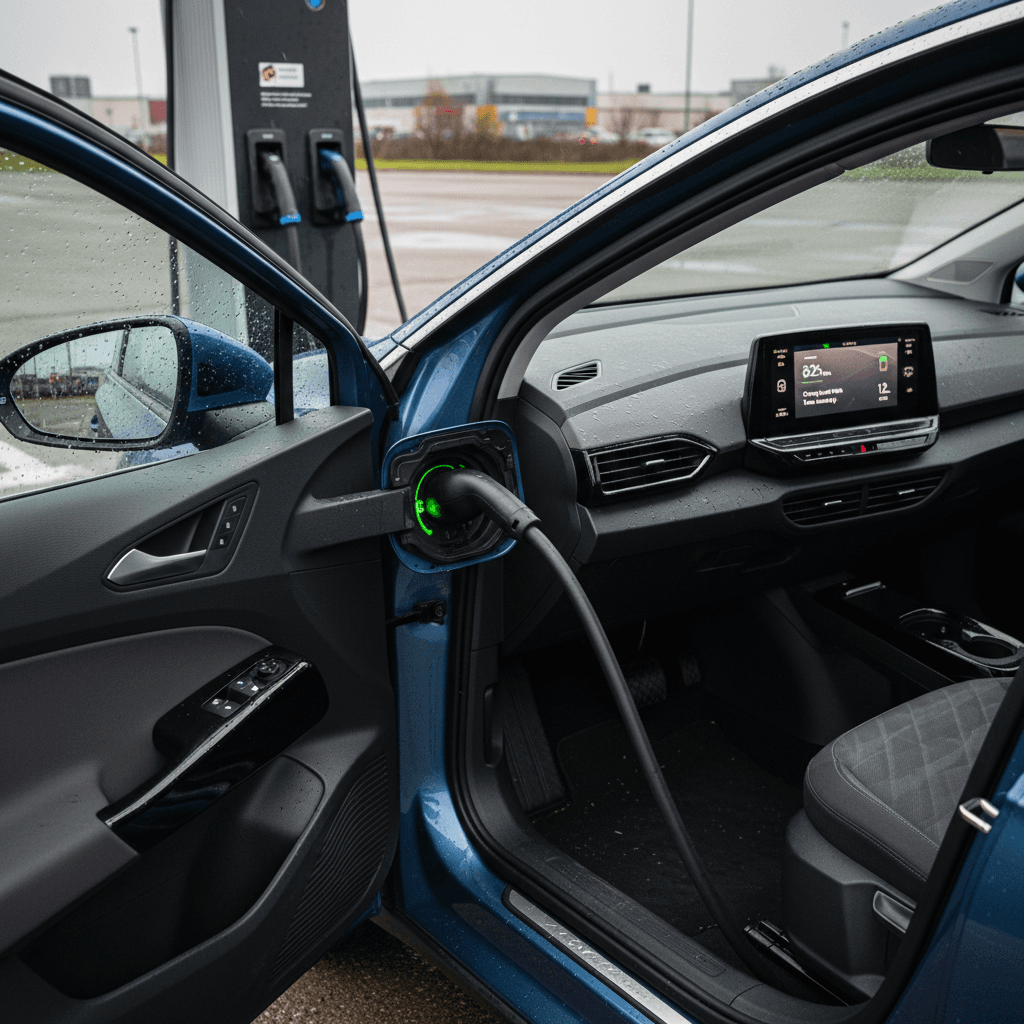
Typical feature differences: ID.4 Standard vs Pro vs Pro S
Highlights based on common equipment on 2024‑era U.S. models; individual vehicles may have packages or options.
| Feature area | Standard | Pro | Pro S |
|---|---|---|---|
| Battery / range | 62‑kWh, shorter range | 82‑kWh, long range | 82‑kWh, long range |
| Upholstery | Cloth or cloth/leatherette mix | Similar to Standard | Full synthetic leather (V‑Tex) |
| Front seats | Manual adjust, heated | Manual or limited power (varies) | 12‑way power, lumbar + massage, memory |
| Steering wheel | Heated on many S/Pro S | Available | Standard heated on S/Pro S |
| Panoramic roof | No | No | Standard (S and Pro S) |
| Wheels | Smaller alloys | Up to 20" depending on year | Typically 20" alloys |
| Liftgate | Manual | Manual | Hands‑free power liftgate |
| Infotainment | 12" touch screen, wireless CarPlay/AA | Larger 12.9" screen, backlit sliders | Same as Pro |
| Climate control | Dual‑zone auto | Dual‑zone auto | Tri‑zone with rear controls (in many Pro S / Plus) |
Use this as a feature checklist while you compare listings or test‑drive cars.
When the S and Pro S make sense
Pricing and value: new vs used ID.4 trims
New from the factory, there’s a clear price walk: Standard at the bottom, then S, Pro, Pro S and Pro S Plus at the top. On the used market, things get more interesting. Depreciation tends to narrow the gap between trims, which can make a Pro or Pro S far more attainable than you might expect from the original window sticker.
How trims usually price out
Exact numbers move with incentives and interest rates, but these patterns hold in both new and used markets.
Standard / S
- Lowest purchase price.
- Best for budget‑focused buyers who mainly drive locally.
- On the used market, often the most plentiful inventory.
Pro / Pro S
- Higher MSRP new, but used prices often overlap with well‑equipped Standards.
- Better long‑term usability thanks to bigger battery and range.
- Pro S holds value slightly better due to desirability.
If you’re financing, the monthly payment difference between a used Standard and a used Pro may be modest compared with the extra range and resale value you get from the 82‑kWh battery. That’s why many analysts and dealers steer shoppers to the Pro or Pro S when inventory allows.
How Recharged helps you compare value
Which VW ID.4 trim fits your life?
Pick your VW ID.4 trim by use case
Short‑range commuter or second car
Daily driving mostly under 40–50 miles.
Easy access to overnight home charging.
Budget is tight and you don’t road‑trip often.
Best fit: <strong>ID.4 Standard</strong> or <strong>S</strong>, if you find a clean one with good battery health.
Mixed city + highway, occasional trips
Weekly mix of surface streets and freeway.
A few road trips a year, often with passengers or cargo.
You’d like extra range cushion for weather and aging.
Best fit: <strong>ID.4 Pro</strong> (RWD) for value; <strong>Pro S</strong> if you want comfort upgrades.
Frequent road‑tripper or mountain driver
Regular long highway stints, ski trips or mountain driving.
Value all‑weather traction and higher towing capacity.
Plan to keep the vehicle for many years.
Best fit: <strong>ID.4 Pro AWD</strong> or <strong>Pro S AWD</strong>, bigger battery plus dual motors.
Comfort‑first family hauler
Kids or adults in back seats most days.
You care about seat comfort, climate control and ease of loading.
You’re willing to pay more for a nicer cabin that you’ll live with for years.
Best fit: <strong>ID.4 Pro S</strong> or <strong>Pro S Plus</strong> for tri‑zone climate, upgraded seats and liftgate.
Used VW ID.4 trim checklist
Trim names tell you a lot about an ID.4, but not everything. When you’re actually evaluating a used VW ID.4 Standard vs Pro vs Pro S, walk through a simple checklist so you don’t miss something important.
Checklist for comparing used VW ID.4 trims
1. Confirm battery size and drive type
Check the window sticker, owner’s manual or listing details for <strong>62‑kWh vs 82‑kWh</strong> and whether the vehicle is RWD or AWD. Don’t rely only on marketing names or badges.
2. Look at the EPA range label
On U.S. cars, the Monroney label shows the official EPA range. For used EVs, ask the seller or dealer for a photo of that sticker if it’s still available.
3. Inspect seats and upholstery
Sit in the front and rear seats. The <strong>Pro S</strong> should feel noticeably more upscale, with synthetic leather, power adjustments and usually a massage function for the driver.
4. Check for panoramic roof and liftgate
Open and close the panoramic glass roof and power liftgate (if equipped). These features are typical of S/Pro S trims and can be big quality‑of‑life upgrades.
5. Test the infotainment system
Make sure the larger 12.9‑inch screen (on many Pro/Pro S models) responds quickly, connects to your phone and that wireless Apple CarPlay/Android Auto work as expected.
6. Review the battery‑health report
Ask for documentation on battery health. On Recharged, every ID.4 comes with a <strong>Recharged Score</strong> that shows how the pack is performing relative to when it was new.
Battery health, charging speeds and ownership tips
Regardless of trim, all ID.4s share a few key traits: an 8‑year/100,000‑mile high‑voltage battery warranty, AC Level 2 charging via a J1772 connector and DC fast‑charging via CCS. Where Standard vs Pro vs Pro S diverge is mainly in battery capacity and peak DC charging speed.
- Level 2 home charging: All trims support roughly 11 kW AC charging on a 240‑V circuit, which typically means a full overnight charge from low state of charge.
- DC fast charging: Standard models offer solid DC rates, but Pro and Pro S versions with the 82‑kWh pack can reach higher peak power, shortening highway stop times.
- Battery longevity: Bigger packs (Pro/Pro S) tend to experience less day‑to‑day stress because you’re using a smaller portion of total capacity for the same commute. That can be a long‑term advantage.
Right‑size your home charging
Recall and safety considerations for ID.4 shoppers
In early 2026, Volkswagen announced a large recall covering tens of thousands of 2023–2025 ID.4 SUVs in the U.S. tied to potential high‑voltage battery overheating. A smaller subset of 2023–2024 vehicles with specific battery modules received stricter guidance: park outside after charging, avoid overnight indoor charging, limit charge level and skip DC fast charging until repairs are completed.
What this means if you’re buying used
Trim levels shouldn’t be a mystery. Once you know that Standard means a smaller battery, Pro means the big pack and Pro S layers on comfort, you can match an ID.4 to your real‑world driving. For many buyers, the 82‑kWh Pro or Pro S hits the sweet spot of range, usability and resale value, especially on the used market, where prices have already done the heavy depreciating. If you want help comparing individual cars, a Recharged EV specialist can walk you through battery‑health reports, fair‑market pricing and trim‑level differences so you drive away in the ID.4 that actually fits your life.