If you own a VW ID.4 or you’re shopping the used market in 2025, resale value isn’t an abstract concept, it’s thousands of dollars either staying in your pocket or evaporating. The VW ID.4 resale value picture in 2025 is mixed: prices are down from their early-pandemic highs, depreciation has been steeper than many gas SUVs, and recent tax-credit changes have reshuffled demand. But for the right buyer or seller, that volatility is actually opportunity.
Context: what changed by 2025
VW ID.4 resale value in 2025: the quick take
VW ID.4 resale value snapshot for 2025
Put bluntly, the VW ID.4 is a heavy-depreciation EV in 2025. That’s painful if you bought new at peak pricing, but encouraging if you’re coming to the used market now. Depreciation front-loads a lot of cost into the first owner’s experience; if you’re buying a 2–3 year-old ID.4 today, you’re often paying half of what that car cost new while still getting the bulk of its usable life and battery warranty.
How fast does the VW ID.4 depreciate?
Depreciation is where EV economics get real. Traditional gas SUVs might lose 35–45% of their value in the first three years. For the VW ID.4, real-world data suggests a steeper curve.
Estimated VW ID.4 depreciation profile
Illustrative depreciation based on public pricing guides and real-world used listings for mainstream trims. Actual values vary with mileage, condition, incentives, and region.
| Model year at purchase | Original MSRP (est.) | Age in 2025 | Typical 2025 resale range | Approx. value retained |
|---|---|---|---|---|
| 2021 VW ID.4 Pro RWD | $41,000 | 4 years | $16,000–$20,000 | 40–50% |
| 2022 VW ID.4 Pro S AWD | $48,000 | 3 years | $20,000–$25,000 | 40–50% |
| 2023 VW ID.4 Standard RWD | $40,000 | 2 years | $19,000–$24,000 | 45–55% |
| 2024 VW ID.4 S Plus AWD | $51,000 | 1 year | $28,000–$33,000 | 55–65% |
These are ballpark figures, not guaranteed resale values.
Pricing guides show that a recent VW ID.4 has shed on the order of 55% of its value within about three years, leaving a resale value in the high teens for a typical configuration. That’s worse than the average compact SUV, and it puts the ID.4 in the “higher depreciation” bucket among 2024–2025 SUVs.
Why some ID.4s depreciate faster than others
What are used VW ID.4s actually selling for in 2025?
On paper, depreciation tables are neat and clean. In the used market, things are messier. Several trends define VW ID.4 resale values in late 2025 and early 2026:
- Prices are down sharply from 2022 highs. As the EV supply crunch eased and incentives came and went, ID.4 transaction prices slid from the upper $30,000s–low $40,000s new into the high teens to high twenties used.
- Recent months have been especially rough. After the US used EV tax credit expired on September 30, 2025, most non-Tesla EVs saw further price softening. The ID.4 was among the larger movers, with average used prices falling by just over 6% between early fall 2025 and January 2026.
- Mileage and trim matter more than model year. A low-mileage 2022 ID.4 Pro S AWD can trade for more than a high-mileage 2023 base car. Buyers are putting a premium on range, all-wheel drive, and comfort features rather than the year on the title.
- Regional spreads are wide. In EV-dense markets like coastal California or the Northeast, you’ll often see a $2,000–$3,000 spread versus similar cars in the Midwest or South, simply because EV demand and charging infrastructure are better established.
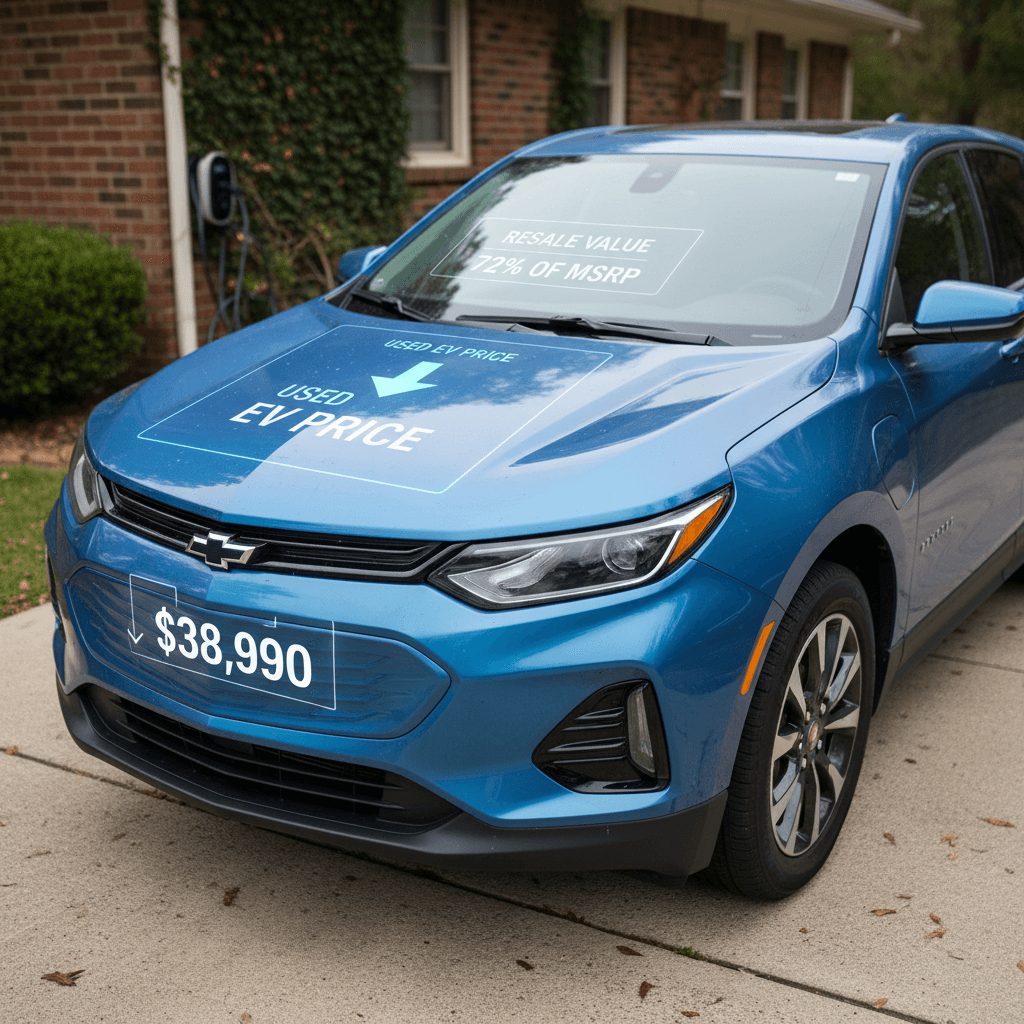
Why VW ID.4 resale value trails Tesla (and why that’s not all bad)
In the latest used-EV data, there’s a stark split: Teslas have nudged back up in value since the used EV tax credit ended, while nearly every other EV brand, including Volkswagen, has slipped. The VW ID.4’s used prices dropped roughly 6% over a recent four‑month window, even as the overall used EV average ticked slightly higher on the back of Tesla price gains.
How ID.4 resale compares to Tesla in 2025
Why the gap exists, and how to turn it to your advantage
Brand pull & demand
Charging experience
Buyer upside
The silver lining for used buyers
Key factors that move your ID.4’s resale value up or down
With ID.4 resale values already under pressure, the details of your specific vehicle matter more than ever. When we look across thousands of used-EV listings and auction data, a few patterns emerge.
What most strongly affects VW ID.4 resale value
Trim, battery size, and drivetrain
Pro and Pro S trims with the larger battery and <strong>all-wheel drive</strong> consistently sell for more than base rear‑drive cars, especially in snow states. Longer EPA range and better traction translate directly into stronger resale.
Charging performance & software updates
Later ID.4s charge faster and behave more consistently at DC fast chargers. Cars with documented software updates, and owner reviews noting smoother charging, tend to command higher prices.
Mileage and usage pattern
An ID.4 with 25,000 mostly-highway miles can look better to buyers than a 40,000‑mile city commuter. Low overall mileage still matters, but how the car was used and maintained increasingly shows up in battery health scans.
Accident history and cosmetic condition
A clean Carfax and well-kept interior go a long way. On a vehicle that’s already taken a big value hit, major accident history can be the difference between a fast sale and a car that lingers on the market, or gets lowballed by dealers.
Remaining warranty & CPO status
Volkswagen’s factory battery and powertrain coverage are a big part of the value story. Certified pre‑owned (CPO) ID.4s or cars with substantial warranty time and miles left commonly list several thousand dollars higher than out‑of‑warranty peers.
Local incentives and fuel prices
Even after federal credits ended, some states and utilities still offer perks like rebates or discounted charging. In markets where electricity is cheap and gas is expensive, used ID.4s hold value noticeably better.
Battery health, warranty, and how buyers think about risk
The single biggest unknown for many used-EV shoppers is the battery. With the VW ID.4, the picture is better than headlines suggest, but buyers are becoming more sophisticated, and more demanding, about data.
- Warranty is your floor. The ID.4’s high-voltage battery is covered for roughly 8 years/100,000 miles (check your specific model year and region). A car with several years and tens of thousands of miles of coverage remaining is inherently less risky and therefore more valuable.
- Visible battery health is a differentiator. Third-party battery health reports, like the Recharged Score that comes with every vehicle on Recharged, turn a vague concern into hard numbers. If a scan shows capacity loss well within normal bounds, many buyers will pay more for that peace of mind.
- Use and charging habits matter. A garage‑kept ID.4 that mostly AC‑charged overnight and only occasionally fast‑charged on road trips is likely to show better long‑term capacity than one that lived on DC fast chargers.
How Recharged helps de‑risk a used ID.4
7 ways to protect your VW ID.4 resale value
If you already own an ID.4, or you’re about to buy one used, there’s a lot you can’t control about macro EV pricing. But you have meaningful influence over what your specific vehicle is worth when it’s time to sell.
Practical steps to keep your ID.4’s value higher
1. Stay current on software updates
VW has steadily improved charging behavior, driver‑assist tuning, and infotainment response. Keep your car updated and keep records; a smoother, more modern-feeling ID.4 sells better and avoids the stigma of “early buggy software.”
2. Baby the battery (within reason)
Whenever possible, charge on Level 2 instead of living on DC fast chargers, and avoid leaving the battery at 100% or near 0% for long stretches. These habits support long‑term health, and a better battery scan when you sell.
3. Document everything
Maintain records for scheduled service, tire rotations, warranty repairs, and even charging equipment upgrades. A documented history builds buyer confidence and justifies a stronger asking price.
4. Fix small cosmetic issues early
Door dings, curb‑rashed wheels, and cracked glass get disproportionately punished in used‑EV pricing. Cleaning these up before listing can add more value than they cost, especially on higher‑trim ID.4s.
5. Time your sale strategically
Resale is seasonally sensitive. Listings often perform better in spring and early summer, and before major policy deadlines. Selling right after a big incentive expires can hurt, while selling into a local rebate window can help.
6. Highlight range and real-world efficiency
Buyers care less about brochure numbers and more about what you actually see. Sharing your typical kWh/100 mi and real‑world range in your listing reassures skeptical shoppers and sets your car apart from anonymous dealer ads.
7. List where EV shoppers actually look
General classifieds are full of confused listings. Selling through an EV‑focused marketplace like <strong>Recharged</strong> or an EV‑savvy dealer puts your ID.4 in front of buyers who understand the product and will value its strengths.
What hurts ID.4 resale the most
Selling your ID.4 in 2025: how to get a fair price
1. Understand your baseline value
Start with online valuation tools and comparable local listings for the same model year, trim, and mileage. Then adjust for condition, options, and remaining battery warranty. Remember: guide values may lag fast‑moving EV markets, what matters is what similar ID.4s actually transact for, not just list for.
EV‑specific retailers such as Recharged can also give you an instant offer or range, grounded in current used‑EV auction data rather than generic gas‑car curves.
2. Choose the right selling path
- Trade‑in / instant offer: Fast and low‑effort, but you’re trading some money for convenience.
- Consignment with an EV specialist: Lets you access higher retail pricing while outsourcing marketing, test‑drives, and paperwork.
- Private sale: Highest potential price, but you must screen buyers, manage payment risk, and explain EV basics.
Recharged offers trade‑in, instant offer, and consignment specifically tailored to used EVs like the ID.4, so you can align value and hassle with your priorities.
- Gather records: title, registration, service history, charging equipment receipts, and any battery or software documentation.
- Detail the car: a professional interior and exterior detail often pays for itself in days-on-market and final price.
- Get a battery health report: through services like Recharged, an independent battery scan is a powerful selling tool.
- Price realistically: start slightly above the middle of your local market range for similar ID.4s, then adjust based on interest in the first 1–2 weeks.
- Be prepared to educate: many buyers are new to EVs. A patient walkthrough of charging, range, and home setup can justify a stronger price and smoother sale.
Buying a used VW ID.4: how to know if it’s a good deal
From a buyer’s perspective, 2025 is arguably the best moment so far to pick up a used VW ID.4. Prices have corrected, inventory is broad, and more data is available about long‑term reliability and battery performance. The flip side is that you need to separate great deals from potential headaches.
Checklist for evaluating a used ID.4 deal
Look past the monthly payment and into the fundamentals
Price vs. peers
Battery and warranty coverage
Charging and range reality
Use total cost of ownership, not just sticker price
Shopping through an EV‑focused platform like Recharged simplifies this process: every vehicle comes with a digital history, expert‑verified pricing, and remote guidance from EV specialists, plus options for financing and nationwide delivery if the right ID.4 isn’t parked down the street.
VW ID.4 resale value 2025: FAQ
Frequently asked questions about VW ID.4 resale value in 2025
The 2025 story of VW ID.4 resale value is really a story about EV market maturation. Early incentives pulled demand forward, supply finally caught up, policy shifted, and non‑Tesla EVs bore the brunt of the correction. For first owners, that’s frustrating, but for used buyers, it’s a rare chance to get a modern, practical electric SUV at a meaningful discount to both its original price and its new‑EV peers. Whether you’re selling an ID.4 or hunting for the right used one, focusing on battery health, charging behavior, and verified data, not hype, will put you on the right side of that value equation. And if you want expert backup, Recharged is built to make that process transparent from the first search to the final signature.