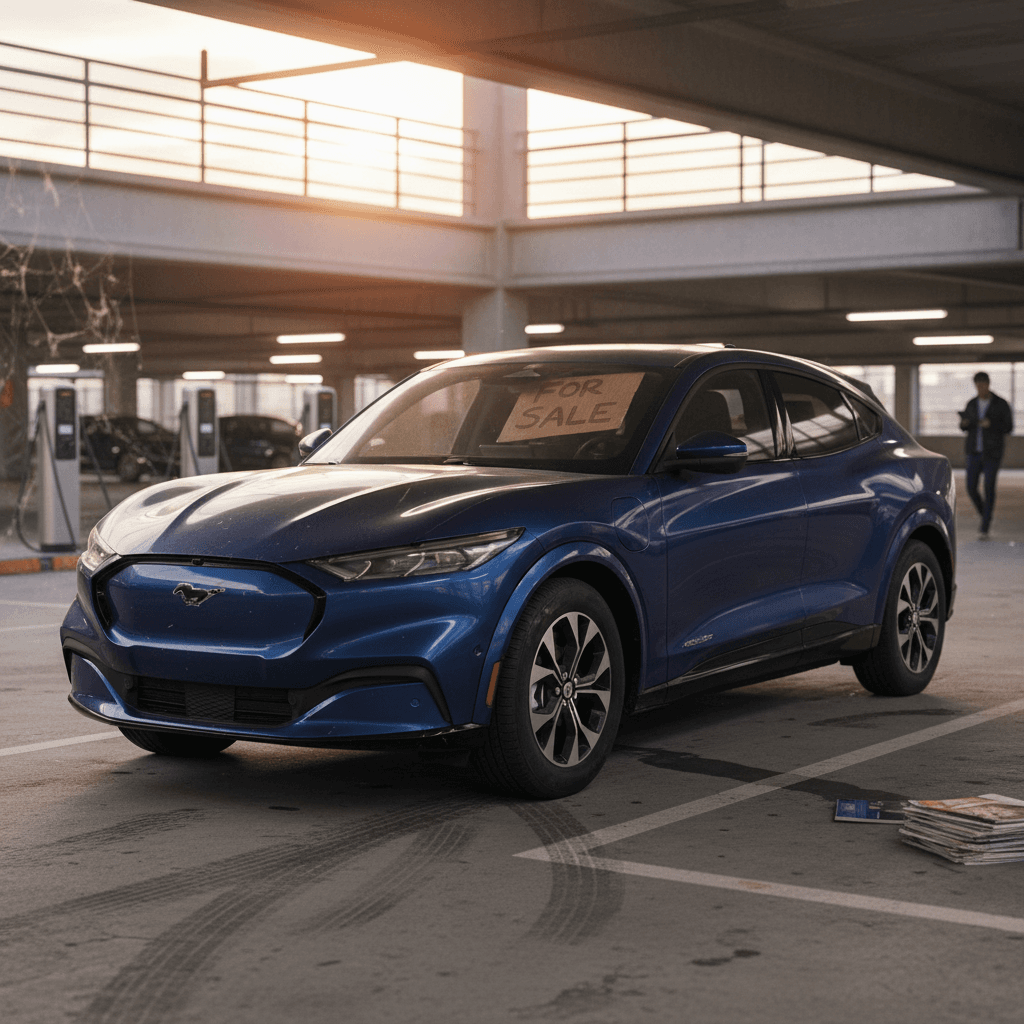
If you’re eyeing a Ford Mustang Mach‑E, or already own one, the big question isn’t just how it drives today. It’s what the Ford Mustang Mach‑E resale value forecast looks like over the next 3–5 years. With EV prices swinging, incentives changing, and new rivals arriving every quarter, understanding depreciation is the difference between a smart buy and an expensive experiment.
Quick take
Why Ford Mustang Mach-E resale value matters now
EV resale values are in flux. After a few years of rapid price cuts and incentive whiplash, we’re now in what many analysts call an “EV winter”: new EV sales have cooled, while used EV demand is quietly rising. That dynamic has different implications for a Ford Mustang Mach‑E than for a Tesla Model Y or a Hyundai Ioniq 5, and it’s reshaping what a “good” resale outcome looks like for early adopters and second owners alike.
- You’re buying new or nearly new and want to know what your Mach‑E might be worth in 3–5 years.
- You’re shopping used and wondering if current prices are a bargain or a trap.
- You already own a Mach‑E and are deciding whether to keep it, trade it, or sell it privately.
Think in total cost of ownership, not just resale
The current Ford Mustang Mach-E resale picture (2024–2026)
Current Mustang Mach‑E depreciation snapshot
Kelley Blue Book data for recent model years paints a fairly clear early picture. A 2024 Mustang Mach‑E example shows roughly 40–45% depreciation within two years, with resale values in the mid‑$20,000s for a typical configuration. For 2025 models, KBB’s 5‑year Cost to Own view estimates around $25,000 in depreciation over five years, roughly half of a mid‑$40K starting MSRP.
Edmunds’ appraisal tools tell a similar story: a 2025 Mach‑E Premium is projected to lose on the order of $30,000 of value over five years, landing in the mid‑teens by 2030 if driven average miles. That’s more aggressive depreciation than mainstream gas crossovers, but in line with many non‑Tesla EVs that were heavily discounted new and lost federal credits.
Incentive whiplash matters
How the Mach-E compares to Tesla Model Y and other EVs
Against Tesla Model Y
- Price positioning: New Mach‑E stickers slightly below a comparable Model Y, but Y transaction prices can be aggressive when Tesla cuts prices.
- Resale strength: Recent used‑market data shows Tesla values rebounding as certain tax credits expired, while many other EVs, including Mach‑E, have continued softening.
- Brand pull: Tesla’s brand and Supercharger network remain a resale advantage, especially for buyers who prioritize charging convenience.
Against other non‑Tesla EVs
- Above the laggards: Mach‑E holds value better than some slower‑selling EVs that have seen deep discounts or rental‑fleet saturation.
- Mid‑pack overall: It generally sits in the middle of the EV pack on depreciation, worse than the top few, better than many.
- Body style helps: As a compact electric SUV, it taps into strong demand for practical crossovers, which supports used prices compared with small electric sedans or niche models.
Resale isn’t just about the car
5‑year Ford Mustang Mach-E resale value forecast (2026–2031)
Forecasting resale value is always an exercise in probabilities, not certainties. That’s doubly true for EVs in a rapidly shifting policy and technology environment. But looking at current depreciation curves, battery warranties, and broader EV demand, you can sketch a reasonable 2026–2031 Ford Mustang Mach‑E resale value forecast.
Illustrative 5‑year value path for a 2025 Ford Mustang Mach‑E (mid‑trim, average miles)
These are directional, not guaranteed, numbers, designed to give you a ballpark of how values might evolve if today’s trends continue and no major shocks occur.
| Year | Vehicle age | Illustrative value | Approx. % of original price | What’s happening |
|---|---|---|---|---|
| 2026 | ~1 year | $33,000 | ~70% | Initial hit from driving off the lot; used buyers get a discount relative to new inventory and incentives. |
| 2027 | ~2 years | $29,000 | ~60% | Depreciation slows but is still front‑loaded compared with later years. |
| 2028 | ~3 years | $26,000 | ~53% | Most early‑life depreciation is baked in; demand focuses on battery health and warranty remaining. |
| 2029 | ~4 years | $22,000 | ~45% | Warranty still active; values supported by buyers seeking lower‑priced EVs as new ones stay expensive. |
| 2030 | ~5 years | $17,000–$18,000 | ~35%–38% | Battery warranty nearing its end, new tech more advanced; depreciation stabilizes but values lower in absolute terms. |
All values approximate; local markets, mileage, accidents and incentives can move individual vehicles significantly higher or lower.
Don’t over‑trust any single forecast
The big picture: if you buy a new 2025 Mach‑E and put average miles on it, you should budget for roughly 55–65% total depreciation over five years in today’s market. If you buy a 2‑ or 3‑year‑old used Mach‑E instead, you’re past the steepest part of the curve, and your additional 3–5 years of depreciation are likely to be milder in percentage terms.
Key factors that help or hurt Mach-E resale value
What moves Ford Mustang Mach‑E resale value up or down
Think beyond age and miles, used‑EV buyers scrutinize different levers than gas buyers.
Battery health & warranty
Battery condition is central to EV resale. Ford’s 8‑year/100,000‑mile battery warranty gives buyers confidence, especially through the late 2020s. Documented charging habits and limited DC fast‑charging use can be a selling point.
Charging experience
Access to reliable DC fast charging, particularly with growing NACS (Tesla connector) adoption, matters. Buyers will increasingly prefer Mach‑Es that are compatible with major networks and include any necessary adapters.
New‑car pricing & incentives
If Ford heavily discounts new Mach‑Es or if a generous federal or state incentive reappears, used prices feel high by comparison and tend to drift down. When new inventory is tight or credits expire, used values firm up.
Reliability & recalls
High‑profile recalls, like the 2021–2025 electronic door‑latch recall, can spook buyers, but software‑fixable issues are less damaging than battery or motor failures. A clean recall and service history helps resale.
Segment demand
Compact electric SUVs are the heart of the EV market. As more buyers cross‑shop EVs against gas crossovers, the Mach‑E’s familiar Mustang branding and SUV shape support demand in the used market.
Miles, usage & accidents
As with any vehicle, lower mileage, clean accident history, and evidence of careful ownership (no curb‑rashed wheels, interior wear, or mismatched tires) all support higher offers from both dealers and private buyers.
Why a third‑party health report helps
Trim, battery and options: which Mach-Es hold value best?
Not every Mach‑E depreciates the same way. Just as certain gas trims become the “sweet spot” on the used market, a few Mach‑E build combinations look particularly well‑positioned from a resale standpoint.
Mach‑E configurations that tend to age well
Mid‑range trims over bare‑bones or maxed‑out
Historically, mid‑level trims, like Premium rather than stripped Select or pricey Rally/GT, hold value best. They balance equipment, price, and broad appeal on the used market.
Extended‑range battery for road‑trip buyers
Range anxiety is still a real concern. Extended‑range battery Mach‑Es typically command more on the used market than standard‑range versions, especially in regions where charging infrastructure is patchy.
All‑wheel drive where weather demands it
In snow‑belt states, dual‑motor AWD Mach‑Es see stronger demand and better resale than rear‑drive versions. In mild climates, the gap narrows and efficiency‑minded buyers may prefer RWD.
Mainstream colors and wheels
Conservative exterior colors and mid‑sized wheels usually age best. Loud colors or niche wheel packages may limit your buyer pool a few years down the line.
Driver‑assist and tech packages
Buyers expect modern safety tech and over‑the‑air update capability. Mach‑Es with the full suite of driver‑assist features and the latest infotainment hardware are easier to sell and price stronger.
Be cautious with expensive niche options
How to protect your Mach-E’s resale value
You can’t change macro trends or future incentives, but you can stack the deck in your favor. Treat your Mach‑E more like an iPhone with wheels than a traditional SUV: software, charging behavior and documentation all matter when it’s time to sell.
Practical steps to keep your Mach‑E’s value higher
1. Keep software and recalls fully up to date
Document over‑the‑air updates and get recalls (like the electronic door‑latch fix) addressed promptly. A fully up‑to‑date car reassures buyers that you’ve been paying attention.
2. Charge smart to support battery health
Whenever possible, charge on Level 2 at home and avoid leaving the battery at 100% or 0% for long periods. Limit DC fast‑charging to road trips. Healthy batteries support stronger offers.
3. Maintain a clean, damage‑free history
Repair cosmetic damage, fix windshield chips before they spread, and avoid aftermarket modifications that could worry buyers or lenders. A clean Carfax and inspection report directly translate into higher bids.
4. Document everything
Keep digital or printed records of services, tire rotations, recalls and even charging patterns if you can. When you sell through a marketplace like Recharged, that documentation is gold for pricing and buyer confidence.
5. Time your sale around supply and incentives
If a big new‑car incentive hits Mach‑Es in your region, you may want to wait to sell. Conversely, if inventory tightens or credits lapse, used prices can firm up, an ideal time to trade in or list.
Buying a used Mustang Mach-E: what to look for
If you’re coming into the Mach‑E market as a used buyer, the current depreciation curves are good news. You can often buy a 2‑ or 3‑year‑old example for roughly half of what the original owner paid, while still riding the protection of the factory battery warranty. The key is separating healthy cars from those that will become headaches.
Used Mustang Mach‑E checklist for shoppers
These are exactly the items that platforms like Recharged scrutinize before listing a used EV.
Battery & charging health
- Confirm remaining battery warranty duration and mileage.
- Ask for any available battery health report or third‑party diagnostic.
- Test both AC and DC charging wherever possible.
Software, recalls & history
- Verify that major recalls, including the electronic door‑latch campaign, have been completed.
- Check that the infotainment and driver‑assist systems are on recent software.
- Review service records and vehicle history reports for collisions or flood damage.
Physical condition & tires
- Walk around the car for panel gaps, paint mismatches, and wheel damage.
- Inspect tire tread depth and age, EVs are heavy, and cheap tires can mask wear.
- Check for interior wear around common touch points and the cargo area.
Range fit & use case
- Make sure the real‑world range of the specific trim and battery meets your daily needs.
- Consider local charging availability and whether you’ll need additional adapters.
- Estimate your 5‑year total cost of ownership, not just the monthly payment.
How Recharged simplifies used Mach‑E shopping
Ready to find your next EV?
Browse VehiclesSelling or trading in your Mach-E with Recharged
When it’s time to exit your Mustang Mach‑E, the same uncertainty that makes buying a used EV intimidating can also complicate selling one. Many traditional dealers are still learning how to price EVs, and private buyers will grill you about charging, battery health, and warranty coverage.
Option 1: Instant offer or trade‑in
If you value speed and simplicity, you can get an instant offer for your Mach‑E from Recharged. We factor in your trim, mileage, options, and current EV market conditions to give you a fair, data‑backed price. You can apply that toward another used EV or simply cash out.
Option 2: Consignment on a specialist marketplace
If your Mach‑E is a desirable spec and you’re willing to wait a bit longer for top dollar, consignment through Recharged lets you tap into a national audience of EV‑savvy buyers. We handle listings, buyer questions, and paperwork while you benefit from expert pricing guidance and the credibility of the Recharged Score battery health diagnostics.
Leverage timing and transparency
Ford Mustang Mach-E resale value FAQ
Common questions about Mustang Mach‑E resale value
Bottom line: Is the Mustang Mach-E a good resale bet?
Looking across the data, the Ford Mustang Mach‑E resale value forecast from 2026 through roughly 2030 is one of steady but not catastrophic depreciation. New‑car buyers should expect to give up more value in the first few years than owners of popular gas crossovers or the strongest‑resale EVs. But used‑car buyers can take advantage of that front‑loaded depreciation to get into a relatively young, warrantied Mach‑E at an attractive price.
As the EV market normalizes, buyers will reward vehicles that combine solid range, a robust charging experience, and transparent battery health information. The Mach‑E checks many of those boxes, and the backing of a major automaker and dealer network reassures mainstream shoppers. If you align your expectations, choose the right configuration, and use tools like the Recharged Score Report to validate battery and pricing, the Mustang Mach‑E can be a smart, predictable entry into used EV ownership, without betting your entire financial future on where the market goes next.