If you’re cross‑shopping the **VW ID.4** with other electric SUVs or thinking about a used ID.4, you’ve probably seen EPA range numbers like 263 or 291 miles. But what you really care about is **VW ID.4 real world range on the highway**, especially at 70–75 mph with luggage, passengers, and imperfect weather. This guide pulls together independent tests, owner experience, and efficiency basics so you know what to expect before your first road trip.
Highway range vs “official” range
VW ID.4 highway range at a glance
Typical real‑world highway range (70 mph, mild temps)
Those ranges assume a **steady 70 mph**, relatively flat terrain, mild weather (around 60–75°F), and starting from 100% down to near empty. Push faster, climb long grades, or drive in real winter and you’ll see less. Slow down to 60–65 mph or mix in city driving and you can often match or even beat the EPA numbers.
EPA vs real‑world VW ID.4 range
For North America, the **big‑battery VW ID.4 (77–79 kWh usable)** is EPA‑rated around **263 miles for AWD** and **up to 291 miles for RWD** on the combined cycle. Smaller‑battery versions with around 58 kWh usable are rated just over 200 miles. Those figures blend city and highway driving, with a fairly gentle speed profile.
What tests say
- Independent instrumented tests of earlier ID.4 models have seen **around 250–255 miles** at a constant **70 mph** for the big‑battery versions.
- On mixed real‑world routes with freeway plus slower segments, some tests have actually **exceeded EPA range**, hitting just under 300 miles in mild weather.
- Highway efficiency around **29–31 kWh/100 miles** is common for the large‑battery ID.4, which is mid‑pack for compact electric SUVs.
What this means for you
- Don’t expect to see your full **EPA rating at 75 mph**. That’s true of almost every EV.
- On a long, flat, 70‑mph highway run, plan on **roughly 10–20% less range than the EPA number** in good conditions.
- The ID.4’s strength isn’t extreme range; it’s **predictability and efficiency that stay consistent** once you learn your own driving profile.
Quick mental rule for ID.4 owners
Real‑world highway range by battery and drive type
Not all ID.4s are equal. Battery size, motor count, and even model year (older APP 310 motor vs newer APP 550) all nudge the numbers. Here’s a realistic highway‑focused view for U.S.‑spec models, assuming 70 mph, mild temperatures, and starting from a full charge.
Typical VW ID.4 highway range by configuration
Approximate real‑world highway ranges at a steady ~70 mph in mild conditions. These are practical planning numbers, not guarantees.
| Configuration | Battery (usable) | EPA combined | Realistic 70 mph highway range | Notes |
|---|---|---|---|---|
| 58 kWh RWD (Standard/Base) | ~58 kWh | ~206–209 mi | ~170–190 mi | Best for shorter trips and mixed driving; highway‑only days feel short. |
| 77 kWh RWD Pro / Pro S (earlier motor) | ~77 kWh | ~260–291 mi | ~220–240 mi | Good balance of price and range; efficient if you keep speeds reasonable. |
| 77–79 kWh RWD Pro (newer APP 550 motor) | ~77–79 kWh | up to 291 mi | ~230–250 mi | More power and a small efficiency bump vs early years. |
| 77 kWh AWD Pro / AWD Pro S | ~77 kWh | ~245–263 mi | ~210–235 mi | Extra motor adds grip and performance but costs some efficiency. |
| European‑spec smaller packs (52 kWh usable) | ~52 kWh | shorter WLTP ranges | ~140–170 mi | These are rare in North America; highway legs will be brief. |
Use these figures as conservative planning targets; actual results will vary with speed, weather, elevation, and load.
Don’t forget buffer and charging curve
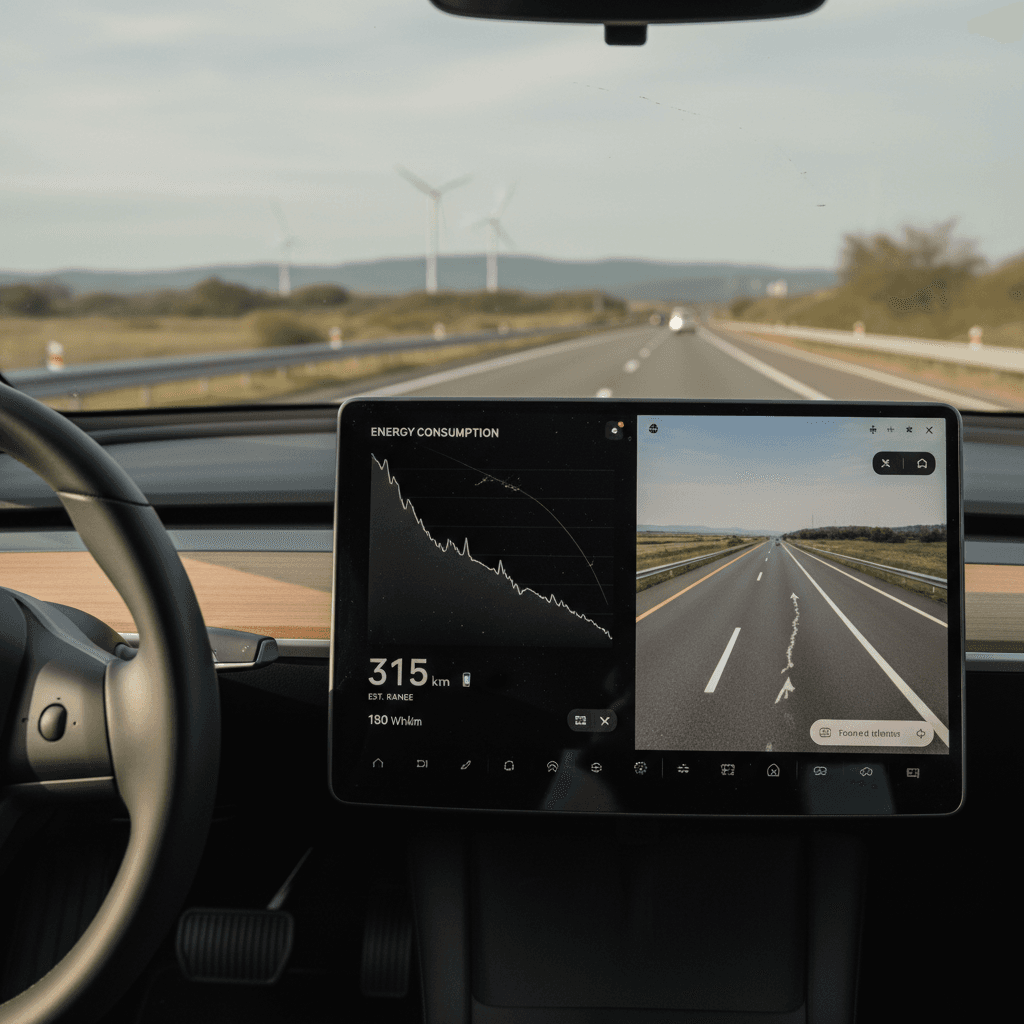
What actually kills VW ID.4 highway range
4 big factors that shrink ID.4 highway range
These apply to every EV, but the ID.4’s efficiency makes them easy to see in the data.
Speed
Wind & elevation
Cold weather
Load & roof gear
The silent killer: HVAC at 75 mph in winter
How fast can you drive and still get good range?
If you mainly care about **real‑world highway range**, speed is your biggest lever. The ID.4 is reasonably slippery for a boxy crossover, but physics still wins. Here’s a practical way to think about speed vs range in a large‑battery ID.4 (77–79 kWh), assuming mild weather and flat terrain.
- At **60–65 mph**, you’re in the sweet spot. It’s realistic to get **close to EPA range** on long runs, perhaps 240–260 miles in a big‑battery RWD ID.4 if you start from 100%.
- At **70 mph**, you’ll give up roughly **10–15% vs 60–65 mph**. That translates to about **220–240 miles** of total usable range in good conditions for the big pack, less for the small pack or AWD.
- At **75–80 mph**, you’re paying a big aero penalty. Expect **20–30% less** than EPA and **noticeably worse consumption** than at 70. That can drop a 263‑mile AWD ID.4 to something like **180–210 miles** of practical range.
Smart tactic for road trips
Cold weather and winter VW ID.4 range
Cold weather is where expectations and reality diverge the most. The ID.4 has a heat pump on some trims and decent thermal management, but physics still matter. At 70 mph in **below‑freezing temperatures**, you’ll see a bigger drop than in mixed city driving because you can’t recapture much energy with regenerative braking and the heater runs constantly.
Typical winter highway penalty
- At **around freezing (32°F / 0°C)** with heat on, expect **20–30% less** range than in mild temps.
- In **deep cold (teens or single digits °F)**, the hit can grow to **30–40%**, especially on non‑heat‑pump cars and short legs where the pack never fully warms up.
- Short pre‑heated legs from DC fast chargers help. A warm battery is more efficient and can accept higher charge rates at your next stop.
Practical winter game plan
- Use **seat and steering‑wheel heaters**, they sip power compared with blasting cabin heat.
- Pre‑condition while plugged in at home or hotel, so early energy use comes from the grid, not the pack.
- On truly cold trips, aim for **shorter legs (80–130 miles)** between DC fast chargers instead of stretching range to the limit.
Cold‑weather buffer
Planning road trips in a VW ID.4
Once you internalize your ID.4’s **true highway range**, trip planning becomes straightforward. Think in terms of **usable battery window** (often 10–80% between fast charges) rather than the full EPA number, and lean on route planners that understand your car.
Checklist: Setting realistic ID.4 highway expectations
1. Know your configuration
A 58 kWh RWD ID.4 and a 77 kWh AWD Pro behave very differently on the interstate. Check your **battery size and drive type** before trusting anyone’s range anecdote.
2. Start with conservative assumptions
For your first big trip, assume **~2.7–3.0 mi/kWh at 70 mph** (around 33–37 kWh/100 mi) and revise after you’ve driven a leg or two.
3. Use a smart route planner
Apps and tools that know your ID.4’s consumption and the local DC fast‑charging network will generally propose **shorter, more efficient legs** instead of heroic, stressful stretches.
4. Plan around 10–80% SOC on DC fast
The ID.4 charges fastest in the **middle of the pack**. Running from 10–80% repeatedly is often faster overall than going 5–95% with fewer stops.
5. Watch elevation and weather
Climbs, cold, and headwinds can each **move your arrival SOC by 5–10 percentage points**. Build that into your plan rather than reacting at the last minute.
6. Practice on a familiar route
Before a cross‑country run, do a **mini‑road trip loop** from home. Take notes on mi/kWh and arrival SOC at different speeds to calibrate your expectations.
Think in legs, not tankfuls
Used VW ID.4s, battery health, and range
If you’re considering a **used VW ID.4**, real‑world highway range is partly about the original spec and partly about **how the battery has aged**. The good news: modern ID.4 packs have generally shown modest degradation in their first years, especially when they’re not fast‑charged hard every day. But individual cars can vary.
How degradation affects highway range
- A **10% loss in usable capacity** roughly equals a **10% loss in range** at a given speed and temperature.
- On a big‑battery ID.4 that once delivered ~230 miles at 70 mph, a typical few‑year‑old example might now deliver **205–215 miles** under the same conditions.
- The impact feels larger if you already operate on the edge, like a **58 kWh ID.4 used for long‑distance highway commuting**.
Why a battery report matters
Shopping used is where a **third‑party battery health report** really earns its keep. Instead of guessing from mileage or dash estimates, you get a quantified view of pack condition.
Every vehicle listed on Recharged includes a Recharged Score Report with verified battery health and pricing that already reflects that condition. That gives you a much clearer idea of **what kind of highway legs you can actually expect** from a specific used ID.4.
How Recharged can help with a used ID.4
Ready to find your next EV?
Browse VehiclesFAQ: VW ID.4 real‑world range on the highway
Frequently asked questions
Bottom line: What to expect from an ID.4 on the highway
The VW ID.4 isn’t a range monster on paper, but in the real world it delivers **predictable, respectable highway legs**, especially in big‑battery trims. If you treat the EPA number as a **best‑case mixed‑driving figure**, assume **10–20% less at 70 mph** in good weather and **30% or more less in winter**, you’ll be pleasantly unsurprised on your first road trip.
If you’re shopping used, the real question isn’t just, “What’s the VW ID.4 real world range on the highway?” It’s, “What will **this specific car** do on **my** routes?” That’s where verified **battery health data, honest range expectations, and route‑planning habits** matter more than any single EPA number. When you’re ready to find an ID.4 that matches your driving profile, a curated marketplace like Recharged, with **battery diagnostics, EV‑savvy support, financing, trade‑in options, and nationwide delivery**, can make that decision a lot more straightforward.