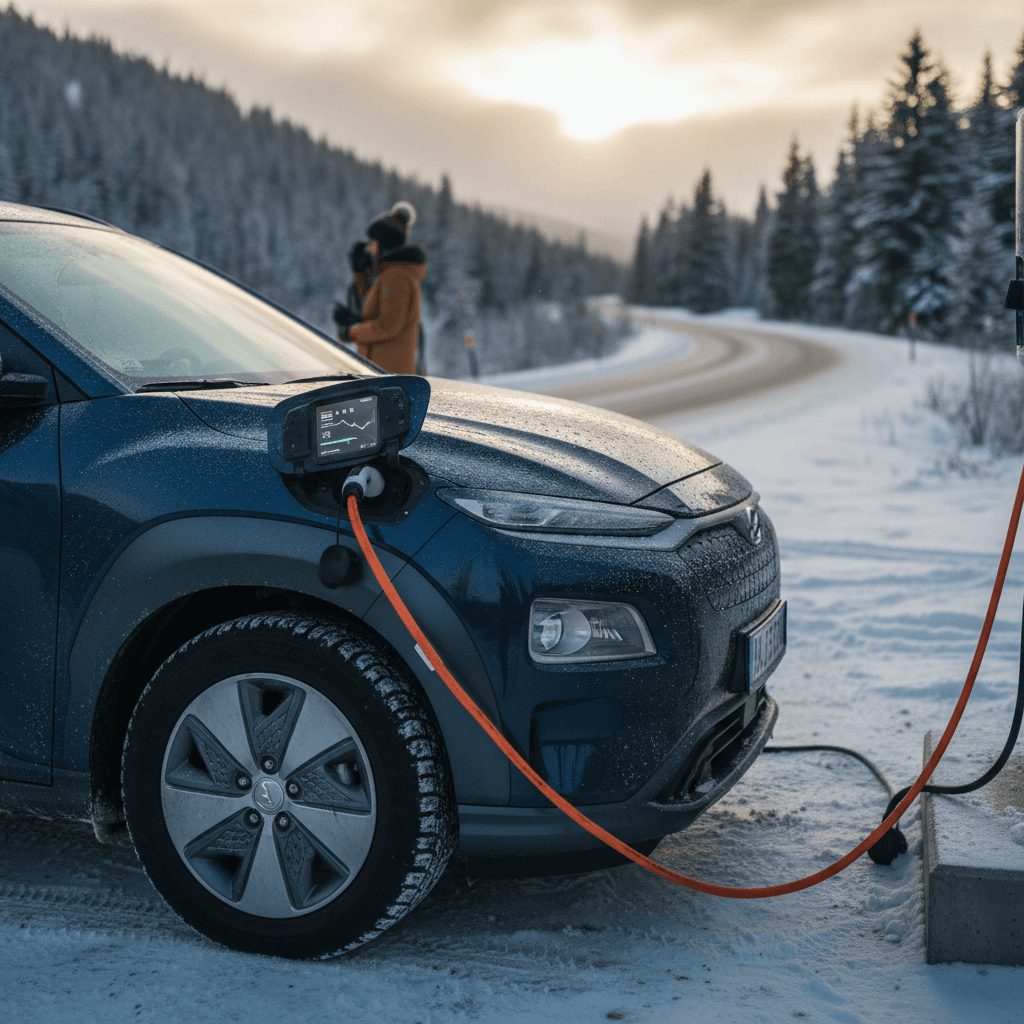
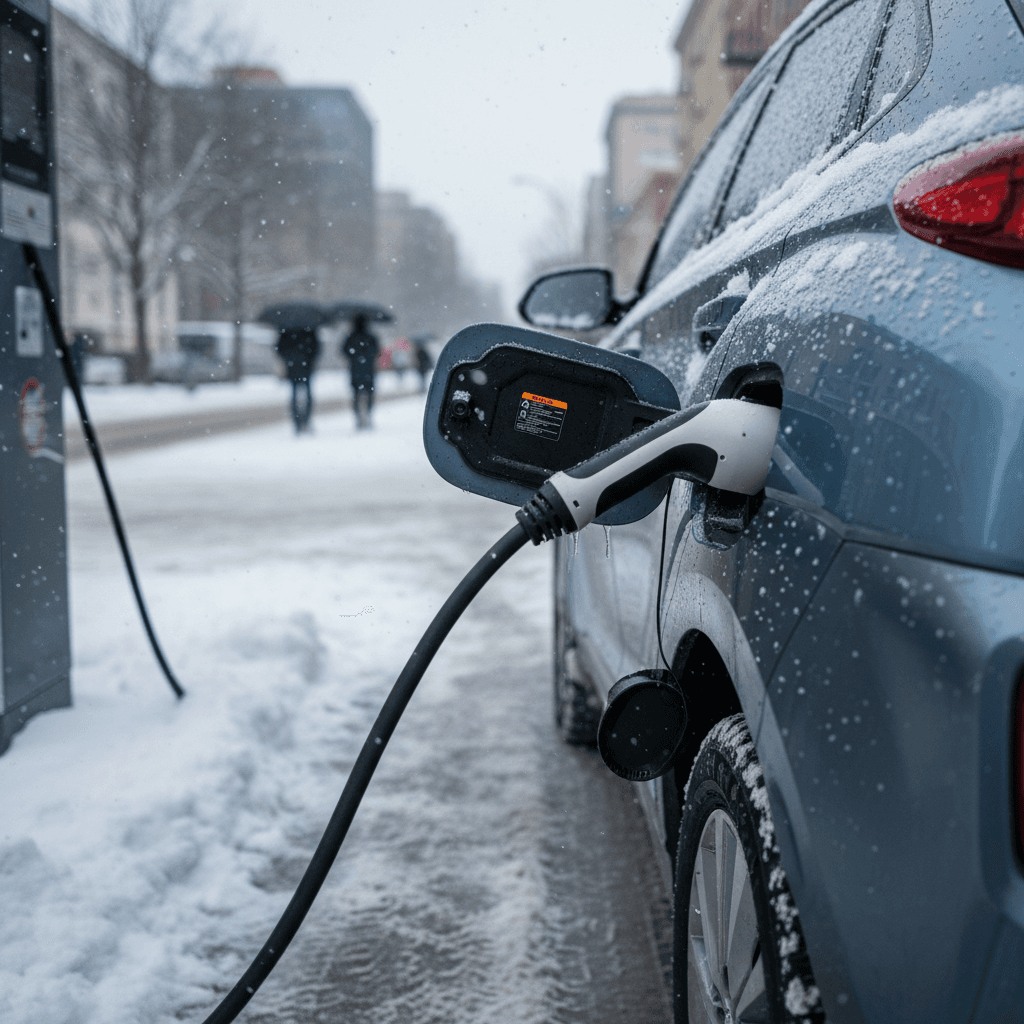
If you live in a colder climate, you’ve probably heard stories about VW ID. Buzz winter range loss. A big, brick-shaped electric van isn’t going to be a hyper‑efficient winter hypermiler, but that doesn’t mean it turns useless the moment temperatures hit freezing. The key is understanding how much range you actually lose, why it happens, and how to plan around it.
Quick takeaway
VW ID. Buzz winter range loss at a glance
ID. Buzz winter range in one chart-free snapshot
Across the broader EV market, large real‑world datasets show that most electric vehicles retain about 80% of their rated range around freezing temperatures. That’s an average 20% loss, but boxier, less efficient vehicles like vans can see bigger swings, especially at motorway speeds. The ID. Buzz is no exception: owners and testers routinely report winter motorway ranges in the 130–180 mile band even when official ratings are north of 230 miles.
Aerodynamics matter more in winter
Official ID. Buzz range vs real-world winter numbers
Before you can understand winter range loss, you need a baseline. The ID. Buzz has evolved quickly since launch, and different wheelbases and batteries carry different official ratings.
VW ID. Buzz official range figures
Approximate official range numbers for recent ID. Buzz variants. Exact figures vary slightly by wheel size, trim and test cycle.
| Model/year | Battery (usable) | Drive | Official range |
|---|---|---|---|
| SWB ID. Buzz (early EU models) | ~77–79 kWh | RWD | ≈250–291 mi WLTP |
| LWB ID. Buzz (EU) | ~85–86 kWh | RWD/AWD | ≈277–295 mi WLTP |
| US‑spec ID. Buzz 3‑row (2025) | ≈86 kWh | RWD | ≈234 mi EPA est. |
| US‑spec ID. Buzz 3‑row (2025) | ≈86 kWh | AWD | ≈231 mi EPA est. |
Use these official figures as a *summer baseline*; real winter range will be lower.
Independent tests and long‑term reviews tell a more sobering story. European reviewers typically report 200–230 miles in mixed, mild conditions for the standard‑battery ID. Buzz, and around 170–200 miles when it’s loaded up and driven primarily on the motorway. When you layer winter on top of that, freezing temps, wet roads, snow tires, cabin heating, it’s very realistic to see motorway range fall into the 130–180‑mile window.
EPA vs WLTP vs your life
Why the VW ID. Buzz loses range in winter
Cold‑weather range loss isn’t a VW problem, it’s a physics problem. Every EV has to fight the same three enemies in winter: a colder battery, a colder cabin and a less efficient powertrain. The ID. Buzz just adds a fourth: van‑like aerodynamics.
Four main reasons your ID. Buzz loses range in winter
Once you see where the energy goes, the solutions become obvious.
1. Cold battery chemistry
Battery cells are chemical systems. At low temperatures they:
- Can’t accept or deliver current as efficiently
- Show higher internal resistance
- Need more energy for the same power output
Result: higher Wh/mile and slower DC fast‑charge speeds until the pack warms up.
2. Thick, cold air & rolling losses
Cold air is denser, and winter often adds wet roads, slush and snow tires.
- Higher aerodynamic drag at the same speed
- More rolling resistance from cold rubber and road surface
Result: highway efficiency takes a noticeable hit.
3. Cabin heating load
An EV doesn’t have free waste heat from an engine. The ID. Buzz must:
- Power resistive heaters or a heat pump
- Warm a large interior volume of glass and air
Result: climate control can easily add 2–4 kW of continuous draw on cold days.
4. Big, boxy shape
The ID. Buzz’s charm comes from its bus‑like shape, but that means:
- Large frontal area
- Less aerodynamic profile
Result: at 65–75 mph, it simply spends more energy pushing air out of the way than a sleek crossover.
Good news: batteries like use
So how much winter range loss should you expect?
There’s no single number that fits every driver, but we can bracket realistic expectations for a VW ID. Buzz in different winter scenarios. Think in terms of percentage loss from your *mild‑weather* baseline, not from the brochure number on the window sticker.
Mild winter city & suburb driving (28–40°F / −2–4°C)
- Short to medium trips, mix of 25–50 mph
- Pre‑heating while plugged in
- Normal Eco or Comfort driving modes
Typical impact: 15–25% range loss vs. mild weather. A Buzz that comfortably does 220 miles in spring might feel more like a 170–185‑mile vehicle here.
Cold motorway trips (≤32°F / 0°C, 65–75 mph)
- Long runs at steady highway speeds
- Cabin heat on continuously
- Snow tires or wet roads common
Typical impact: 25–35% loss is common, and 40% isn’t impossible with headwinds, heavy loads or sub‑freezing temps. That same 220‑mile Buzz might return just 130–160 miles before you’re ready to recharge.
Beware of planning off the dash estimate
ID. Buzz trims, batteries and heat pump: what actually matters
Volkswagen has already offered the ID. Buzz with a few different battery sizes and powertrains, and more variants are coming. For winter range, three aspects matter most: usable battery capacity, drive layout and whether the van has a heat pump.
- Battery size: Most early European short‑wheelbase Buzz models used a ~77–79 kWh usable pack; long‑wheelbase and US 3‑row versions use a larger ~85–86 kWh pack. More kWh buys you more winter buffer, but also more weight.
- RWD vs AWD: All‑wheel‑drive GTX/4MOTION versions add traction and performance, but slightly cut official range. In winter, AWD can help you get moving on snow, but it doesn’t magically improve efficiency.
- Heat pump: Optional on many markets. A heat pump uses ambient heat more efficiently than resistive heaters, trimming climate‑control losses on longer winter drives. If you do a lot of sub‑freezing highway miles, a heat pump is worth seeking out.
Shopping tip for winter climates
Driving strategies to cut winter range loss
You can’t negotiate with physics, but you can work with them. The goal isn’t to baby the van; it’s to trim the worst inefficiencies so you still arrive on time with a comfortable cabin.
7 practical ways to improve ID. Buzz winter range
1. Pre‑heat while plugged in
Use the ID. Buzz’s scheduled climate control to warm the cabin and battery while you’re still on shore power. That way, more of the first few kWh after departure go to motion, not thawing.
2. Dial back top speed slightly
Dropping from 75 mph to 65 mph has an outsized effect on aero drag in a bluff‑front van. That small sacrifice can claw back 10–15% efficiency on a long winter run.
3. Use seat and wheel heaters first
Direct heating on your body is more efficient than blasting hot air through the whole cabin. Try lowering the cabin setpoint a few degrees and leaning on seat heaters instead.
4. Choose Eco or Comfort, not Sport
Aggressive throttle mapping and climate settings in sporty modes can burn extra energy with little real‑world benefit in winter conditions. Eco modes usually soften HVAC loads too.
5. Keep tyres properly inflated
Cold weather drops tyre pressures. Under‑inflated tyres increase rolling resistance and can easily cost you several percent of range. Check and top up when cold snaps hit.
6. Clear snow and ice thoroughly
Snow on the roof and wheel arches adds drag and weight. It’s also a safety issue. A clean Buzz is a more efficient and predictable Buzz.
7. Avoid repeated short trips from cold
Many 1–3 mile trips from a cold soak are the worst‑case for winter efficiency. If you can combine errands into longer outings, your battery and range readout will thank you.
Think kWh per 100 miles, not just miles remaining
Planning winter charging with an ID. Buzz
Winter complicates charging in two ways: you’ll arrive at chargers more often, and the pack may charge more slowly until it warms up. The ID. Buzz supports solid fast‑charging power in ideal conditions, roughly 170–200 kW on recent models, with 10–80% in around half an hour, but that headline is a best‑case scenario, not a guarantee when it’s 20°F and windy.
Winter charging game plan for your Buzz
Reduce stress by adjusting expectations before you hit the road.
Aim for shorter legs
Instead of trying to stretch a 200‑mile leg to the last electron, plan 120–150‑mile hops in winter. That keeps you in a healthy state‑of‑charge band and gives you buffer for detours or headwinds.
Arrive with 15–25% state of charge
Cold batteries don’t like to fast‑charge from very low state of charge. Target arriving with ~20% so the pack isn’t both cold and nearly empty.
Use preconditioning where available
If software allows it in your region, start DC fast‑charge preconditioning from the nav so the battery is warmed as you approach a high‑power charger. If not, a spirited 10–15 minutes of driving before the stop helps.
Build slack into your schedule
Buying a used ID. Buzz? Winter range questions to ask
Because the ID. Buzz is relatively new, most examples in the used market will have healthy batteries and modern software. That’s good news for winter performance, as long as you verify a few basics. This is exactly where a transparent, data‑driven report like a Recharged Score battery health diagnostic becomes valuable.
Key winter‑range questions for a used ID. Buzz
1. Which battery and drivetrain does it have?
Confirm whether you’re looking at a smaller‑battery SWB van or a larger‑pack LWB/US model, and whether it’s RWD or AWD. That sets your baseline winter range.
2. Does it have a heat pump?
Ask the seller directly and verify from the build sheet. A factory heat pump is a meaningful comfort and efficiency upgrade for cold‑climate owners.
3. Any software updates for charging/efficiency?
VW has pushed multiple software updates that improve charging curves and energy management. Make sure the van is on a current software version before winter.
4. What does real‑world winter consumption look like?
If possible, look at long‑term consumption logs in the trip computer. Numbers in kWh/100 miles or mi/kWh under winter conditions tell you more than one‑off anecdotes.
5. Has the battery been independently checked?
A <strong>Recharged Score Report</strong> uses verified diagnostics to show current battery health and range expectations. That’s far more useful than a seller’s “it seems fine.”
6. How was the van used?
High‑speed, heavily loaded motorway use in northern climates will show different winter behaviour than a mostly urban life in milder regions. Neither is automatically bad, but context matters.
How Recharged can help
Ready to find your next EV?
Browse VehiclesVW ID. Buzz winter range loss: FAQ
Common questions about ID. Buzz winter range
The bottom line on VW ID. Buzz winter range loss
The VW ID. Buzz isn’t a winter range champion, but it also isn’t the horror story some social‑media anecdotes suggest. In practice, you’re looking at roughly a quarter to a third less usable range in real cold‑weather driving, with the steepest penalties coming from high speeds, short trips from a cold soak and heavy HVAC use. Treat the official range numbers as a sunny‑day ceiling, learn your own consumption at different temperatures, and plan your winter routes with a margin.
If you’re shopping for a Buzz, especially used, pay attention to battery size, drivetrain, heat‑pump fitment and battery health rather than trim gimmicks. That’s where your winter experience lives. And if you’d rather not decode all of that alone, a used‑EV specialist like Recharged can surface real battery data, fair pricing and tailored advice so you can enjoy the retro‑futurist charm of the ID. Buzz without cold‑weather surprises.