If you’re looking at a Volkswagen ID. Buzz as the family adventure vehicle, you’re probably asking two big questions: how much can it tow, and how far will it go on a charge, especially with a trailer behind it? The answers are a little different from what you may be used to with a gas minivan or SUV, but once you understand the numbers the ID. Buzz can be a very capable tow rig for the right kind of trips.
Quick answer
Overview: ID. Buzz towing and range at a glance
VW ID. Buzz towing & range snapshot
About trim differences
VW ID. Buzz towing capacity by version
Volkswagen has launched several flavors of the ID. Buzz across Europe and North America. They don’t all tow the same amount, which is where a lot of confusion comes from when you’re Googling specs. Here’s how the numbers break down at a high level.
VW ID. Buzz towing capacity by configuration
Approximate maximum trailer weights. Always follow the limits printed for your specific vehicle.
| Model / market | Drive | Wheelbase | Max braked trailer | Max unbraked trailer | Notes |
|---|---|---|---|---|---|
| 2025 ID. Buzz (U.S., 3‑row) | AWD dual‑motor | Long | 3,500 lb | 1,650 lb | Factory tow package required |
| ID. Buzz Pro (EU, early RWD) | RWD single‑motor | Short | 1,200 kg (2,646 lb) | 750 kg (1,653 lb) | Some long‑wheelbase RWD rated at 1,000 kg |
| ID. Buzz GTX (EU, SWB) | AWD dual‑motor | Short | 1,800 kg (3,968 lb) | 750 kg (1,653 lb) | Higher‑output GTX powertrain |
| ID. Buzz GTX (EU, LWB) | AWD dual‑motor | Long | 1,600 kg (3,527 lb) | 750 kg (1,653 lb) | Three‑row GTX with more seats/weight |
Towing ratings may vary by market and equipment; check your owner’s manual and VIN‑specific data.
Never exceed the lowest limit
How much can a VW ID. Buzz really tow?
On paper, a properly equipped 2025 U.S.‑spec ID. Buzz can tow 3,500 lb with trailer brakes, which puts it right in the hunt with many midsize crossovers. In the real world, though, you’ll want to think a little more conservatively, particularly if you’re loading passengers and cargo for a family trip.
- Comfort zone for most owners: 2,000–2,800 lb fully loaded trailer, especially if you’re climbing grades or driving in hot weather.
- Occasional max loads: Up to the full 3,500 lb rating are realistic for short, planned trips with careful loading and plenty of charging stops.
- Best matches: Small molded‑fiberglass campers, pop‑up trailers, lightweight boats, single‑ or double‑jet‑ski trailers, small utility trailers.
Think in payload as well as tow rating
ID. Buzz range estimates with and without towing
Range is where towing with an electric van feels very different from towing with a gas model. The ID. Buzz has a battery of about 91 kWh gross (around 86 kWh usable). In U.S. trim, that yields an EPA rating right around 231–234 miles on a full charge in mixed driving without a trailer, depending on wheel and trim choices.
Typical unloaded range
- City / suburban use: 2.6–3.0 mi/kWh is achievable if you’re gentle, which works out to roughly 225–260 miles per full charge.
- Highway at 65–70 mph: Many testers report closer to 2.2–2.5 mi/kWh, or about 190–215 miles if you use most of the pack.
- Cold weather: Winter temperatures can easily trim range by 25–35%, even without a trailer.
Expected towing range
- Plan on losing 30–50% of your normal range with a modest, well‑shaped trailer (small camper, boat, or utility trailer).
- With a full charge, that usually means a practical towing range of 115–160 miles between fast‑charge stops.
- Boxy, tall trailers towed at high speeds will sit at the short end of that range; low, narrow campers towed at 60–65 mph land at the upper end.
How to plan trips
Real‑world efficiency: what owners and tests are seeing
Laboratory ratings are one thing; how an ID. Buzz behaves on real roads is what matters to you. Early long‑term tests and U.S. reviews paint a fairly consistent picture: the ID. Buzz is shaped like a friendly brick, and at highway speeds that hurts efficiency more than its raw battery size would suggest.
ID. Buzz efficiency snapshots
These figures help you sanity‑check what you see on a used example or test drive.
European SWB tests
U.S. 2025 3‑row
Winter driving
Aerodynamics matter more than weight
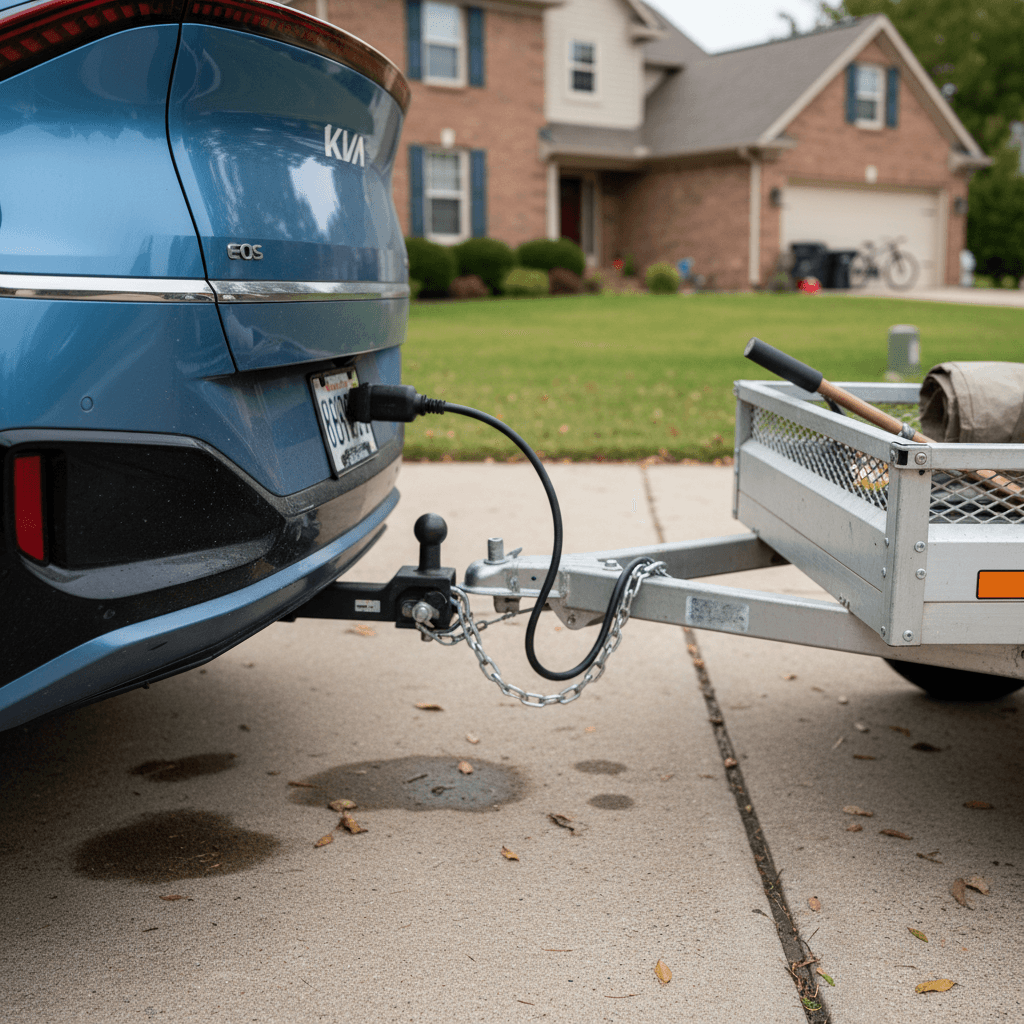
Charging while towing: what to expect
The good news is that the ID. Buzz is built on VW’s MEB platform, so it supports competitive DC fast‑charging. Most recent specs quote up to 200 kW peak DC charging on the latest battery packs, with a 10–80% fast charge taking roughly 26–30 minutes in good conditions.
- Plan to unhook for some chargers. Many highway stations aren’t designed for vehicles with trailers. You may need to park across spaces (if allowed) or briefly unhook your trailer.
- Use apps that show layout photos. Third‑party charging apps with user photos are invaluable; you can quickly see whether a station is trailer‑friendly.
- Target 10–80%, not 0–100%. EVs like the ID. Buzz charge fastest in the middle of the pack. For towing road trips, it’s usually better to stop a bit more often and live in that fast‑charging window.
- Watch speed after charging. Leaving a charger and jumping straight to 75 mph with a trailer behind you is the quickest way to burn through your fresh kWh. Ease back into a steady cruise.
Make charging easier on yourself
Towing with an EV vs. gas van: key differences
If you’re coming out of a gas minivan, pickup, or full‑size van, the ID. Buzz will feel very familiar in some ways, strong low‑speed torque, stable chassis, and very different in others. Understanding those differences upfront will help you decide whether an electric van fits your style of towing.
Where the ID. Buzz shines
- Instant torque: Electric motors deliver their best shove right off the line, so the ID. Buzz feels strong pulling away with a trailer.
- Low center of gravity: The battery under the floor helps stability, especially in crosswinds.
- Quiet climbing: On grades, you get smooth, quiet power instead of a high‑revving gas engine.
- Regenerative braking: The powertrain can recover energy on long descents, taking some load off the friction brakes.
Where gas still has the edge
- Total range: A gas van with a big tank can knock out 400–500 miles between stops, even with a trailer. The ID. Buzz simply can’t match that today.
- Refueling speed: Five minutes at a pump versus 25–35 minutes at a DC fast charger is still a big difference on long days.
- Trailer‑friendly stations: Most gas stations are built with trailers in mind; many charging sites are not, yet.
Where the ID. Buzz makes sense as a tow rig
Checklist: setting up your ID. Buzz for towing
Getting an ID. Buzz ready to tow is less about bolting on hardware and more about making sure the right pieces are in place and that your trailer and driving habits are aligned with how EVs behave.
Essential towing checklist for VW ID. Buzz owners
1. Confirm factory tow rating & equipment
Check the owner’s manual, door‑jamb sticker, and build sheet to confirm the van is rated for towing and whether it has the <strong>factory tow package</strong> (hitch, wiring, cooling, and software). On a used ID. Buzz, don’t assume every hitch you see is factory‑installed.
2. Match your trailer to your range needs
If you plan 200‑mile legs without charging, the ID. Buzz is the wrong tool today. If you’re comfortable with <strong>100–150‑mile towing legs</strong>, look for trailers in the 2,000–3,000 lb loaded range with smooth, rounded fronts.
3. Weigh your setup
Whenever possible, hit a public scale with your loaded trailer and tow vehicle. Verify <strong>gross vehicle weight</strong>, <strong>gross combined weight</strong>, and <strong>tongue weight</strong> are all inside limits. This is doubly important on a used Buzz you didn’t set up yourself.
4. Dial in trailer brakes & brake controller
Most ID. Buzz tow packages are set up to work with <strong>braked trailers</strong>. Make sure brake controllers are compatible and properly adjusted so the trailer is doing its share of stopping.
5. Adjust tire pressures and mirrors
Follow VW’s recommended pressures under towing load and consider towing mirrors or mirror extensions if your trailer is wider than the van. Rolling resistance and visibility both affect comfort and efficiency.
6. Build a realistic route plan
Use EV‑specific navigation tools that can account for <strong>towing consumption</strong>. Plan chargers every 90–120 miles at first and save them offline in case you lose signal. Once you see what your combo actually uses, you can stretch or shorten those legs.
Don’t experiment on a holiday weekend
Shopping used: what to look for on an ID. Buzz that’s towed
Because the ID. Buzz is already developing a fan base among campers and surf‑van types, you’re likely to see used examples that have done trailer duty. That’s not a bad thing, towing within the rating doesn’t automatically hurt an EV, but you should inspect a little differently.
Used ID. Buzz towing history checklist
How to separate a well‑set‑up tow van from a hard‑used one.
1. Inspect the hitch & wiring
2. Ask about towing use & routes
3. Check efficiency history
4. Review service & recall history
How Recharged helps with used ID. Buzz vans
Ready to find your next EV?
Browse VehiclesFAQ: VW ID. Buzz towing capacity and range
Frequently asked questions about VW ID. Buzz towing & range
Bottom line: is the VW ID. Buzz a good tow vehicle?
The VW ID. Buzz isn’t a replacement for a heavy‑duty pickup or a long‑range gas van, and it’s not trying to be. Think of it instead as a characterful, electric family van that happens to handle light‑to‑medium towing duty surprisingly well, provided you match the trailer to the van and you’re willing to plan your charging stops.
If your idea of fun is a small camper, bikes on the back, the kids strapped into the third row, and a scenic drive to a state park a couple of hours away, the ID. Buzz fits that picture very nicely. The key is to go in with clear expectations about towing capacity and range, and to verify those numbers carefully when you’re shopping used. That’s exactly where a transparent marketplace like Recharged, with battery‑health diagnostics, fair pricing, financing options, trade‑ins, and nationwide delivery, can help you turn the retro‑cool ID. Buzz into a practical, confidence‑inspiring part of your towing and travel plans.