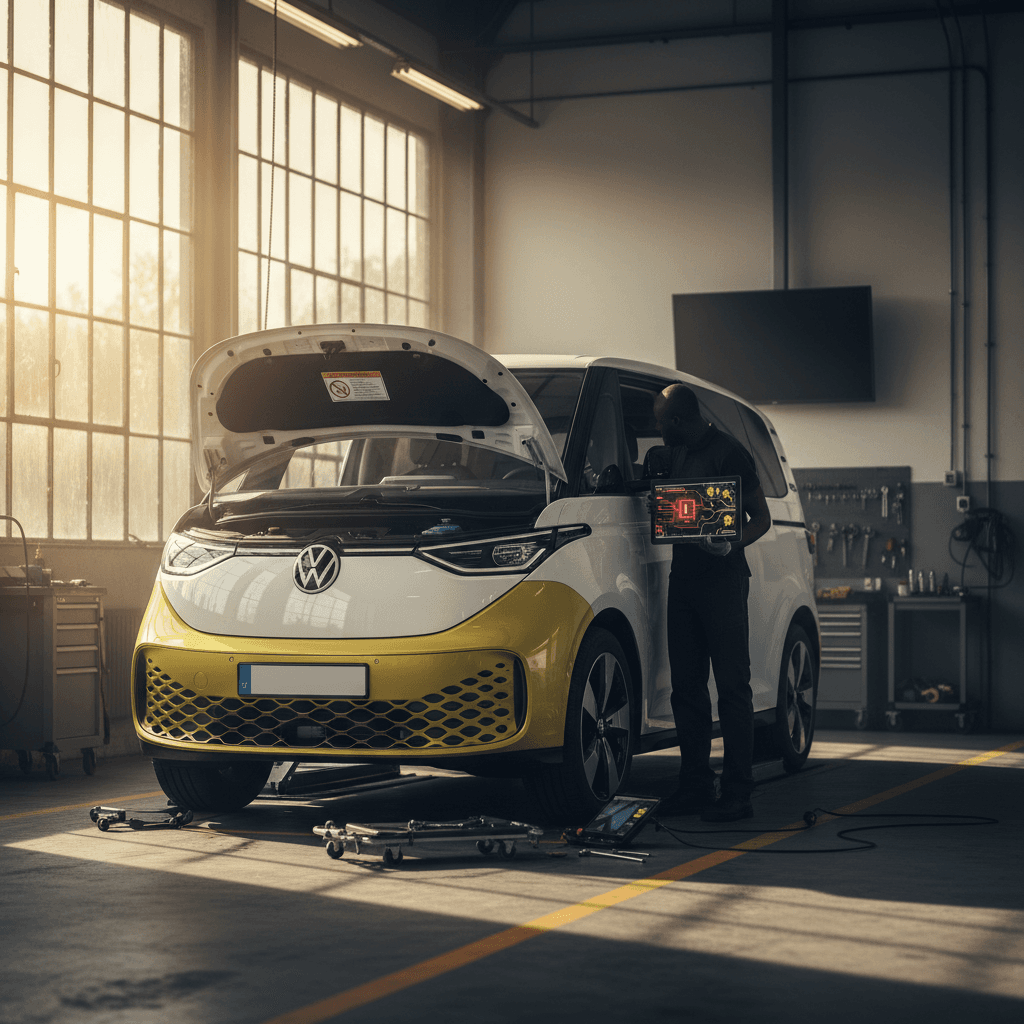
The VW ID. Buzz has had one of the splashiest EV debuts in years, retro styling, family-friendly packaging, and a lot of nostalgia packed into a 21st‑century electric van. But along with the buzz came a few early‑production hiccups, including a stop‑sale and multiple recalls. If you’re shopping for one new or used, you need a clear, no‑nonsense **VW ID Buzz recalls list** and a plan to make sure any issues have been fixed.
Quick take
Overview: VW ID. Buzz recalls so far
The ID. Buzz is still a relatively new model in the U.S. It launched here in late 2024 as a 2025 model, after going on sale in Europe earlier. That short history means the **recall list is limited**, but the issues it *has* had were serious enough to trigger a federal stop‑sale order and temporary shipping holds.
VW ID. Buzz recall picture (U.S. & Canada)
On top of formal recalls, VW has also issued some **software updates and technical service campaigns** that don’t always show up in headline news but are still worth having on your van, especially if you’re buying used and don’t know the history.
VW ID. Buzz recall timeline at a glance
Key VW ID. Buzz recalls and stop‑sale actions
This table summarizes the major ID. Buzz recall events relevant to U.S. and Canadian owners.
| Approx. date announced | Issue | Impact | Rough build window (global) | What dealers do |
|---|---|---|---|---|
| Spring 2025 | Third‑row bench too wide vs. number of seat belts | Federal safety violation; U.S./Canada stop‑sale | Sept 18, 2024 – Feb 11, 2025 | Install trim pieces to narrow the usable seating surface to two passengers |
| Spring 2025 | Brake system warning light may show incorrect symbol/color | Driver may misinterpret brake warnings | Sept 2024 – early 2025 builds (overlaps above) | Update instrument‑cluster software and data container |
| Ongoing (various) | General software/infotainment and charging behavior updates | Drivability and UX refinements, not always labeled as recalls | Early‑production ID. Buzz | Apply the latest software package during service visits |
Exact build dates and campaign codes vary. Always confirm specifics with a VIN lookup before you buy a used ID. Buzz.
Stop‑sale vs. recall
Recall 1: Rear bench too wide (third-row seating)
This is the **headline recall** for the ID. Buzz in North America, the one that produced all the jokes about a “bench seat that’s too generous.” Underneath the humor is a very real safety‑compliance problem and the reason the ID. Buzz briefly went under a U.S. and Canadian stop‑sale order.
- Issue: The third‑row bench in some ID. Buzz vans is wide enough to fit **three people**, but VW only fitted **two seat belts** and designed it as a two‑person seat.
- Regulation: U.S. safety rules say that if a seat is effectively wide enough for three, it must be equipped and rated for three, or physically limited to two.
- Risk: A third, unbelted passenger might squeeze in. In a crash, that unbelted occupant is at a much higher risk of serious injury and can injure others in the vehicle.
- Scope: Roughly **5,600+ vans in the U.S.** and about **770 in Canada**, built from mid‑September 2024 into early February 2025. Exact ranges depend on VIN.
Instead of re‑engineering the entire rear seat, Volkswagen chose a simpler remedy: make it very clear that **only two people belong back there.**
What the rear‑bench recall fix includes
Trim pieces that narrow the seating area
Dealers install fixed, unpadded trim pieces on both sides of the third row. These effectively reduce the usable width of the bench to two defined seating positions.
Clearer two‑person seating
After the repair, it’s visually obvious that only two people should sit in the third row. That brings the design back in line with safety regulations.
Free repair, short appointment
The work is performed **free of charge** to owners and typically takes about an hour once the dealership has parts.
Stop‑sale lifted once complete
For vehicles sitting on lots, the stop‑sale order ended only after this trim‑piece fix was completed. For used‑car shoppers, that’s a signal to confirm the repair is done before you buy.
How to spot a fixed rear bench
Recall 2: Incorrect brake warning light symbol/color
Separate from the seating drama, VW also recalled thousands of ID. Buzz vans because the **brake system warning light on the digital cluster might not display the correct symbol or color**. On a car that leans so heavily on screens, that’s not a tiny detail.
- Issue: The brake system warning indicator in the instrument panel could show the **wrong symbol or color**, potentially confusing drivers about the severity of a problem.
- Why it matters: When something is wrong with your brake system, you need a **clear, instantly recognizable warning**. Even a moment’s hesitation because the icon looks “off” can be dangerous.
- Scope: This recall covered thousands of ID. Buzz vans built in roughly the same 2024–early‑2025 window as the rear‑seat recall. Many vans were affected by **both** campaigns at once.
- Dealer fix: A **software update** that corrects the symbol/color logic plus a broader data‑container update in the cluster. It’s a computer‑style patch, not a hardware swap.
Good news for used buyers
Other software updates and service actions
Like most modern EVs, the ID. Buzz is more rolling computer than simple van. That means Volkswagen can address some early quirks with **software patches and technical service bulletins (TSBs)** that don’t always rise to the level of an official safety recall.
Common non‑recall updates owners report
These can improve ownership even if they never show up as official recalls.
Charging‑behavior refinements
Updates that smooth out DC fast‑charging curves, improve communication with certain public chargers, or address rare charge‑session dropouts.
Infotainment and UI tweaks
Bug fixes for the center screen, map glitches, or random reboots. These are common on any first‑run EV platform.
Thermal and efficiency tuning
Occasional updates can slightly change how the battery and climate system behave, especially in extreme temperatures.
OTA vs. dealer visits
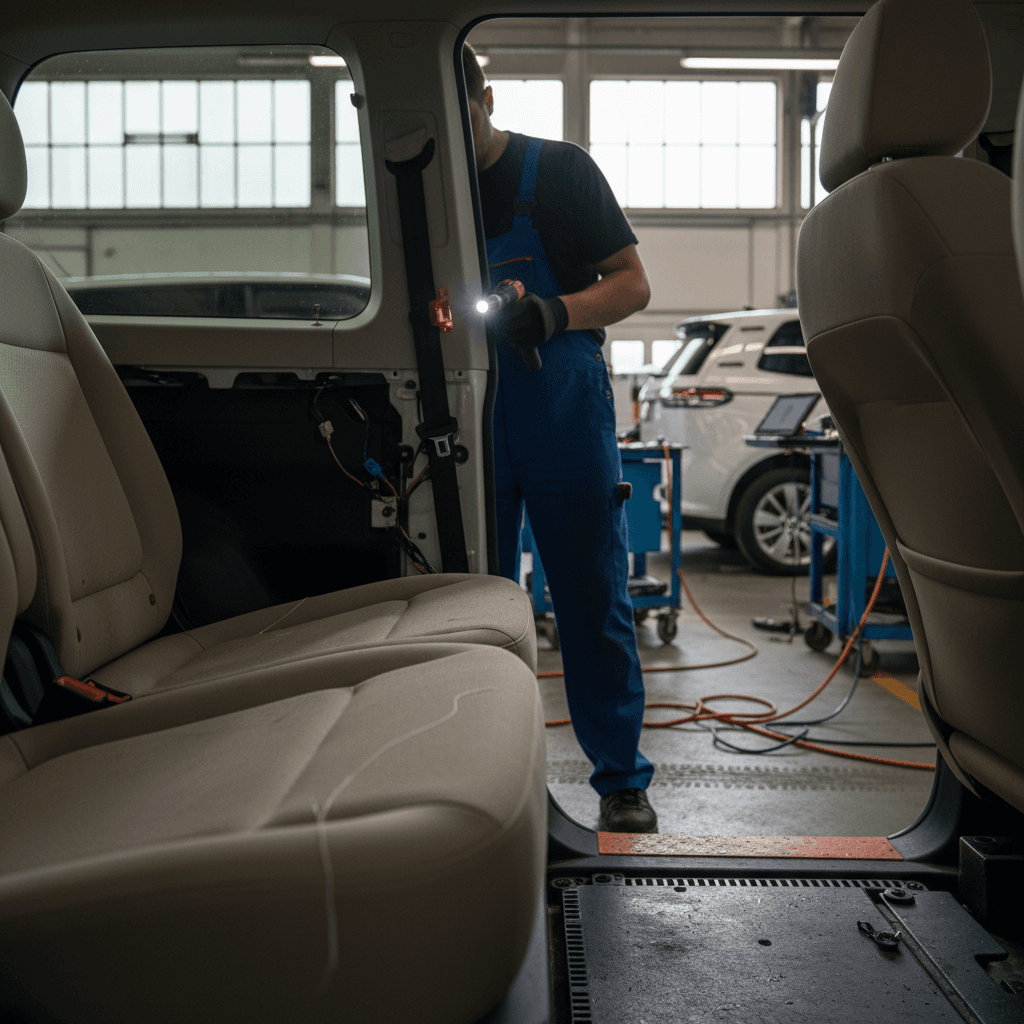
How to check any VW ID. Buzz for open recalls
Whether you already own an ID. Buzz or you’re eyeing one on a used lot, **never guess** about recalls. A quick VIN check will tell you exactly what’s outstanding.
Step‑by‑step: Check a VW ID. Buzz for recalls
1. Grab the full 17‑digit VIN
You’ll find it on the lower driver’s‑side corner of the windshield, the driver’s‑door jamb, and on the title or registration. For a used van listing, ask the seller to send a clear photo.
2. Run the VIN through NHTSA
Visit the National Highway Traffic Safety Administration’s recall lookup tool and enter the VIN. It will show **all open safety recalls** for that specific vehicle, not just generic model‑year info.
3. Check Volkswagen’s own recall tool
VW’s owner site also has a VIN‑based lookup. It sometimes lists additional campaigns or service actions that NHTSA doesn’t flag as formal recalls.
4. Call a VW service department
Ask a service advisor to run the VIN and **email you a printout** showing completed work and any open campaigns. This is especially handy if you’re buying from a non‑VW dealer or a private seller.
5. Confirm repairs in writing before you buy
If recalls are open, insist the seller complete them **before you sign**, or put an agreement in writing that they’ll schedule the repair and provide documentation.
6. Save the paperwork
Hang on to repair invoices and recall letters. They’re proof for future buyers that the van’s safety work is up to date, and they help protect the value of your ID. Buzz.
Don’t ignore recall letters
Buying a used ID. Buzz? Recall and safety checklist
Used ID. Buzz vans are already hitting the market, sometimes with big discounts after VW decided to skip the 2026 model year in the U.S. That can make them tempting, but you should treat early‑production vans like any new‑to‑market EV: **verify the fixes, then enjoy the deal.**
Safety and recall checks
- VIN history: Run the VIN through NHTSA’s recall tool and a vehicle‑history report to look for crash damage or buy‑backs.
- Recall completion: Ask for dealer paperwork showing the rear‑bench and brake‑warning recalls are completed.
- Seat inspection: Fold and unfold the third row. Check that trim pieces look properly installed and nothing feels loose or improvised.
- Warning lights: Turn the van on and confirm the brake system warning behaves normally, no persistent warnings, no odd icons.
EV‑specific health checks
- Battery health: Ask for a recent battery‑health report or diagnostic from a VW dealer, or a third party like Recharged.
- Charging behavior: Test both Level 2 and DC fast‑charging if possible. Watch for failures to initiate or random session drops.
- Range reality: Compare the van’s indicated full‑charge range to real‑world reviews and EPA estimates. Big gaps deserve questions.
- Software level: Confirm the van is on current software. Out‑of‑date software can mask known fixes and quirks.
How Recharged can help
Do recalls hurt a used ID. Buzz’s value?
Recalls come with a stigma, but in a modern EV, they’re almost a fact of life. With the ID. Buzz, the story is more nuanced than “recall equals bad van.”
How recalls affect ID. Buzz resale value
Think in terms of type of problem, not just the word "recall."
Safety‑compliance fixes (like the rear bench)
These are about making the van match the rule book. Once fixed properly, they rarely have a lasting impact on value, especially when there’s no history of injuries or crashes tied to the defect.
Core‑system defects (not seen so far)
Major battery or high‑voltage failures can hurt long‑term value. So far, the ID. Buzz’s recalls have not targeted battery packs or electric drive units in a systemic way.
If anything, early recalls can be a **buyer’s opportunity**. Dealers and private sellers sometimes overreact, dropping prices simply because the model has been in the news. If you can confirm those campaigns are closed and the van has a clean accident history, you may be looking at a solid family EV van at a meaningful discount.
A recall tells you a problem was identified and a fix was engineered. The real red flag is a vehicle with a problem and no campaign to address it.
VW ID. Buzz recalls FAQ
Frequently asked questions about VW ID. Buzz recalls
Bottom line: Is a recalled VW ID. Buzz a deal-breaker?
The ID. Buzz’s early recalls make good headlines, “seat too wide” is practically made for late‑night jokes, but from a safety and ownership standpoint, they’re **contained and fixable**. The rear‑bench and brake‑warning campaigns are serious enough that you should insist the work has been done, yet neither points to a fundamental flaw in the battery or electric drivetrain.
If you’re shopping for a used ID. Buzz, treat recall history as one of several tools, not an automatic red flag. Verify campaigns with a VIN lookup, inspect the third row and warning lights in person, and combine that with a **battery‑health report and a clean title history**. Do that, and a recalled ID. Buzz can still be a smart, charming electric family hauler, especially if you take advantage of the softer prices that recall headlines have helped create.
And if you’d rather have an expert in your corner, consider finding your next EV through Recharged, where every vehicle comes with a Recharged Score and EV‑savvy support from first click to final delivery.