If you’re looking at a VW ID. Buzz, you’re probably asking one big practical question: how much can it actually carry? Understanding VW ID Buzz cargo space dimensions is the difference between a van that fits your life and one that comes up short on moving day or the first big family trip.
Two very different “Buzz” bodies
VW ID. Buzz cargo space overview
Volkswagen positioned the ID. Buzz as a modern, electric take on the classic Microbus, but under the nostalgia is a very straightforward question: how much volume and what dimensions do you actually get behind each row of seats? Official figures tell only part of the story, especially on the US three-row model, where the sliding third row makes the spec-sheet number look worse than real-world usability. Below, we’ll walk through the hard numbers first, then translate them into what you can realistically fit.
Headline VW ID. Buzz cargo stats
Key VW ID. Buzz cargo dimensions at a glance
VW ID. Buzz cargo space dimensions cheat sheet
Approximate factory and independent-test numbers. US volumes are SAE-style cubic feet; European figures may use different measurement standards, so use them for comparison rather than exact packing plans.
| Model / configuration | Cargo volume | Key length | Key width | Notes |
|---|---|---|---|---|
| US 3-row ID. Buzz – behind 3rd row | 18.6 cu ft | ~30–32 in from hatch to 3rd row | Full width ~48 in between wheel arches | Good for grocery runs, small stroller, a couple of carry-on suitcases |
| US 3-row ID. Buzz – 3rd row removed, 2nd row up | 48.9 cu ft | Roughly 40–45 in to 2nd-row seatbacks | ~48 in between arches | More space behind 2nd row than any current gas minivan measured by Cars.com |
| US 3-row ID. Buzz – max with seats folded/removed | 145.5 cu ft | Cargo floor over 6 ft long with seats flat | ~5 ft wide at floor in widest area | Nearly small-cargo-van territory for volume |
| European 2-row ID. Buzz – 5 seats up | 1,121 L (39.6 cu ft) | Max ~1,330 mm (52.4 in) to seatbacks | 1,204 mm (47.4 in) between arches | Big square “trunk” even with all five seats in use |
| European 2-row ID. Buzz – 2nd row folded | 2,205 L (77.8 cu ft) | Load length up to 2,232 mm (87.9 in) with seats folded | 1,204 mm (47.4 in) between arches | Optional Multiflex floor makes it completely flat |
| ID. Buzz Cargo panel van | 3.9 m³ (137.7 cu ft) | Max loading length 2,208 mm (86.9 in) | 1,732 mm (68.2 in) max width / 1,230 mm (48.4 in) between arches | Takes two Euro pallets; proper work-van dimensions |
Cargo volume and key load bay dimensions for VW ID. Buzz passenger models and the ID. Buzz Cargo van.
Mind the measurement standards
2025 US 3-row VW ID. Buzz cargo room
The 2025 US-market ID. Buzz finally brings a three-row electric “minivan” to the States. Cargo space is where it earns its keep, but the official spec, 18.6 cubic feet behind the third row, doesn’t tell the full story because the third row slides.
US ID. Buzz cargo room by seating configuration
From school run to small moving van, here’s what changes as you fold or remove seats.
All three rows in use
Official volume: about 18.6 cu ft behind the third row.
- Tall, boxy opening makes the space more usable than the number suggests.
- Good for a week’s worth of groceries, a compact stroller, and a few duffel bags.
- The third row slides, so you can trade a little legroom for more cargo depth.
Third row folded or removed
With 3rd row removed: around 48.9 cu ft behind the second row.
- Beats every current gas minivan for space behind the second row when the third row is out of the car.
- Each third-row section is roughly 60 lb, so plan where you’ll store them.
- With the third row folded but still installed, usable space is still generous for bikes, dog crates, or big luggage.
Max volume for hauling
Maximum cargo: roughly 145.5 cu ft with rear rows folded/removed.
- Enough length and height for flat-packed furniture, mattresses, or moving boxes.
- Not as low a load floor as a true cargo van, but significantly roomier than a three-row SUV.
- The removable center console opens up more continuous floor space for long items.
Approximate US interior dimensions
- Length with 3rd row up: about 30–32 in from hatch to seatback (varies with seat position).
- Length with 3rd row removed: roughly 40–45 in to 2nd-row seatbacks.
- Max floor length with both rear rows flat: just over 6 ft.
- Width between wheel arches: about 4 ft, enough for many flat-pack boxes laid sideways.
Practical takeaway for US shoppers
European 2-row ID. Buzz luggage space
If you’re looking at European-market listings or importing details, the story changes slightly. The original two-row ID. Buzz is a five-seater with enormous luggage space even before you touch the back seats.
- With five people on board, the ID. Buzz offers 1,121 liters (about 39.6 cu ft) of luggage space loaded to the top of the second-row seatbacks.
- Fold the 40:60-split rear bench and you unlock up to 2,205 liters (around 77.8 cu ft) of cargo volume.
- Independent measurements put the distance from the hatch to the second row at roughly 1,330 mm (52.4 in) with seats in place, and up to 2,232 mm (87.9 in) when folded.
- Between the rear wheel arches you have about 1,204 mm (47.4 in) of width, wide enough for bikes, camping bins, or a home-improvement haul.
Multiflex floor makes it camper-friendly
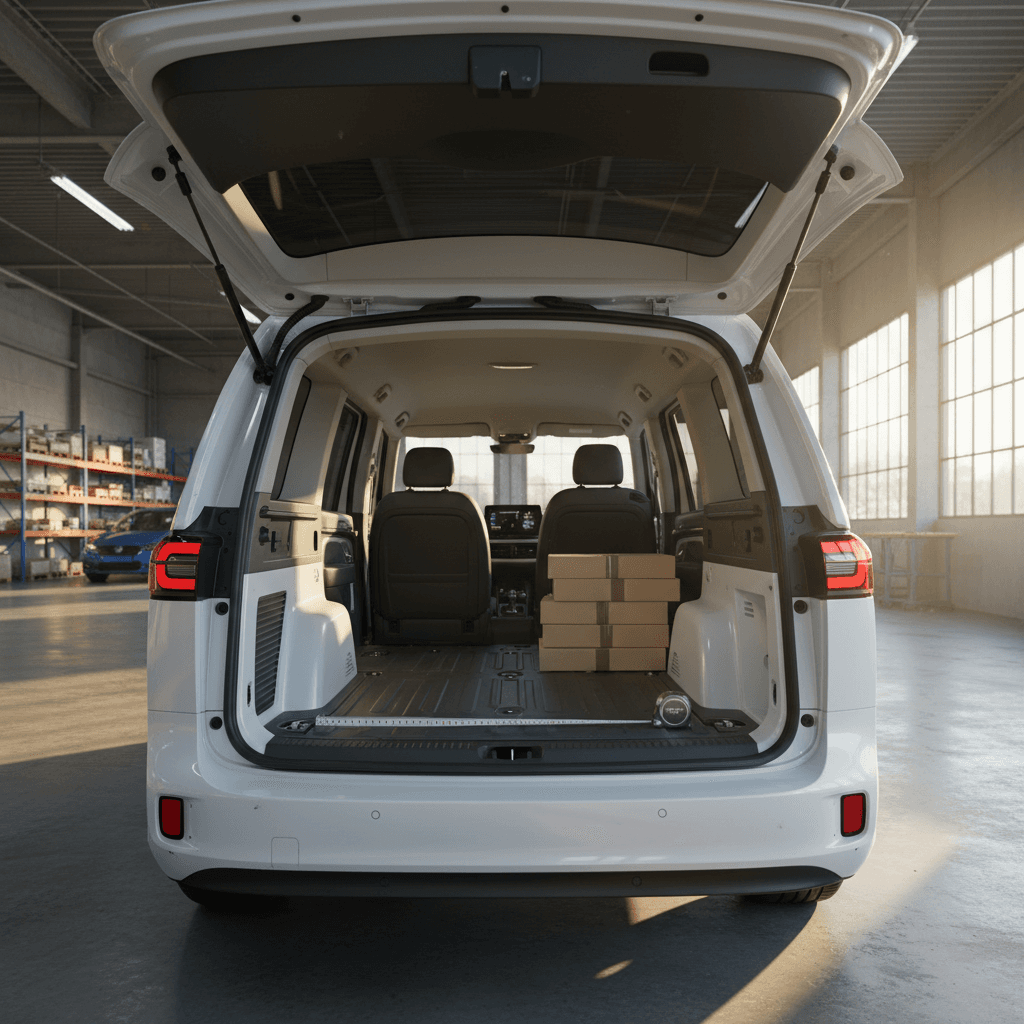
ID. Buzz Cargo van load space dimensions
The ID. Buzz Cargo takes the same electric platform and turns it into a work van. Here, the numbers are simpler and more traditional: a flat-floored load bay, a fixed bulkhead behind the front seats, and capacity for two Euro pallets.
VW ID. Buzz Cargo load bay dimensions
Factory specs for the standard-wheelbase ID. Buzz Cargo panel van. Great reference if you’re a tradesperson, fleet buyer, or planning a camper build on the cargo shell.
| Measure | Metric | Imperial (approx.) | What it means for you |
|---|---|---|---|
| Maximum load volume | 3.9 m³ | 137.7 cu ft | More volume than many short-wheelbase traditional vans. |
| Maximum loading length | 2,208 mm | 86.9 in | Easily swallows 8-ft lumber and many assembled bikes or shelving units. |
| Maximum loading width | 1,732 mm | 68.2 in | Very generous width for racking or wide equipment. |
| Width between wheel arches | 1,230 mm | 48.4 in | Comfortably takes two Euro pallets loaded crosswise. |
| Maximum loading height | 1,279 mm | 50.3 in | Enough vertical room for stacking boxes and tall appliances. |
| Interior height (to roof) | 1,330 mm | 52.4 in | You can’t stand fully upright, but you can crouch and move around when loading. |
| Loading sill height | 623 mm | 24.5 in | Low, van-like loading edge for heavy toolboxes or parcels. |
Key interior load dimensions for the ID. Buzz Cargo van.
ID. Buzz Cargo use-case sweet spot
How the ID. Buzz compares to minivans and SUVs
If you’re cross-shopping the ID. Buzz with gas minivans like the Honda Odyssey or Kia Carnival, or three-row SUVs like the Hyundai Palisade, the best way to look at it is row by row. Cargo specs can be confusing, but media tests help clarify the picture.
Versus gas minivans
- Behind the third row: The ID. Buzz’s 18.6 cu ft trails the 35–40+ cu ft you’ll see in mainstream minivans. If you always carry seven passengers and lots of stuff, that matters.
- Behind the second row: With the third row removed, the Buzz jumps to about 48.9 cu ft, which beats popular minivans for space behind the mid row.
- Max volume: With both back rows folded/removed, the ID. Buzz is competitive with or better than minivans that can swallow 140+ cu ft.
Versus three-row SUVs
- Many large SUVs offer around 15–20 cu ft behind the third row, so the Buzz’s 18.6 cu ft is right in the mix, but the tall, square opening makes it easier to exploit.
- Behind the second row, the Buzz’s near-50 cu ft beats three-row SUVs like VW Atlas or Hyundai Palisade in real-world testing.
- The boxy shape and low load floor make the Buzz feel more like a van when loading awkward furniture than a typical SUV.
Trade-off to keep in mind
Real world: what actually fits in an ID. Buzz
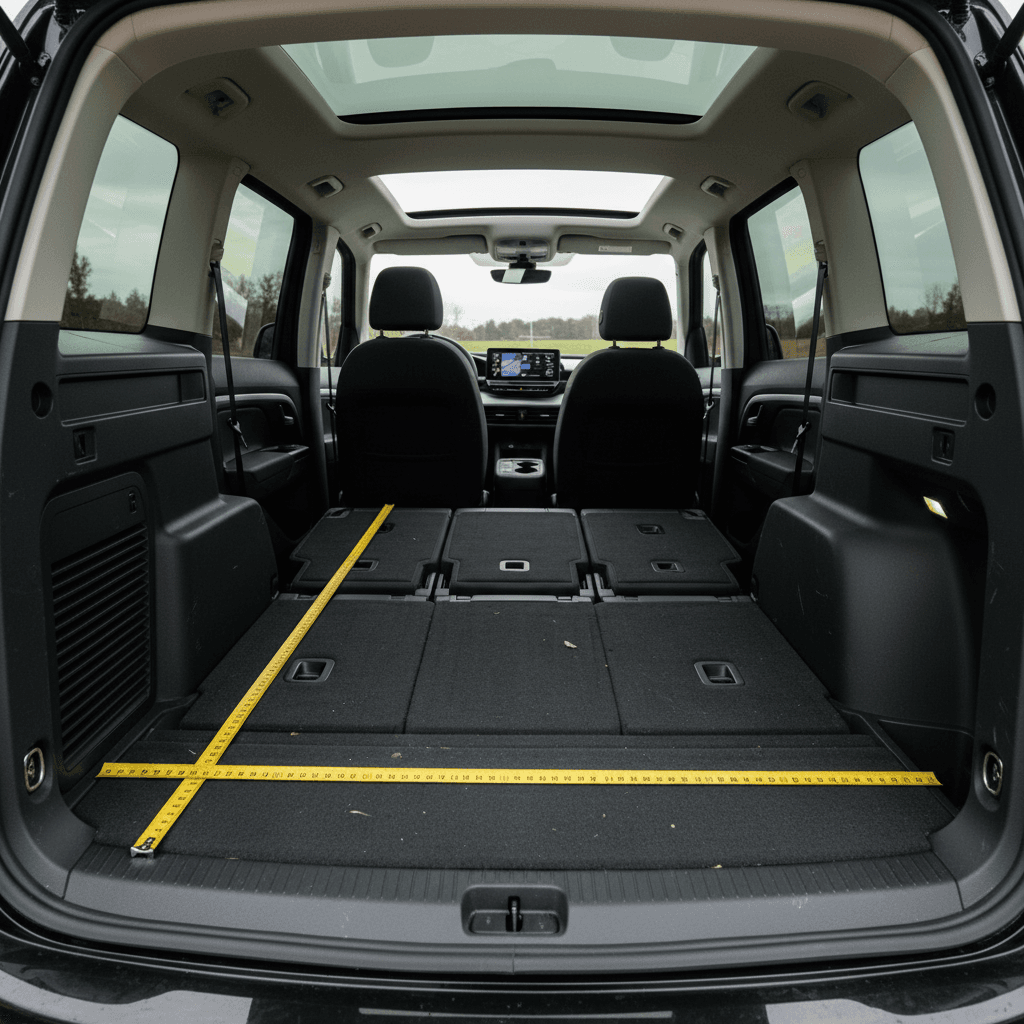
Everyday cargo scenarios in the ID. Buzz
Translate cubic feet into bikes, boxes, and gear.
Groceries & kid gear
- Behind the third row, expect space for a week’s groceries plus a stroller or wagon.
- Tall hatch makes it easy to stack soft bags on top of hard-sided items.
- Great for school runs, sports practices, and Costco runs without touching the seats.
Bikes & outdoor gear
- Drop the third row and you can roll in two adult bikes with front wheels off, plus helmets and gear.
- With both rear rows down, you can carry bikes upright on fork mounts or lay kayaks and paddleboards along the floor.
- Tie-downs and flat side walls help keep gear from shifting.
Moving day & IKEA runs
- With the rear rows folded or removed, the Buzz handles flat-pack furniture, dressers, and mattresses better than most SUVs.
- The interior length of around 86–88 in in van and two-row models means queen mattresses will fit diagonally; check exact mattress size vs trim.
- Square sides and nearly vertical hatch simplify loading bulky boxes.
The ID. Buzz isn’t just about nostalgia. Its real party trick is that boxy, upright body that turns battery-electric running gear into an extremely usable cargo box.
Cargo tips for families, campers, and trades
Set up your ID. Buzz cargo space for your lifestyle
1. Families: prioritize easy access
Keep the third row installed and slide it to balance kneeroom and trunk depth. Use stackable bins or soft-sided totes to build up, not out, so you can still close the hatch with a full load of kids’ gear.
2. Road-trippers: go modular
For long trips, consider removing the third row and leaving the second row up. That 48.9 cu ft behind the mid row is ideal for coolers, duffels, and pet crates while keeping passenger comfort high.
3. Camper builds: start with dimensions
If you’re dreaming of a micro-camper, sketch out a bed platform that works within the ~87 in max load length (two-row and Cargo) and ~47–48 in width between wheel arches. Aim to keep storage low and narrow to preserve headroom.
4. Trades & fleets: use vertical space
In the ID. Buzz Cargo, you’ve got over 50 in of height. Wall-mounted shelving, modular racking, and floor drawers help you avoid building a tall, unstable pile of loose toolboxes and parts bins.
5. EV charging gear management
Neither the US ID. Buzz nor the Cargo has a front trunk, so plan a dedicated spot in the boot or load bay for Level 1 and Level 2 charging cables. A shallow bin under a false floor keeps them clean and easy to reach.
6. Mind payload as well as volume
Even with generous cubic footage, don’t overload the van. Payload on passenger ID. Buzz models and the Cargo van is ample for typical use, but if you’ll be hauling tools or materials daily, confirm payload ratings against your heaviest scenarios.
Charging and cargo: planning overnight stops
Buying a used ID. Buzz: cargo-related checks
As ID. Buzz models start appearing on the used market, cargo space is about more than just dimensions. You also want to know how the interior has been used, hard family life, heavy work use, or light-duty road-tripping all leave different marks.
Cargo and interior checks for a used ID. Buzz
Look past the paint and focus on how the space you’ll actually use has aged.
Inspect the load area
- Lift cargo mats and check for dents, rust, or moisture where heavy items may have sat.
- Look closely at the load sill and bumper top for deep gouges that suggest repeated overloading.
- On Cargo vans, examine the bulkhead for signs of impact from loose cargo.
Check seats and mechanisms
- Fold and slide every rear seat. They should move smoothly and lock positively into place.
- Confirm the third row is present on US models; replacement seats are expensive.
- Verify the parcel shelf or cargo cover (if equipped) is intact and operates correctly.
Battery health vs. cargo use
- Frequent heavy loading won’t directly hurt the battery, but commercial-style use often means higher mileage and more DC fast charging.
- Ask for a battery health report to see how much usable capacity remains.
How Recharged can help
At Recharged, every used EV we sell comes with a Recharged Score Report that includes verified battery health, fair market pricing, and detailed condition info. When we list an ID. Buzz, you’ll see clear photos and notes about the interior and cargo area, so you know exactly how it’s been used before you buy.
Don’t ignore interior damage
VW ID. Buzz cargo space FAQ
Frequently asked questions about VW ID. Buzz cargo dimensions
When you look past the retro styling, the VW ID. Buzz stands out because of its boxy, usable cargo space. Whether you’re running a family, planning a camper build, or spec’ing out an urban work van, understanding the VW ID Buzz cargo space dimensions, row by row and inch by inch, helps you decide if it fits your life. And if you’re considering a used example, working with an EV-focused retailer like Recharged can give you confidence that both the battery and the cargo area are up to the job you have in mind.