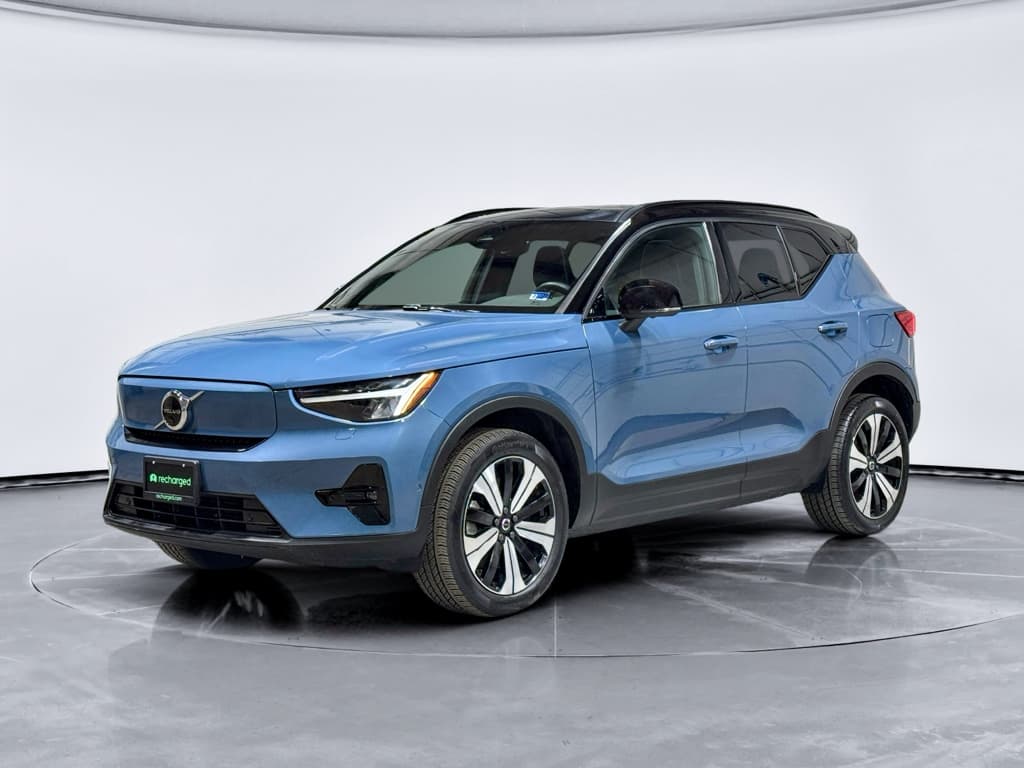
If you own a Volvo XC40 Recharge and you’re thinking about trading it in, you’ve probably seen confusing numbers, from dealer lowballs to higher values on pricing sites. This guide breaks down how Volvo XC40 Recharge trade-in value really works in 2025, why this EV depreciates faster than many gas SUVs, and what you can do to squeeze the most out of your next offer.
Quick context for 2025
XC40 Recharge trade-in value at a glance
XC40 Recharge value snapshot (early 2025)
Pricing tools like Kelley Blue Book show a 2024 Volvo XC40 Recharge with a current trade-in value just under $30,000 after roughly two years on the road, down from a mid–$50,000s MSRP. That’s a real-world illustration of how quickly this model can depreciate when it moves from "new" to "used" status.
Don’t fixate on a single number
Why the Volvo XC40 Recharge depreciates the way it does
The XC40 Recharge sits at the intersection of two forces that are brutal for resale value: it’s both a luxury vehicle and a first‑generation EV from its brand. That combination tends to push depreciation higher than mainstream gas crossovers.
Key forces pushing XC40 Recharge values down
Understanding these helps you make sense of trade-in offers
Rapid EV tech turnover
Luxury badge economics
Internal Volvo competition
Third‑party depreciation analyses have highlighted that early model years of the XC40 Recharge can lose well over half their original value within three to four years. In practice, that creates a wide gap between what owners *expect* and what traditional dealers feel comfortable offering.
Where range fits in
Factors that shape your XC40 Recharge trade-in offer
When a dealer or online buyer evaluates your XC40 Recharge, they’re really asking one question: “How easily can I resell this, and at what margin?” Everything about your car feeds into that calculus.
- Model year and trim: Later years and higher trims with desirable options (Pilot Assist, upgraded audio, panoramic roof) tend to appraise higher, especially if they mirror what new-car shoppers want today.
- Mileage and usage pattern: For a 3–4‑year‑old luxury EV, mileage under 30,000 is a big plus; over 60,000 will drag trade-in offers down quickly.
- Condition and accident history: Clean bodywork, original paint, and no major insurance claims make it easier for the buyer to retail your car at a premium.
- Service and battery warranty status: Documented Volvo service and remaining battery warranty help nervous used-EV buyers feel more confident, and that confidence shows up in higher bids.
- Market timing and incentives: If new XC40 Recharge or EX40 inventory is heavily discounted, dealers will adjust trade-in values downward to leave room for discounts on new metal.
Bring documentation to your appraisal
How battery health impacts XC40 Recharge value
You can’t talk about EV trade-in value without talking about the battery. For your XC40 Recharge, the high‑voltage pack is the single most expensive component in the vehicle. Even though Volvo’s 8‑year / 100,000‑mile battery warranty transfers to subsequent owners, buyers still worry about degradation and replacement cost.
Why buyers care so much about the pack
- Replacement cost fear: Used buyers have heard horror stories about five‑figure battery replacements, even if they’re rare in reality.
- Range anxiety: An XC40 Recharge that only delivers 70–80% of its original range will be harder to sell and will fetch less on trade.
- Warranty runway: The closer your car is to the 8‑year / 100,000‑mile limit, the more conservative appraisers will be on value.
What you can actually control
- Charging habits: Frequent DC fast charging and sitting at 100% for long periods can accelerate degradation; gentler habits support value.
- Transparency: Being able to share a clear, independent battery health report is a major advantage when negotiating with any buyer.
- Specialist buyers: EV‑focused marketplaces like Recharged know how to quantify battery health instead of just pricing based on fear, which often leads to more competitive offers.
How Recharged handles battery health
Ready to find your next EV?
Browse VehiclesReal-world price ranges: what owners are actually seeing
To make the numbers more concrete, it helps to look at how depreciation translates into real‑world XC40 Recharge prices. Keep in mind these are directional ranges, not quotes for any specific car.
Illustrative XC40 Recharge value bands (U.S. market, early 2025)
Approximate price territory many owners see, assuming clean history and average use. Your actual trade-in value may vary.
| Model year | Typical miles | Condition example | Retail listing range | Likely trade-in band |
|---|---|---|---|---|
| 2021 XC40 Recharge | 35k–55k | Clean, some wear | $22,000–$28,000 | $18,000–$23,000 |
| 2022 XC40 Recharge | 25k–45k | Clean, 1-owner | $24,000–$30,000 | $20,000–$25,000 |
| 2023 XC40 Recharge | 15k–35k | Low-mile, well optioned | $28,000–$34,000 | $23,000–$29,000 |
| 2024 XC40 Recharge | 5k–25k | Near-new, still under full warranty | $32,000–$38,000 | $27,000–$33,000 |
These ranges are based on public pricing tools and observed listing data; they’re useful for orientation, not as promises.
Why your local dealer may be lower

Trade-in vs. selling to a used EV specialist
You’ve essentially got three main ways to unlock the value in your XC40 Recharge: trade it at a traditional dealer, sell it yourself, or work with a used‑EV specialist like Recharged. Each path has different implications for how much you get and how much effort you put in.
Your main options for cashing out of an XC40 Recharge
Think in terms of money, time, and risk, not just convenience today
Traditional dealer trade-in
- Pros: Fast, one‑stop transaction when buying another car; can roll equity directly into your next deal.
- Cons: Often the lowest offer, especially from stores with limited EV expertise or appetite for used electric inventory.
Private party sale
- Pros: Highest potential sale price if you find the right buyer.
- Cons: Time‑consuming, requires marketing, test drives, paperwork, and lots of education about EVs and battery health.
Used EV specialist / marketplace
- Pros: More informed about EV demand and battery valuation; often stronger offers than traditional dealers, plus streamlined digital process.
- Cons: May not be available in every region; process still involves an inspection and some back‑and‑forth.
Where Recharged fits in
Steps to maximize your XC40 Recharge trade-in value
You can’t change market-wide depreciation, but you have a lot of control over how your specific XC40 Recharge is perceived. Treat this like a short, focused project before you ask anyone to appraise your car.
Pre-trade-in checklist for XC40 Recharge owners
1. Get your numbers from multiple sources
Pull estimates from at least two pricing tools plus one real offer from an EV‑savvy buyer. Having a range of values arms you for negotiation and helps you recognize a truly weak bid.
2. Gather service and warranty documentation
Download Volvo service records, recall work, and any battery or high‑voltage repairs. Highlight remaining battery warranty life, this reassures buyers and supports a stronger valuation.
3. Invest in inexpensive reconditioning
Fix cheap cosmetic items: a thorough detail, paintless dent repair for obvious dings, fresh wiper blades, and a basic interior refresh. Leave big-ticket cosmetic repairs to the next owner unless they’re severely damaging value.
4. Check tires and brakes
EVs are heavy, and worn tires or brakes are an easy excuse for a low offer. If you’re close to the wear bars, be realistic: either replace them or expect the buyer to deduct their cost from your trade-in price.
5. Prepare a transparent “battery story”
Note your typical range, charging habits, and any fast‑charge heavy usage (like frequent road‑tripping). If you can, get a third‑party battery health report, or lean on a buyer like Recharged that includes diagnostics as part of its process.
6. Time your move around new-car incentives
When new XC40 Recharge / EX40 deals or federal/state incentives spike, used values can soften. If you’re flexible, consider trading out just before big promotional pushes, not during them.
Be ready to walk
Common pitfalls when trading in an EV
XC40 Recharge owners run into a lot of the same traps as other EV sellers, but a few are unique to early‑generation luxury electric SUVs.
- Accepting the first dealer offer: Especially if that store doesn’t regularly retail used EVs, their offer is likely padded for risk and ignorance.
- Letting battery fears drive the conversation: If you don’t have data on pack health, an appraiser might assume the worst and price your car accordingly.
- Ignoring software and feature differences: Over‑the‑air updates and model‑year changes mean not all XC40 Recharges are equal. Know which features your car has (and doesn’t).
- Underestimating state and local dynamics: In EV‑heavy markets, buyers know and want the XC40 Recharge; in others, dealers may see it as a niche headache and price it that way.
- Failing to separate payoff from value: Your remaining loan balance has nothing to do with what your Volvo is worth. It’s possible to be “upside down” even if you get a fair trade-in number.
Beware of over‑allowance games
FAQs: Volvo XC40 Recharge trade-in value
Frequently asked questions about XC40 Recharge trade-ins
Is now the right time to trade your XC40 Recharge?
The Volvo XC40 Recharge has taken a harder depreciation hit than many owners expected, but that doesn’t mean you’re powerless. If you know how trade-in value is really determined, and you’re willing to seek out EV‑savvy buyers, you can still exit this vehicle on fair terms and set yourself up well for your next EV.
Start by getting a few benchmark values, then invite at least one specialized buyer into the conversation. With Recharged, you can request an instant offer, explore consignment, and, if you’re ready, roll your XC40 Recharge’s value into a used EV that’s been independently evaluated with a Recharged Score battery health report. In a market that’s still figuring out how to price used EVs, working with someone who lives in this world every day is one of the best ways to protect your wallet.