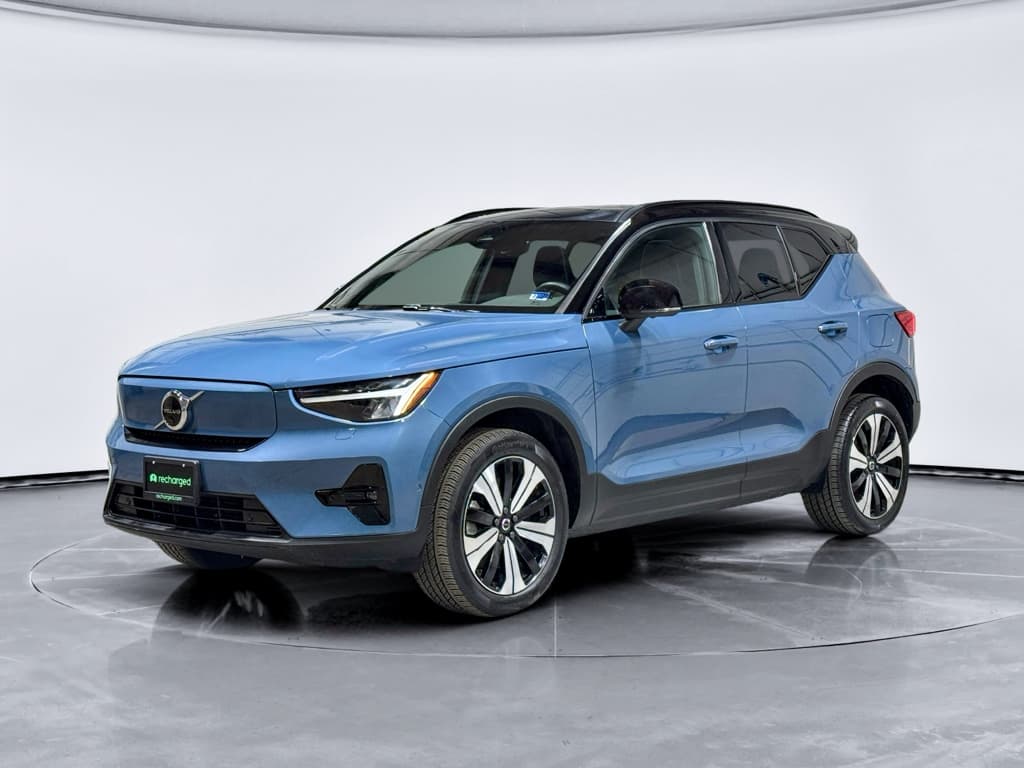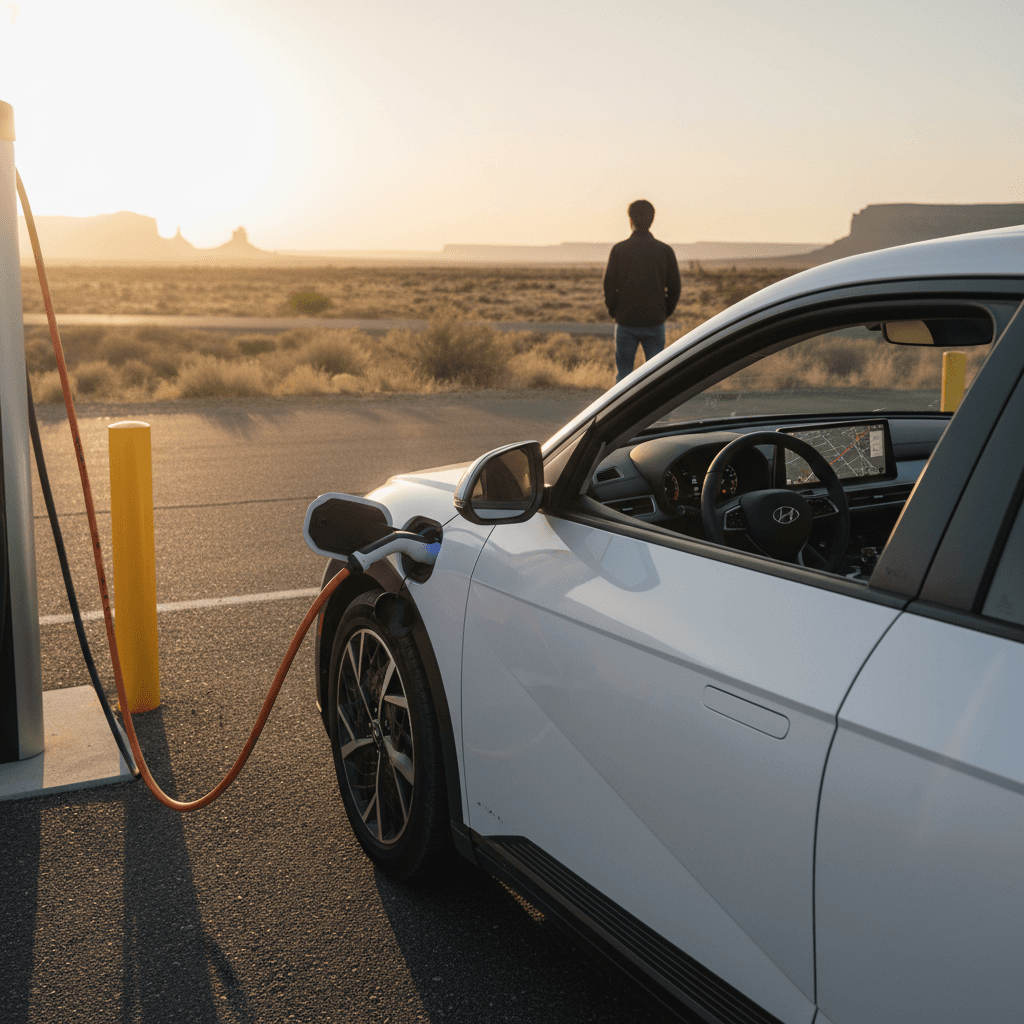
You don’t buy a Volvo if you hate comfort, and you don’t buy an XC40 Recharge if you never leave the city. At some point you’re going to point this square-shouldered Swedish shoebox at the horizon and ask a simple question with a complicated answer: is the Volvo XC40 Recharge actually good for road trips?
Quick take
Who this Volvo XC40 Recharge road trip review is for
- Drivers considering a used Volvo XC40 Recharge and wondering if it can replace a gas crossover for long trips.
- Current XC40 Recharge owners planning their first 300–800 mile highway run and nervous about range and charging.
- EV shoppers cross‑shopping compact electric SUVs like the Model Y, Mustang Mach‑E, Ioniq 5, EV6 or ID.4.
- Families who care as much about comfort, safety and design as they do about raw range numbers.
We’ll focus on how the XC40 Recharge behaves in the real world, highway consumption, charging curves, comfort, winter behavior, and where it shines or falls short compared with other EVs. If you’re thinking about buying one used, we’ll also touch on battery health and how a Recharged Score Report can de‑mystify what that previous road‑trip life has done to the pack.
Volvo XC40 Recharge specs that matter on a road trip
The XC40 Recharge has gone through a quiet but important evolution. Early dual‑motor models had modest range; newer single‑motor rear‑drive versions get a larger battery, more range, and faster peak charging. For road‑trip planning, you care less about 0–60 and more about battery size, efficiency, and DC charging speed.
XC40 Recharge road-trip-relevant specs (recent models)
Know your generation
XC40 Recharge variants and road-trip implications
Approximate U.S.-market figures; always confirm your exact model year and trim.
| Version | Drivetrain | EPA rated range | Best for road trips? |
|---|---|---|---|
| Early Dual Motor (2021–2022) | AWD, ~75 kWh | ~220–230 mi | Capable but range and average fast‑charge speed lag behind newer rivals. |
| Updated Dual Motor (2023–2024) | AWD, larger pack | ~250–260 mi WLTP-equivalent | Better, but still not a highway range king. |
| Single Motor Extended Range (2024+) | RWD, ~79–82 kWh | Up to ~290–293 mi | The pick of the litter if you road‑trip often. |
Later single‑motor models are notably better road‑trippers than early dual‑motor cars.
Real-world highway range: what you actually get
The EPA numbers look decent on paper, around the high‑200‑mile mark for newer single‑motor cars, but the highway is a truth serum. At 70–75 mph, with cruise control on and the family plus luggage aboard, the XC40 Recharge tends to underperform its window sticker a bit, as many owners and instrumented tests have found.
What to expect from XC40 Recharge highway range
Assuming a mostly flat route, light winds, and a relatively new battery.
Mild weather (55–75°F)
Single‑motor (newer): ~220–240 miles from 100% to 0% at 70 mph. In practice, you’ll plan 160–190‑mile legs between fast chargers.
Older dual‑motor: ~180–210 miles total, with realistic legs of 140–170 miles.
Cold weather (below freezing)
Range drops sharply: expect 20–30% less in sustained cold, more if you use toasty cabin settings and short hops between chargers.
A dual‑motor in winter can feel like a 150‑mile highway car if you’re conservative.
Bad conditions (headwinds, rain)
A boxy small SUV has the aerodynamic grace of a steamer trunk. Strong headwinds or heavy rain can shave another 10–15% off your effective range.
Plan tighter charging intervals on stormy days.
Don’t trust 0–100%
The criticism here is not that the XC40 Recharge can’t go the distance, but that it requires more stops than its spec‑sheet peers. If a Model Y Long Range is a four‑stop car on your 900‑mile cannonball, the Volvo might be a six‑stop car at the same cruising speed.
Charging performance: how the XC40 Recharge behaves at fast chargers
This is where the XC40 Recharge’s Scandinavian charm runs into physics and thermal management. On paper, newer cars can accept up to around 150–200 kW on a DC fast charger. In practice, real‑world owners often see a brief spike, followed by a fairly conservative charging curve.
The good news
- On a properly warmed battery, arriving around 10–20% state of charge, the car can ramp up near its advertised peak for a few minutes.
- From 10–50%, it charges respectably fast; this is your sweet spot for quick splash‑and‑dash stops.
- Battery preconditioning, when you set a fast charger as your destination in Google Maps, does help sustain higher power in cool weather.
The less‑good news
- Average power over a full 10–80% session is often closer to ~80–90 kW, not that headline 150–200 kW.
- Above 50–60% charge, the curve tapers quickly; hanging around to 90–100% is slow and rarely worth it.
- Some owners report frustratingly low rates (50–70 kW) on big “350 kW” chargers if the battery is cold or you plug in at too high a state of charge.
How to charge faster in an XC40 Recharge

XC40 Recharge DC fast-charging best practices
1. Start low, not high
Try to reach the charger with 10–25% battery. Plugging in at 50–60% looks comforting on the gauge but kills your average charging speed.
2. Pre‑condition the battery
Use the built‑in Google Maps and set the charger as your destination. The car will warm the battery on the way, improving peak charge power, especially in cool weather.
3. Target 70–80%, not 100%
Above ~80%, charge power falls off a cliff. It’s usually faster to leave at 70–80% and hit another charger later than to wait for that last 15%.
4. Use reliable networks
Look for well‑maintained networks near amenities. Reviews in charging apps are your friend; a slow or flaky station hurts more in a car that isn’t a charging monster to begin with.
5. Keep climate sensible while charging
Cranking heat or AC while fast charging adds load. You don’t have to suffer, but dial back extremes if you’re trying to shave minutes off the stop.
Comfort, noise and practicality on long drives
Here the XC40 Recharge feels unmistakably Volvo. While Tesla chases minimalism and Hyundai goes for sci‑fi lounge, the XC40 gives you a cozy, upright living room with big‑glass visibility and furniture‑grade materials. On a long haul, that counts for more than a brag‑worthy 0–60 time.
How the XC40 Recharge feels over 500 miles
The subjective stuff that determines whether you arrive frazzled or fine.
Seating & ergonomics
The front seats have Volvo’s usual orthopedic genius: long under‑thigh support, good lumbar, and a natural wheel‑to‑pedal relationship. Taller drivers appreciate the upright posture.
Noise & ride quality
Wind and road noise are well controlled for a short‑wheelbase box on wheels. It’s not S‑Class silent, but the ride is supple and body motions are nicely damped, which matters more over broken pavement.
Space & storage
With the rear seats up, cargo space is competitive with other compact crossovers. The usable, square load bay and clever under‑floor storage make packing for a weekend easy, but this is not a three‑row Tahoe replacement.
Peak Volvo
Infotainment is Google‑built and familiar if you live in Android World, maps, voice control, and charger search are generally excellent. Apple users will grumble about the lack of Apple CarPlay in some early software builds, but later cars and updates have largely addressed that. There are physical stalks and real buttons for the things you jab at most when tired, which your future road‑weary self will appreciate.
Winter driving, heat and weather: what changes on a trip
Volvo sells itself on Nordic credibility, and the XC40 Recharge does cold weather better than many EVs: available heat pump, excellent seat and steering‑wheel heaters, and thoughtful traction calibration. But physics is non‑negotiable, your winter road trip will look different from your July beach run.
What the Volvo gets right
- Heated surfaces let you run the cabin temperature a bit lower while staying comfortable, which saves energy.
- Traction and stability control in the dual‑motor versions are well sorted; the car feels sure‑footed on slush and packed snow with proper tires.
- Pre‑conditioning while plugged in can warm both cabin and battery, reducing the initial efficiency penalty when you set out.
The unavoidable compromises
- Expect a 20–30% range hit in sustained cold, even more on short hops where the car never fully warms through.
- Fast charging on a cold battery is slower; you may see modest kW figures until the pack comes up to temperature.
- Short wheelbase plus extra weight from the battery makes for busy motions on broken, frozen surfaces, still comfortable, but not magic‑carpet plush.
Don’t overestimate winter legs
Route planning and charging network reality
The XC40 Recharge uses the CCS fast‑charging standard, which means you’ll be leaning on public networks like Electrify America, EVgo, ChargePoint and regional players. Coverage has improved dramatically along major U.S. interstates, but quality remains a roll of the dice in some areas.
Planning a smooth road trip in an XC40 Recharge
Apps and habits matter as much as the car’s hardware.
Use multiple apps
Don’t rely on a single charging app. Combine Google Maps in the car with PlugShare, A Better Routeplanner (ABRP), or your favorite third‑party apps to cross‑check station status and reviews.
Favor major corridors
The XC40 Recharge is happiest on well‑served interstate routes where you can choose between several DC fast chargers every 60–80 miles. Sparse corridors magnify its average‑speed charging disadvantage.
Stack stops with breaks
Because the Volvo prefers 20–40 minute stops, plan them where you’d naturally use a restroom, eat, or stretch. You’re not chasing 10‑minute sprints like in a hyper‑fast‑charging Kia EV6.
CCS vs NACS future
XC40 Recharge vs rivals: is it a good road trip EV?
Compared to similarly sized EVs, the XC40 Recharge lands squarely in the middle on road‑trip talent. It’s not the thirsty early‑generation oddball some make it out to be, but it’s also not the effortless interstate teleporter that newer 800‑volt platforms have become.
How the XC40 Recharge stacks up for road trips (big picture)
Simplified comparison focusing only on highway range and charging behavior for recent model years.
| Model | Highway range feel | Fast‑charge experience | Road‑trip character |
|---|---|---|---|
| Volvo XC40 Recharge | Solid but shorter legs; plan more stops. | Respectable peak, modest average; happiest with 10–80% hops. | Calm, comfortable, upscale; a great place to spend hours. |
| Tesla Model Y | Long legs; easy 220–280 mi at 70 mph for Long Range. | Strong network, simple experience; high average power. | Efficient and practical, if a bit austere for some tastes. |
| Hyundai Ioniq 5 / Kia EV6 | Similar or better range at speed. | Among the quickest chargers; short, sharp DC sessions. | Futuristic cabins, very relaxed high‑speed manners. |
| VW ID.4 | Comparable or slightly better efficiency. | Average charge speeds; improving with updates. | Soft‑riding, roomy; more anonymous than the Volvo. |
| Ford Mustang Mach‑E | Good range in some trims, but efficiency varies. | Charging curve improving, but still behind the best. | Sportier feel, less glass‑box visibility than the XC40. |
The XC40 Recharge trades some road‑trip efficiency and speed for comfort and character.
Where the XC40 Recharge fits
Is a used XC40 Recharge a smart choice for road trippers?
On the used market, the XC40 Recharge is interesting: you get Volvo cabin quality, strong safety tech, and a premium feel for less than a new mainstream EV. The trade‑offs, average charging and modest range on early cars, are easier to swallow if you buy right and understand the battery’s health.
Used XC40 Recharge road-trip buyer checklist
1. Verify model year and variant
Later single‑motor Extended Range versions are noticeably better for long trips than early dual‑motor cars. Check the EPA rating and battery size in the listing.
2. Inspect battery health
Ask for a battery health report. With Recharged, every EV includes a <strong>Recharged Score Report</strong> that quantifies remaining capacity and flags pack issues, so you’re not guessing how past fast‑charging habits have affected the car.
3. Test a realistic highway loop
On a test drive, do at least 20–30 miles of highway driving at your normal speed, note consumption, and extrapolate range. Numbers on paper are no substitute for a quick real‑world sanity check.
4. Confirm charging port and adapter plans
Verify that the car has CCS DC fast‑charging and ask about future NACS adapter availability or included hardware; this matters for long‑term access to fast networks.
5. Factor in your trip patterns
If your idea of a road trip is a 250‑mile beach run twice a year, the XC40 Recharge is great. If you constantly hammer 700‑mile days, consider a longer‑range, faster‑charging platform.
6. Consider financing and trade‑in options
If you’re moving out of a gas crossover, platforms like <strong>Recharged</strong> can help with trade‑in, financing, and even consignment, so you can step into the right XC40 Recharge with a clear total cost picture.
Volvo XC40 Recharge road trip FAQ
Common Volvo XC40 Recharge road-trip questions
Final verdict: should you road trip in an XC40 Recharge?
Think of the Volvo XC40 Recharge as a compact premium SUV that happens to be electric, rather than a science project optimized for charging leaderboard glory. On a road trip, it rewards you with superb seats, a soothing cabin, and the calming sense that someone thought about your passengers before they thought about 0–60 times.
The cost of that comfort is a car that needs a bit more planning. Highway range is adequate, not heroic, and DC fast‑charging performance, while improved on newer models, still trails the state of the art. If your life is one long interstate, look to the hyper‑efficient, ultra‑fast‑charging crowd. If you’re more of a long‑weekend, a‑few‑times‑a‑year road‑tripper, the XC40 Recharge is an entirely defensible, and deeply likable, choice.
If you’re shopping used, that’s where Recharged earns its name. You can browse XC40 Recharge listings with verified battery health, transparent pricing, expert EV guidance, flexible financing, and nationwide delivery, all from your sofa. That way, when you do finally point your little Swedish brick at the horizon, you’ll know exactly what kind of road‑trip partner you’ve got.