If you’re cross‑shopping the new all‑electric Volvo EX90 against the long‑running Volvo XC90, the EX90’s sticker shock can be real. But when you look at the full picture in 2026, energy, maintenance, depreciation, and the changing tax‑credit landscape, the “expensive” EX90 often ends up much closer in total cost than you’d expect, especially if you drive a lot or plan to keep the SUV for years.
What this comparison covers
EX90 vs XC90: Why costs look closer than MSRP
On paper, the Volvo EX90 is a premium‑priced, fully electric three‑row SUV. Volvo announced a U.S. starting MSRP around the high‑$70,000s for early EX90 models, with many real‑world builds landing in the low‑$80,000s once destination and options are factored in. By contrast, XC90 pricing spans a wide range, from mid‑$50,000s for a base mild‑hybrid B5 to around $70,000+ for a well‑optioned XC90 Recharge plug‑in hybrid.
Look past MSRP, though, and the picture changes. The EX90 carries a ~106–107 kWh usable battery, EPA range near 300 miles, and DC fast‑charging capability. When you factor in far lower "fuel" costs and reduced maintenance, a typical American family driving 12,000–15,000 miles per year can see the EX90’s total 5‑year cost of ownership land surprisingly close to a nicely equipped XC90 B6 or Recharge.
Quick 2026 cost snapshot: Volvo EX90 vs XC90 (U.S.)
Federal tax credit changed in late 2025
Pricing in 2026: How much do EX90 and XC90 really cost?
Exact 2026 transaction prices vary by dealer, incentives, and options, but we can frame realistic ranges using current market data and what we’re seeing shoppers actually pay.
2026 Volvo EX90 vs XC90: Typical U.S. pricing
Approximate MSRP bands for new models in 2026. Always confirm current pricing with a retailer.
| Model / Drivetrain | Typical 2026 MSRP range (new) | Notes |
|---|---|---|
| Volvo EX90 Twin Motor Plus | ~$80,000–$85,000 | Large battery (~106–107 kWh usable), dual‑motor AWD, 3‑row seating. |
| Volvo EX90 Twin Motor Performance | ~$86,000–$92,000+ | More power; similar battery, slightly higher energy use. |
| Volvo XC90 B5/B6 mild‑hybrid | ~$55,000–$65,000 | 2.0L gas with 48‑V assist; 3‑row, traditional gasoline fueling. |
| Volvo XC90 Recharge plug‑in hybrid | ~$70,000–$76,000+ | Larger battery, 30–40 miles of electric range plus gas engine backup. |
Pricing shown excludes local taxes and fees.
Don’t compare a base XC90 to a loaded EX90
Energy costs: electricity vs gasoline
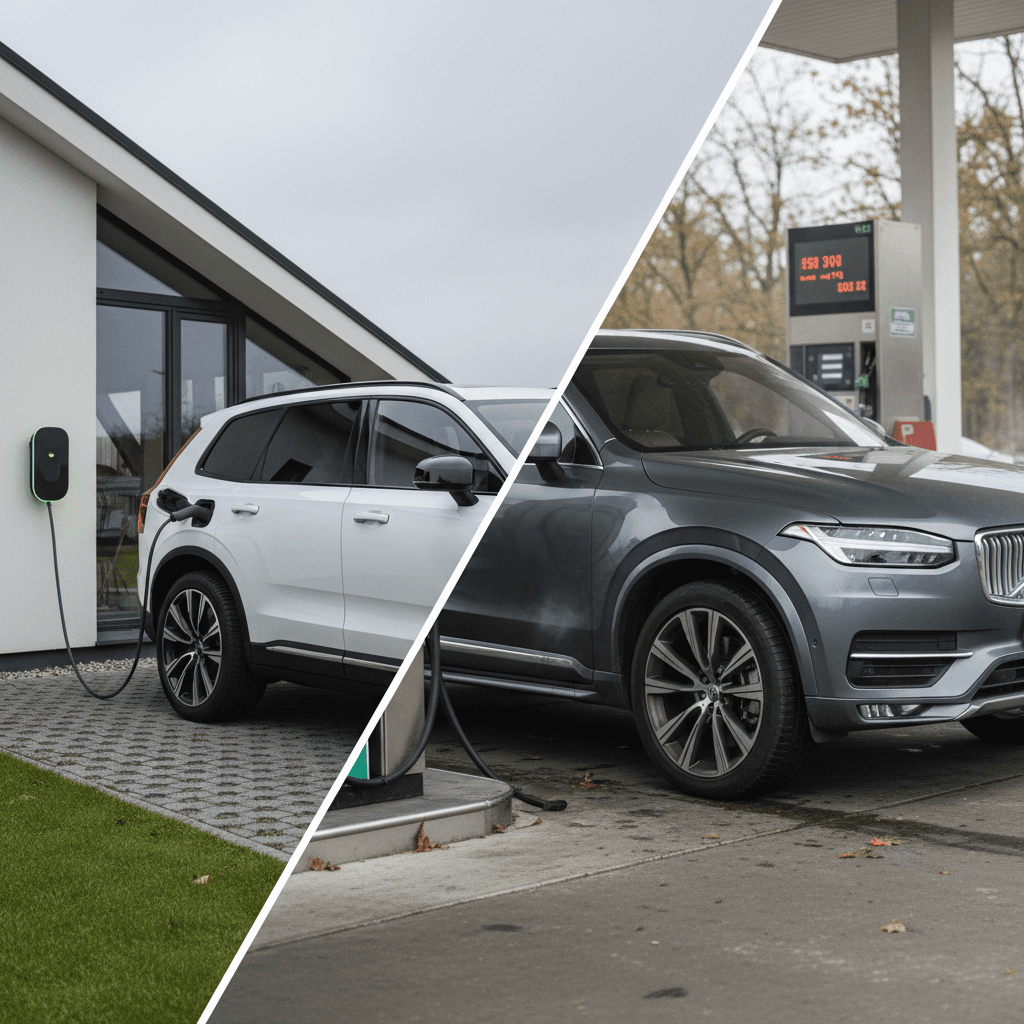
The biggest day‑to‑day cost difference between the EX90 and XC90 is what it takes to move two and a half tons of three‑row SUV down the road. In 2026, many U.S. families are paying $3.25–$4.25 per gallon of regular or premium gas, while home electricity often runs $0.13–$0.22 per kWh, before any off‑peak EV rates.
Volvo EX90 energy use
- Usable battery: roughly 106–107 kWh.
- EPA‑rated efficiency: about 42 kWh/100 miles in real‑world owner reports.
- At $0.17/kWh home charging, that’s roughly $7.00 per 100 miles, about 7 cents per mile.
- Public DC fast charging can be 2–3x higher per kWh, but for most owners that’s the minority of charging.
Volvo XC90 fuel use
- Typical combined fuel economy: 22–25 mpg (gas B5/B6), lower if mostly city or heavy loads.
- At $3.75/gal, you’re around $15–$17 per 100 miles, roughly 15–17 cents per mile.
- XC90 Recharge PHEV owners who plug in religiously can dramatically cut gasoline use, but once the small battery is depleted, it behaves like a heavy gas SUV.
Typical family savings on “fuel”
Maintenance and repairs: where EVs save money
EVs don’t eliminate maintenance, but they simplify it. The EX90 has no oil changes, no multi‑speed automatic transmission, no exhaust system, and far fewer moving parts in the powertrain. Volvo still specifies regular inspections, coolant service, brake fluid flushes, and tire rotations, but the most frequent and expensive drivetrain items on an XC90 simply don’t exist on an EX90.
Maintenance differences: EX90 vs XC90
Key cost drivers over a typical 5‑year/60,000‑mile ownership window.
Engine & oil service
XC90: Multiple oil and filter changes, spark plugs, air filters, occasional engine diagnostics.
EX90: No engine, no oil. Cabin filters and coolant checks still apply.
Transmission & drivetrain
XC90: Complex multi‑speed automatic, AWD components, more fluids.
EX90: Single‑speed reduction gear with dual motors, fewer wear items.
Brakes & tires
Both: Heavy three‑row SUVs eat tires; budget for quality rubber.
EX90: Strong regen braking often extends brake pad life vs XC90.
Budget for tires either way
Across most ownership surveys, EVs of this size typically deliver 25–40% lower maintenance and repair spending than similar luxury gasoline SUVs over the first 5–8 years. Volvo’s warranty coverage and recommended service intervals will influence the exact math, but structurally the EX90 has fewer failure points.
Insurance, taxes and fees
Insurance costs are highly personal, credit, driving record, ZIP code, and coverage levels matter more than nameplates. Still, a few patterns matter when you’re comparing the EX90 and XC90 in 2026.
- Because the EX90 is a higher‑MSRP, newer‑technology vehicle, many insurers quote slightly higher comprehensive and collision premiums than for a similarly equipped XC90 today.
- Some states are rolling out or increasing annual EV registration surcharges to offset lost gas‑tax revenue. These flat fees can eat into the EX90’s fuel savings if you drive very few miles.
- On the flip side, a growing list of states and utilities offer rebates on home charger installation or discounted off‑peak EV rates, tilting the math back toward the EX90.
Check state‑level EV fees and perks
Depreciation and resale value
Depreciation is where traditional SUVs like the XC90 have historically shined: predictable demand, well‑understood resale, and a big used‑car buyer base. New EVs, including the EX90, are still working through faster early‑life depreciation, as technology and incentives change quickly.
XC90 depreciation dynamics
- Volvo’s three‑row gas SUVs have an established used market with solid demand.
- Five‑year residual values often land in the 45–55% of MSRP range depending on mileage and condition.
- The XC90 Recharge PHEV can hold value well in markets with high fuel prices thanks to its everyday efficiency.
EX90 depreciation dynamics
- As a new, high‑priced EV, the EX90 is likely to see steeper initial depreciation over the first 3–4 years than an XC90.
- On the other hand, its large battery, three‑row practicality, and advanced safety tech could make it highly attractive as a used EV once early price drops are baked in.
- Battery health will be a key value driver; documented fast‑charging habits and State‑of‑Health (SoH) reports matter.
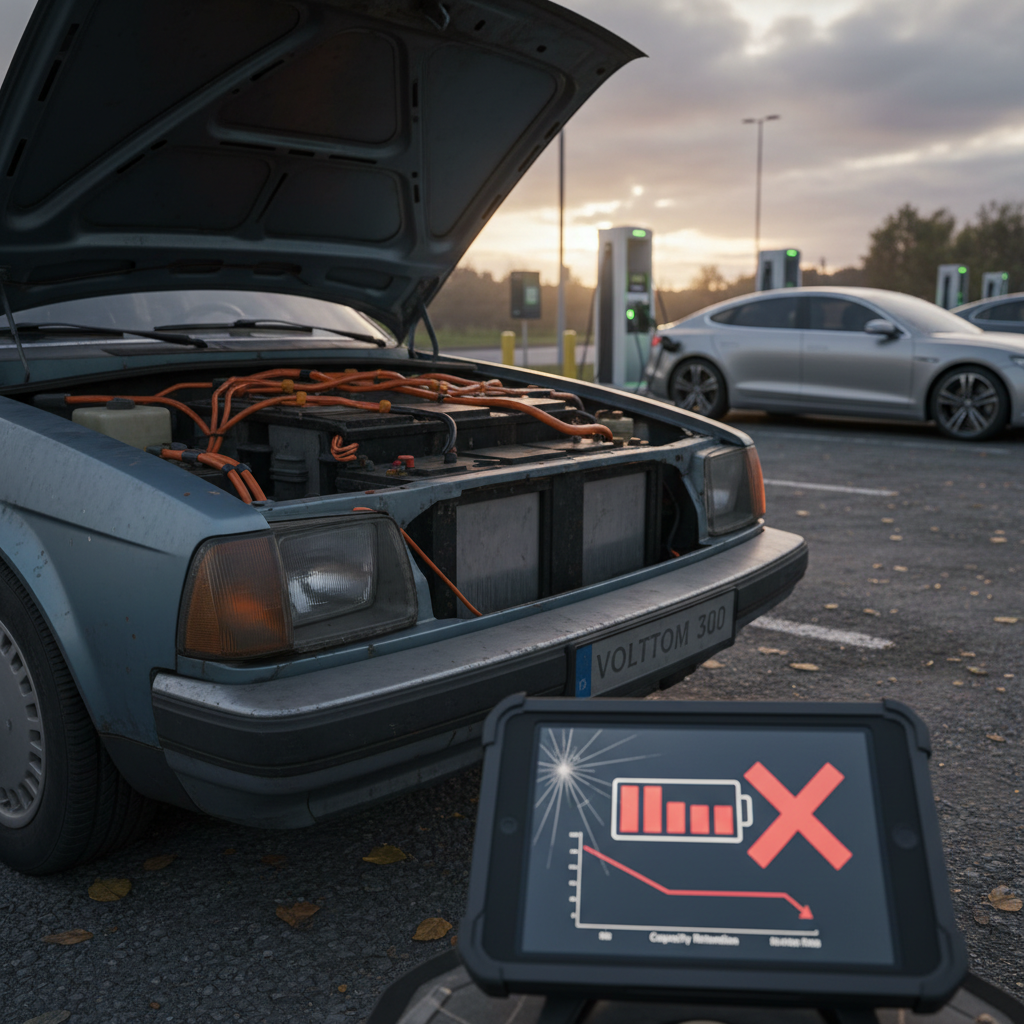
Why battery health is critical for EX90 resale
Real‑world 5‑year cost comparison
To make this concrete, let’s stack a typical EX90 Twin Motor Plus against a comparably equipped XC90 B6 or Recharge over five years. We’ll assume 12,000 miles per year, mostly home charging for the EX90, mixed driving for the XC90, and ownership running from 2026–2031.
Illustrative 5‑year cost of ownership: EX90 vs XC90 (2026–2031)
High‑level comparison for a typical U.S. driver. These are directional estimates, not quotes.
| Category (5 years) | EX90 (electric) | XC90 B6 (gas) | What to know |
|---|---|---|---|
| Purchase price (before tax) | $82,000 | $62,000 | EX90 typically costs ~$20,000 more up front when similarly equipped. |
| Energy (fuel/electricity) | ~$4,200 | ~$9,500 | EX90 saves roughly $5,000 in “fuel” at today’s prices. |
| Routine maintenance | ~$3,000 | ~$4,500 | Fewer fluids and drivetrain parts to service on EX90. |
| Tires | ~$2,400 | ~$2,400 | Both are heavy SUVs on big wheels, tire costs are similar. |
| Insurance & fees | Slightly higher | Slightly lower | EX90 may run a bit more in premiums; some states add EV fees. |
| Depreciation (est.) | High in first 3 yrs | More predictable | XC90 likely retains value more consistently, especially early on. |
Assumptions: 12,000 mi/year, $3.75/gal gasoline, $0.17/kWh electricity, normal driving and wear.
What this math really says
Which Volvo SUV is right for you?
Who should pick the EX90 vs XC90?
Match the SUV to your driving habits, home setup, and budget.
Choose the EX90 if…
- You can install Level 2 home charging or already have it.
- You drive at least 10,000–12,000 miles per year and want to cut fuel costs.
- You value the latest Volvo safety tech, over‑the‑air updates, and quiet, smooth electric driving.
- You plan to keep the SUV for 7–10 years and can spread the higher upfront cost over time.
Choose the XC90 if…
- You can’t easily charge at home or live in an apartment with no reliable charging.
- You drive fewer miles each year and fuel savings won’t add up as quickly.
- You prefer lower upfront cost and more predictable resale in the near term.
- You want the flexibility of quick “fill‑ups” anywhere on long road trips without planning charging stops.
Personal checklist: make the EX90 vs XC90 decision your own
1. Estimate your annual mileage
If you’re under 8,000 miles a year, fuel savings may not justify EX90 pricing. At 12,000+ miles, electricity’s lower cost starts to tip the scales.
2. Audit your home charging options
Do you have a garage or driveway and access to a 240‑volt circuit? Getting Level 2 charging installed can make EX90 ownership dramatically more convenient.
3. Look up your local gas and electricity rates
Plug real prices into a cost‑per‑mile calculator. A few cents per kWh or per gallon can swing the math by thousands over five years.
4. Think about how long you’ll keep the SUV
If you trade every 3 years, XC90’s steadier resale may win. If you keep vehicles 8–10 years, reduced maintenance and fuel costs favor the EX90.
5. Decide how you value silence and smoothness
Cost aside, many families simply prefer the quiet, instant‑torque driving experience of a big EV. That intangible benefit can be worth a lot if you’re behind the wheel every day.
How Recharged can help you shop smarter
New EX90s will sit at the top of Volvo’s price ladder for a while. But as early leases end and more lightly used electric Volvos hit the market, the smart money will look at used EX90s and other three‑row EVs alongside well‑kept XC90s. That’s where a transparent view of battery health and fair pricing matters most.
Shopping EX90 vs XC90 with Recharged
Take the guesswork out of EV vs gas cost decisions.
Recharged Score battery health
Fair market pricing & financing
Trade‑in, instant offer & delivery
Ready to find your next EV?
Browse VehiclesTry an EV at the Recharged Experience Center
Volvo EX90 vs XC90 cost FAQ
Frequently asked questions
Viewed only through MSRP, the 2026 Volvo EX90 and XC90 don’t look like rivals at all. But once you factor in energy, maintenance, and how long you’ll keep the vehicle, the gap narrows quickly, and for the right household, an EX90 can pencil out better than you’d expect. The key is matching the SUV to your driving, your home charging reality, and your budget. If you’re ready to put real numbers to your situation, and want transparent insight into battery health and fair pricing on used EVs, Recharged is built to make that decision simpler.