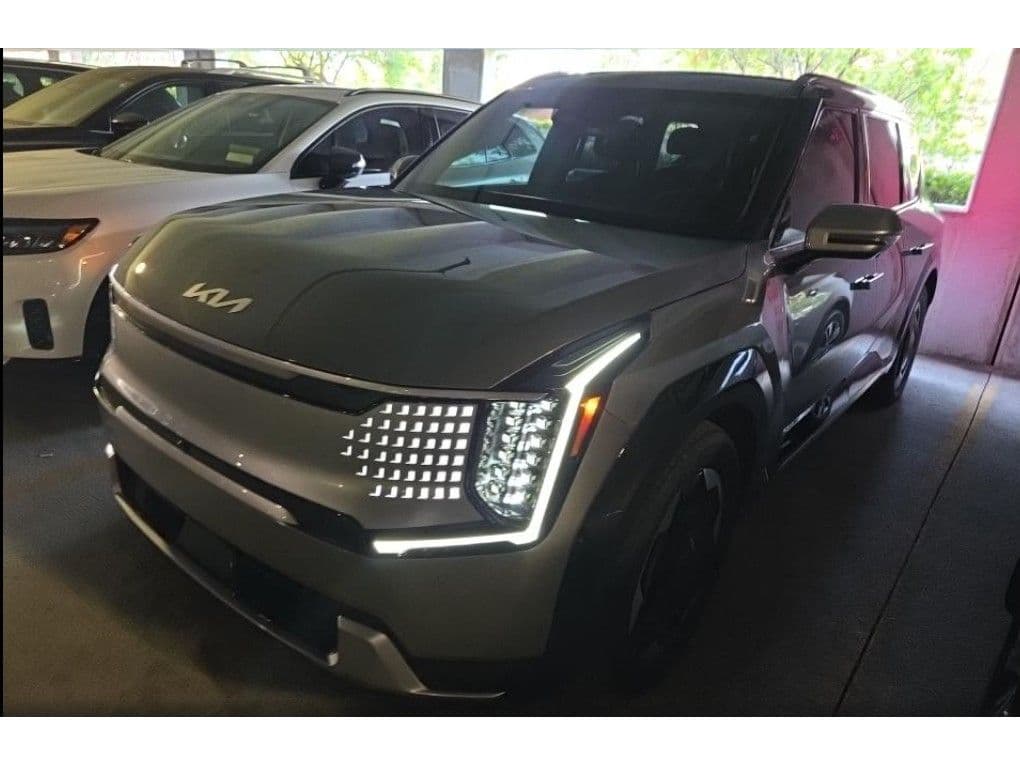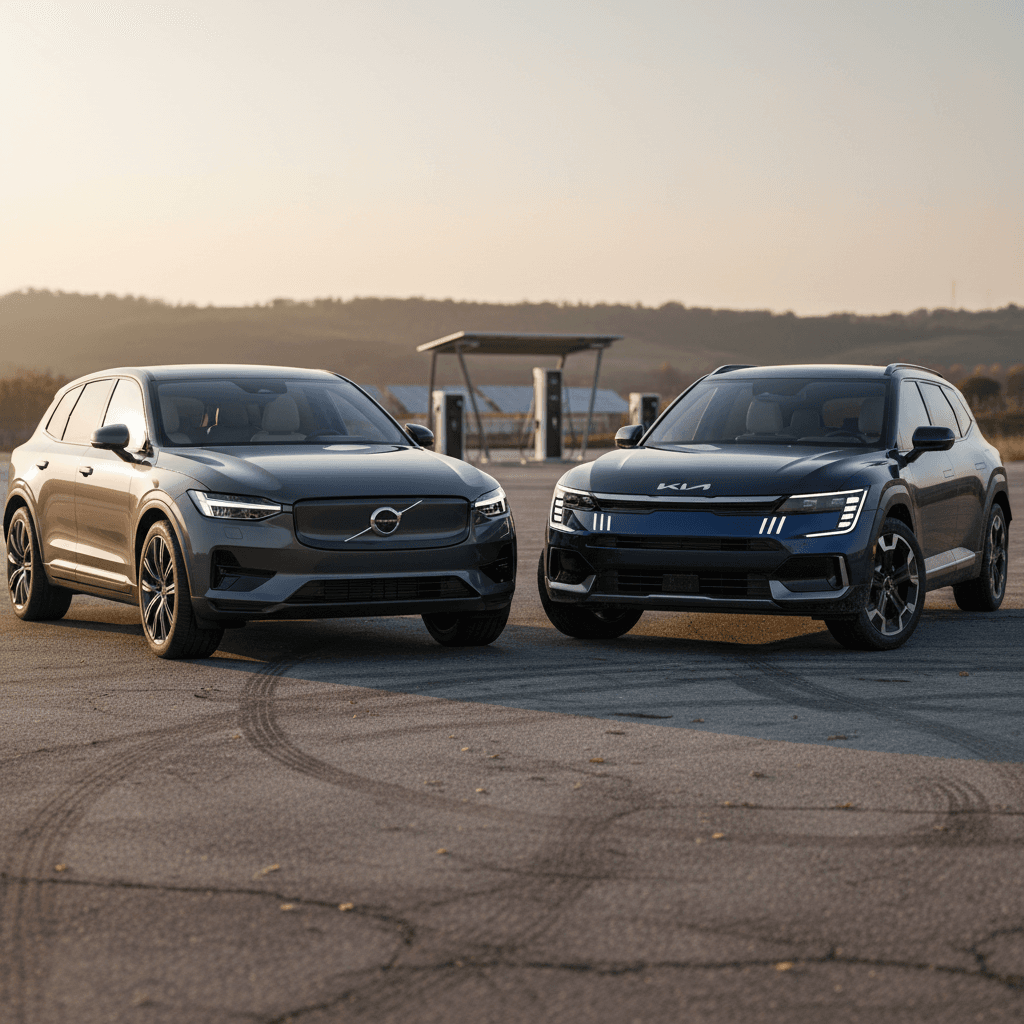
You’re shopping at the sharp end of the EV market: two big, handsome three‑row electric SUVs, the **Volvo EX90** and **Kia EV9**. Both promise family‑shuttle practicality with zero tailpipe emissions. When you Google “Volvo EX90 vs Kia EV9 which is better,” what you’re really asking is: which one actually fits my life, my budget, and my risk tolerance?
Big picture
Overview: Volvo EX90 vs. Kia EV9 at a glance
Key numbers: EX90 vs. EV9 (U.S. market)
On paper, these two are aiming at the same buyer: you want **three rows**, real highway range, and a cabin nice enough that road trips don’t feel like punishment. But Volvo and Kia approach the problem differently. Volvo leans into **safety, serenity, and soft‑touch materials**. Kia counters with **value, flexibility (RWD or AWD, multiple battery sizes), and a charging curve that’s road‑trip‑friendly** thanks to its 800‑volt E‑GMP platform.
Pricing and value: Where the money goes
Approximate new‑vehicle pricing (U.S.)
Representative 2025 model‑year MSRPs before destination and incentives. Real‑world transaction prices can be lower, especially as used inventory grows.
| Model | Trim examples | Approx. MSRP (new) | Positioning |
|---|---|---|---|
| Volvo EX90 | Twin Motor Plus / Ultra | ≈$81,000–$90,000+ | Luxury 3‑row EV SUV, standard dual‑motor AWD |
| Kia EV9 | Light RWD / Light Long Range / Wind / Land / GT‑Line | ≈$55,000–$74,000 | Mainstream 3‑row EV with broad trim ladder and options |
Kia EV9 clearly undercuts the Volvo EX90 on entry price and offers more spread between trims.
In raw dollars, the **Kia EV9 is dramatically cheaper to get into**. A base Light RWD comes in the mid‑$50,000s, and even well‑equipped mid‑trims land in the $60k–$70k bracket. By contrast, early U.S. **Volvo EX90s start in the low‑$80,000s and climb quickly** with options and performance packs.
Think in monthly payment, not just MSRP
- Smaller battery, lower price (Light RWD)
- Big‑battery, long‑range RWD for maximum miles
- AWD performance trims for quick acceleration and towing
Range, charging, and road‑trip ability
Range and charging: how far, how fast
Both can road‑trip; Kia’s platform is the more relaxed traveler.
Volvo EX90 range & efficiency
- Volvo quotes roughly up to ~300–310 miles of range, depending on wheel size and trim.
- Dual‑motor AWD and substantial curb weight mean you’re moving a lot of metal; real‑world range will vary with speed and weather.
- DC fast charging from 10–80% in about 30 minutes under ideal conditions.
Kia EV9 range & charging
- U.S. 2025 EV9 trims roughly range from ~230 miles (standard‑range AWD) up to about ~300+ miles (Light Long Range RWD).
- Built on an 800‑volt platform, allowing very fast DC charging when the station cooperates.
- Real‑world testing shows the EV9 is a confident highway cruiser with competitive consumption for its size.
Cold‑weather reality check
For **pure highway usability**, the **EV9 has a small but meaningful edge**. Its 800‑volt hardware can sustain higher charging speeds at compatible DC fast‑chargers, and the Long Range RWD trim is tuned for efficiency over brute force. The EX90 isn’t slow to charge, but between its hefty curb weight and dual‑motor focus, it feels more like an electric Range Rover, fantastic, but thirsty in kilowatt‑hours.
Road‑trip questions to ask yourself
1. How far is your longest regular drive?
If your real‑world longest leg is under 200 miles, both vehicles are overkill and range is effectively a non‑issue. Above 250 miles, the EV9’s long‑range trims and faster DC charging start to matter.
2. How often will you fast‑charge?
Frequent DC fast‑charging makes the EV9’s 800‑volt system attractive. If you mostly charge at home and only fast‑charge on holidays, the EX90’s slightly slower curve isn’t a deal‑breaker.
3. Are you towing regularly?
Both can tow, but the EV9 offers up to roughly 5,000 pounds of rated towing in many trims. Remember: towing slashes range dramatically, sometimes by half.
Space, comfort, and family practicality
Volvo EX90: Calm, cocooned, Scandinavian
- Three standard rows, with seating for six or seven depending on configuration.
- Cabin design is all about serenity and materials: textiles, open‑pore wood, muted colors.
- Second row is genuinely adult‑friendly; the third row is best for kids or shorter adults on shorter stints.
- Big glass area and thoughtful lighting make it feel more like a modern lounge than a truck.
Kia EV9: Boxy, honest, hugely usable
- Similar overall footprint, but a more upright, box‑shaped body that carves out massive cabin volume.
- Available captain’s chairs make kid wrangling easier; sliding second row helps third‑row access.
- EV9’s squared‑off rear end gives you a very practical cargo hold, with the third row folded or up.
- Interior quality is a step above typical mainstream, but not at Volvo’s level of finish.
Car‑seat reality
For **pure space and kid‑hauling sanity**, the **Kia EV9 pulls ahead**. It’s the minivan disguised as a concept car. The EX90 is spacious and comfortable, but psychologically it feels like you’ve parked a luxury object in the garage. If your family treats cars like rolling living rooms, the Kia will stress you out less.
Performance and driving character
How they drive: numbers and feel
Both are quick enough; how they go about it is very different.
Volvo EX90 on the road
- Dual‑motor powertrains with output in the high‑400‑hp ballpark give the EX90 brisk acceleration for such a large SUV.
- Steering is light, body control is tidy, and the ride skews comfort over sport.
- Noise isolation is excellent; this is a quiet, composed cruiser that shrinks long highway days.
Kia EV9 on the road
- Trim‑dependent outputs range from relaxed RWD to seriously quick dual‑motor AWD GT‑Line models with 0–60 mph times in the ~5‑second zone.
- Chassis tuning balances firm control with decent compliance; you feel the road more than in the Volvo, but it’s never harsh.
- Steering is accurate if not chatty; overall feel is closer to a well‑sorted crossover than a soft luxury barge.
These aren’t sports cars; they’re rolling neighborhoods. The question isn’t how fast they are, it’s how good they feel after four hours of kid noise and interstate expansion joints.
Here, the choice is mostly about **personality**. The **EX90 drives like a traditional European luxury SUV that happens to be electric**, smooth, cushy, unflustered. The **EV9 feels more like a slightly oversized crossover**, willing to hustle, sometimes a bit busier over broken pavement but also more playful. Neither will disappoint you in straight‑line shove.
Safety and driver‑assistance tech
Volvo’s safety moonshot
Volvo has staked its modern brand on safety, and the **EX90 is the densest concentration of that ethos yet**. Beyond the usual adaptive cruise, lane‑keeping, and automatic emergency braking, it adds lidar‑supported perception and interior monitoring designed to prevent everything from lane‑departure incidents to leaving a child in the back seat.
The **Kia EV9 is no slouch**: it offers a full suite of driver‑assistance tech, highway driving assist, smart cruise, blind‑spot collision avoidance, junction‑turning assistance, the works. It may not have the EX90’s lidar halo, but in day‑to‑day use it delivers **all the core safety features most drivers will ever actually lean on**.
First‑gen tech, first‑gen teething problems
Tech experience and usability
Volvo EX90: Minimalist, screen‑first cockpit
- Large, portrait‑oriented central touchscreen running Google‑based infotainment with native Maps, Assistant, and Play Store apps.
- Very few physical buttons: visually stunning, but climate and drive‑mode adjustments are mostly in the screen.
- Digital instrument cluster is clean and understated, matching the cabin’s calm aesthetic.
Kia EV9: Techy, but more pragmatic
- Wide, landscape‑style displays with a mix of touch controls and reconfigurable physical buttons.
- Interface shares a lot with other modern Kias and Hyundais, familiar, fairly intuitive, and improving via software updates.
- Plenty of family‑friendly touches: USB‑C ports everywhere, available relaxation seats, and thoughtful storage solutions.
Screen tolerance test
Both vehicles support over‑the‑air updates, advanced navigation, and deep smartphone integration. The EX90’s system feels more like a **Scandinavian smartphone blown up to SUV scale**; the EV9’s interface is more conventional but also more forgiving to technophobes. Over years of ownership, that friendliness can matter as much as screen resolution.
Ownership costs and used‑EV considerations
Operating costs for either SUV will be dramatically lower than an equivalent gasoline three‑row, especially if you can charge at home on a time‑of‑use electricity plan. The main differences are **up‑front price, depreciation, and potential software complexity**.
Cost and risk: what to think about before you buy
Two expensive EVs, two very different risk profiles.
Up‑front spend
EX90: Luxury pricing from day one, with the depreciation curve of a high‑end EV.
EV9: Lower starting price and broad trim ladder make it easier to fit into more budgets.
Depreciation
Big, new‑tech EVs depreciate quickly in the first years, especially as new models and tax rules appear. Over time, used examples of both EX90 and EV9 should become strong value plays for second owners.
Complexity & software
The EX90’s bleeding‑edge safety and infotainment stack is impressive but complex. The EV9 rides on a mature Hyundai‑Kia EV platform with a growing track record, which may translate to fewer surprises as it ages.
How Recharged fits in
If you’re not in a rush, the smartest money move may be to **let early adopters eat the steepest depreciation**, then shop for a low‑mileage EV9, or eventually EX90, on the used market. You’ll want objective battery‑health data and a clear view of software update history; that’s exactly what tools like the Recharged Score are built to surface.
Which is better for you? Real‑world recommendations
Volvo EX90 vs. Kia EV9: who they’re best for
Neither is “better” in the abstract. Each shines for a different kind of owner.
Pick the Volvo EX90 if…
- You prioritize top‑shelf safety tech, cabin serenity, and materials over price.
- You like the idea of a flagship Scandinavian luxury experience more than you worry about first‑gen complexity.
- Most of your driving is suburban commuting and highway cruising, not constant road‑warrior duty.
- You’re comfortable with higher payments in exchange for that calm, high‑end feel.
Pick the Kia EV9 if…
- You want the most practical, price‑efficient family EV in this segment right now.
- You value faster charging, flexible trims, and strong towing options.
- Your kids treat cars like playrooms, and you’d rather not hover over every snack crumb.
- You’re planning to road‑trip, haul gear, and generally use the thing hard.
Blunt verdict
The good news is that neither of these choices is a mistake. They simply prioritize different virtues. If you want the most rational three‑row electric family hauler today, test‑drive the EV9 first. If you want a rolling sanctuary with a PhD in safety systems, take a long, quiet drive in the EX90 and see if it feels like home. And if you’re willing to wait for the value to ripen, keep an eye on the **used EV** market, Recharged will be there with battery‑health data and expert guidance when the first wave of these flagship SUVs changes hands.