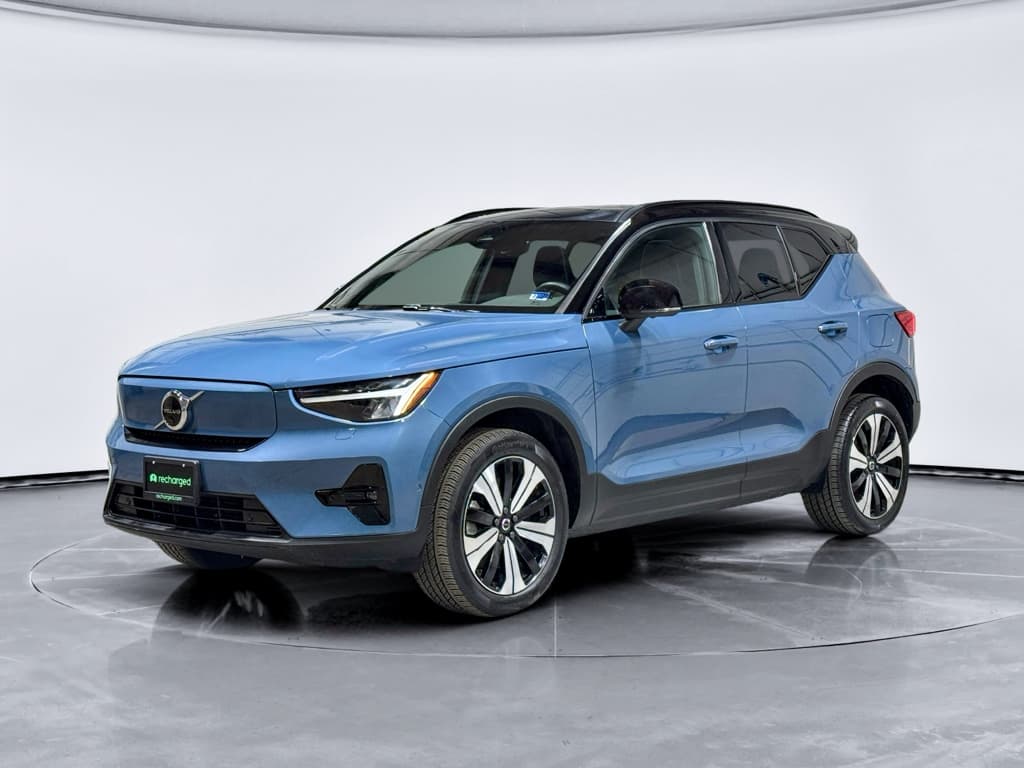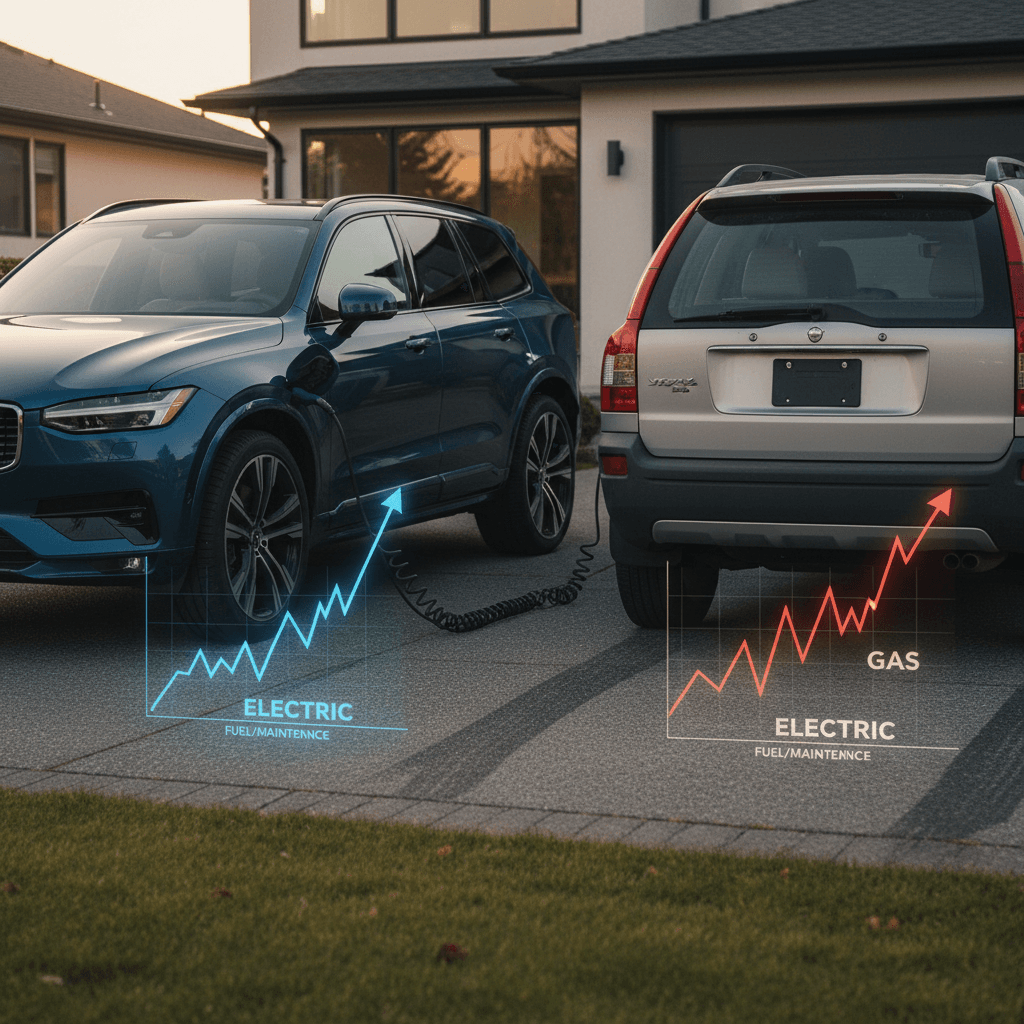
If you’re cross-shopping a Volvo EX90 against a gas-powered three‑row SUV like the Volvo XC90, sticker price alone can be misleading. The real question is the total cost of ownership: what will you actually spend over 5–10 years once you factor in energy, maintenance, taxes, and resale? This guide walks through a realistic, U.S.-focused breakdown of Volvo EX90 total cost vs a gas car equivalent so you can decide whether the electric route pencils out for your household.
Numbers are estimates, not tax advice
Why compare the Volvo EX90 to a gas SUV?
The EX90 replaces the XC90 as Volvo’s flagship 3‑row family hauler. On paper, they look similar: seven seats, luxury cabin, and all‑wheel‑drive options. Underneath, though, they’re completely different animals, one runs on electrons, the other on gasoline. If you’re deciding between them (or any similar gas SUV such as a BMW X5, Audi Q7, or Acura MDX), understanding their lifetime cost per mile is more useful than comparing MSRPs in isolation.
Headline numbers: EX90 vs gas SUV costs (5‑year snapshot)
Those savings don’t automatically make the EX90 the cheapest option; a high purchase price and faster initial depreciation can erase or delay the break‑even point. So instead of arguing EVs always win, we’ll show you where the EX90 wins, where gas still fights back, and how long it takes for the numbers to tilt electric.
Key assumptions behind this cost comparison
- Time horizon: 5 years for the main comparison, with a 10‑year look‑ahead section.
- Mileage: 12,000 miles per year (roughly the U.S. average).
- Location: U.S. national averages for gas and electricity; your local prices may be higher or lower.
- Driving mix: 80% home charging, 20% public DC fast charging for the EX90.
- Comparable gas SUV: a well‑equipped Volvo XC90 or similar luxury 3‑row gas SUV.
Why assumptions matter
Purchase price, incentives, and financing
Volvo has positioned the EX90 as a premium, tech‑heavy flagship. Recent pricing puts U.S. EX90 models in the high‑$70,000s to low‑$90,000s depending on trim and options, with a base MSRP published just under the $80,000 federal SUV price cap. Well‑equipped XC90s typically fall in the $60,000–$75,000 range. In other words, expect an EX90 to cost roughly $8,000–$15,000 more up front than its gas sibling when similarly equipped.
EX90 vs gas SUV: what you pay up front
Approximate U.S. pricing for similarly equipped models
Volvo EX90 (new)
- MSRP: Roughly $78,000–$90,000 depending on trim and options.
- Potential incentives: May qualify for up to a $7,500 federal clean vehicle credit if final assembly and price caps are met, plus state or utility rebates in some regions.
- Effective price: After incentives, many buyers effectively land in the low‑ to mid‑$70,000s.
Volvo XC90 or similar gas SUV
- MSRP: Roughly $60,000–$75,000 for a comparably equipped AWD XC90 or equivalent luxury 3‑row.
- Incentives: Limited to dealer discounts and normal financing offers; no federal EV tax credit.
- Effective price: Often mid‑$60,000s after typical discounts.
Leasing and used can narrow the gap
Energy costs: electricity vs gasoline
Energy is where the EX90 quietly goes to work. The 2026 EX90 Twin Motor Plus, for example, carries an EPA rating around 39 kWh/100 miles (0.39 kWh per mile). A gas XC90’s combined fuel economy typically lands around 22 mpg in real‑world mixed driving for the higher‑powered trims many buyers choose.
Electric: Volvo EX90
- Efficiency: ~39 kWh/100 miles (0.39 kWh per mile).
- Home electricity rate: Assume $0.15/kWh (many U.S. markets fall near this, and off‑peak EV rates can be lower).
- Public fast charge rate: Assume $0.35/kWh blended for road‑trip charging.
Blended cost example (80% home / 20% DC fast):
- Home portion: 0.39 × $0.15 = about $0.058 per mile.
- DC portion: 0.39 × $0.35 = about $0.137 per mile.
- Blended: (0.8 × 0.058) + (0.2 × 0.137) ≈ 7.4¢ per mile.
Gas: Volvo XC90 or similar
- Efficiency: Assume 22 mpg combined.
- Gas price baseline: Over 2024–2025, U.S. regular has generally hovered around $3.00–$3.25 per gallon on average, with recent spikes over $4 in 2026. For this comparison we’ll use a conservative $3.25/gal long‑term average.
Cost per mile:
- $3.25 ÷ 22 mpg ≈ 14.8¢ per mile.
Annual energy costs: EX90 vs gas SUV (12,000 miles/year)
Using the assumptions above for a typical U.S. household.
| Vehicle | Cost per mile | Annual miles | Estimated annual energy cost |
|---|---|---|---|
| Volvo EX90 (mostly home charging) | $0.074 | 12,000 | ≈ $890 |
| Gas Volvo XC90 (22 mpg, $3.25/gal) | $0.148 | 12,000 | ≈ $1,780 |
| Gas Volvo XC90 (22 mpg, $4.00/gal scenario) | $0.182 | 12,000 | ≈ $2,180 |
Even with some fast charging, the EX90 roughly halves per‑mile energy spend compared with a gas equivalent.
5‑year energy savings add up fast
Maintenance, repairs, and warranty
Electric SUVs like the EX90 eliminate oil changes, spark plugs, exhaust systems, and many transmission‑related services. Volvo still recommends regular inspections, tire rotations, cabin filters, and brake fluid intervals, but the service schedule is generally simpler than a gas XC90’s.
What you’ll maintain on an EX90 vs a gas XC90
Same tires and brakes, very different drivetrains
Volvo EX90 (EV)
- No engine oil changes.
- No timing belt/chain, spark plugs, or exhaust repairs.
- Single‑speed gearbox with fewer wear parts.
- Brake wear is often lower thanks to regenerative braking.
- Battery and electric drive components covered by separate long‑term warranty.
Volvo XC90 (gas)
- Regular oil and filter changes.
- More complex transmission with fluid and potential repairs.
- More cooling system and exhaust components to maintain over time.
- Engine‑related wear items (belts, plugs, sensors) as miles climb.
Realistic maintenance savings
Insurance, taxes, and fees
Insurance can be a swing factor. The EX90’s higher sticker price, advanced sensors, and repair complexity may push premiums above a comparable XC90, especially in its early years. On the flip side, strong safety tech and favorable crash performance can help offset some of that.
Insurance
- In many markets, expect 5–15% higher premiums for a new EX90 vs a similarly priced gas XC90, at least initially.
- Over time, as parts flows and collision repair procedures normalize, that gap may shrink.
- Your driving record and local rates will matter more than drivetrain choice alone.
Taxes and registration
- Some states charge extra annual registration fees to EVs to replace lost gas‑tax revenue.
- Others reduce registration or property tax for EVs, or offer HOV lane perks and local credits.
- On balance, these add‑ons rarely erase the EX90’s fuel and maintenance advantages, but you should definitely factor them into your local math.
Don’t forget property or excise tax
Depreciation and resale value
Depreciation is where the story gets nuanced. Luxury SUVs tend to drop sharply in value during the first 3–4 years, then stabilize. The EX90 faces an extra wildcard: rapid EV tech progress and battery‑health concerns. Early buyers pay full price, but the used‑EV market (and companies like Recharged that specialize in it) are quickly putting better data around long‑term value.
Illustrative 5‑year depreciation: EX90 vs gas XC90
These are directional examples to show relative behavior, not predictions for every trim or region.
| Vehicle | New purchase price | Estimated value after 5 years | Dollar depreciation | Percent depreciation |
|---|---|---|---|---|
| Volvo EX90 (EV) | $80,000 | $36,000–$40,000 | ≈ $40,000–$44,000 | 50–55% |
| Volvo XC90 (gas) | $68,000 | $32,000–$36,000 | ≈ $32,000–$36,000 | 47–53% |
In percentage terms, early EX90 depreciation may be steeper, but strong used demand for 3‑row EVs could tighten the gap.
Why used EV buyers care about battery health
5‑year total cost: Volvo EX90 vs gas Volvo XC90
Let’s pull everything together for a 5‑year, 60,000‑mile ownership window. These numbers are simplified but directionally realistic for a U.S. buyer who finances both vehicles and drives a typical mileage mix.
Illustrative 5‑year total cost of ownership (60,000 miles)
Assumes both vehicles are bought new and then sold after 5 years.
| Category | Volvo EX90 (EV) | Volvo XC90 (gas) | Notes |
|---|---|---|---|
| Effective purchase price | $75,000 | $66,000 | Assumes EX90 benefits from a mix of incentives; XC90 gets typical discounts. |
| 5‑year energy/fuel cost | ≈ $4,500 | ≈ $9,000 | 12,000 miles/year; blended electricity vs $3.25/gal gasoline. |
| 5‑year routine maintenance | ≈ $2,000 | ≈ $3,500 | EX90 benefits from fewer fluid and engine‑related services. |
| Insurance, taxes & fees | ≈ $11,000 | ≈ $10,000 | Slightly higher premiums and EV fees offset somewhat by safety benefits. |
| 5‑year depreciation | ≈ $42,000 | ≈ $34,000 | Using midpoints from depreciation table above. |
| Estimated 5‑year TCO | ≈ $134,500 | ≈ $122,500 | Total cash outlay minus resale value, excluding financing interest. |
| Cost per mile (60,000 mi) | ≈ $2.24 | ≈ $2.04 | EX90 still runs slightly higher over 5 years, but the gap narrows considerably. |
The EX90’s lower running costs close much of the up‑front price gap, especially if you qualify for EV incentives.
Where the EX90 catches up, and where it doesn’t (yet)
Looking out 10 years: what changes?
Stretch the horizon to 10 years and 120,000 miles, and the EX90’s running‑cost advantages grow, while depreciation curves flatten for both vehicles. At that point, energy and maintenance differences play an even larger role in total cost per mile.
10‑year EX90 ownership themes
- More fuel savings: Doubling mileage roughly doubles the EX90’s energy‑cost advantage vs a gas SUV.
- Battery health becomes critical: A well‑cared‑for pack maintains usable range and resale; a neglected one can drag value down.
- Fewer big repairs: No engine or transmission overhauls, though high‑mileage components like air suspension or infotainment can still be expensive.
10‑year gas XC90 themes
- Higher cumulative fuel spend: It’s not unusual to see $18,000–$25,000 in fuel costs over 10 years for a thirsty luxury SUV at recent price levels.
- More component wear: Aging engines, transmissions, and emissions systems add risk of large repair bills.
- Policy and demand headwinds: As more buyers seek EVs and low‑emission vehicles, older gas SUVs may face weaker resale demand in some markets.
Long‑term edge tilts electric
How buying a used EX90 changes the math
Most shoppers don’t buy brand‑new $80,000 SUVs. They wait a few years and let someone else eat the steepest depreciation. For the Volvo EX90, that can be a smart financial move, as long as you get reliable data on battery health and pricing.
Used EX90 vs used gas SUV: what to look at
1. Verified battery health
Ask for a <strong>third‑party battery health report</strong>, not just the dash range estimate. Recharged’s Recharged Score includes pack diagnostics so you can see how much usable capacity remains.
2. Charging history and patterns
Frequent DC fast charging, especially in hot climates, can age a pack faster. A car that was mostly home‑charged at moderate rates is often a better long‑term bet.
3. Realistic range needs
Match the EX90’s remaining usable range to your daily and trip use. If you rarely exceed 150–200 miles in a day, a slightly degraded pack may be a non‑issue but still cheaper up front.
4. Total cost per mile
Compare total cost per mile, not just price. A used EX90 with low energy and maintenance costs can beat a cheaper gas SUV once you factor in fuel and repairs over 5–8 years.
5. Financing and warranty coverage
Look for financing rates that don’t punish you for buying an EV, and check remaining factory battery and drivetrain warranty. Recharged can help you understand coverage before you buy.
How Recharged fits in
Is a Volvo EX90 the right financial move for you?
When the EX90 makes the most financial sense
And when a gas SUV may still be the better fit, for now
EX90 is financially compelling if…
- You drive at least 12,000–15,000 miles per year.
- You can charge at home most nights at reasonable electricity rates.
- You live in an area with decent public fast‑charging options for road trips.
- You plan to keep the vehicle 7–10 years or buy it used after early depreciation.
- You value advanced safety and software features that can stay current via updates.
A gas XC90 or similar may still fit better if…
- You drive fewer than 8,000 miles per year and mostly short hops.
- You have no realistic way to install home charging and public options are sparse.
- Your local electricity rates are very high and gas is unusually cheap.
- You prioritize lowest up‑front price over long‑term efficiency.
Run the math honestly and the pattern is clear: the Volvo EX90 often costs more to buy but less to operate. Over five years, a new EX90 may still carry a modest total‑cost premium versus a comparable gas XC90. Stretch the horizon, drive more miles, or buy used, and the EX90’s energy and maintenance savings start to look more like an investment than an indulgence. If you want help modeling those numbers against an actual vehicle, Recharged can pair you with an EV specialist and a detailed Recharged Score so you’re making a decision based on data, not guesses.