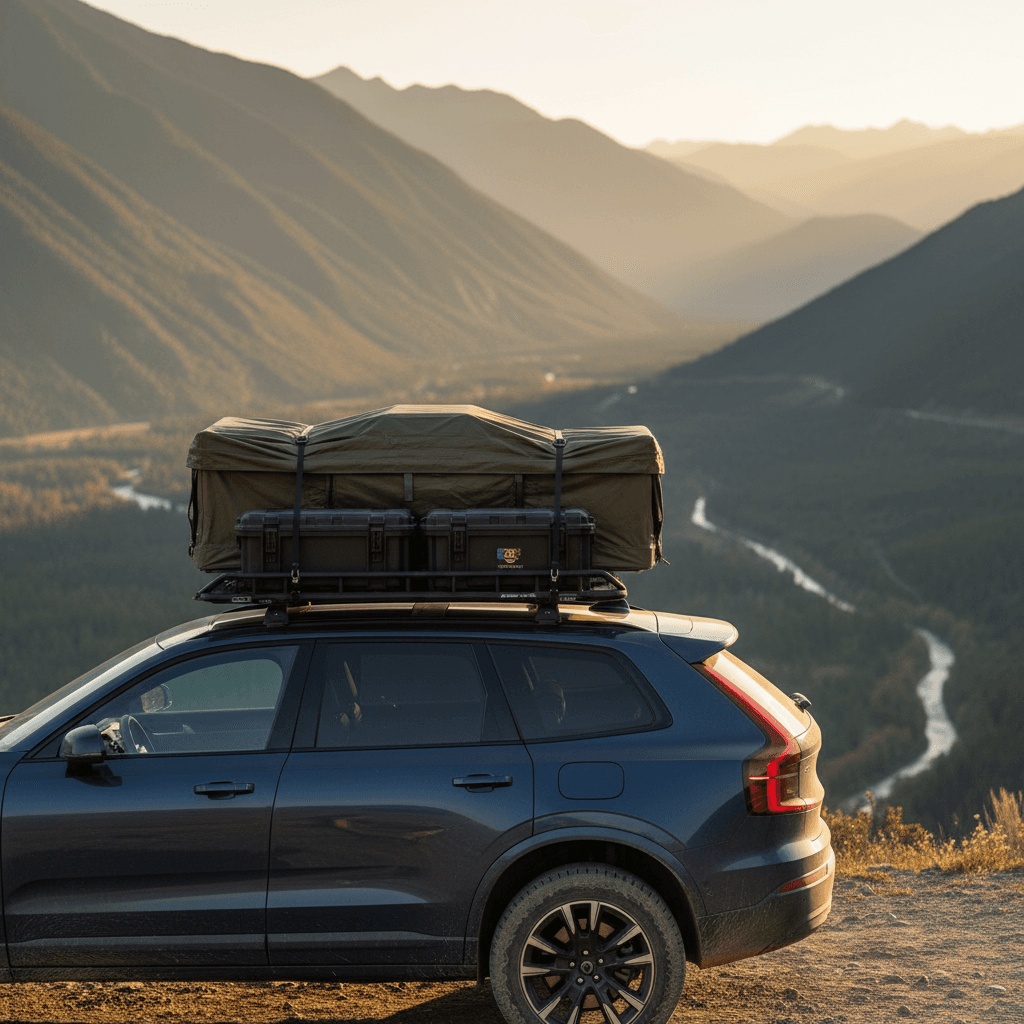
How much can you actually put on the roof of a Volvo EX90 without bending metal, upsetting the battery’s balance, or voiding your warranty? For a 7‑seat electric flagship that already weighs close to three tons, understanding the Volvo EX90 roof rack weight limit isn’t trivia – it’s the difference between a great road trip and a very expensive mistake.
Key number up front
Volvo EX90 roof rack weight limit: the short answer
Volvo EX90 official load ratings at a glance
Volvo publishes a maximum roof load of 100 kg (220 lb) for the EX90 across current Twin Motor and Twin Motor Performance variants. That number shows up consistently in technical specifications and brochures, and it’s the figure you should treat as gospel for anything mounted to the roof while you’re in motion.
- The 100 kg limit is a **dynamic** load rating – it applies while driving.
- It includes **everything above the roof skin**: crossbars, boxes, baskets, bikes, skis, etc.
- It sits inside the EX90’s broader payload rating, which also has to cover passengers, luggage, tongue weight from a trailer, and so on.
Don’t mix up rack rating and roof rating
Dynamic vs static roof load on the EX90
If you’re thinking roof‑top tents, camera platforms or just climbing up to lash a wayward duffel, you’ll quickly run into the distinction between dynamic and static roof load. Volvo officially quotes only the 100 kg figure for the EX90, and that’s a dynamic number. But it helps to understand what’s happening structurally.
Dynamic load (the official 100 kg)
- Applies while the EX90 is moving – highway speeds, potholes, evasive maneuvers.
- Accounts for forces from braking, cornering and bumps, which can briefly multiply the effective weight of whatever’s on the roof.
- Is the number Volvo publishes and stands behind – 100 kg max, including bars and accessories.
Static load (when the car is parked)
- Refers to what the roof can support at rest, on level ground.
- Isn’t usually quoted in owner’s manuals, but in practice is often a multiple of the dynamic rating.
- Some Volvo‑specific load carriers for similar large SUVs mention static roof loads in the ~300 kg range for things like roof tents, but you should always confirm for the EX90’s exact parts and market.
Why Volvo is conservative
In practice, you should treat 100 kg as the hard ceiling for anything you carry on the roof while driving. If you plan to sleep up there (roof‑top tent, platform, etc.), you may be able to run a heavier static load when parked, but only if your specific tent + crossbars setup is approved and you’re absolutely sure the dynamic load of the tent itself stays under 100 kg.
How the EX90 roof rack system is designed
The Volvo EX90’s roof isn’t an afterthought; it’s a structural member in a safety‑obsessed electric monocoque. The factory roof rails and Volvo‑branded crossbars are designed to spread load into reinforced sections of the body, not just into thin steel and glass.
What makes up the EX90 roof load system?
Each part has its own rating – the weakest link defines your limit.
1. Roof structure
2. Roof rails
3. Crossbars & carriers
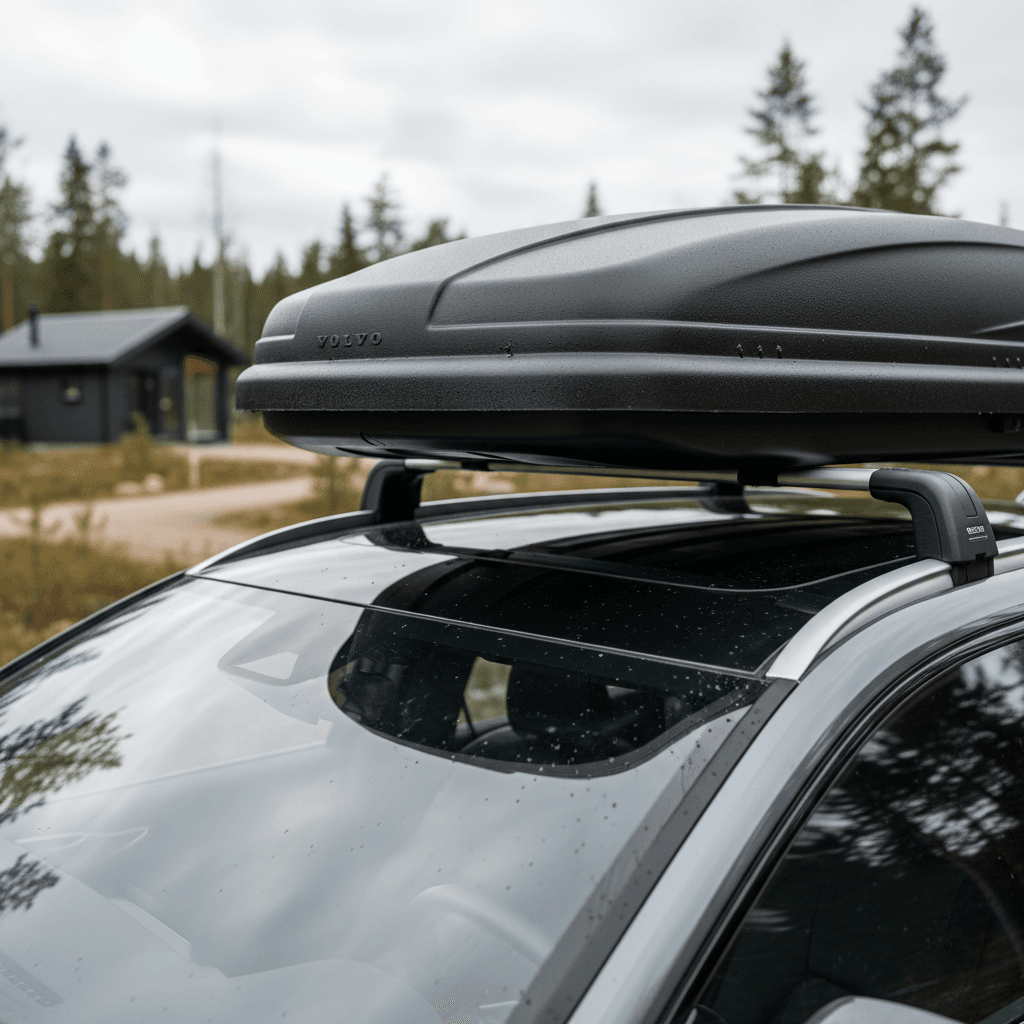
Weigh the system, not just the luggage
Roof box, bikes & gear: real‑world loading examples
So what does 100 kg actually buy you in the real world? Enough for a serious adventure, but not enough to ignore the kitchen scale.
Common EX90 roof‑load scenarios
All examples assume Volvo or quality aftermarket crossbars of about 6–8 kg total. Your actual numbers will vary – always weigh your own gear.
| Scenario | Hardware weight | Cargo weight | Total roof load | Safe within 100 kg? |
|---|---|---|---|---|
| Large roof box + soft bags | Box 18 kg + bars 7 kg = 25 kg | 60 kg of duffels, pillows, light gear | ≈ 85 kg | Yes, with a bit of headroom |
| Two adult bikes on trays | Trays 10 kg + bars 7 kg = 17 kg | 2 bikes × 14 kg = 28 kg | ≈ 45 kg | Comfortably inside limit |
| Four bikes (2 adult, 2 kids) | Trays 18 kg + bars 7 kg = 25 kg | 2×15 kg + 2×9 kg = 48 kg | ≈ 73 kg | Likely fine; watch crosswind stability |
| Ski box + skis + board | Box 20 kg + bars 7 kg = 27 kg | 4 pairs of skis + 1 board ≈ 35 kg | ≈ 62 kg | Comfortably inside limit |
| Overpacked box + hard cases | Heavy box & bars ≈ 28 kg | 80+ kg of mixed luggage | 100–110 kg | Borderline to over – start moving weight inside |
These are illustrative scenarios, not official Volvo guidance. Stay under 100 kg total and keep heavy items inside the cabin when possible.
Don’t hide bricks in the roof box
Can the Volvo EX90 carry a roof‑top tent?
This is the question that comes up in every EX90 forum thread: can Volvo’s big electric flagship carry a roof‑top tent, and if so, how much? The short answer is: yes, in principle – but only with the right hardware and a clear understanding of the limits.
- You still cannot exceed **100 kg dynamic roof load** while driving. That means the tent shell + crossbars + any permanently mounted accessories must be under 100 kg total.
- Higher static loads (e.g., tent + two adults while parked) may be structurally possible, especially with Volvo‑approved load carriers, but static figures are rarely printed in the EX90 owner materials.
- Volvo is famously cautious about modifications that can affect rollover safety and airbag performance, so a dealer‑sanctioned solution matters more here than on many other SUVs.
If you’re tent‑curious, do this first
Three non‑negotiables before you put a bed on a battery pack.
1. Check the fine print
2. Run the numbers
3. Respect the safety envelope
Insurance & liability
Checklist: how to load your EX90 roof safely
EX90 roof loading checklist
1. Know your numbers
Write down Volvo’s <strong>100 kg roof load limit</strong>, your estimated payload, and any towing you plan to do. Keep everything – including people, cargo and tongue weight – inside the EX90’s payload rating.
2. Weigh hardware first
Put crossbars, feet, boxes, trays or baskets on a scale before you mount them. Subtract that from 100 kg to see how much payload is left for actual gear.
3. Pack light, pack low
Use the roof for light, bulky items. Heavy things go in the cargo area or under seats. If the box lid is hard to close, assume you’re flirting with the limit.
4. Center the mass
Position heavy items between the bars and towards the centerline of the car. Avoid tail‑heavy or nose‑heavy loads that can upset handling or strain mounts.
5. Check clearances
Add the height of your loaded box or bikes to the EX90’s already tall stance. Low garages, drive‑thrus and tree branches can end your trip quickly.
6. Retorque and recheck
After the first 50–100 miles of a trip, recheck crossbar torque and straps. EV torque and instant acceleration can work fasteners loose faster than you expect.
Roof load and Recharged’s inspection
Ready to find your next EV?
Browse VehiclesHow roof weight and drag affect range
Even if you stay well inside the EX90’s 100 kg roof rack weight limit, physics still sends a bill – both in range and refinement. The EX90 is a slippery brick by SUV standards, but bolt a cargo pod on top and you’ve turned it into a kite.
Weight penalty
- Extra mass on the roof forces the dual‑motor powertrain to work harder, especially on hills and in stop‑and‑go traffic.
- The EX90’s big battery masks the hit, but you’ll still see a noticeable drop in efficiency once you start packing the roof.
- Because that mass is high up, small steering corrections and crosswinds make stability systems intervene more often, nibbling at efficiency.
Aero penalty
- A tall roof box or a forest of bikes can knock double‑digit percentages off your highway range, regardless of weight.
- Range‑conscious owners often run with empty bars removed and only mount the box for long trips.
- If you’re planning a road trip, build in extra fast‑charge stops when the roof is loaded – and keep speeds reasonable.
Pro move: modular roof strategy
What to check on a used EX90: roof & cargo wear
Shopping used, the EX90’s roof can tell you a lot about how the previous owner treated their very expensive appliance. A family that used the car as rolling REI isn’t a red flag – unless they treated the roof like a Costco pallet rack.
Roof‑related checks when buying a used EX90
Five quick tells that an EX90 has carried more than its share.
Rail & paint wear
Distorted rails
Thread condition
How Recharged bakes this into the Recharged Score
At Recharged, every EX90 we list goes through a structured EV‑specific inspection. We’re not just kicking tires; we’re checking how the roof, suspension and tires tell the story of weight and use.
- Roof rails and surrounding paint checked for stress, deformation and corrosion.
- Cargo area trims and tie‑downs inspected for signs of abuse.
- Suspension and tire wear patterns reviewed for evidence of chronic overloading or heavy towing.
Why it matters for you
A roof that’s been routinely overloaded can hint at harder‑than‑average use overall. With a heavy EV like the EX90, that can mean accelerated wear on brakes, tires and even suspension bushings.
Buying through Recharged means you get a Recharged Score Report with transparent notes on use, battery health and overall condition – so you’re not guessing what the roof has been through.
Volvo EX90 roof rack weight limit FAQ
Frequently asked questions about the EX90 roof rack
Bottom line: treat the EX90 roof like expensive real estate
The Volvo EX90 is a big, capable, quietly imposing EV that can tow, haul seven people and still feel civilized. But its roof is not a free‑for‑all. The 100 kg roof rack weight limit is a carefully chosen line in the sand – a balance between practicality, safety and physics. Respect it, prioritize light bulky items overhead, and your EX90 will shrug off ski trips, beach weeks and bike‑packing odysseys without complaint.
If you’re shopping for a used EX90, or trying to decide whether this Swedish skyscraper‑on‑wheels fits your family’s gear habits, Recharged can help you read between the spec‑sheet lines. Every EX90 on our marketplace comes with a Recharged Score Report that covers battery health, condition and use patterns – including the kinds of clues that reveal how its roof, and the rest of the vehicle, have really been treated.