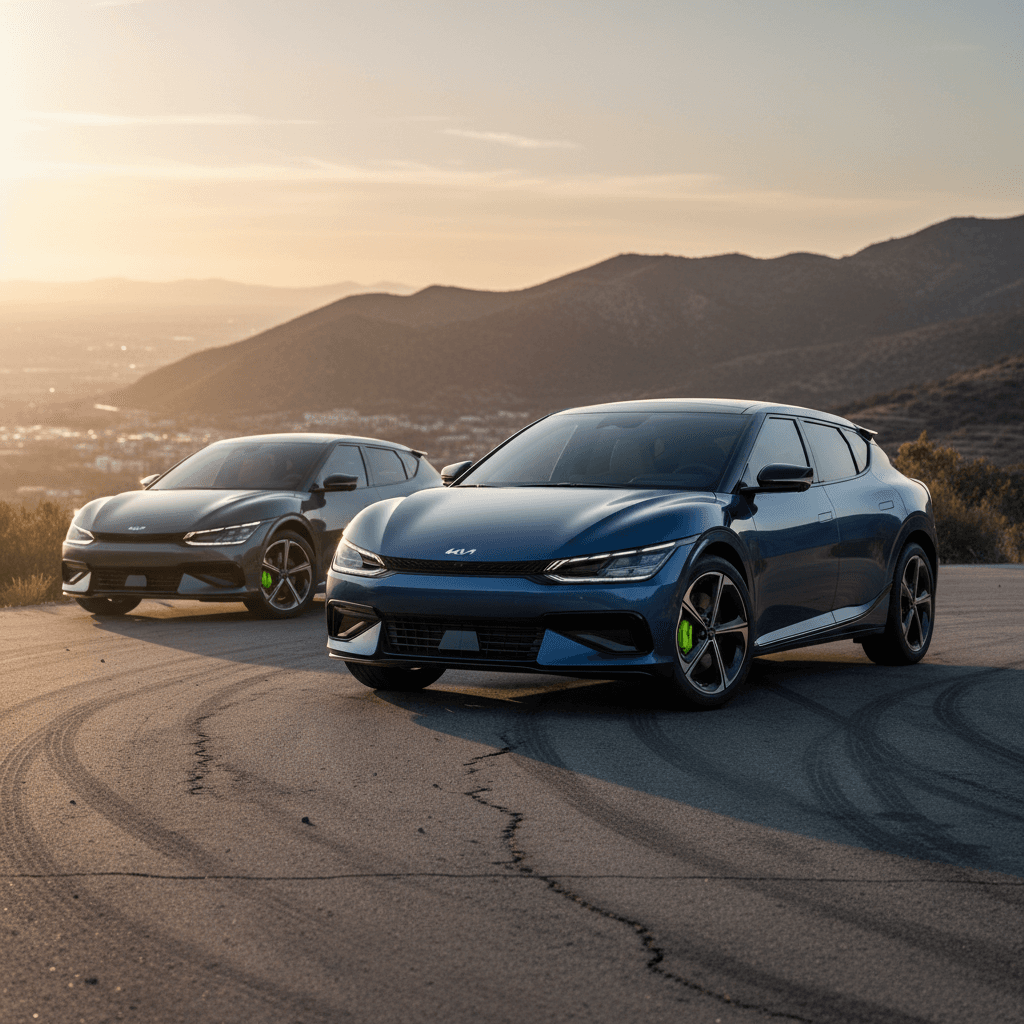
If you’ve spent any time around car people, you’ve probably heard whispers about the Kia EV6 GT. This is the wild-child of the EV6 family: a practical electric crossover with supercar numbers. But when you’re staring at real monthly payments and real-world range, the big question isn’t how fast it is. It’s whether the Kia EV6 GT is worth the premium over an EV6 Wind or GT-Line, or rival performance EVs like the Mustang Mach‑E GT and Tesla Model Y Performance.
What this guide will help you decide
Kia EV6 GT at a glance
Kia EV6 GT: headline numbers
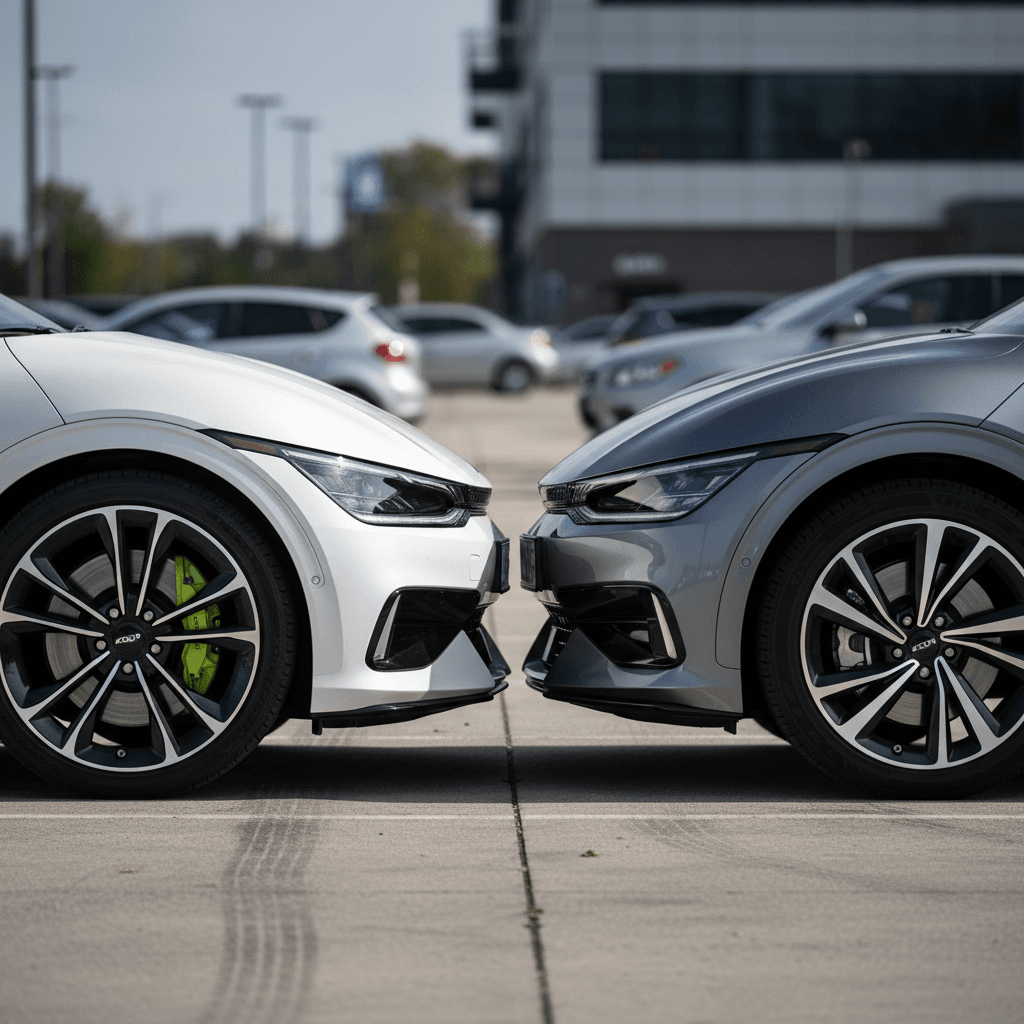
On paper, the EV6 GT is outrageous: dual electric motors, up to roughly 640 horsepower, launch control, adaptive suspension, huge brakes, and 21‑inch performance tires. It has humbled six‑figure sports cars in magazine tests while still offering a usable back seat and hatchback practicality. The catch is that you pay for that performance twice, once on the window sticker, and again in range and running costs.
How much more does the EV6 GT cost?
Pricing moves around year to year and by market, but in the U.S. the EV6 GT has generally sat near the top of the lineup. Earlier model years launched with MSRPs in the low‑$60,000s before destination fees, while mainstream trims like Wind and GT-Line typically started in the high‑$40,000s to mid‑$50,000s depending on battery and drivetrain. For 2025, modest price increases across the EV6 range keep that spread intact: the GT still demands a clear premium over a well‑equipped GT-Line or Wind.
New Kia EV6 GT
- Top of the range performance model.
- Dual‑motor AWD, adaptive suspension, bigger brakes, 21‑inch wheels.
- Sticker typically lands in the low‑to‑mid $60,000s before options and fees.
- Often $10,000–$15,000 more than an EV6 Wind or GT-Line RWD.
New EV6 Wind / GT-Line
- Long‑range 84 kWh battery on most non‑GT trims.
- Choice of efficient RWD or grippy AWD.
- MSRPs typically in the high‑$40,000s to mid‑$50,000s.
- Still quick: dual‑motor versions make around 320 hp, 0–60 mph in the low‑5‑second range.
Where used EV6 GTs get interesting
Performance: Kia EV6 GT vs other EV6 trims
Let’s be honest: if you’re considering the EV6 GT, it’s because you care about how hard it pulls. The standard EV6 is already a quick car; the GT turns it into something that feels closer to a track toy than a family crossover.
Kia EV6 GT vs other EV6 trims (typical figures)
Approximate performance stats based on recent model years. Exact numbers vary slightly by year and test source.
| Trim | Drivetrain | Horsepower (approx.) | 0–60 mph (approx.) | Character |
|---|---|---|---|---|
| Light / Wind RWD | Single‑motor RWD | 225 hp | ~7.0 s | Smooth and efficient, ideal for commuting. |
| Wind / GT-Line AWD | Dual‑motor AWD | 320 hp | ~5.0 s | Seriously quick, strong all‑weather traction. |
| EV6 GT AWD | Dual‑motor AWD | ~576–641 hp | ~3.2–3.4 s | Supercar‑quick, brutal acceleration with launch control. |
The GT is dramatically quicker than other EV6 trims, but you may already be satisfied with the mid‑range models.
How fast is “fast enough”?
- Throttle response: The GT hits harder, sooner. Even half‑throttle pulls are aggressive compared with other trims.
- Handling: Adaptive suspension, stiffer tuning, and performance tires all make the GT flatter and sharper, at the expense of some ride comfort.
- Braking: Larger brakes give the GT more confidence in repeated hard stops, especially if you drive in the mountains or do the occasional track day.
Range and efficiency: the hidden cost of speed
The hardware that makes the EV6 GT so quick, dual high‑output motors, aggressive tires, less aero‑friendly wheels, also works against range. The regular long‑range EV6 trims can crest 300 miles of EPA range in rear‑wheel‑drive form. The GT lands much lower, especially if you drive it the way it begs to be driven.
Typical EPA range by trim (recent U.S. figures)
Illustrative EPA‑style range estimates for common EV6 configurations. Exact numbers vary by model year and wheel choice.
| Trim | Battery | Drivetrain | EPA range (approx.) |
|---|---|---|---|
| Wind RWD (long range) | 84 kWh | RWD | ~310–319 miles |
| GT-Line AWD (long range) | 84 kWh | AWD | ~260–282 miles |
| EV6 GT AWD | 84 kWh | AWD | ~206–231 miles |
The EV6 GT trades roughly 80–100 miles of range for its added performance.
Expect lower real‑world range
Range reality check: is the GT enough for you?
1. Map your longest regular trip
Think about the farthest you drive in a typical week, kid activities, work, weekend visits. If that round‑trip distance approaches 180–200 miles without reliable fast charging, the GT’s real‑world range may feel tight.
2. Consider your charging routine
If you can charge at home overnight on Level 2, the GT’s shorter range is easier to live with. Relying heavily on public chargers magnifies every lost mile.
3. Think about road‑trip style
If you’re a set‑and‑forget cruiser who hates stopping, a long‑range RWD EV6 is a better fit. If you enjoy breaking up trips and don’t mind planning fast‑charge stops, the GT’s range is more manageable.
4. Climate matters
Frequent winter driving, high speeds, or heavy loads will nibble at any EV’s range. Those hits hurt more when you start from a lower baseline like the GT.
Daily comfort, ride, and usability
From the driver’s seat, every EV6 shares the same basic strengths: roomy cabin, usable back seat, generous hatch area, and a clean, tech‑forward cockpit. The GT doesn’t suddenly turn it into a stripped‑down sports car, but it does change how it feels day to day.
How the EV6 GT feels to live with
Same body shell, very different personality.
EV6 Wind / GT-Line
- Ride comfort: Softer suspension tuning, smaller wheels on most trims, and touring‑oriented tires keep bumps in check.
- Noise: Quieter over rough pavement thanks to less aggressive tires.
- Seats: Comfortable, supportive, but not as aggressively bolstered as the GT.
- Parking & errands: Easygoing, feels like a modern, refined crossover.
EV6 GT
- Ride comfort: Noticeably firmer, especially over sharp impacts or patchy city streets.
- Noise: Performance tires can add more road roar on coarse asphalt.
- Seats: Deeply bolstered sport buckets that hold you in place during hard cornering; bigger folks may find them snug.
- Parking & errands: Still practical, but the car always feels like it’s coiled and ready to go.
Try before you commit
Kia EV6 GT vs rival performance EVs
If you’re cross‑shopping the EV6 GT, you’re probably also eyeing the Ford Mustang Mach‑E GT, Tesla Model Y Performance, or even higher‑end options like the Porsche Taycan. The EV6 GT plays a middle game: more affordable than the luxury exotics but offering genuine super‑quick acceleration and a usable cabin.
Kia EV6 GT vs key rivals (broad strokes)
High‑level comparison of popular performance EV crossovers and sport sedans. Exact specs vary by model year and options.
| Model | Body style | 0–60 mph (approx.) | EPA range (approx.) | Starting price (approx.) | What stands out |
|---|---|---|---|---|---|
| Kia EV6 GT | Compact crossover | ~3.2–3.4 s | ~206–231 mi | Low‑$60,000s | Huge power and value; bold styling; very fast charging. |
| Ford Mustang Mach‑E GT | Compact crossover | ~3.5–3.7 s | Up to ~270 mi | Low‑to‑mid‑$60,000s | Iconic name, strong performance, slightly more range in some trims. |
| Tesla Model Y Performance | Compact crossover | ~3.5 s | ~279 mi | Mid‑$50,000s | Supercharger access, strong efficiency, simple interior. |
| Porsche Taycan (GTS, etc.) | Sport sedan / wagon | Low‑3s | ~225–246 mi | $130,000+ | Luxury, handling precision, badge appeal, at twice the price or more. |
The EV6 GT is often the performance bargain, but rivals can offer more range or brand cachet.
Where the EV6 GT shines
Ownership costs: insurance, tires, and depreciation
The sticker price is only part of the story. High‑performance EVs like the EV6 GT quietly add cost in other parts of your budget, especially if you drive them the way the engineers clearly hoped you would.
Key cost differences: EV6 GT vs regular trims
Where the GT may hit your wallet harder over time.
Insurance
Insurers see the EV6 GT as a higher‑risk performance vehicle. Premiums can be noticeably higher than for lower trims, especially for younger drivers or those with tickets.
Tires & brakes
Those 21‑inch performance tires are pricey, and they tend to wear faster than touring rubber. Bigger brakes mean more expensive pads and rotors down the line, even if EVs rely heavily on regen braking.
Depreciation
Performance EVs often take a steeper initial depreciation hit than mainstream trims. That can be bad news if you buy new and sell early, but good news if you’re shopping used.
Budget for consumables
Who should actually buy the Kia EV6 GT?
Here’s the honest part: the EV6 GT is a phenomenal machine, but it’s not the smartest choice for every EV6 shopper. For many drivers, a Wind or GT-Line delivers 80–90% of the experience for much less money and with more range. The GT makes sense when your priorities tilt heavily toward performance and emotional appeal.
Is the EV6 GT worth the premium for you?
The GT is worth it if…
You genuinely care about <strong>maximum acceleration</strong> and enjoy using it, on ramps, back roads, maybe the occasional autocross or track day.
You’re okay trading 80–100 miles of range for a car that makes you grin every time you merge.
You can afford higher insurance and tire costs without stress.
You have reliable home or workplace charging so the shorter range doesn’t cramp your routine.
You’ve test‑driven the GT and love the firmer ride and sport seats.
You’re better off with Wind / GT-Line if…
You mostly commute, run errands, and road‑trip with family at legal speeds.
You want <strong>maximum range</strong> and minimal charging stops, especially on long drives.
You value a softer, quieter ride over razor‑sharp handling.
You prefer lower ongoing costs for insurance, tires, and repairs.
You like the idea of quick acceleration, but you don’t need supercar numbers.
Shopping strategies: new vs used EV6 GT
If you’ve decided the EV6 GT fits your personality, the next question is how to buy one without overpaying for the thrill. Because performance EVs tend to depreciate faster than their mainstream siblings, the used market can be very kind to patient shoppers.
Buying new
- Best if you want a specific color, option mix, or the latest tech updates.
- Full manufacturer warranty and latest software/hardware revisions.
- Higher upfront cost, but you start the clock on the car’s history yourself.
Consider new if you plan to keep the car for many years and you’re comfortable paying for the privilege of being first owner.
Buying used
- Lets you let someone else eat the steepest depreciation.
- Can sometimes price an EV6 GT close to a new Wind or GT-Line.
- Battery health becomes critical, this is where objective data matters.
At Recharged, every used EV6, GT or otherwise, comes with a Recharged Score Report that verifies battery health, analyzes fair market pricing, and documents vehicle history so you’re not guessing about the life left in that high‑output powertrain.
Checklist: evaluating a used Kia EV6 GT
Confirm battery health and fast‑charge history
High‑performance owners may fast‑charge more often and drive harder. Ask for a recent battery health report, on Recharged, this is built into the Recharged Score so you can see degradation at a glance.
Inspect tires and wheels closely
Curb rash and worn inner shoulders on performance tires tell you a lot about how the car was driven and parked. Budget for an immediate replacement set if they’re near the wear bars.
Look for track or competition use
Occasional spirited driving is fine; repeated track days add wear. Ask directly, look for helmet‑sticker residue, and check service invoices for track‑ready brake fluid or unusual pad changes.
Verify software and recall updates
Make sure the car has received any performance, charging, or safety updates. A seller with good records is a seller who likely maintained the car well.
Compare total cost vs non‑GT trims
Even if you fall in love with a used GT, run the numbers against a used Wind or GT-Line. If the price gap is small and you value performance, the GT’s premium is easier to justify.
FAQ: Kia EV6 GT and whether it’s worth the premium
Frequently asked questions about the Kia EV6 GT
Bottom line: is the Kia EV6 GT worth the premium?
If you strip emotion out of the decision, the rational answer is simple: for most drivers, an EV6 Wind or GT-Line delivers more range, a softer ride, and plenty of power for less money. From a pure value and practicality standpoint, those trims are the smarter buy.
But cars aren’t purely rational. If you light up every time you read a spec sheet, if you’ve always wanted something that can embarrass sports cars while hauling kids and cargo, the Kia EV6 GT absolutely can be worth the premium. The key is not to overpay for that thrill, or to ignore the trade‑offs in range and running costs.
That’s where shopping smart matters. Comparing multiple EV6 trims side by side, looking at real battery health, and understanding fair pricing is much easier when every vehicle comes with the same transparent report. On Recharged, every used EV6, including the GT, comes with a Recharged Score Report that spells out battery condition, value, and history so you can decide, with clear eyes, whether the EV6 GT is the car your heart and your budget can agree on.