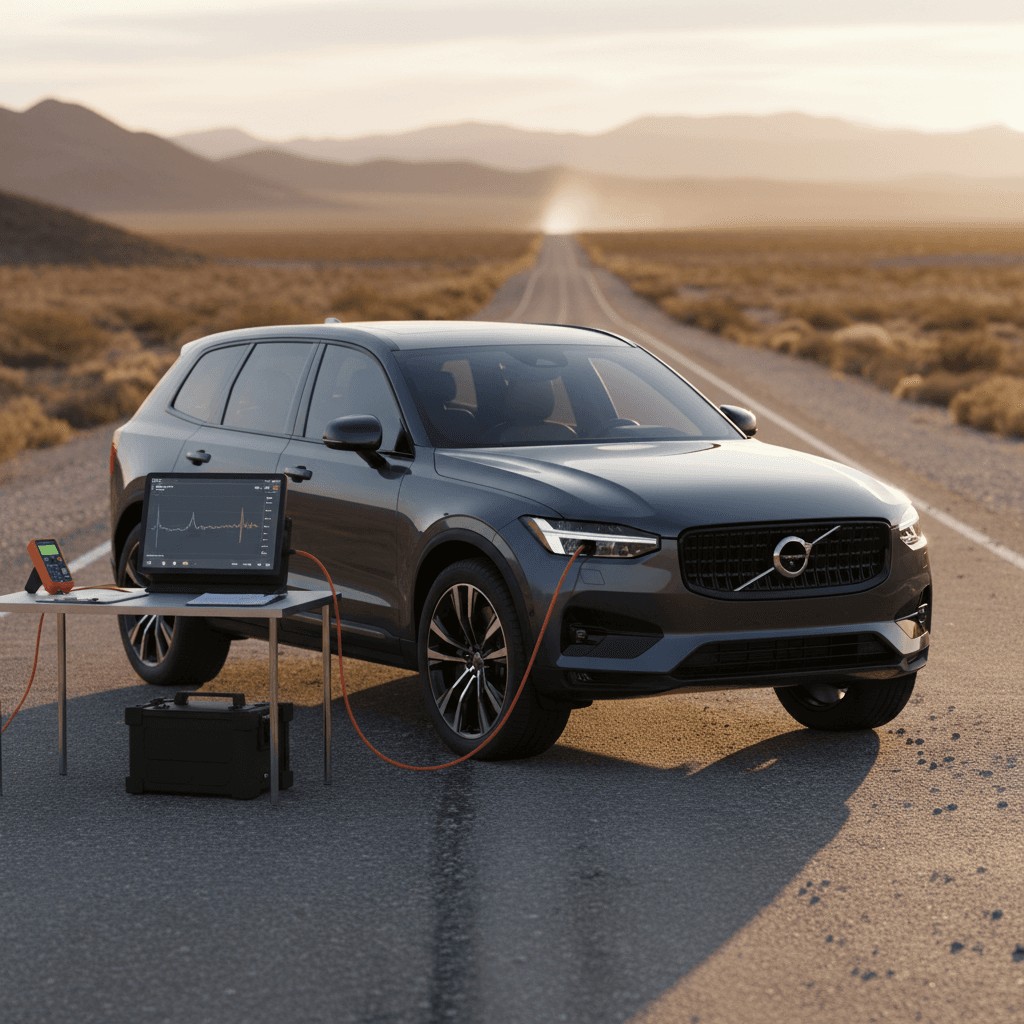
If you’re looking at a Volvo EX90, especially on the used market, you’re probably less interested in brochure numbers and more interested in the real-world highway range. How far will it actually go at 70–75 mph with the family, luggage, and bad weather in the mix?
Why highway range matters more than you think
Volvo EX90 range basics: ratings, batteries, trims
To understand Volvo EX90 real-world highway range, you first need the key specs. Early U.S. EX90s use a roughly 111 kWh battery pack (about 107 kWh usable) with dual motors and standard all-wheel drive. Later 2026-and-newer models switch to an 800‑volt architecture and a slightly smaller pack around 102 kWh usable, trading a few miles of rated range for faster charging and lower weight.
Key Volvo EX90 battery and range specs (U.S.)
Approximate U.S. EPA-style range estimates; exact figures vary by trim and wheel size.
| Model year & trim | Battery usable (approx.) | EPA-estimated range (best case) | Drivetrain |
|---|---|---|---|
| 2024–2025 Twin Motor | ~107 kWh | Up to ~310 miles | Dual-motor AWD |
| 2024–2025 Twin Motor Performance | ~107 kWh | Around 300 miles | Dual-motor AWD (higher power) |
| 2026+ EX90 (800V, updated pack) | ~102 kWh | Peak around 305 miles | Dual-motor AWD; more variants coming |
Always check the Monroney label or Volvo’s official site for your specific EX90’s ratings.
Preliminary numbers can change
EPA and WLTP vs real-world highway range
What lab cycles assume
- Official EPA and WLTP tests mix city and highway driving.
- Average speeds are lower than a real U.S. interstate cruise.
- Climate control is limited or standardized.
- No roof boxes, bikes, or heavy cargo.
What your highway trips look like
- 70–80 mph cruising, sometimes into a headwind.
- Cabin at 70–72°F, maybe heated seats or steering wheel in winter.
- Kids, luggage, maybe a hitch rack on the back.
- Elevation changes and traffic that force speed changes.
Put simply, lab cycles are designed to be comparable between vehicles, not to mirror a real family road trip. For a big, three-row SUV like the EX90, it’s common to see 15–25% less range at a steady 70 mph than the headline EPA number suggests, especially with large wheels and in poor weather.
Typical gap between window sticker and real highway range
What independent tests show so far
Independent highway tests of the EX90 are still limited because the model is new, but we do have some early data points, especially on the Performance version with big wheels, which is usually the worst case for range.
- A well-documented road-trip-style test at a steady 70 mph in a 2025 EX90 Performance on 22‑inch wheels reported roughly 247 miles from 100% down to about 5% state of charge in mild conditions.
- That same vehicle carries an EPA rating around 300 miles on those wheels, so it delivered roughly 80–85% of its rated range in that constant‑speed highway scenario.
- During fast‑charging, testers saw a peak power well under the claimed 250 kW (closer to ~190 kW), adding roughly 90–100 miles in around 15 minutes, meaning the EX90’s road‑trip pace is competitive but not segment‑leading today.
Treat early tests as direction, not gospel
Highway range by EX90 trim, wheels, and model year
Wheel size, tire choice, and configuration can easily swing real-world highway range in a Volvo EX90 by 30–40 miles or more. Here’s how to think about it if you routinely cruise at 70–75 mph.
How different EX90 configurations affect highway range
Approximate 70–75 mph ranges assuming mild weather, mostly flat terrain, and typical loading.
Twin Motor, smaller wheels (21")
Best EX90 highway case. With 21‑inch wheels and the standard Twin Motor powertrain, many drivers can expect:
- ~235–255 miles at 70 mph from 100% down to ~10%.
- Closer to EPA numbers on mixed routes that aren’t pure highway.
Range can be a bit better in warm, dry conditions at 65–70 mph.
Twin Motor Performance, 22" wheels
Worst efficiency case. The Performance variant on 22s brings more power and show, but costs range:
- ~210–240 miles at 70 mph from 100% down to ~10%.
- Noticeable extra hit in strong headwinds or cold rain.
If you buy this spec, plan charging stops a bit closer together.
If you care about range, prioritize wheels over power
For 2026‑and‑newer EX90s with the 800‑volt system and slightly smaller battery, Volvo’s own estimates show only a small change in official range (around 305 miles peak vs about 310 before). In the real world, you should expect similar highway range but shorter DC fast‑charge stops, which matters more once you’re beyond a single charge.
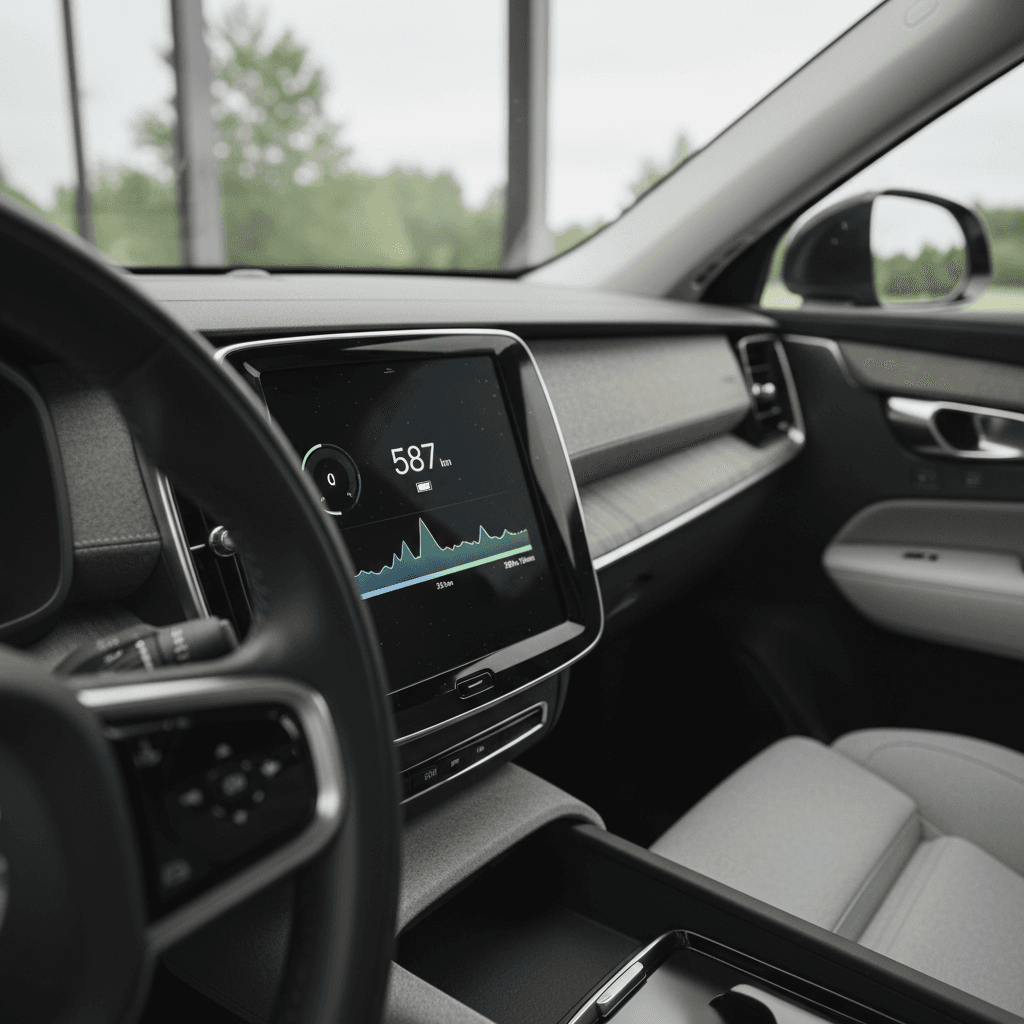
What really eats into Volvo EX90 highway range
The EX90 is a big, safe, three‑row SUV. That’s its appeal, but it also means there’s a lot of frontal area pushing through the air at 75 mph. Here are the major range killers you’ll notice in day‑to‑day highway use.
Top EX90 highway range killers
1. High cruising speeds
Jumping from 65 mph to 75 mph can eat 10–15% of your range on a large EV. On an EX90 Performance, that might mean 220 miles instead of 250 over the same charge window.
2. Cold temperatures and winter tires
Cold batteries are less efficient and offer less usable energy. Combine that with sticky winter tires and you can see 20–30% less range on sub‑freezing days at highway speeds.
3. Strong headwinds and heavy rain
Aerodynamic drag rises quickly with wind speed. A 20–30 mph headwind effectively turns 70 mph into 90+ mph from the car’s perspective, easily shaving another 10–20% off your projected range.
4. Roof boxes and bike racks
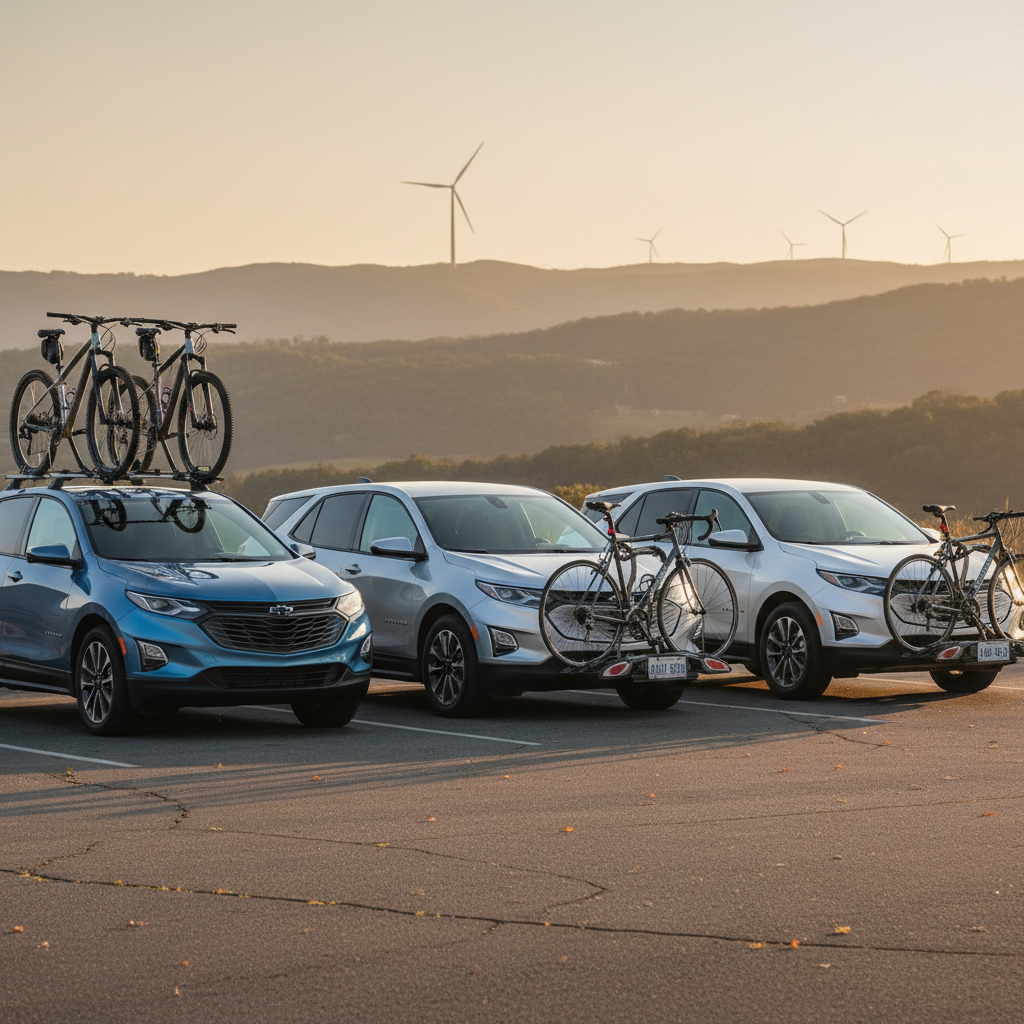
Anything on the roof is a range penalty, especially at 75 mph. A big cargo box or pair of bikes can cost 30–50 miles over a full pack. Rear racks are better aerodynamically but still add drag and weight.
5. Big wheels and aggressive tires
The 22‑inch wheel option looks great but adds rotational mass and often higher‑rolling‑resistance tires. Expect a clear efficiency hit versus a 21‑inch setup, even in perfect conditions.
6. Frequent acceleration and passing
A steady 70 mph is actually pretty efficient. It’s the “rush to 85, brake to 60” pattern in heavy traffic that burns extra energy and reduces your average miles per kWh.
Watch for stacked penalties
Planning real road trips in a Volvo EX90
So what does all this mean for a real‑world interstate trip in a Volvo EX90? Let’s translate the numbers into practical planning so you aren’t sweating the battery gauge between chargers.
Conservative planning rule of thumb
- Assume you can comfortably use 70% of your battery between fast‑charge stops (for example, 80% down to 10%).
- On a Twin Motor with sensible wheels, that’s often ~180–210 highway miles at 70–75 mph in mild weather.
- On a Performance with 22s, plan closer to ~160–190 miles between stops.
How that feels on the road
- On a 600‑mile day, you’re probably looking at two DC fast‑charge sessions plus an overnight charge at your destination.
- Each stop might be 25–35 minutes from 10–15% back to ~70–80% on today’s 400‑volt models.
- 2026+ 800‑volt EX90s should trim each stop by several minutes, especially from 10–60%.
Use the car’s own trip planner, but verify with a third‑party app
If you’re coming from a gasoline XC90, the biggest mindset shift is accepting that you’ll stop a little more often, for slightly longer breaks, but your energy cost per mile will usually be lower, and the EX90’s quiet cabin makes those miles a lot less tiring.
Buying a used Volvo EX90: battery and range checklist
Because the EX90 is still new to the market, most examples you’ll see over the next couple of years will be lightly used lease returns or early adopters trading out. That’s an opportunity, if you know how to evaluate battery health and real‑world range before you sign anything.
Used EX90 highway range & battery checklist
1. Verify build year, trim, and wheel size
Get the exact trim (Twin Motor vs Performance), model year, and wheel size from the VIN decode or build sheet. These three items largely set your realistic highway range envelope.
2. Check the EPA label and in‑car estimate
Look at the original window sticker if you can, then compare it to the car’s current full‑charge estimate in the instrument cluster. A healthy used EX90 should typically show 80–90% of EPA in its predicted range at 100% state of charge, depending on recent driving history.
3. Ask for a recent 70 mph range run
A seller who’s serious should be willing to share at least one recent highway drive, distance, average speed, weather, and battery use. That’s a much more honest picture than a single photo of the range gauge after city driving.
4. Look for fast‑charging history
Moderate DC fast‑charging is fine, but a vehicle that’s lived on 250 kW stations every day may show slightly more long‑term degradation over many years. Ask how the previous owner charged: mostly home Level 2, or fast charge‑heavy road‑trip use?
5. Consider a professional battery health report
A diagnostics report, like the Recharged Score battery health check, gives you an objective read on pack condition, usable capacity, and any fault codes that might not throw a dash warning yet.
6. Think about your actual highway use
Map out your real patterns. If 95% of your life is a 40‑mile daily commute plus a few 200‑mile weekends a year, a used EX90 Performance on 22s might be perfect. If you routinely pound out 500‑mile days, you’ll likely prefer a Twin Motor on smaller wheels.
How Recharged can help with a used EX90
Charging speeds, 400V vs 800V, and your total trip time
Range is only half the highway story. The other half is how quickly you can put miles back into the pack at a DC fast charger, and that’s where the 2026‑and‑newer EX90’s 800‑volt architecture starts to matter.
EX90 highway efficiency vs charging speed
Why the newer 800‑volt EX90 can feel quicker on a long day even if range is similar.
2024–2025 EX90 (400V)
- ~107 kWh usable battery.
- Claimed peak around 250 kW, with many real‑world sessions peaking lower.
- Typical 10–80% fast charge in roughly 30 minutes when conditions are ideal.
- On a 600‑mile trip, expect roughly two 30‑minute stops plus your starting charge.
2026+ EX90 (800V)
- ~102 kWh usable battery, slightly smaller but lighter.
- New 800‑volt system targets a roughly 22‑minute 10–80% session under good conditions.
- On that same 600‑mile day, your two main stops might shrink by 6–10 minutes each.
- Net result: similar range, shorter breaks, faster overall door‑to‑door time.
Trip time > range number
FAQ: Volvo EX90 real-world highway range
Frequently asked questions about EX90 highway range
Bottom line: how far will a Volvo EX90 really go?
If you strip away the marketing and focus on real-world highway range, the Volvo EX90 is a comfortable 200‑plus‑mile cruiser that trades a bit of efficiency for safety tech, space, and refinement. In Twin Motor form on smaller wheels, 70–75 mph legs in the 190–220‑mile range are entirely realistic. In Performance trim on 22s, you should think more in terms of 170–200 miles between fast‑charge stops, especially in less‑than‑ideal weather.
For many families, that’s more than enough, especially with the EX90’s fast‑charging capability and the 800‑volt update landing on newer models. The key is to be honest about how you drive, where you charge, and how often you really need to stretch that last 10% of the pack. If you’re exploring a used EX90, pairing those questions with a verified battery health report and expert guidance, like you get from Recharged, can turn a complex decision into a confident, data‑backed purchase.