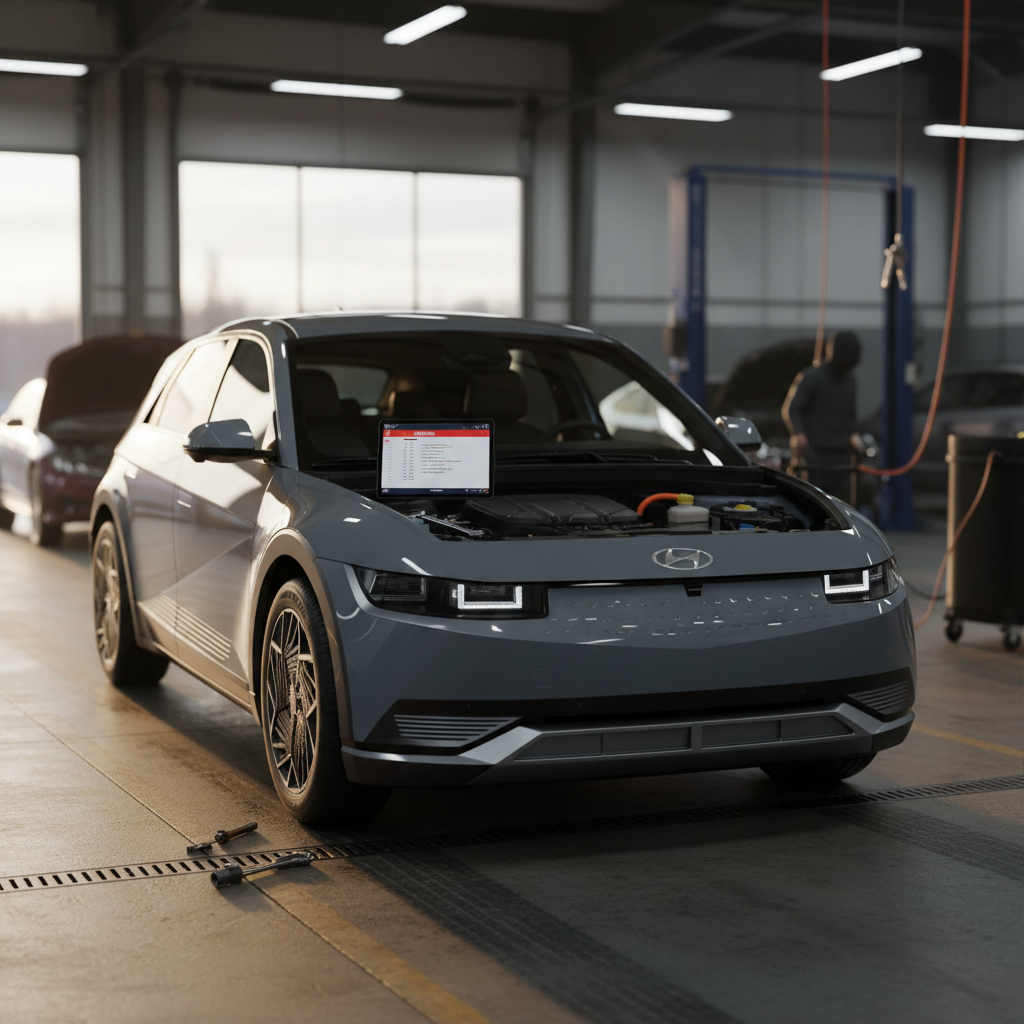
If you’re budgeting long‑term ownership costs for a Volvo EX90, you’ve probably noticed that **coolant service** shows up in the maintenance schedule but not very often. That leads to an obvious question: what does a **Volvo EX90 coolant flush cost**, and how worried should you be about it compared with other EV expenses?
Quick answer
Why coolant matters in the Volvo EX90
On the EX90, coolant isn’t just about engine temperature, there is no traditional engine. Instead, the SUV uses **multiple dedicated coolant loops** for the high‑voltage battery, power electronics, and electric drive units. Those circuits keep components in a safe temperature window, protect against corrosion inside the cooling system, and help manage cabin comfort through the heat pump and HVAC system.
- The **battery coolant loop** helps maintain pack temperature for range, performance, and longevity.
- The **power electronics loop** cools the onboard charger and inverters that convert power for driving and charging.
- Additional circuits support the **electric motors** and climate system, especially in hot or very cold weather.
Why EV coolant is a bigger deal than it looks
How often does a Volvo EX90 need a coolant flush?
Volvo’s **2025 fully electric maintenance sheets** for models including the EX90 emphasize **inspecting** coolant at regular intervals rather than replacing it frequently. Service visits around every 20,000 miles call for checking coolant levels and antifreeze/anti‑corrosion properties, but they do not list routine coolant replacement at those lower mileages.
- Every service (roughly 10,000–20,000 miles): Coolant level and condition are checked.
- Around 30,000–40,000 miles: Volvo technicians perform more detailed inspections of the EX90’s cooling circuits as part of broader system checks.
- Long‑term: Many modern Volvos using long‑life G48‑type coolant are serviced around **100,000–150,000 miles** or **5–10 years** in real‑world practice, unless a leak or hardware repair forces earlier replacement.
Think “inspection first,” flush later
Typical Volvo EX90 coolant service timing
Check your specific EX90
Volvo EX90 coolant flush cost breakdown
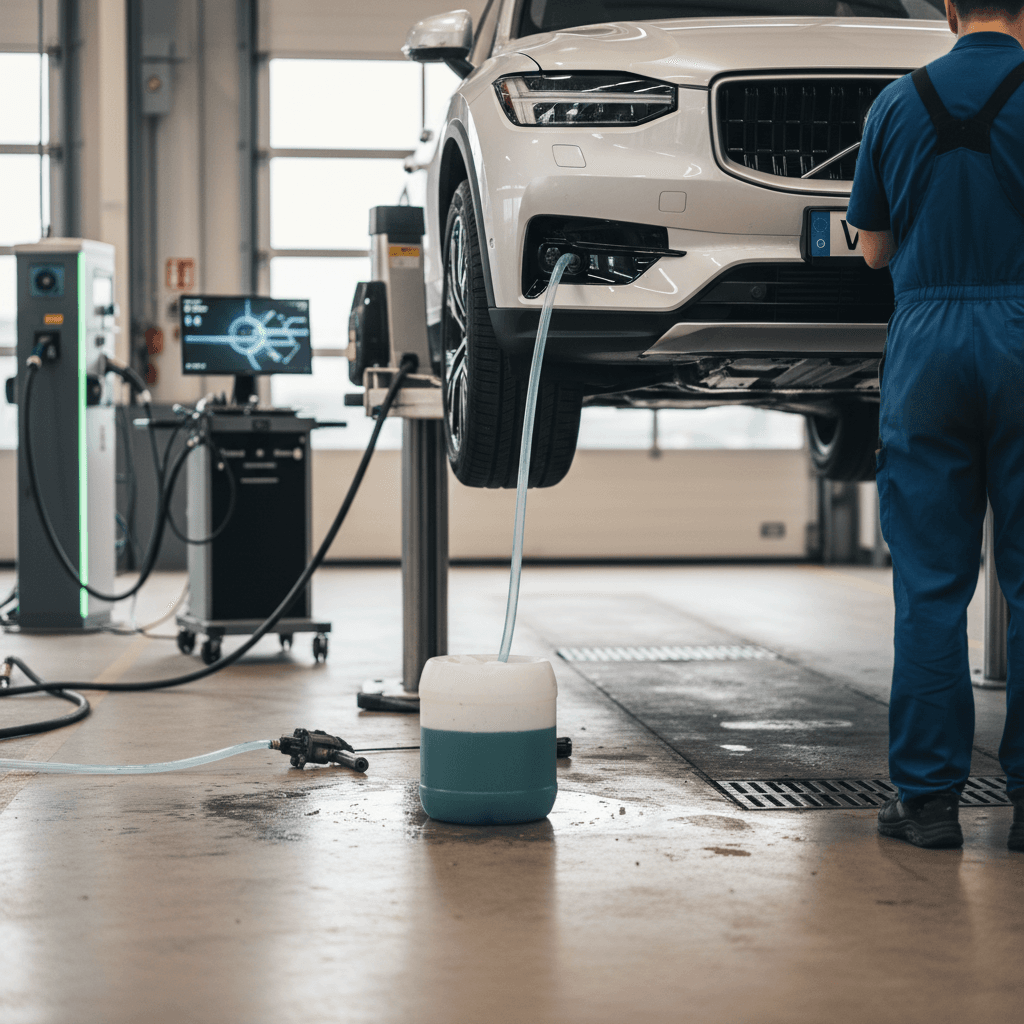
When you see “coolant flush” on a Volvo EX90 estimate, you’re usually paying for a **coolant exchange using vacuum‑fill equipment**, not just a quick drain and refill. EVs like the EX90 have complex plumbing and may require scan‑tool procedures to bleed electric pumps and valves, which drives the price higher than a basic sedan.
Typical Volvo EX90 coolant flush cost (U.S.)
Approximate pricing for a full coolant exchange on a Volvo EX90, assuming out‑of‑warranty service in 2026 dollars.
| Scenario | Where | What’s Included | Typical Cost Range |
|---|---|---|---|
| Quick top‑off only | Dealer or independent | Add approved coolant, no flush; often done during scheduled service | Usually included or $0–$40 |
| Single‑loop exchange | Independent EV‑savvy shop | Drain and refill of one coolant circuit (for example, battery loop) using vacuum‑fill equipment | $220–$350 |
| Single‑loop exchange | Volvo dealer | Same as above, plus Volvo overhead and OE‑branded coolant | $280–$400 |
| Multi‑loop EV exchange | Independent EV‑savvy shop | Exchange of multiple loops (battery + power electronics) with vacuum‑fill and scan‑tool bleed if needed | $320–$450 |
| Multi‑loop EV exchange | Volvo dealer | Full EX90 coolant service across applicable circuits, OE coolant, dealer labor rates | $380–$550+ |
Actual prices vary by region; always request a written estimate before authorizing work.
Those ranges line up with broader U.S. coolant‑flush pricing trends, where **modern SUV coolant services can push into the $400–$600 bracket** when specialized equipment and extra labor are required. The EX90 falls squarely into the “premium, complex cooling system” camp, so it tends to be near the upper half of general coolant‑service price lists.
Watch the line items
Dealer vs. independent shop pricing
Volvo dealer pros and cons
- Pros: Factory training on the EX90’s multi‑loop cooling system; correct Volvo‑approved coolant; access to technical service bulletins for issues like coolant‑system filling procedures.
- Pros: Easier warranty conversations if a cooling‑related failure happens later, because the work is in Volvo’s system.
- Cons: Higher labor rates; more aggressive service menus that may recommend coolant exchanges earlier than the manual.
Independent EV specialist pros and cons
- Pros: Lower hourly rates; more flexibility to price a single‑loop exchange instead of a blanket service; can still source OE‑spec coolant.
- Pros: Often more willing to **test coolant condition** and show you results before recommending a flush.
- Cons: Not every shop is comfortable with EX90‑specific bleed and vacuum‑fill steps; you’ll need to verify EV experience up front.
How to compare quotes fairly
Signs your EX90 may need coolant service sooner
Ideally, your Volvo EX90 will go years before anyone suggests a coolant exchange. But certain symptoms should push you to schedule a visit and, in some cases, expect coolant service as part of the repair.
- Visible **low coolant level** in the reservoir or repeated top‑off warnings (remember that some EX90s do not always show a DIM warning for low coolant).
- Damp spots, crusty residue, or a sweet smell around hoses, the radiator, or under the vehicle after parking.
- Repeated **thermal‑management warnings** in the driver display, especially under heavy use or fast charging.
- A history of battery or onboard‑charger repair, where the system had to be opened and refilled.
- Coolant that looks rusty, milky, or contaminated rather than clear and brightly colored.
Don’t ignore thermal warnings
Can you skip or delay a Volvo EX90 coolant flush?
If a service advisor is recommending a coolant flush on a low‑mileage EX90, say **under 40,000 miles** and only a few years old, it’s fair to ask questions. In many cases, there’s **no explicit requirement** in Volvo’s early service schedule for a full coolant exchange unless there’s contamination, a leak, or a component replacement.
When a Volvo EX90 coolant flush makes sense
Use this as a sanity check before you authorize the work.
Situations where “yes” makes sense
- Your EX90 has 80,000–120,000+ miles or 5–10 years of service and has never had a coolant exchange.
- Coolant tests show degraded corrosion protection or contamination.
- Cooling components were just replaced (e.g., chiller, pump, radiator, or onboard charger) and the system is already open.
- A previous shop mixed the wrong coolant type and your Volvo tech wants to correct it.
Situations where you can usually wait
- Vehicle is still relatively new (for example, under 40,000 miles) with clean coolant and no warning lights.
- The advisor can’t explain a specific **Volvo interval** or test result driving the recommendation.
- The line item appears on a “menu” service instead of as a response to inspection findings.
Ask for the evidence
Coolant service and used Volvo EX90 buyers
If you’re shopping for a **used Volvo EX90**, coolant may not be the first thing you ask about, but it should be on your short list. EV cooling issues can hide expensive problems, and a clear coolant history is one sign that the previous owner paid attention to the vehicle.
Coolant checks when evaluating a used EX90
1. Ask for service records
Look for invoices listing coolant inspections, leak repairs, or exchanges. Regular documentation is a positive sign; long gaps may justify a proactive inspection.
2. Look under the hood
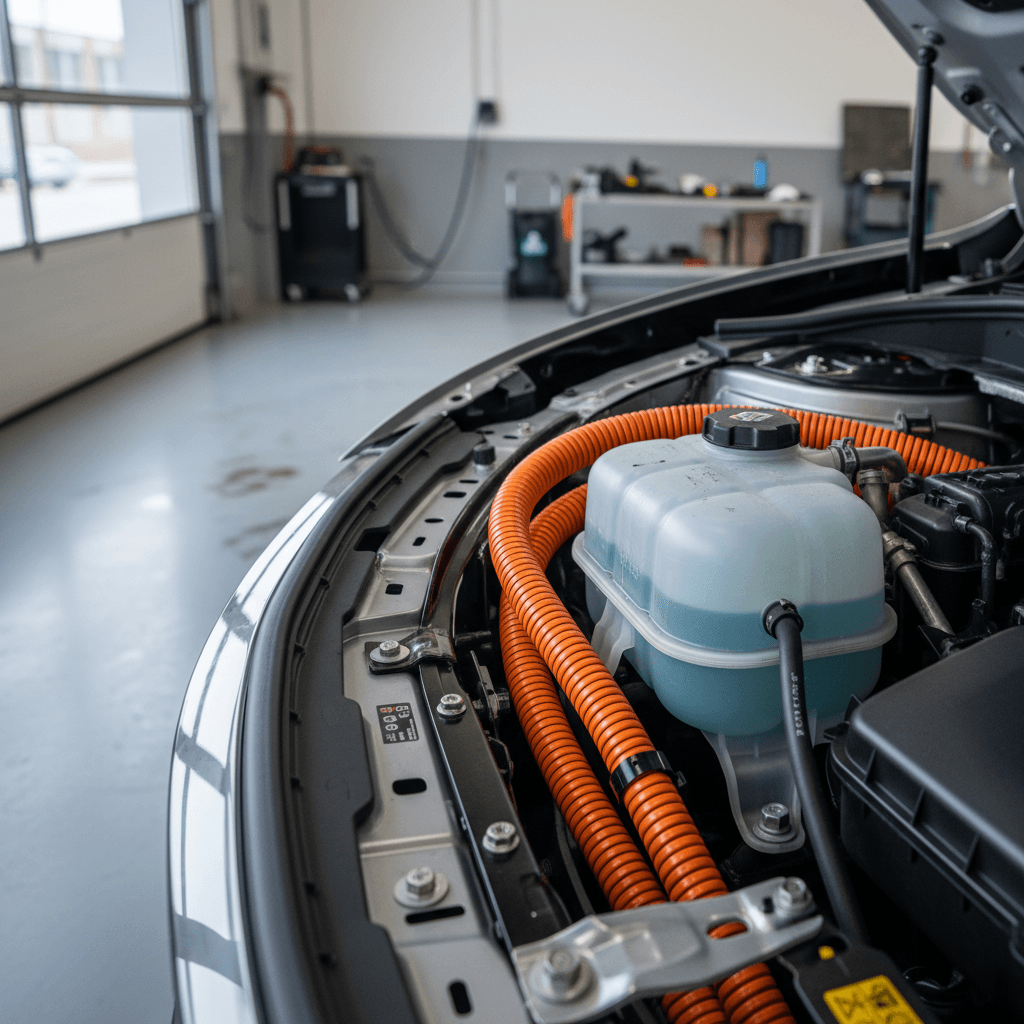
On a test drive or inspection, glance at the coolant reservoir. Fluid should be at the correct mark, with no oily film, flakes, or sludge.
3. Watch for warning history
Ask the seller directly about any **coolant, thermal, or charging faults** that required service. Those can hint at past or ongoing cooling‑system issues.
4. Budget for a baseline check
If there’s no clear history, plan on a **cooling‑system inspection and fluid test** early in ownership. That’s cheaper than rolling the dice on unseen problems.
5. Get battery and thermal health data
Use a third‑party EV inspection or a service like the <strong>Recharged Score</strong> to dig into battery performance and look for signs of past overheating or derating events.
How Recharged helps with Volvo EX90 maintenance costs
Coolant service is just one piece of the total‑cost‑of‑ownership puzzle for a Volvo EX90. When you shop used EVs through Recharged, every vehicle comes with a **Recharged Score Report** that covers battery health, charging performance, and key maintenance data so you’re not guessing about how the previous owner treated the car.
Buying a used Volvo EX90 through Recharged
Less guesswork, more transparency around long‑term costs.
Verified battery and thermal health
Clear service‑cost picture
Expert EV support, nationwide
Ready to find your next EV?
Browse VehiclesWhy this matters for coolant costs
FAQ: Volvo EX90 coolant flush cost and maintenance
Volvo EX90 coolant flush and service FAQ
Bottom line on Volvo EX90 coolant flush costs
For most Volvo EX90 owners, coolant isn’t a frequent line item, but when it does show up, it won’t be the cheapest service on the menu. Plan for a **few hundred dollars** for a proper coolant exchange using the right equipment, and expect to see it only once or twice over a long ownership period unless repairs force the issue.
The smartest moves you can make are simple: **follow Volvo’s inspection schedule**, act quickly on thermal warnings, and choose shops that understand high‑voltage cooling systems. If you’re stepping into a **used EX90**, look for clear documentation and, where possible, third‑party data about battery and thermal performance so you’re not inheriting someone else’s deferred maintenance.
And if you want help picking the right used electric SUV, with transparent pricing, verified battery health, and support from specialists who live and breathe EVs, start your search with Recharged. A little homework on coolant and other service items today can save you a lot of hassle over the years you’ll actually live with the car.