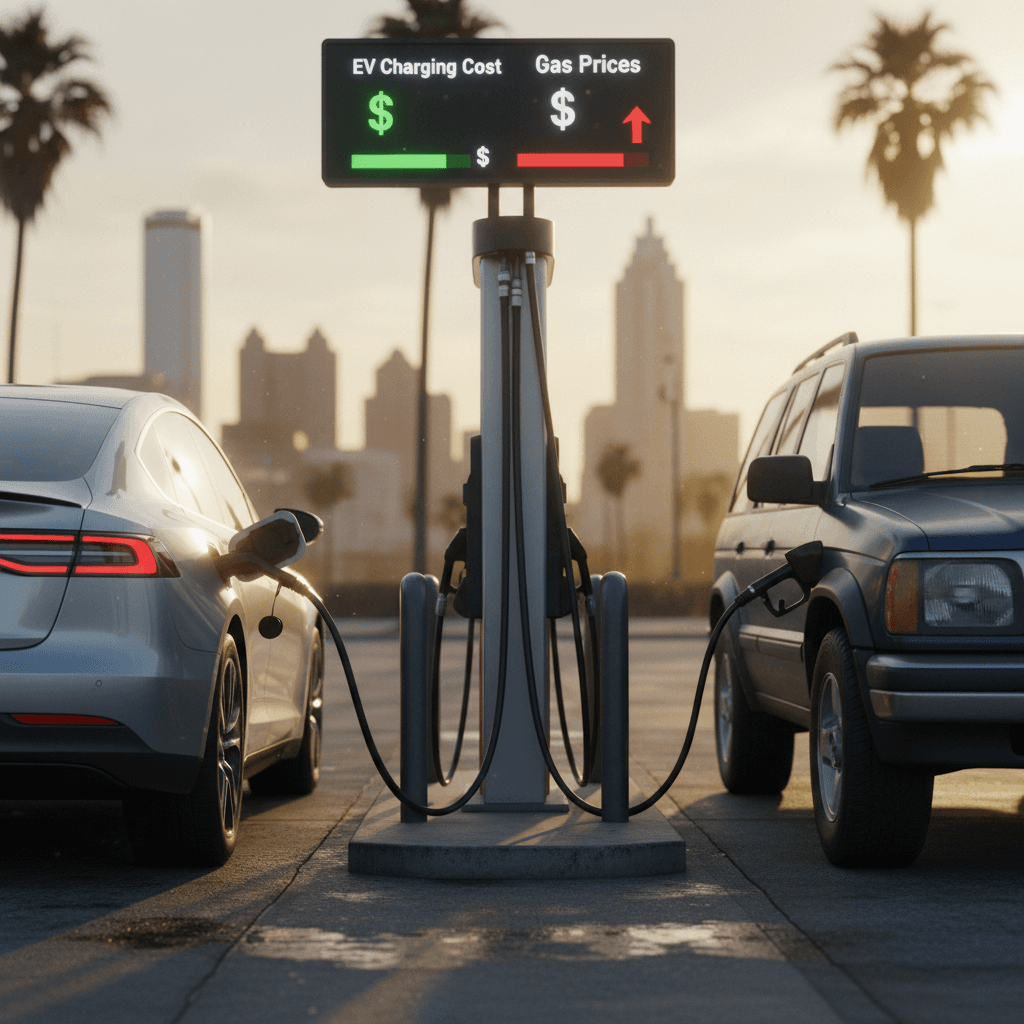
If you live in metro Atlanta, you’ve probably watched gas station price boards creep up again in 2026 and wondered how they compare to EV charging costs. The short answer: with today’s gas prices vs EV charging cost in Atlanta in 2026, electricity still wins on a per‑mile basis, especially if you can charge at home.
Why this matters in 2026
Atlanta 2026: The Real Cost Picture
Key 2026 Cost Numbers for Atlanta Drivers
These aren’t theoretical numbers, they’re based on early‑2026 gas data, recent Georgia electricity reports, and what major charging networks are actually charging in the state. With those anchors, you can get to something that really matters: how much it costs you to move one mile in a gasoline car versus an EV in Atlanta.
Key 2026 Price Assumptions for Atlanta
To compare gas prices vs EV charging cost in Atlanta in 2026, we’ll use a few transparent assumptions. You can tweak them for your own situation, but this will get you in the right ballpark.
- Gasoline (regular): about $3.25 per gallon in core Atlanta counties in early 2026.
- Home electricity: around 15¢/kWh on a standard residential plan, with some off‑peak or EV plans dipping closer to 10–12¢ overnight.
- Public charging (average): roughly 40–45¢/kWh across Level 2 and DC fast charging in Georgia, based on recent statewide averages.
- Typical gas car efficiency: 30 mpg for a compact/crossover; 25 mpg if you’re in something larger or drive aggressively.
- Typical EV efficiency: 3.0–3.5 miles per kWh for most modern EVs doing mixed city/highway around Atlanta.
Your numbers may look different
Gas vs. EV: Cost Per Mile in Atlanta
Once you translate everything to cost per mile, the picture in Atlanta in 2026 gets much clearer. Let’s run the math both for gas and electricity.
2026 Cost Per Mile: Gas vs EV in Atlanta
Approximate per‑mile fuel/energy cost using common Atlanta prices and typical vehicle efficiencies.
| Scenario | Key Assumptions | Energy Cost | Cost Per Mile |
|---|---|---|---|
| Gas – efficient compact | $3.25/gal, 30 mpg | $3.25 per gallon | ≈ 10.8¢/mile |
| Gas – typical crossover/SUV | $3.25/gal, 25 mpg | $3.25 per gallon | ≈ 13.0¢/mile |
| EV – home charging (typical) | 15¢/kWh, 3.3 mi/kWh | $0.15 per kWh | ≈ 4.5¢/mile |
| EV – home off‑peak EV plan | 11¢/kWh, 3.3 mi/kWh | $0.11 per kWh | ≈ 3.3¢/mile |
| EV – public Level 2 | 40¢/kWh, 3.0 mi/kWh | $0.40 per kWh | ≈ 13.3¢/mile |
| EV – DC fast (road trip) | 45¢/kWh, 3.0 mi/kWh | $0.45 per kWh | ≈ 15.0¢/mile |
Even with relatively moderate gas prices, EVs are meaningfully cheaper per mile when home charging is in the mix.
The simple rule of thumb
Where gas still holds its own
- If you only drive a few thousand miles a year, fuel savings alone won’t justify switching by themselves.
- If you rely almost entirely on DC fast charging, your per‑mile energy cost can be similar to or higher than a 30 mpg gas car.
- Rural driving with cheap gas but limited charging options can narrow the gap.
Where EVs clearly win
- Any Atlanta‑area driver with regular home charging access.
- Higher‑mileage commuters (40–70 miles/day) who can charge mostly at home.
- Households with two cars, where the EV covers most of the miles and the gas car handles road trips.
Home EV Charging Costs in Atlanta
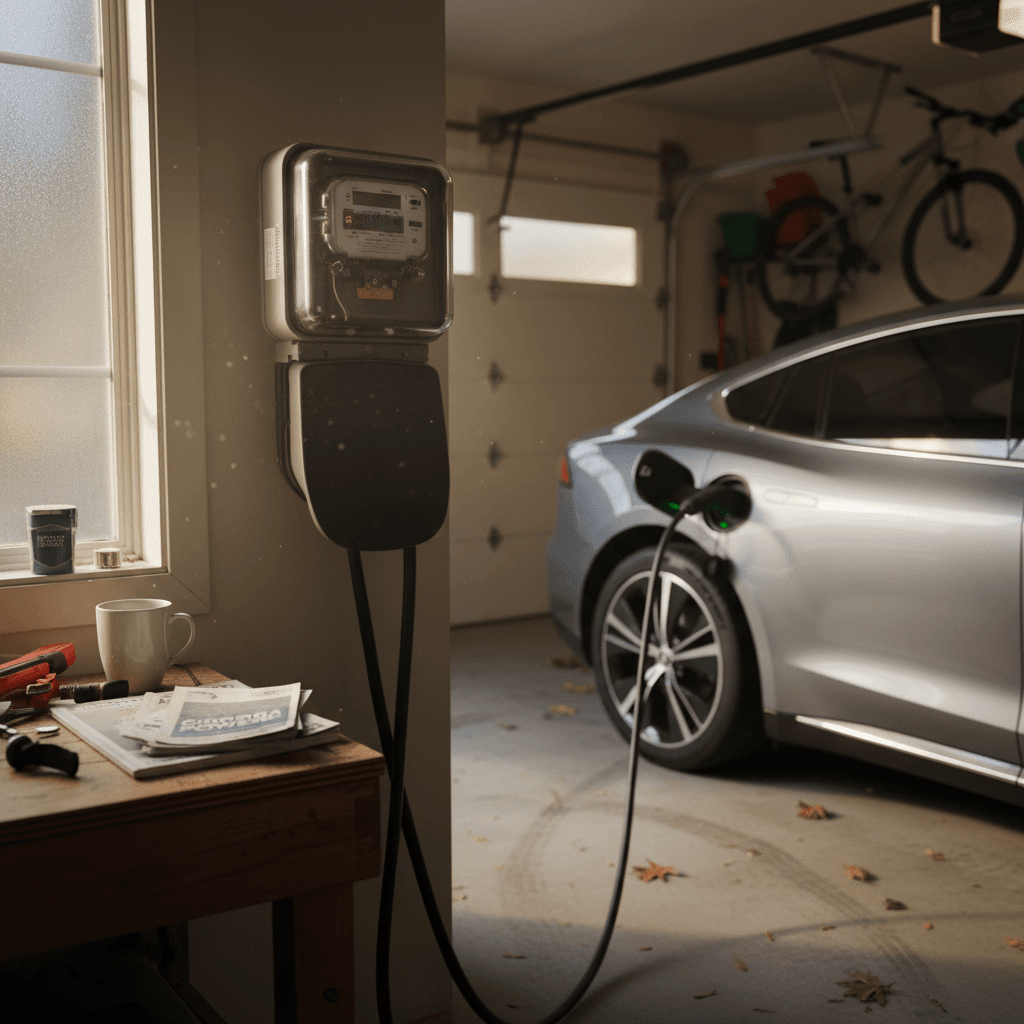
Because home charging is where most of the savings are, it’s worth looking more closely at what it really costs you as an Atlanta‑area homeowner or renter.
Typical Home Charging Scenarios in Metro Atlanta
How your rate plan and setup change your cost per mile.
Standard residential rate
Most Atlanta households pay around 15¢/kWh on standard service.
At 3.3 mi/kWh, that’s about 4.5¢ per mile.
EV / overnight plan
Georgia utilities increasingly offer cheaper off‑peak EV rates, often near 10–12¢/kWh overnight.
That drives cost down to ~3–4¢ per mile.
Solar + EV
Some Atlanta‑area homeowners add rooftop solar. Midday solar charging can push marginal energy cost toward zero for part of your driving, though payback depends on system cost and net‑metering rules.
What about home charger installation?
If you’re in an apartment in Atlanta, your situation is more nuanced. Some newer complexes now offer resident Level 2 charging in the garage, sometimes billed at near‑residential rates, sometimes closer to public pricing. The key is to ask about their per‑kWh rate and any session or parking fees before assuming EV charging will be cheap.
Public EV Charging Costs Around Atlanta
Public charging pricing around Atlanta in 2026 is all over the map. Local government sites, workplace chargers, and grocery store networks can still be relatively inexpensive, while high‑speed DC fast chargers along I‑75 and I‑85 often price energy aggressively.
Typical 2026 Public EV Charging Prices in Atlanta/Georgia
Approximate price ranges you’re likely to see at common public charging options in and around Atlanta.
| Charger Type | Common Locations | Typical Price (Energy) | Best Use Case |
|---|---|---|---|
| Workplace / destination Level 2 | Offices, hotels, libraries, some retail | Free – 25¢/kWh | Topping up while parked for hours. |
| Urban Level 2 networks | Parking decks, mixed‑use developments | 25–35¢/kWh + fees | Regular use for apartment dwellers without home charging. |
| DC fast – highway corridors | I‑75, I‑85, major travel routes | 40–50¢/kWh; some higher | Road trips, long‑distance travel, quick top‑ups. |
| Tesla Supercharger (non‑Tesla access) | Select sites around metro Atlanta | Varies by time of day; generally 35–50¢/kWh | Fast charging for NACS or adapter‑equipped EVs. |
Public charging is convenient, but it can quickly erase your EV’s fuel‑cost advantage if you rely on it exclusively.
Watch for idle and session fees
When Does an EV Actually Save You Money?
The headline comparison of gas prices vs EV charging cost in Atlanta in 2026 is clear: electricity is cheaper per mile if you can charge at home. But the real question most buyers have is, how long until the vehicle itself pays off versus sticking with gas?
Big Factors in Your EV Payback Period
1. How many miles you drive per year
If you’re doing 12,000–15,000 miles annually, the gap between ~11–13¢/mile for gas and 3–5¢/mile for home‑charged EV miles adds up quickly, often $600–$1,000 per year in fuel savings alone.
2. Whether you have reliable home charging
Home charging is the difference between EV ownership as a discount and EV ownership as a sometimes‑cheaper‑sometimes‑not convenience. If you’ll be on public chargers more than half the time, run the numbers carefully.
3. What kind of gas car you’re replacing
Swapping a 20 mpg SUV for an efficient EV produces huge savings. Replacing a 50 mpg hybrid with a big, heavy EV trims the fuel savings dramatically and stretches the payback period.
4. Purchase price, incentives, and financing
Total cost of ownership is fuel plus payments, insurance, maintenance, and depreciation. A fairly priced used EV with a healthy battery can undercut a new gas crossover on monthly cost even before you count fuel.
5. How long you plan to keep the car
Many of the savings stack over 5–8 years. If you churn vehicles every 24 months, you’ll see less of the long‑term benefit from lower energy and maintenance costs.
Example: 40‑mile Atlanta commute
Say you drive 12,000 miles per year (40 miles/day, 300 days/year).
- Gas car at 30 mpg: 400 gallons × $3.25 ≈ $1,300/year.
- EV home‑charged at 15¢/kWh and 3.3 mi/kWh: 3,636 kWh × $0.15 ≈ $545/year.
Annual savings: around $750 on energy alone, roughly $60/month, before maintenance differences.
Example: Apartment dweller on public charging
Same 12,000 miles/year, but 80% on public Level 2 at 35¢/kWh and 20% on DC fast at 45¢/kWh.
- Effective energy cost roughly 38¢/kWh, at 3 mi/kWh ≈ 12.7¢/mile.
- That’s close to a 25 mpg gas crossover on $3.25 gas (≈13¢/mile).
In this scenario, your EV isn’t saving you much on fuel; the case for switching has to rest more on driving feel, emissions, and maintenance than on energy costs.
Beyond Fuel: Maintenance, Time and Volatility
Gas prices vs EV charging cost in Atlanta in 2026 only tells part of the story. The economics of EVs are also shaped by maintenance needs, how you value your time, and how much risk you want to take on future fuel prices.
Other Cost Levers That Tilt Toward EVs
Fuel is just one line on the spreadsheet.
Lower routine maintenance
No oil changes, fewer moving parts, and less brake wear thanks to regenerative braking. Over 5–8 years, many Atlanta EV owners spend meaningfully less on routine service.
Time saved at the pump
Charging at home essentially moves your ‘fueling’ time to when you’re asleep. For commuters who value their time, that’s a hidden dividend each week.
Less price volatility
Georgia power rates have been relatively stable compared with oil prices. If you dislike surprise spikes at the pump tied to global events, an EV shifts more of your budget to predictable local electricity costs.
What if gas crashes again?
How Recharged Helps Atlanta Drivers Shop Smarter
If the numbers above have you leaning toward an EV, the next questions are predictable: Which used EVs still have strong battery health, how do I avoid overpaying, and what will my real‑world costs look like? That’s exactly where Recharged focuses its energy.
Why Atlanta Buyers Use Recharged for Used EVs
Cost clarity, battery transparency, and a simpler buying experience.
Battery health you can actually see
Every vehicle on Recharged includes a Recharged Score Report with verified battery diagnostics. In Atlanta’s hot summers, battery health matters for both range and long‑term value.
Knowing how a specific car’s pack has aged lets you decide if the lower per‑mile cost of electricity will hold up over the years you plan to own it.
Total cost and financing support
Recharged pairs each car’s pricing with fair market analysis, financing options, and trade‑in or instant offer tools, so you can compare a used EV against a gas alternative on a monthly‑payment and operating‑cost basis, not just sticker price.
Nationwide delivery and an Experience Center in Richmond, VA add flexibility whether you’re shopping purely online from Atlanta or willing to travel for the right car.
Ready to find your next EV?
Browse VehiclesUse fuel savings to right‑size your budget
FAQ: Gas Prices vs EV Charging Cost in Atlanta (2026)
Frequently Asked Questions
Bottom Line for Atlanta Drivers in 2026
In 2026 Atlanta, the math is tilting steadily toward electricity, provided you can plug in reliably at home or at work. On today’s prices, every mile in a typical gas car costs you roughly two to three times as much in fuel as a mile in a home‑charged EV. Public fast charging is the outlier: it’s a fantastic enabler of long‑distance travel, but not where the savings live.
If you’re comparing gas prices vs EV charging cost in Atlanta this year, focus on three questions: where you’ll charge most of the time, how many miles you drive, and what kind of vehicle you’re replacing. From there, a well‑chosen used EV with a healthy battery can turn volatile pump prices into a predictable power bill. And if you want help running the numbers on a specific car, Recharged’s battery health reports, fair‑price data, and financing tools are designed to make that decision far less of a guess.