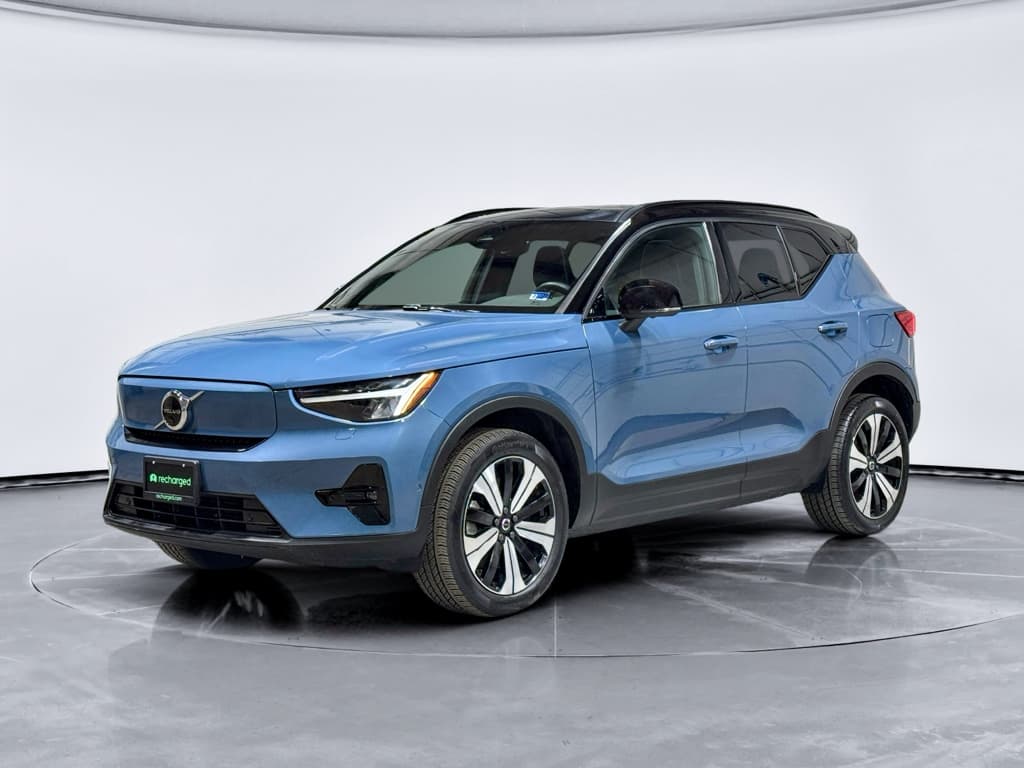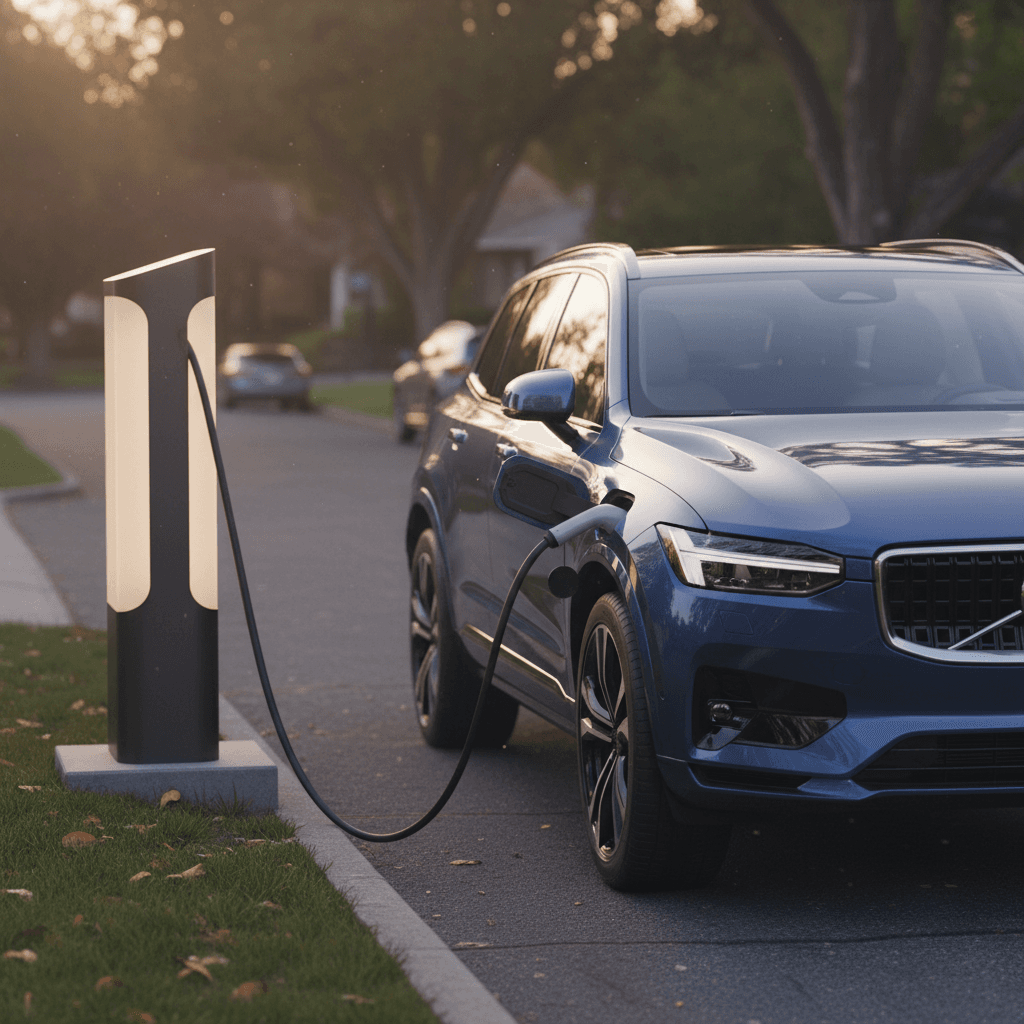
If you’re eyeing a Volvo EX90, or already have one in the driveway, you’re probably asking a simple question with a surprisingly complicated answer: how fast does it really charge? This Volvo EX90 charging speed guide breaks down home and DC fast charging times, what “10–80% in X minutes” actually looks like on the road, and how to spend less time parked at the plug.
Quick takeaway
Volvo EX90 charging basics at a glance
Volvo EX90 key charging numbers
For everyday driving, you’ll mostly live between 20–80% battery. On a properly installed 240V Level 2 charger, an EX90 can comfortably recharge a normal day’s commuting and errands overnight. On road trips, DC fast charging takes over: depending on model year and charger, you’re generally looking at roughly 30–40 minutes to go from about 10% back up to 80% if you pick a strong station and arrive with a warm battery.
Model year matters
Battery size, voltage architecture, and why they matter
The EX90 uses a large lithium-ion battery pack of about 111 kWh gross (around 107 kWh usable), shared across Twin Motor and Twin Motor Performance variants. That big battery is a blessing for range and towing, but it also means there’s a lot of energy to move in and out when you charge.
- Battery capacity (kWh) controls how many miles you get and how long a full charge takes.
- Onboard AC charger power (kW) controls how fast you can charge at home and most destination chargers.
- DC fast charging peak (kW) and the shape of the charging curve control how quickly you can add energy on the road.
Early EX90s are built on a 400V system with a 250 kW claimed DC peak. For the 2026 model year and beyond, Volvo has moved to an 800V architecture on some trims, raising peak DC numbers closer to 350 kW at the right kind of station. The headline is simple: 800V doesn’t always mean faster in the real world, but it helps at the newest high-power chargers that can deliver high kilowatts without overheating or current limits.
Think in “miles per hour,” not just kW
Home charging: Level 1 vs. Level 2 for the EX90
Let’s start where your EX90 will spend most of its time: at home. Every Volvo EX90 has an 11 kW onboard AC charger. That’s the maximum rate the car can accept from a Level 2 source, whether it’s a hardwired wall box or a 240V plug-in unit.
Home charging options for your Volvo EX90
What different setups really feel like day to day
Level 1 (120V household outlet)
Approx. power: 1.3–1.4 kW
- Gains: ~3–4 miles of range per hour
- Best for: Very light daily driving, occasional top-ups
- 0–100% from empty: well over 2 days; not realistic for routine use on an EX90
Level 2 (240V home or workplace)
Approx. power: Up to 11 kW with a 48A circuit
- Gains: ~20–30 miles of range per hour
- Best for: Normal commuting, families, and road-trip prep
- 0–100% from near empty: roughly 10 hours on a strong setup
The sweet spot: a 40–48A Level 2 charger
Owners in the U.S. often pair the EX90 with a wall box on a 50A or 60A breaker, delivering 40–48A continuous. That’s enough to comfortably refill 50–70% battery overnight, which covers most people’s weekly rhythm even if you skip a day or two of plugging in.
Watch your circuit and adapter choices
DC fast charging speed: 10–80% in the real world
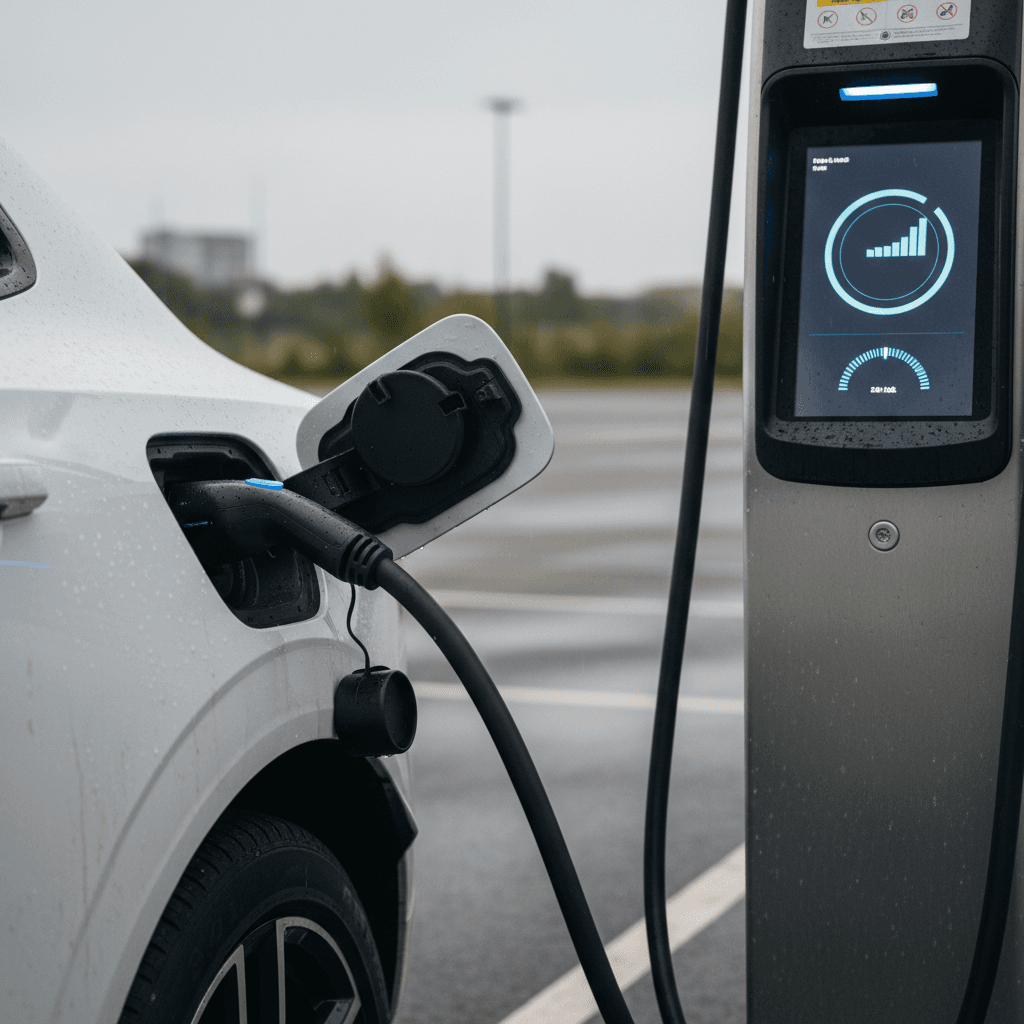
On paper, a Volvo EX90 can charge at up to 250 kW DC (early 400V models) and around 350 kW DC (later 800V variants) at the ideal charger. But no EV sits at peak power for long. What matters is the average power from 10–80% and how long a typical highway stop takes.
- From a low state of charge, around 10–20%, the EX90 can briefly spike near its advertised peak on a capable station with a warm battery.
- Power tapers as state of charge rises; by 60–70% you’ll see substantially lower kW, even on a strong charger.
- Above ~80%, the curve falls off more sharply; you spend a lot of extra time to gain the last few percent, with little extra usable range.
What a good EX90 DC session looks like
Test data and owner reports suggest that on a compatible high‑power station, a 400V EX90 can average well over 150 kW between 10–80% when everything lines up. The newer 800V versions raise that ceiling further on 350 kW posts, but remember: charger quality, shared power, temperature, and software all matter as much as the car’s spec sheet.
Don’t chase 100% on road trips
Volvo EX90 charging time table (common scenarios)
Numbers vary with temperature, elevation, and driving style, but these ballpark figures will get you close when planning your day. We’ll assume roughly 107 kWh usable capacity and typical North American conditions.
Approximate Volvo EX90 charging times by scenario
Use these as planning guides, not promises, the real world is always messier than the brochure.
| Scenario | Charger type & power | Start → End SoC | Estimated time | What it feels like in daily life |
|---|---|---|---|---|
| Overnight top‑up after commuting | Level 2 home, 11 kW | 30% → 80% | ≈ 5 hours | Plug in after dinner, you’re full well before morning |
| Weekend road‑trip stop (early 400V EX90) | DC fast, 250 kW peak, strong site | 10% → 80% | ≈ 30–35 minutes | Bathroom break, coffee, and you’re back on the highway |
| Quick splash on the way home | DC fast, ~100–150 kW (typical site) | 20% → 60% | ≈ 20–25 minutes | Just enough time to grab food or walk the dog |
| Garage-only Level 1 owner | 120V outlet, ~1.4 kW | 40% → 70% | ≈ 7–9 hours | Fine if you barely drive, painful for most EX90 owners |
| Full refill for road-trip departure | Level 2 home, 11 kW | 20% → 100% | ≈ 8–9 hours | Leave it overnight and wake up with the maximum buffer |
Charging times assume a healthy battery and good-quality equipment. Cold weather, heat, or sharing a DC post will slow things down.
Remember: these are estimates
Road-trip strategy: Getting the most from EX90 fast charging
The EX90 is sized, geared, and appointed for long‑haul family duty. To make it feel as effortless on electrons as a big gas SUV does on fuel, you need to work with the battery and the charging curve instead of fighting them.
Volvo EX90 road-trip charging playbook
1. Start your day at a high SoC
The EX90 is happiest when you leave your lodging or home with 80–100% for a long day on the road. Use scheduled departure or timed charging so it finishes shortly before you leave, which also preconditions the cabin and battery.
2. Aim to arrive between 10–20% SoC
You’ll see the best charging speeds when the battery is lower. Don’t panic at 15%, for a big pack like the EX90’s, that’s still a healthy buffer as long as your next charger is on schedule.
3. Prioritize high-power, reputable networks
Not all 350 kW or 250 kW signs deliver in practice. User reviews in apps like PlugShare, or data from your EX90’s built‑in routing, will help you pick sites that actually deliver strong power and reliable uptime.
4. Let the car precondition the battery
When you set a fast charger as your destination in the nav, newer EX90 software can pre‑warm or cool the pack on the way. That’s the difference between hitting the charger cold and jumping straight to strong power.
5. Plan shorter, more frequent stops
Because charge power falls off above ~80%, it’s usually faster to stop more often for shorter 10–80% (or 15–70%) sessions than to go for a single, extra‑long sit.
6. Use your time at the plug well
Treat charging stops as built‑in breaks: bathroom, food, stretching, quick email triage. If you’re still waiting after you’re ready to go, it’s time to unplug and move on.
Think of the EX90 as your pace car
Charging costs, battery health, and what to avoid
Keeping charging costs down
- Home is king: Even at standard U.S. residential rates, Level 2 home charging is usually far cheaper per mile than public DC fast charging.
- Time-of-use plans: Many utilities offer lower overnight rates. Your EX90’s scheduled charging tools can target those off‑peak hours.
- Occasional DC is fine: Don’t stress about the cost of road‑trip charging; it’s still often cheaper than fueling a comparable gas SUV, especially if most charging happens at home.
Protecting your EX90’s battery
- Avoid living at 100%: Daily charging to 70–90% is kinder to the pack than topping off to 100% and letting it sit.
- Don’t fear 10–20%: Regularly running down into low double digits before charging is normal; just avoid repeated deep discharges to 0%.
- Moderate fast charging where you can: Use DC fast when you need it; rely on AC Level 2 the rest of the time for gentler, cooler charging.
Heat is the enemy
Troubleshooting slow Volvo EX90 charging
Because the EX90 is still a relatively new model, early owners have reported a few charging quirks, especially on AC home charging hardware. Most drivers will never run into them, but if you’re seeing dramatically slow speeds or repeated faults, work through a simple checklist before assuming the worst.
- Confirm what the charger is capable of. If you’re plugged into a 32A Level 2 unit on a 40A circuit, you’ll never see the full 11 kW, expect more like 7 kW.
- Check wiring and breaker sizing. A licensed electrician should verify that your circuit and wall box are rated for the maximum continuous current you’ve configured in the EX90’s settings.
- Look for temperature or sharing limits. Public DC posts often share power between stalls; if someone plugs in next to you, your kW may drop even though nothing is wrong with your car.
- Use a different charger brand or site. If your EX90 behaves badly on one specific piece of hardware but fine elsewhere, it’s likely the station, not the SUV.
- Watch for software updates. Volvo has been issuing OTA updates to refine charging behavior. If something feels off, check for updates in the app or talk with your dealer.
- Document issues early. If you consistently can’t exceed a very low AC speed at home despite good hardware, log photos and error messages and schedule service. On a used EX90, this can be a negotiation point.
Don’t ignore persistent faults
Buying a used Volvo EX90? Charging checks that matter
The EX90 is already entering the used market, which is where Recharged lives. Because charging speed is such a big part of EV livability, you’ll want to make sure the specific SUV you’re considering behaves the way the brochure promises, or at least close.
Used Volvo EX90 charging checklist
Confirm model year and charging hardware
Verify whether you’re looking at a 400V or newer 800V EX90 and what DC fast rating Volvo quotes for that year. That sets expectations for how it should behave on the highway.
Review AC charging history and behavior
If possible, plug into a healthy Level 2 and watch the current and kW after a few minutes. A healthy EX90 should pull close to its 11 kW rating on a 48A circuit with a moderate SoC.
Test a DC fast session
On a pre‑purchase inspection, a quick 20–30 minute DC fast test from a modest SoC can reveal whether the car climbs toward expected power or struggles to get off the ground.
Check for software updates and recalls
Ask the seller or dealer to confirm that all charging‑related software updates and any relevant recalls or service bulletins have been completed.
Ask for a battery health snapshot
At Recharged, every EX90 listing includes a <strong>Recharged Score Report</strong> with verified battery health data. That gives you a clear view into usable capacity and helps explain any small differences in charging behavior vs. a brand-new example.
Estimate your daily needs honestly
If your routine includes heavy towing, long mountain grades, or big winter mileage, charging speed and access to reliable DC sites matter even more. Make sure the EX90, and your local infrastructure, fit the life you actually lead, not the spec sheet version.
How Recharged helps
Ready to find your next EV?
Browse VehiclesVolvo EX90 charging speed FAQ
Frequently asked questions about Volvo EX90 charging
The Volvo EX90’s charging story is more than a single kW number. It’s a combination of a big, comfortable battery, a capable 11 kW onboard charger, and DC hardware that, when paired with the right stations, can turn long distances into a rhythm of easy, predictable stops. Learn how your EX90 behaves at home and on the road, pick the right hardware, and you’ll spend far more time enjoying the drive than watching the progress bar climb. And if you’re exploring a used EX90, a transparent report like the Recharged Score can turn all of those charging specs into a clear, confident decision.