If you’re shopping for a Volvo EX30, or already own one, insurance is going to be one of your biggest ongoing costs after depreciation. And because insurers price coverage heavily around driver age, Volvo EX30 insurance rates by age can look wildly different for a 22‑year‑old than for a 45‑year‑old driving the exact same car.
Key takeaway up front
Overview: Volvo EX30 insurance rates by age
Insurers don’t publish a single nationwide rate card for the Volvo EX30, but we can piece together a realistic picture from EV insurance trends and model‑specific estimates. Third‑party shopping tools that model premiums by vehicle put average Volvo EX30 insurance around $2,438 per year, or about $203 per month, for a 40‑year‑old driver with good credit and a clean record.
From there, companies apply age‑based risk curves. Younger drivers, especially under 25, have more frequent and more severe claims, so they pay a steep surcharge. Older drivers, once they move past their late 20s, generally see falling premiums until their 60s, when rates can tick up again as reaction time and claim frequency change.
Where the Volvo EX30 sits in today’s EV insurance market
Average Volvo EX30 insurance costs in 2026
For context, full‑coverage car insurance in the U.S. in 2026 typically runs around $2,000–$2,100 per year for a 40‑year‑old with a clean record, across all vehicle types. Electric vehicles generally cost more to insure because of higher repair and total‑loss costs, but newer data suggests that gap is finally starting to narrow as more repair shops become EV‑certified and parts availability improves.
Against that backdrop, the Volvo EX30’s estimated $2,400–$2,600 annual premium for a middle‑aged driver puts it slightly above the overall market average, but in line with many compact EV crossovers. It’s typically cheaper to insure than higher‑powered luxury EVs and many Teslas, and roughly comparable to insurance for vehicles like the Hyundai Kona Electric or Kia Niro EV for similar drivers.

Volvo EX30 insurance rates by age group
To make the age impact easier to see, here’s a simplified estimate of Volvo EX30 insurance rates by age for a typical U.S. driver with full coverage, good credit, and no at‑fault accidents. These ballpark figures use the ~$2,438 40‑year‑old estimate as the baseline and apply common industry age adjustments. Your real quote can be higher or lower depending on state, insurer, and coverage limits, but the relative pattern is what matters.
Estimated Volvo EX30 annual insurance cost by age (full coverage, 2026)
Illustrative averages for a driver with good credit, clean record, 12,000 miles per year, and typical coverage limits. Use this as a directional benchmark, always compare real quotes.
| Driver age | Risk profile assumption | Estimated annual premium | Rough monthly cost |
|---|---|---|---|
| 16–18 | Newly licensed, on own policy | $5,000–$6,000+ | $415–$500+ |
| 19–20 | Young driver, 1–3 years’ experience | $3,800–$4,600 | $315–$385 |
| 21–24 | Early 20s, improving record | $3,000–$3,600 | $250–$300 |
| 25–29 | Risk falls sharply after 25 | $2,400–$2,800 | $200–$235 |
| 30–39 | Prime years, clean record | $2,200–$2,600 | $185–$215 |
| 40–49 | Baseline reference age | $2,300–$2,500 | $190–$210 |
| 50–64 | Longer experience, fewer claims | $1,900–$2,300 | $160–$190 |
| 65–74 | Slight uptick in some states | $2,000–$2,500 | $170–$210 |
| 75+ | Higher frequency and severity risk | $2,400–$3,000+ | $200–$250+ |
Younger drivers pay the most for a Volvo EX30; safe drivers in their 30s–50s tend to see the best pricing.
These are benchmarks, not quotes
Why your age changes Volvo EX30 insurance so much
Insurers build pricing models from millions of historical claims. Age is one of the strongest predictors of claim frequency and severity, which is why a 19‑year‑old and a 49‑year‑old see such different numbers, regardless of driving skill or confidence.
How age affects Volvo EX30 insurance risk
The same EX30, very different expected losses for your insurer.
Teens (16–19)
New drivers in high‑torque EVs worry insurers. Claim frequency and severity are both elevated, especially for single‑vehicle crashes.
Result: Highest premiums, often 2–3x what a 40‑year‑old pays for the same EX30.
20s and early 30s
Experience improves, but drivers in their early 20s still over‑index in claim data, especially for nighttime and high‑speed incidents.
Result: Rates fall quickly after 21 and again around 25.
40s–50s sweet spot
Decades of experience, generally higher credit scores, and lower loss frequency make this the pricing “sweet spot.”
Result: Often the lowest Volvo EX30 premiums on the board.
For older drivers (mid‑60s and up), some insurers start to add modest surcharges again as reaction times slow and medical‑claim severity rises. That said, a 70‑year‑old with decades of claim‑free driving can still beat the average, especially if they drive fewer miles and bundle policies.
Put young EX30 drivers on a family policy
How the EX30’s EV design affects insurance pricing
The fact that the EX30 is an electric vehicle cuts both ways for insurance. On the positive side, EVs tend to have strong acceleration for merging and passing, and in Volvo’s case, robust passive safety and advanced driver‑assistance systems (ADAS) such as automatic emergency braking, lane‑keeping assist, and blind‑spot monitoring. Those systems can help prevent or reduce the severity of crashes, something underwriters do factor in.
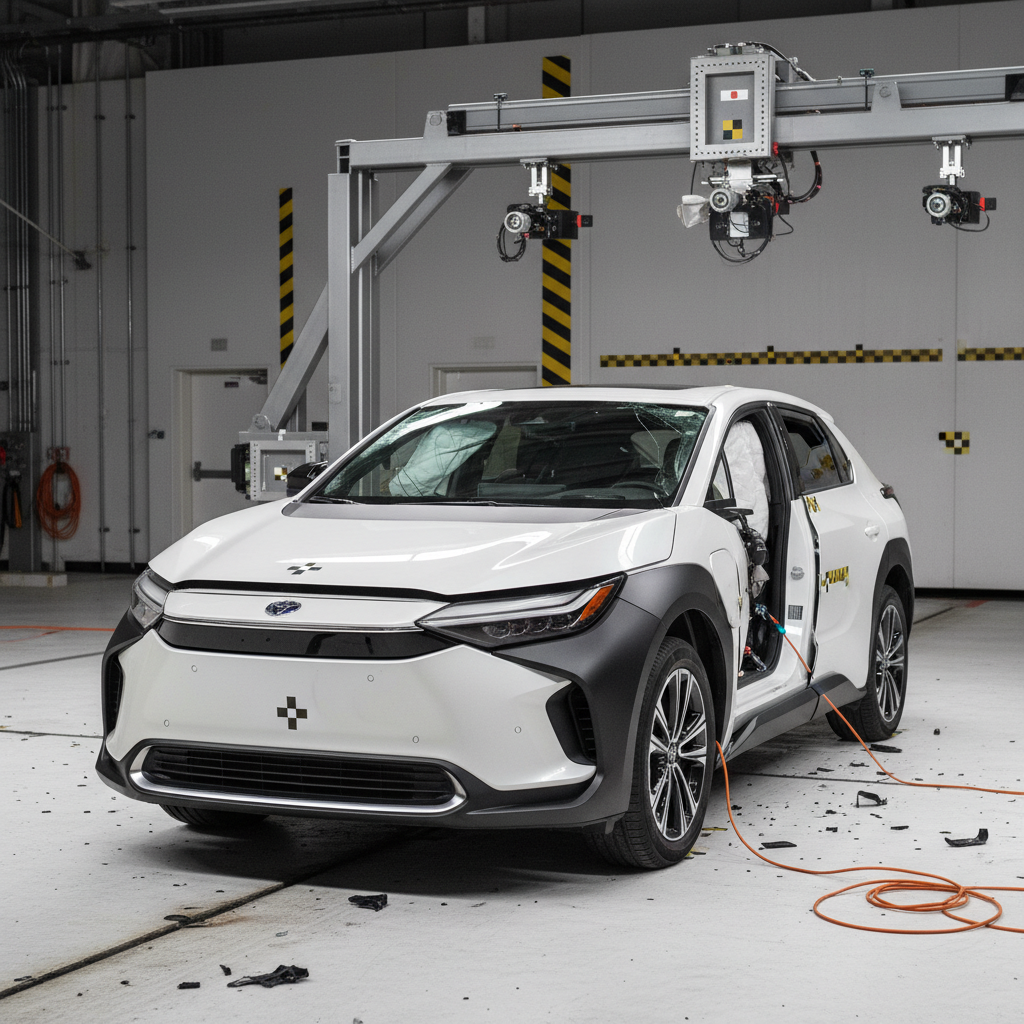
On the cost side, EV collision repairs are still more expensive on average than comparable gas‑powered vehicles. Battery packs, high‑voltage components, aluminum structures, and dense sensor arrays mean a seemingly minor front‑end hit can turn into a five‑figure repair or even a total loss. Industry data from 2024 and 2025 put EV repair costs roughly 20–30% higher than ICE equivalents, which is a big reason EV premiums, including on the EX30, remain elevated compared with similar‑size gas crossovers.
Where the EX30 helps your rate
- Strong crash protection: Volvo designs for safety first, which typically shows up in low injury claim severity.
- ADAS standard: Features that prevent or mitigate crashes are a plus for underwriters.
- Moderate price point: The EX30 undercuts many luxury EVs, so total‑loss payouts are lower than for six‑figure models.
Where the EX30 hurts your rate
- EV repair complexity: Battery, sensors, and structural repairs remain pricey.
- New‑model uncertainty: As a newer nameplate, insurers have less long‑term loss history than they do for older Volvos.
- High torque: Strong acceleration in the twin‑motor versions can lead to more single‑vehicle incidents in inexperienced hands.
Beyond age: 7 other factors that move your rate
Age is only one variable in a long list. Two 35‑year‑old Volvo EX30 owners can see very different insurance bills depending on where and how they drive. Here are seven other major levers that shape what you pay.
- Location: Dense urban areas with higher crash and theft rates (and more expensive body shops) cost more than small towns or rural regions.
- Driving record: At‑fault accidents, speeding tickets, and DUIs can easily add 20–50% to your EX30 premium, or more.
- Annual mileage: Someone who commutes 70 miles per day exposes the insurer to more risk than a work‑from‑home driver using the EX30 mostly on weekends.
- Credit‑based insurance score (where allowed): In most states, lower credit scores correlate with higher claim frequency, so they often mean higher premiums.
- Coverage limits and deductibles: Higher liability limits and low deductibles raise premiums; choosing reasonable limits with a $500–$1,000 deductible can meaningfully cut costs.
- Garaging and security: Parking in a locked garage, using tracking/anti‑theft systems, and living in a lower‑crime ZIP code all help.
- Policy structure: Bundling your EX30 with homeowners or renters insurance, or insuring multiple vehicles (including a second EV or gas car) on one policy, usually produces discounts.
Don’t skimp on liability coverage
How to lower Volvo EX30 insurance at every age
You can’t change your age, but you have more control than you might think over what you pay to insure a Volvo EX30. The tactics that work for a 23‑year‑old and a 53‑year‑old are slightly different, so it helps to think by life stage.
Practical strategies to cut EX30 insurance costs
Shop at least 3–5 insurers
Pricing spreads on EVs are wide. Some carriers still treat all EVs like high‑risk outliers, while others now price them closer to comparable gas crossovers. Comparing multiple quotes is often worth several hundred dollars per year.
Adjust deductibles thoughtfully
If you can comfortably cover a $1,000 repair bill out of pocket, raising your comprehensive and collision deductibles from $500 to $1,000 often trims premiums without sacrificing catastrophic protection.
Use telematics or safe‑driver programs
Many insurers offer usage‑based programs that track braking, acceleration, and mileage via an app. Volvo EX30 owners who drive smoothly and mostly during daylight hours can see 10–30% discounts after a trial period.
Ask about EV or safety discounts
Some carriers now offer explicit EV discounts or ADAS credits. The EX30’s safety tech is a selling point, make sure your insurer is actually giving you credit for it.
Keep claims small and infrequent
Filing for every ding is a good way to end up in a higher‑risk tier. For smaller cosmetic issues, it may be smarter long‑term to pay cash and preserve a clean claims history.
For young drivers, manage access and mileage
If a teen or college‑age driver occasionally uses the EX30, list them but limit miles and make sure they’re also driving a lower‑power vehicle. Good‑student discounts and driver‑ed courses can also help offset age‑based surcharges.
Leverage the EX30’s safety story
Used Volvo EX30 insurance: where you can save
Insurance pricing doesn’t fall in a straight line with vehicle age, but buying a used Volvo EX30 can meaningfully lower some components of your premium. As replacement cost drops, the comprehensive and collision portions of your bill generally trend down as well, especially after the first 3–5 years when depreciation has done its work.
Why a used EX30 can be cheaper to insure
- Lower vehicle value: A 3‑ to 5‑year‑old EX30 is materially cheaper to replace than a new one, which can reduce comprehensive and collision premiums.
- More loss history: As insurers accumulate real‑world claim data on the EX30, pricing tends to become more accurate, and less padded for uncertainty.
- Mileage patterns: Second‑owners often put fewer miles on their vehicles, which can translate to lower exposure and lower rates.
What still keeps costs elevated
- Same EV repair complexity: A used EX30 still has the same battery pack and sensor suite as a new one.
- Safety tech must be maintained: If ADAS systems are damaged or malfunctioning, insurers may not give full credit for them, and some carriers are wary of modified or poorly repaired EVs.
- Location and age still dominate: Where you live and how old you are continue to matter more than whether the car is brand‑new or a few years old.
How Recharged fits in
Volvo EX30 insurance by age: FAQs
Frequently asked questions about Volvo EX30 insurance rates by age
Bottom line: budgeting insurance for your EX30
When you zoom out, Volvo EX30 insurance rates by age follow the same curve as nearly every other vehicle: very high for teens, steadily improving through the 20s, and most affordable for safe drivers in their 30s, 40s, and 50s. What’s different with the EX30 is the EV overlay, higher repair costs and complex technology that keep premiums a bit higher than comparable gas crossovers, even as EV‑specialist repair networks mature.
If you’re planning an EX30 purchase, factor in $2,400–$2,600 per year for full‑coverage insurance as a realistic starting point for an average 40‑year‑old, then adjust up or down based on the age table and your personal risk factors. And remember: buying a well‑priced used EX30 with verified battery health through a retailer like Recharged, pairing it with smart coverage levels, and keeping a clean record can do as much for your long‑term ownership costs as any headline lease or finance deal.