If you’re considering a Volvo EX30, or watching early reviews, you’re probably wondering how much Volvo EX30 battery degradation per year you should expect. Range is the heart of any EV purchase, and long‑term battery health is what separates a good electric crossover from a regret‑filled one.
Quick answer
Volvo EX30 battery degradation basics
All lithium‑ion EV batteries, including the Volvo EX30’s pack, lose a bit of capacity over time. You don’t notice this from one week to the next, but over years it shows up as reduced range and slightly slower fast‑charging at high states of charge.
- Capacity loss: your EX30’s battery can’t store quite as much energy as when it was new.
- Range loss: a full charge gives fewer miles than it used to, especially at highway speeds.
- Charging behavior changes: DC fast‑charging may taper sooner and spend longer in mid‑state‑of‑charge zones.
Manufacturers design a lot of protection into the pack, thermal management, conservative buffers at the top and bottom of the pack, and software limits, to keep degradation slow and predictable. Volvo is targeting the same ballpark as other modern EVs: useful battery life measured in hundreds of thousands of miles, not tens of thousands.
Volvo EX30 battery health at a glance (typical EV benchmarks)
No long‑term EX30 data, yet
How much Volvo EX30 battery degradation per year is normal?
Because the EX30 is so new, owners and shoppers are really asking, “Will this still be a useful EV at year 8, 10, or 12?” Looking at similar‑size crossovers with comparable chemistry and thermal management, a realistic picture for Volvo EX30 battery degradation per year looks like this:
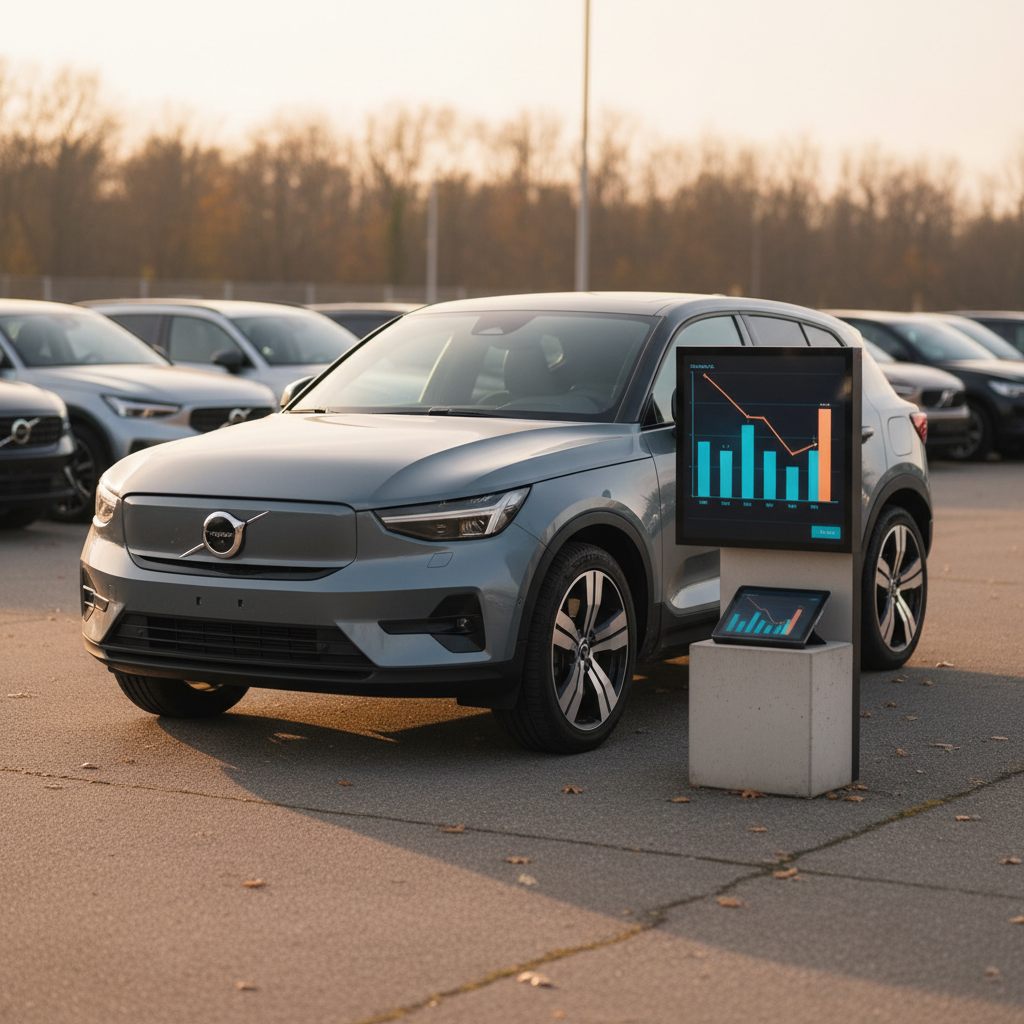
Indicative Volvo EX30 battery degradation over time (normal use)
These are reasonable expectations based on modern EV data, not Volvo guarantees. Your results will vary with climate, charging, and mileage.
| Age | Typical annual loss | Estimated total loss | What you might notice |
|---|---|---|---|
| Year 1 | 2–3% | 2–3% | Range might drop a small but noticeable amount from the original EPA figure. |
| Years 2–4 | 1.5–2%/yr | 5–8% total | Road trips need slightly more planning; daily use is mostly unchanged. |
| Years 5–8 | 1–1.5%/yr | 10–15% total | Highway range noticeably lower; fast‑charging feels a bit slower above 60–70%. |
| Years 9–12 | ~1%/yr | 15–20%+ total | Range ceiling lower but still usable for many daily commutes if charging is convenient. |
How an EX30’s usable capacity typically declines under average conditions.
Translate capacity loss into miles
Battery chemistry in the EX30: LFP vs NMC
The EX30 family uses two broad classes of lithium‑ion chemistry, depending on market and trim: LFP (lithium iron phosphate) for some lower‑range versions and NMC (nickel manganese cobalt) for higher‑range, higher‑performance versions. Even if exact pack specs vary by region, the behaviors are consistent enough to explain.
How chemistry affects EX30 battery degradation per year
LFP and NMC behave differently under the same driving and charging patterns.
LFP‑type EX30 packs
- Lower energy density: Less range per kWh, but robust cell structure.
- Lower degradation risk at high SoC: More tolerant of sitting at or near 100%.
- Cold sensitivity: More range loss and slower charging in winter until the pack warms up.
- High cycle life: Often shines for drivers who charge daily and rack up many miles.
NMC‑type EX30 packs
- Higher energy density: More range in a compact package.
- More sensitive to high SoC: Prefer not to live at 100% for long stretches.
- Better cold‑weather performance than LFP in many cases.
- Still long‑lived: Well‑managed NMC packs can easily last the usable life of the vehicle.
In both cases, Volvo overlays its own battery‑management strategy, software charge limits, coolant‑based thermal management, and buffers at the top and bottom of the pack, to keep Volvo EX30 battery degradation per year in line with other modern EVs, not an outlier.
Cold weather quirks aren’t permanent degradation
7 factors that speed up EX30 battery degradation
How you charge and where you live usually matter more than how fast you drive. Here are the big levers that can quietly add percentage points to your Volvo EX30 battery degradation per year.
- Living at high state of charge (SoC): Parking at or near 100% for days at a time, especially in heat, stresses lithium‑ion cells.
- Frequent fast‑charging to 100%: DC fast‑charging is fine in moderation, but repeated 10–100% fast‑charge sessions generate more heat and chemical stress.
- Extreme heat: Hot climates where the car bakes in direct sun or sees high battery temps day after day accelerate degradation.
- Repeated deep discharges: Regularly running down close to 0% before recharging squeezes more wear out of the pack.
- High annual mileage: 25,000+ miles a year means many more charge cycles, and more opportunities for wear.
- Aggressive power use: Spirited driving doesn’t ruin a pack, but sustained high power draw at low SoC and high temps can add incremental stress.
- Poor storage habits: Parking long‑term at 0–5% or at 100% (for weeks, not days) is one of the best ways to prematurely age the pack.
Worst‑case scenario
How to slow Volvo EX30 battery degradation
The good news: slowing Volvo EX30 battery degradation per year doesn’t require babying the car. A few sensible guardrails, most of which Volvo’s software already encourages, are enough to keep degradation in the low single digits annually for many owners.
Simple EX30 battery‑care habits
1. Use a daily charge limit
Set your EX30’s daily charge target around <strong>70–80%</strong> for routine commuting, and reserve 90–100% for road trips. This one habit has an outsized impact on long‑term battery health.
2. Prefer AC charging at home
Whenever practical, use Level 2 AC charging at home or work instead of defaulting to DC fast‑charging. It’s easier on the pack and usually cheaper per kWh.
3. Avoid parking full in summer heat
If you live in a hot climate, try not to leave the EX30 at 100% charge in open sun all afternoon. Either charge closer to departure or stop at 80–90% when you can.
4. Don’t fear going below 20%, just don’t live there
Occasional dips into the low‑state‑of‑charge zone are fine. Problems come when the car sits for days at 0–5%, or you make it a daily habit.
5. Use scheduled departure or preconditioning
Let the car warm or cool the battery before DC fast‑charging or in cold weather. That improves efficiency and keeps the pack in a friendlier temperature window.
6. Keep software up to date
Over‑the‑air updates can tweak charging curves, thermal strategy, and range estimation. Staying current ensures you benefit from Volvo’s ongoing calibration work.
You don’t need perfection
Volvo EX30 battery warranty and replacement reality
Volvo, like other major automakers, backs the EX30’s high‑voltage battery with a long warranty that’s typically on the order of 8 years and six‑figure mileage, with a guaranteed minimum capacity threshold (often around 70%) written into the fine print.
How to read your EX30 battery warranty
Exact mileage and capacity terms can vary by region, always confirm your specific policy, but the structure looks similar across brands.
| Warranty element | What it usually means for you |
|---|---|
| Time limit | Coverage for the high‑voltage battery usually lasts 8 years from first in‑service date. |
| Mileage cap | Common caps sit around 100,000–150,000 miles, whichever comes first. |
| Capacity threshold | If usable capacity falls below a set percentage (often ~70%), a repair or replacement may be triggered. |
| What’s not covered | Normal, gradual degradation within the expected curve is typically not a defect by itself. |
Key elements that shape how the EX30’s battery is covered.
Full pack replacements are rarer than many shoppers think. More often, a manufacturer replaces a subset of modules or addresses a specific defect rather than swapping the entire battery.
Check the fine print
What degradation actually means for EX30 real‑world range
Range ratings are one thing; how the car behaves on your commute or road trip is another. To make Volvo EX30 battery degradation per year meaningful, you need to translate percentages into miles and charging stops.
Example: New EX30 highway road trip
Assume your EX30 starts life with roughly 260–280 miles of EPA range, and you see about 210–230 miles of real‑world highway range at 70 mph in mild weather.
- Comfortable legs of 2.5–3 hours between charges.
- Arriving at fast‑chargers with ~10–20% remaining.
- Charging from 10–70% in perhaps 25–35 minutes, depending on conditions.
Example: Same EX30 after 10–12% degradation
Fast‑forward several years. Your pack has lost around 10–12% of capacity.
- Highway legs shrink to more like 185–200 miles under similar conditions.
- You may add one extra fast‑charge stop on very long trips.
- A full‑charge estimate in winter might dip into the 180s on the dash, but daily commuting still feels easy.
City vs. highway impact
Shopping used? Volvo EX30 battery health checklist
Because the EX30 is new, most used examples in the next couple of years will still be under factory battery warranty. Even so, you’ll want to understand how the first owner treated the pack and what Volvo EX30 battery degradation per year looks like for that specific vehicle.
Used EX30 battery‑health checklist
1. Verify in‑service date and warranty
Ask for documentation showing when the EX30 was first put into service. That date starts the battery warranty clock. Confirm how many years and miles remain.
2. Pull the car’s battery health or SoH reading
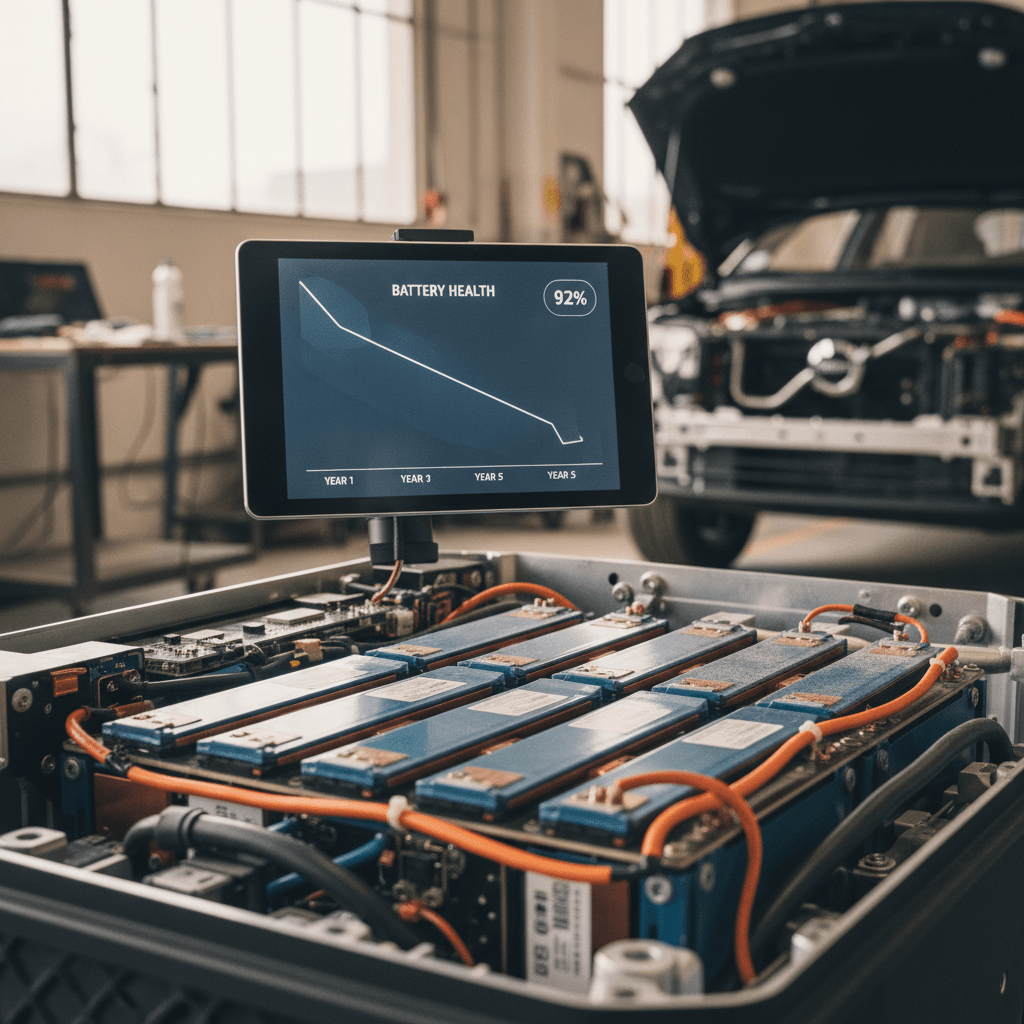
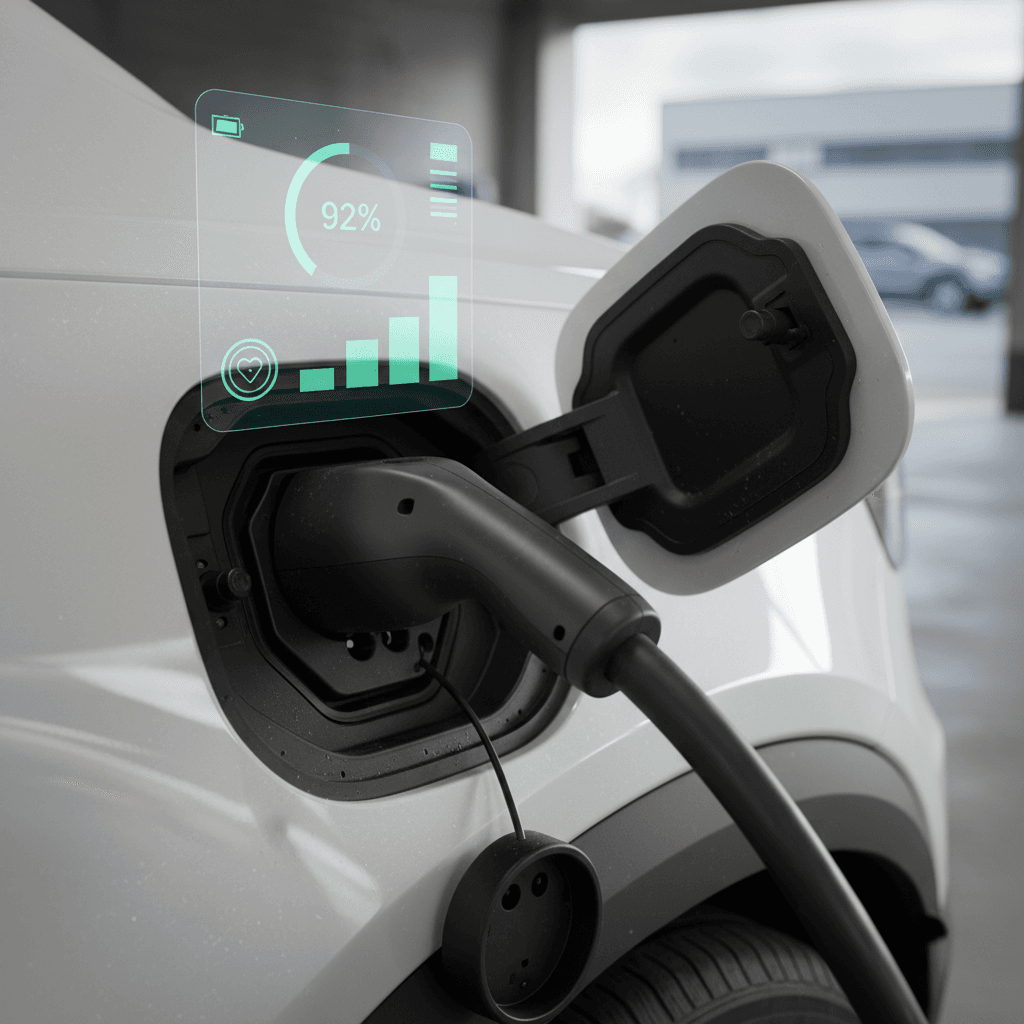
Some tools and dealer‑level diagnostics can surface a <strong>State of Health (SoH)</strong> percentage for the pack. If that number exists, compare it with age and mileage to see if degradation is in a normal range.
3. Review charging history if available
Ask how the car was primarily charged. A vehicle that lived on Level 2 charging with occasional fast‑charge use is generally a better bet than one DC‑fast‑charged daily.
4. Check for software updates
Look for evidence of regular service and software updates. Those often carry battery‑management and charging improvements.
5. Test real‑world range
On a long test drive, reset a trip meter, drive at your normal speeds, and see how the predicted range changes relative to state of charge. You’re looking for consistency more than perfection.
6. Inspect for warning lights or charging issues
Make sure there are no high‑voltage system warnings and that the EX30 charges normally on both AC and, if possible, a DC fast‑charger during the inspection period.
Be cautious with “too cheap” EX30s
How Recharged checks used EX30 battery health
Battery health is the core of any used EV purchase, and the EX30 is no exception. That’s why every EV sold through Recharged includes a Recharged Score Report that goes deeper than a basic visual inspection.
What Recharged looks at on a used EX30
Designed to make used EX30 shopping more transparent.
Independent battery diagnostics
We use specialized battery‑health tools, where available, to evaluate pack State of Health, charge behavior, and any stored high‑voltage fault codes before a car ever hits our marketplace.
Range & usage analysis
We combine odometer readings, usage patterns, and test‑drive data to estimate practical range today, not just what the window sticker said when the EX30 was new.
Transparent reporting & support
Every vehicle includes a Recharged Score Report and expert EV guidance, so you understand how that specific EX30’s battery health stacks up against typical degradation for its age and mileage.
Ready to find your next EV?
Browse VehiclesIf you’re planning to finance or trade in, Recharged can also help you compare similar used EX30s and other EVs side‑by‑side, factoring in battery condition, warranty coverage, and total cost of ownership, not just the monthly payment.
Make the battery work for your budget
Volvo EX30 battery degradation FAQ
Common questions about Volvo EX30 battery degradation per year
Bottom line: Should you worry about EX30 battery degradation?
For most owners, Volvo EX30 battery degradation per year is something to understand, not something to fear. With modern pack design, robust thermal management, and a reasonable charging routine, you’re likely looking at low single‑digit percentage loss annually, and a crossover that can stay useful well beyond its initial warranty window.
Where it pays to be vigilant is when you’re shopping the used market or stacking many years of hard use in harsh climates. That’s where professional diagnostics, transparent battery‑health reporting, and realistic pricing matter. If you want help finding a used EX30, or any EV, with a battery that matches your range needs, Recharged offers financing, trade‑in options, nationwide delivery, and a Recharged Score Report on every vehicle so you can see beyond the odometer and into the pack that actually powers your drive.