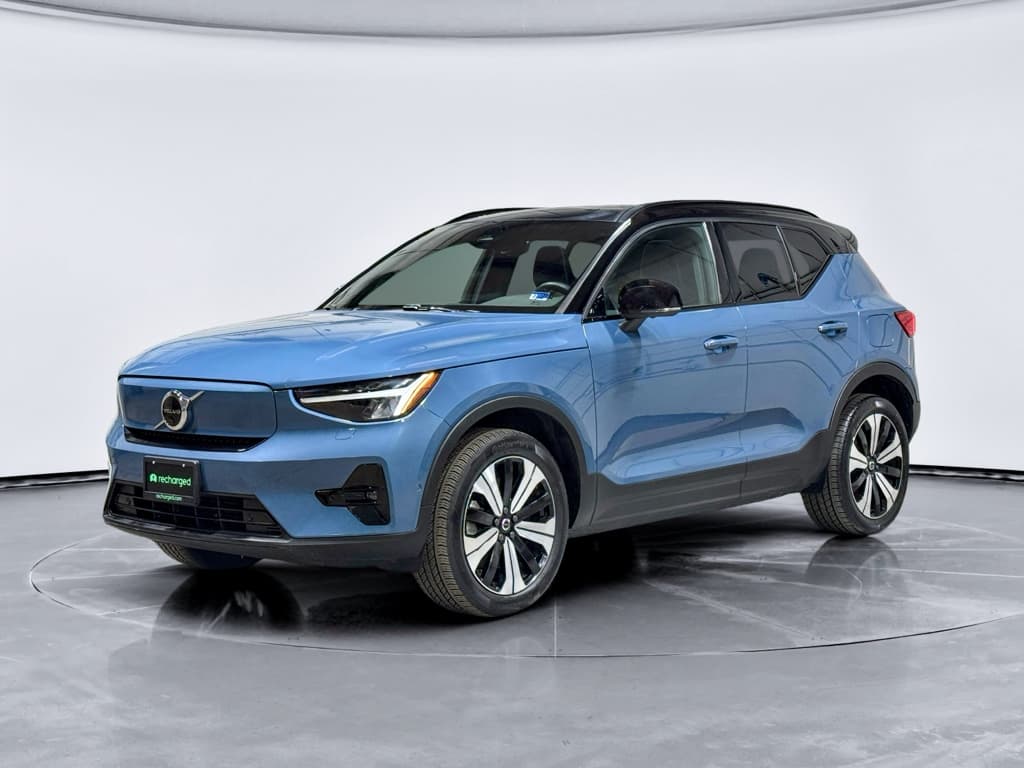
If you’re considering a Volvo C40 Recharge, one of the smartest questions you can ask is: what does it cost per mile to drive? The sticker price gets the headlines, but the day‑to‑day electricity cost is what you’ll feel every time you plug in. In this guide, we’ll use EPA data and current U.S. electricity prices to show what a Volvo C40 Recharge really costs per mile to drive, and what that means if you’re shopping new or used.
Quick answer
How much does a Volvo C40 Recharge cost per mile to drive?
C40 Recharge electricity cost per mile snapshot
To translate that into something useful, the EPA says a Volvo C40 Recharge uses roughly 31 kWh of electricity per 100 miles. If you pay about $0.17 per kWh (close to recent U.S. residential averages), you’re looking at roughly $5.25–$5.50 per 100 miles, or about $0.05–$0.06 per mile. In expensive electricity markets, or at highway speeds in winter, you might see closer to $0.08–$0.09 per mile.
Rule of thumb
Volvo C40 Recharge efficiency basics
Let’s ground the math in how the C40 actually uses energy. Official EPA data for recent model years pegs the Volvo C40 Recharge at about 31 kWh per 100 miles, or roughly 3.2 miles per kWh in mixed driving. That’s for the updated single‑motor rear‑drive and dual‑motor versions that received efficiency tweaks for the 2024 model year.
- EPA combined efficiency: about 31 kWh/100 miles
- That equals roughly 0.31 kWh per mile
- In “miles per kWh” terms, figure 3.2 mi/kWh in mixed driving
- Real‑world highway tests can be a bit worse (more like 34–39 kWh/100 miles) at 70–75 mph, especially in cold weather
You’ll sometimes see owners quoting numbers like 25–40 kWh per 100 miles in forums. That spread isn’t because the car can’t make up its mind; it’s reflecting where and how they drive, city vs highway, summer vs winter, moderate vs aggressive acceleration. That’s why you always want to calculate your cost per mile using your own kWh/mile and your local electricity rate.
Step-by-step: how to calculate your cost per mile
DIY C40 Recharge cost‑per‑mile calculation
1. Find your electricity price
Look at a recent utility bill and find the total cost per kWh, including fees and taxes. In many parts of the U.S. today, it falls somewhere in the <strong>$0.14–$0.22/kWh</strong> range, but it can be lower or much higher.
2. Decide which efficiency number to use
For a quick estimate, use the EPA figure of <strong>31 kWh/100 miles</strong>. If you’ve owned the car a while, use the long‑term average consumption from your Volvo app or the dash instead.
3. Convert to kWh per mile
Divide your kWh per 100 miles by 100. For example, 31 kWh/100 miles ÷ 100 = <strong>0.31 kWh per mile</strong>.
4. Multiply by your kWh price
Take kWh per mile × your electricity price. Example: 0.31 × $0.17 = <strong>$0.0527 per mile</strong>.
5. Sanity‑check for 1,000 miles
Multiply your per‑mile cost by 1,000 to see what that looks like over a month or two of driving. Using the example above: $0.0527 × 1,000 ≈ <strong>$52.70 per 1,000 miles</strong>.
6. Compare to your current vehicle
Take your gas vehicle’s mpg and local gas price. Cost per mile is gas price ÷ mpg. If gas is $3.75 and your SUV gets 25 mpg, you’re paying <strong>$0.15 per mile on fuel</strong>, about 3x a typical C40’s electricity cost.
Don’t forget charging losses
Cost-per-mile examples for different electricity rates
Electricity prices in the U.S. vary widely, from under 12¢/kWh in some states to well over 30¢/kWh in certain coastal markets. Here’s how the Volvo C40 Recharge cost per mile changes at a few common residential rates using the EPA’s 31 kWh/100‑mile efficiency.
Volvo C40 Recharge electricity cost per mile by kWh price
All examples assume 31 kWh per 100 miles (0.31 kWh per mile) in mixed driving.
| Home electricity price (per kWh) | Cost per 100 miles | Cost per mile | Cost for 1,000 miles |
|---|---|---|---|
| $0.12 | 31 × 0.12 = $3.72 | $0.037 | $37.20 |
| $0.15 | 31 × 0.15 = $4.65 | $0.047 | $46.50 |
| $0.17 (near U.S. avg) | 31 × 0.17 = $5.27 | $0.053 | $52.70 |
| $0.20 | 31 × 0.20 = $6.20 | $0.062 | $62.00 |
| $0.25 | 31 × 0.25 = $7.75 | $0.078 | $77.50 |
| $0.35 (very high‑cost markets) | 31 × 0.35 = $10.85 | $0.109 | $108.50 |
Change the kWh column to match your bill and you’ll have a personalized estimate.
What this looks like in real life
Real world vs EPA: what owners actually see
EPA numbers are a good starting point, but they’re not the whole story. In real‑world driving, C40 Recharge owners tend to see a band of 30–40 kWh per 100 miles depending on climate, speed, and usage. On our own testing at Recharged, the C40 Recharge typically returns just over 3.0 miles per kWh on mixed routes, with highway‑only runs and winter driving pushing consumption higher.
When you might beat EPA
- Mild temperatures (60–75°F)
- Mostly city or suburban speeds below 55 mph
- Smooth acceleration and plenty of coasting
- Using Eco mode and preconditioning while plugged in
When you might fall short
- 70–80 mph freeway driving
- Cold winters where the heat pump works hard
- Short, stop‑and‑go trips with lots of start‑ups
- Frequent roof box use or heavy cargo
Let’s translate that into cost per mile. Suppose you live in a colder climate and your C40 averages 37 kWh/100 miles in winter and 29 kWh/100 miles in summer, with an annual average around 33 kWh/100 miles (0.33 kWh/mile). At $0.17/kWh, that works out to roughly $0.056 per mile, still dramatically lower than most gasoline SUVs.
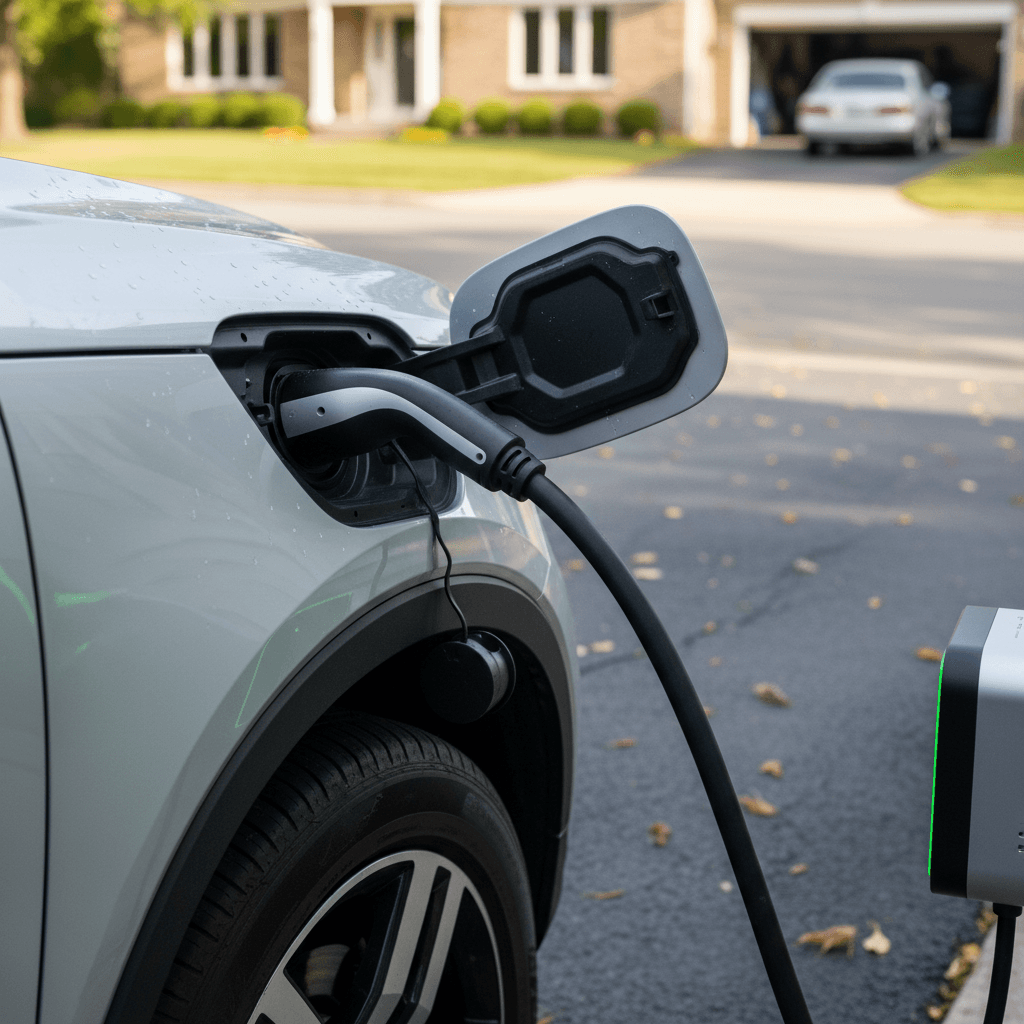
Volvo C40 Recharge vs gas SUV: cost per mile
Numbers don’t mean much in a vacuum. To understand the value of the Volvo C40 Recharge, you need to compare its electricity cost per mile with the fuel cost of a similarly sized gasoline SUV.
Electric vs gas: side‑by‑side cost per mile
Assumes 1,000 miles of driving per month
Volvo C40 Recharge
- Efficiency used: 31 kWh/100 miles
- Electricity price: $0.17/kWh
- Cost per mile: about $0.053
- Cost per 1,000 miles: about $53
Comparable gas compact SUV
- Fuel economy: ~25 mpg combined
- Gas price: $3.75/gal
- Cost per mile: 3.75 ÷ 25 = $0.15
- Cost per 1,000 miles: about $150
Electric advantage grows with higher gas prices
How driving style and weather change your cost per mile
The Volvo C40 Recharge is efficient for a tall, all‑wheel‑drive‑capable crossover, but physics still apply. Speed, temperature, and your right foot all have a measurable impact on how many kWh you burn per mile, and therefore on your cost per mile.
Key factors that move your cost per mile up or down
Think in terms of kWh/100 miles, every increase shows up on your bill.
Temperature
Cold weather can push consumption from ~31 kWh/100 miles into the high‑30s or low‑40s as the C40 heats the cabin and battery. Hot climates add some A/C load, but it’s usually less dramatic than winter heating.
Speed & terrain
Highway speeds above 70 mph and hilly routes create more drag and climb, raising energy use. Slower suburban routes with good regenerative braking often come in under the EPA number.
Driving style
Hard launches and late braking waste energy the motors could have recaptured. Smooth, anticipatory driving and one‑pedal mode help keep kWh/100 miles in check.
Practical ways to lower your C40 Recharge cost per mile
Use scheduled charging at home
Most utilities offer cheaper off‑peak rates overnight. If you’re on a time‑of‑use plan, charging after midnight instead of late afternoon can cut your effective cost per mile by 20–40%.
Precondition while plugged in
Use the Volvo app to warm or cool the cabin while the car is still connected to your charger. That draws energy from the grid instead of the battery, improving on‑road efficiency.
Moderate highway speeds
Dropping from 78 mph to 68 mph can shave several kWh/100 miles on long trips, enough to free up both range and money.
Check tire pressures
Under‑inflated tires add rolling resistance. Keeping them at spec helps the C40 roll more easily and burn fewer kWh per mile.
Limit roof boxes and heavy cargo
A big roof box or bike rack increases aerodynamic drag, especially at highway speeds. Remove it when you’re not using it if you care about every cent per mile.
Public fast charging is a different equation
Used Volvo C40 Recharge: what cost per mile means for buyers
If you’re shopping for a used Volvo C40 Recharge, understanding cost per mile is about more than just today’s electricity bill. It’s a lens into battery health, efficiency, and total cost of ownership over the years you’ll own the vehicle.
Why efficiency matters for used buyers
- Higher kWh/100 miles means you’ll spend more every month on electricity.
- Unusually poor efficiency can signal issues like worn tires, misalignment, or battery thermal management problems.
- Battery degradation affects how many kWh you can actually use, which shows up as lost range more than a change in kWh/mile.
How Recharged helps you read the numbers
Every C40 Recharge listed on Recharged includes a Recharged Score Report, which combines battery health diagnostics with real‑world efficiency data where available. That makes it much easier to compare one used C40 to another and estimate what your real cost per mile will be before you buy.
Pro move for shoppers
Because Recharged also lets you trade in, finance, and arrange nationwide delivery fully online, you can focus less on deciphering specs and more on whether the monthly operating costs work for your budget. If you’re cross‑shopping several EVs, comparing electricity cost per mile side by side is a powerful way to narrow the field.
FAQ: Volvo C40 Recharge cost per mile
Common questions about Volvo C40 Recharge cost per mile
Bottom line on Volvo C40 Recharge cost per mile
When you strip away the marketing and focus strictly on numbers, the Volvo C40 Recharge is a compact luxury crossover that typically delivers $0.05–$0.09 per mile energy costs for U.S. drivers who mainly charge at home. Your exact figure depends on two levers you largely control: your electricity rate and how efficiently you drive.
For many shoppers cross‑shopping gasoline SUVs, that means cutting fuel spending by half to two‑thirds compared with what you’re used to paying at the pump. If you’re looking at a used C40 Recharge, pairing this cost‑per‑mile framework with a detailed Recharged Score battery health report gives you the kind of clarity that used‑car buyers rarely get.
From there, the decision gets straightforward: if you like the way the C40 drives and the math on cost per mile lines up with your budget, you’ve got the makings of a very smart EV purchase. And if you want help running the numbers on a specific C40 Recharge, including trade‑in and financing options, Recharged’s EV specialists can walk you through it from your couch.