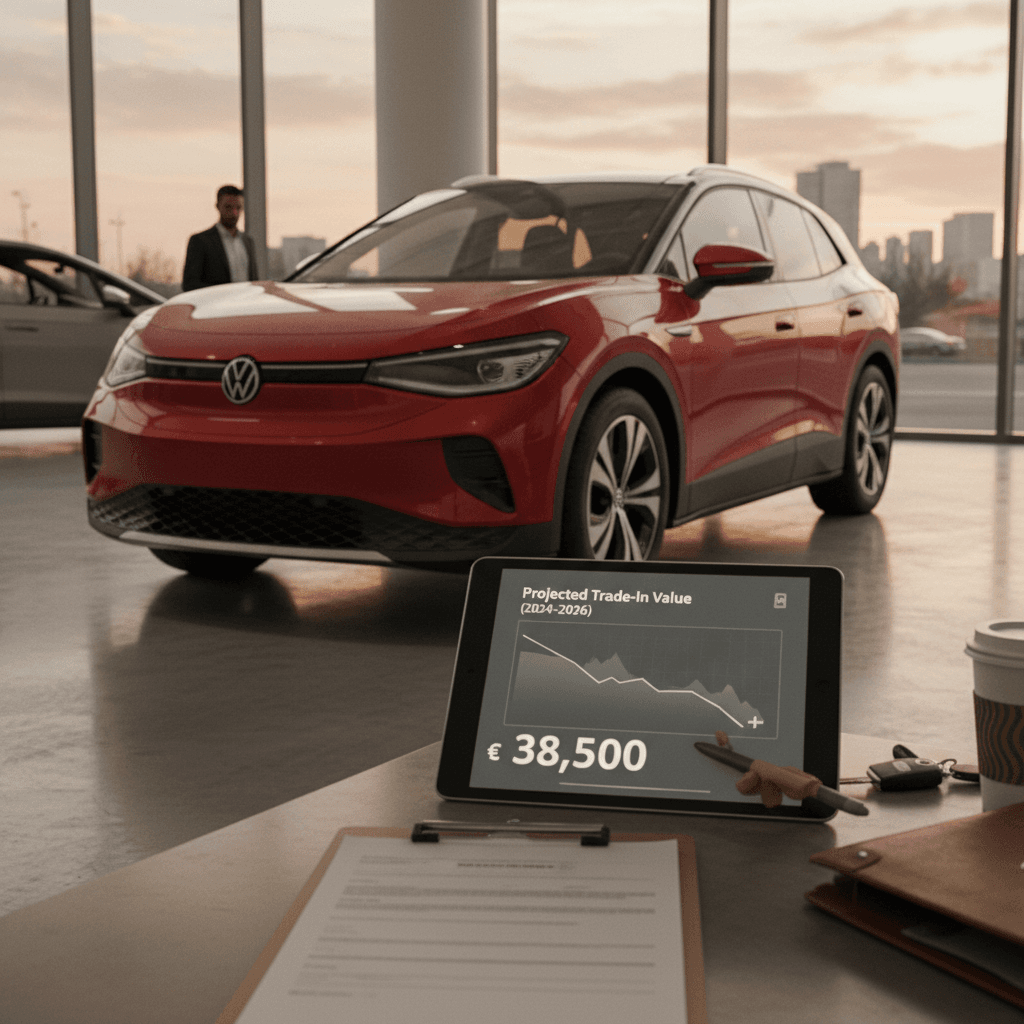
If you own a Volkswagen ID.4, you’ve probably noticed used EV prices bouncing around over the last few years. By 2026, ID.4s are plentiful on dealer lots, federal EV credits have changed, and many owners are shocked by their Volkswagen ID.4 trade‑in value in 2026. This guide cuts through the noise with realistic value ranges, why offers can feel low, and concrete steps to get more for your car.
Quick snapshot for 2026
Overview: Volkswagen ID.4 trade‑in value in 2026
Let’s answer the question you’re really asking: roughly what is my VW ID.4 worth in 2026? Exact numbers depend on trim, mileage, battery health and location, but we can talk in honest ballparks using real‑world 2024–2026 market data and tools like Kelley Blue Book, Edmunds and Recharged’s own valuation work.
VW ID.4 value snapshot heading into 2026
Those ranges are wide on purpose. In 2026, one owner’s 2021 ID.4 might pull a $12,000 trade‑in offer, while another similar‑looking car across town lands closer to $16,000 because of lower mileage, stronger battery health and a hotter local market. The rest of this article is about understanding where your car sits in that spread, and how to push it upward.
Typical 2026 trade‑in ranges by Volkswagen ID.4 model year
To ground the conversation, here’s a simplified look at what many U.S. owners are seeing for Volkswagen ID.4 trade‑in value in 2026, assuming clean condition, no major accidents and "typical" mileage for age. These are directional ranges, not offers.
Illustrative 2026 Volkswagen ID.4 trade‑in ranges (U.S.)
Estimated dealer trade‑in ranges based on national pricing tools and real‑world transactions. Your actual offer may fall outside these bands depending on mileage, options, battery health and market.
| Model year | Example trims | Typical mileage in 2026 | Illustrative trade‑in range* | Notes |
|---|---|---|---|---|
| 2021 | Pro, Pro S, 1st Edition | 35,000–55,000 mi | $11,500–$16,000 | Earliest ID.4s; recalls and battery confidence matter a lot. |
| 2022 | Pro, Pro S AWD | 25,000–45,000 mi | $14,000–$19,000 | More range and features; values hinge on options and warranty time left. |
| 2023 | Standard, Pro, Pro S, AWD | 10,000–35,000 mi | $17,000–$23,000 | Huge spread depending on trim, tires, software and market supply. |
| 2024 | Standard, Pro, Pro S, AWD | Under 25,000 mi | $20,000–$26,000 | Some nearly new ID.4s are discounted heavily new, which caps used value. |
| 2025 (early builds) | Latest Pro / Pro S | Under 15,000 mi | $24,000–$30,000+ | Too new and rare in used channels to have stable averages yet. |
Use this table as a sanity check, then get live appraisals for your specific VIN.
These are not offers
Why ID.4 values dropped faster than you expected
If you bought or leased an ID.4 in 2021–2023, you probably didn’t expect to be underwater on your loan in 2026. Yet many owners are. The reasons have less to do with your specific car and more to do with the way the EV market evolved in the U.S.
Four big forces behind softer ID.4 trade‑in values
Understanding the “why” helps you negotiate smarter instead of taking it personally.
1. Aggressive new‑car discounting
Volkswagen and its dealers spent much of 2024 and 2025 discounting new ID.4s to move inventory, especially after stop‑sale periods and software delays. When a shopper can buy a new or nearly new ID.4 for under, say, $35,000, it hard‑caps what a dealer will offer you on a used one.
2. Shifting EV tax credits
The U.S. federal Clean Vehicle Credit was reshaped, then fully ended for purchases in late 2025. During its peak, dealers used those credits to lower effective prices on both new and used EVs, which pushed used market values down. When thousands of cars are effectively subsidized, resale follows.
3. Rapid EV tech turnover
Range, charging speed and software have all advanced quickly. A 2021 ID.4 still works fine, but buyers see 2024–2025 competitors with sleeker UIs, faster DC charging and longer warranties. That makes earlier ID.4s feel "older" than their age suggests, which hurts resale more than on a gas Tiguan of the same year.
4. Lukewarm mainstream demand
Enthusiasts understand the ID.4’s strengths, but the average crossover shopper still leans toward hybrids or gas SUVs. A softer buyer pool for used EVs means dealers bid cautiously, especially on models with a history of recalls or software complaints.
What dealers are saying in 2026
7 factors that control your VW ID.4 trade‑in value
The advertised “average” ID.4 trade‑in value is almost meaningless until you plug in the details that make your car unique. Here are the seven levers that matter most in 2026.
- Model year and trim – A 2024 Pro S AWD with 20‑inch wheels, heat pump and premium audio will always sit above a 2021 base Pro in dealer books. The jump between trims can be worth several thousand dollars, even within the same year.
- Mileage – EV buyers are becoming more mileage‑sensitive, especially around 30k, 60k and 90k milestones where warranties roll off. A 2022 ID.4 with 22,000 miles is simply easier to sell than one with 58,000 miles, so your offer reflects that.
- Battery health (State of Health, or SoH) – This is the single biggest wildcard. A documented, healthy battery can boost confidence and value; signs of heavy fast‑charging abuse or noticeable range loss push offers down.
- Accident and recall history – Clean Carfax and completed recalls calm buyers. Unrepaired recalls, structural damage or repeated warranty claims make a dealer pad risk into the number.
- Condition and tires – Cosmetic damage, worn 20‑inch tires, curb‑rashed wheels and neglected interiors are all line‑items in a used‑car manager’s head. A couple thousand dollars in reconditioning work will be deducted from your offer.
- Options and software – Panoramic roof, 20‑inch wheels, premium lighting and upgraded driver‑assist help on higher trims. Conversely, older software versions, glitchy infotainment, or missing driver‑assist features compared to new rivals can hurt.
- Local market and timing – Trying to trade an ID.4 in a region overstocked with discounted new EVs (or during a recall stop‑sale) hurts your leverage. In EV‑friendly metro areas with tight used supply, you may see healthier numbers.
Pro tip: set your expectations by VIN, not vibes
How to check your real Volkswagen ID.4 trade‑in value in 2026
You don’t need to drive blind into a dealership to find out whether you’re in the ballpark. Use online tools and real‑world listings to triangulate a realistic value band before you start negotiating.
4‑step process to price your ID.4 before you talk numbers
1. Pull instant valuations from 2–3 sources
Start with sites like Kelley Blue Book, Edmunds and big used‑car retailers. Enter your VIN, mileage, ZIP code and condition honestly. Focus on the <strong>trade‑in</strong> number, not just private‑party or retail.
2. Scan real listings for similar ID.4s
Search for your model year, trim and mileage on large classifieds and dealer sites. Note the <strong>asking prices</strong> for comparable cars, then mentally subtract $2,000–$4,000 to estimate what they probably took in on trade.
3. Factor in your payoff or lease buyout
If you owe money, compare your estimated trade‑in value to your payoff quote. If the payoff is higher, you’re in negative equity territory; that’s not necessarily a deal‑breaker, but it affects how you structure your next move.
4. Get at least one real, written offer
Online instant‑offer tools and local dealers will often give a <strong>firm cash or trade‑in offer</strong> that’s good for a few days. Now you’ve got something concrete to compare, and potentially to beat.
Trade‑in vs. selling your VW ID.4 privately
Once you know your likely Volkswagen ID.4 trade‑in value for 2026, the next decision is whether to take the convenience of trading in or chase a higher price by selling privately. With EVs, especially ones with lots of headlines like the ID.4, the gap between those two can feel larger than with a typical gas crossover.
Trading your ID.4 in
- Pros: Fast, simple, tax‑efficient in many states (you’re taxed only on the difference between the new car price and your trade‑in). The dealer handles payoff and paperwork, and you can roll negative equity into the next deal, carefully.
- Cons: You’re selling wholesale. The dealer must leave room for reconditioning, profit and risk, so trade‑in offers sit below what you’d see in a private sale.
- Best for: Busy owners, cars with higher miles or cosmetic issues, situations where you’re already buying another vehicle from the same place.
Selling your ID.4 privately
- Pros: Typically yields $2,000–$5,000 more than a trade‑in on the same car if you price it well and can wait a bit. You can highlight battery health, recent service and gentle use to the right buyer.
- Cons: More time, more strangers, test‑drives, scams to watch for, and you’ll manage payoff and title yourself. In markets wary of EVs, it may take longer to find a buyer.
- Best for: Low‑mile, clean‑history ID.4s in desirable specs, especially when you’re not in a rush and want to squeeze every dollar from the car.
Where Recharged fits in
How battery health can add thousands to your offer
For gasoline cars, mileage tells most of the story. For EVs, a big chunk of value lives inside the battery pack, specifically its State of Health (SoH), a percentage that compares your current usable capacity to what the pack had when it was new. Dealers and savvy buyers are catching up quickly: a clean, well‑documented battery is gold.
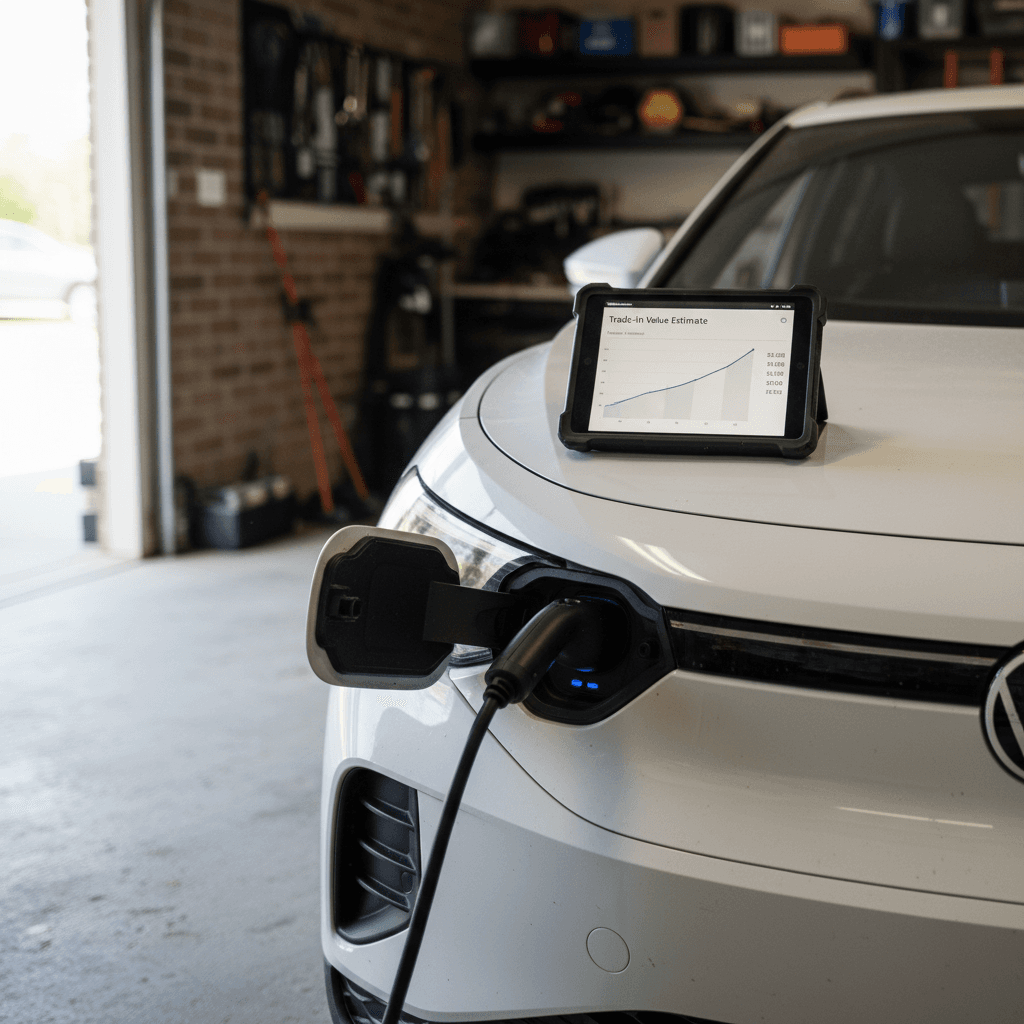
- A strong SoH (say, mid‑90s for a relatively new ID.4) tells buyers the car still has most of its original range and hasn’t been abused by constant DC fast‑charging.
- If your car has noticeable degradation or a history of heavy fast‑charging, experienced buyers will either walk or demand a discount, so it’s better to know the truth and price around it.
- Documentation matters: screenshots from the car, OEM diagnostics or third‑party battery health reports carry weight. A casual “seems fine” does not.
Battery reports = negotiation ammo
Maximizing your ID.4 trade‑in offer: step‑by‑step checklist
You can’t control the whole market, but you can absolutely control how your specific ID.4 shows up on a used‑car manager’s screen. Here’s a practical sequence to follow before you accept any 2026 trade‑in offer.
Pre‑trade‑in checklist for Volkswagen ID.4 owners
1. Fix cheap, obvious problems
Touch up curb rash if it’s minor, replace burned‑out bulbs, get a basic detail, and address low‑cost items like wiper blades. Don’t throw thousands at bodywork, but don’t present a car that looks unloved either.
2. Gather maintenance and recall records
Print or save service history, especially documentation of completed ID.4 recalls and software updates. A tidy digital folder is impressive; it says this car was owned by someone who cared.
3. Check tires and brakes
If your 20‑inch tires are near the wear bars, expect the dealer to knock the offer down to cover a $1,000+ replacement set. If you can replace them cost‑effectively ahead of time, or factor that into your expectations, you’ll avoid surprise sticker shock at appraisal time.
4. Pull a battery health report
Ask your VW dealer for a battery check or use a third‑party EV battery diagnostic service. Bring the report to show that your pack is healthy and that your daily use has been moderate.
5. Get competing offers in writing
Have at least one online instant offer and one local dealer number. If your preferred dealer comes in low, you’re now negotiating with real alternatives, not just feelings.
6. Time your move, if you can
If your ID.4 is still under bumper‑to‑bumper or battery warranty, try to sell or trade before major coverage expires or before you cross a big mileage milestone. And avoid trading during an active recall stop‑sale whenever possible.
Using Recharged to sell or trade your Volkswagen ID.4
Recharged exists for exactly this moment, when you’re staring at a dealer’s trade‑in number, wondering if that’s really all your EV is worth. Because we specialize in used electric vehicles, including the Volkswagen ID.4, we can often see and capture value that generic dealers miss.
How Recharged helps you get a fair ID.4 value
More than just a number on a screen.
Recharged Score battery diagnostics
Every vehicle on Recharged comes with a Recharged Score Report that includes verified battery health and charging history. When you sell or trade through Recharged, that transparency helps justify stronger pricing to the next buyer.
Multiple ways to sell
Take an instant offer, trade your ID.4 toward another EV, or list with consignment if you want to aim for a higher sale price with expert help instead of doing everything yourself.
Nationwide reach, local simplicity
Recharged handles nationwide delivery, title work and EV‑specialist support. That opens your ID.4 up to more buyers than just the people near your ZIP code, which can mean better offers, especially for well‑optioned cars.
Ready to find your next EV?
Browse VehiclesIf you’re near Richmond, VA, you can also visit the Recharged Experience Center, where specialists can walk you through your ID.4’s condition, battery health and options and help you compare keeping it, trading it, or selling it outright.
Frequently asked questions: Volkswagen ID.4 trade‑in value 2026
VW ID.4 trade‑in FAQs for 2026
Bottom line on your Volkswagen ID.4 trade‑in value in 2026
The 2026 market hasn’t been especially kind to used EVs, and the Volkswagen ID.4 is no exception. But a soft market isn’t the same as a rigged game. When you understand how model year, mileage, battery health, incentives and local demand shape your Volkswagen ID.4 trade‑in value, you can walk into any appraisal with clear expectations and a strategy instead of just frustration.
Start by getting honest online valuations, pulling a battery report and cleaning up easy cosmetic wins. Then, compare trade‑in, instant cash offers, and private‑party or consignment options. If you want help turning your ID.4 into your next EV, with verified battery diagnostics, fair‑market pricing and EV‑savvy support from start to finish, Recharged is built for exactly that job.