If you own (or are shopping for) a Volkswagen ID.4, understanding the official Volkswagen ID.4 service schedule is one of the simplest ways to protect your investment. EVs need far less maintenance than gas cars, but they’re not maintenance‑free, and missing a brake fluid change or inspection can cost you later, especially once the factory warranty expires.
Good news for ID.4 owners
Why the Volkswagen ID.4 service schedule matters
Volkswagen built the ID.4 to be a practical daily driver, not a science project. That means the service schedule is intentionally conservative: regular inspections, a few time‑based fluid changes, and tire and brake checks. If you follow it, you’re far less likely to face surprise repairs, and you’ll have a clean paper trail if you ever sell or trade the car.
- Keeps your high‑voltage battery, brakes, and chassis in top shape
- Catches software issues, water leaks, or wear items before they’re expensive
- Protects warranty coverage by showing you followed VW’s recommendations
- Helps preserve resale value, especially important if you plan to trade into another EV later
Tie service to anniversaries, not just mileage
VW ID.4 service interval basics (time vs. mileage)
In the U.S., the ID.4 maintenance plan combines time‑based and mileage‑based intervals. Most owners will hit the time limits first, especially if they have a short commute.
How Volkswagen structures ID.4 service intervals
Most U.S. ID.4 owners should think in years first, miles second.
Every 2 years
General inspection service is due roughly every 24 months, even at low mileage. This includes multi‑point checks, cabin filter replacement on some schedules, and software/recall updates.
Every 10,000 miles
Dealers often talk about 10,000‑mile checkups (10k, 20k, 30k, etc.). On an ID.4, these visits are mostly inspections plus tire rotation, not engine‑style tune‑ups.
Every 3 years (brake fluid)
Brake fluid is the one major fluid change VW calls out early. The first change typically occurs at 3 years, then at shorter intervals afterward depending on model‑year guidance.
Watch for regional wording
Volkswagen ID.4 service schedule overview
The exact table in your owner’s manual can look intimidating, so let’s simplify it into the visits most U.S. ID.4 drivers will actually see at the dealer. Think in terms of 10,000‑mile steps and a 3‑year brake fluid service.
Typical Volkswagen ID.4 service schedule (U.S., 2021–current)
Always verify against your owner’s manual; this table reflects common dealer schedules for U.S.‑market ID.4 models.
| Odometer / Time | Main items | Notes |
|---|---|---|
| 10,000 miles or 1 year | Multi‑point inspection, tire rotation, check fluids, reset service indicator | Often covered under VW Carefree Maintenance in the first 2 years on new vehicles |
| 20,000 miles or 2 years | Repeat 10k service; cabin air filter on some schedules | Ask dealer to check for software updates and open campaigns |
| 30,000 miles or ~3 years | Inspection service + brake fluid change | Brake fluid is time‑based, due even on low‑mileage cars |
| 40,000 miles or 4 years | Inspection, tire rotation, possible cabin filter, underbody check | Good time to assess tires and brakes for wear |
| 50,000–60,000 miles or 5–6 years | Repeat inspection services; brake fluid every 2–3 years after first change | Plan ahead for tires, 12‑volt battery, and alignment if needed |
| Beyond 60,000 miles | Continue 20k / 2‑year inspection rhythm + periodic brake fluid | No engine oil, timing belt, or transmission fluid on the official schedule |
Time‑based intervals should be followed even if you drive fewer miles than listed.
Where VW’s Carefree Coverage fits in
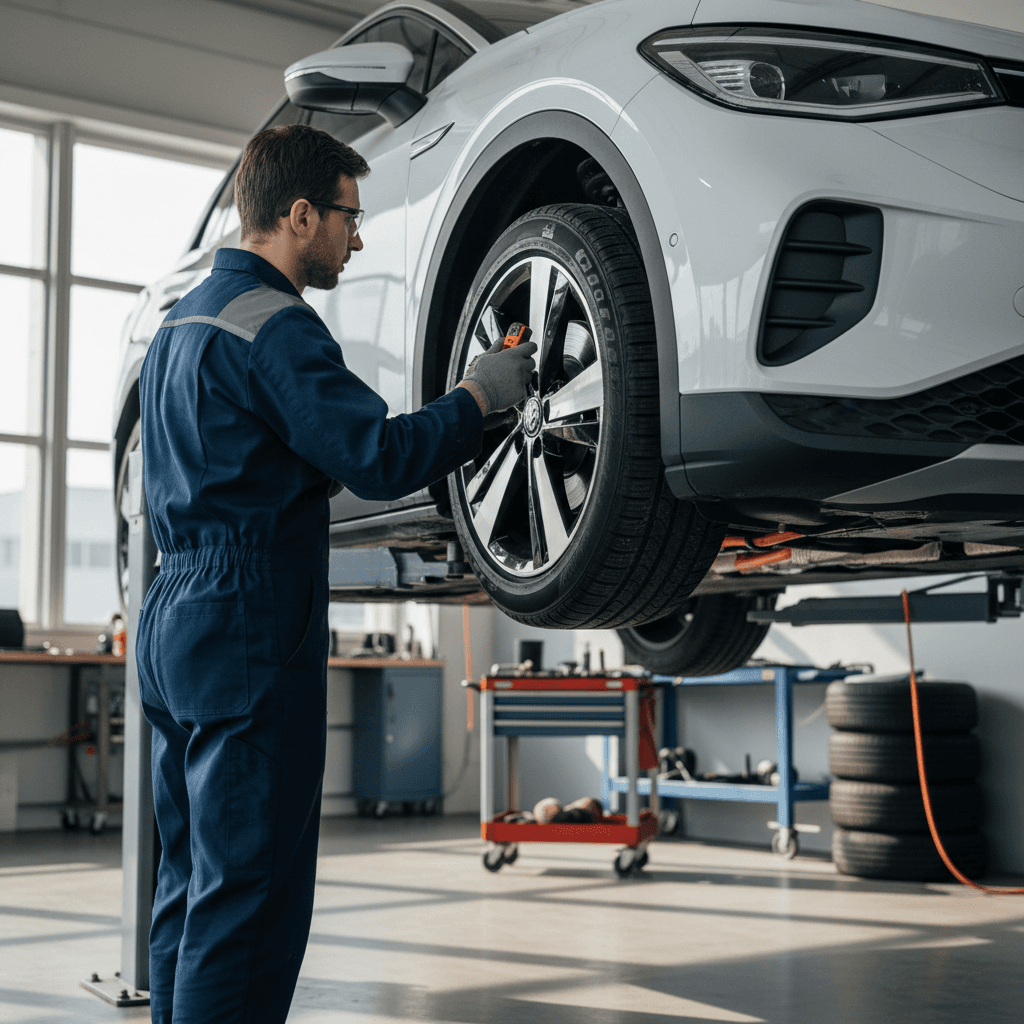
Detailed Volkswagen ID.4 service intervals
Let’s look a bit closer at what’s typically done at each major ID.4 service point. Dealers may bundle or rename services, but the core tasks are similar across model years.
10,000 & 20,000 miles (or 1–2 years): basic inspection services
1. Visual inspection of brakes and underbody
Technicians inspect pads, rotors, brake lines, suspension joints, and underbody panels for wear, corrosion, and damage. On an EV that uses strong regeneration, pad wear is usually minimal early on.
2. Tire rotation and pressure check
Rotating tires every 10k miles helps even out wear, especially on torque‑rich EVs. Proper pressure also protects range and ride quality.
3. Check and top up fluids
Screenwash and, when accessible, other low‑risk reservoirs are checked. The ID.4 doesn’t require routine coolant or gear‑oil service under VW’s official schedule.
4. Cabin air filter check or replacement
Some dealers replace the cabin filter at 20k miles; others wait until 30k or 40k. If you drive in dusty or urban environments, replacing it sooner can keep the HVAC system fresher.
5. Software, recalls, and campaign updates
Because the ID.4 is software‑heavy, many visits include control‑unit scans and software updates. These can address minor glitches, charging behavior, or driver‑assistance quirks.
Bundle alignment checks with tire rotations
By the time you reach roughly 30,000 miles or 3 years, one extra item becomes critical: brake fluid.
30,000 & 40,000 miles (≈3–4 years): brake fluid and deeper inspection
1. Brake fluid change at 3 years
Volkswagen calls for replacing brake fluid around the 3‑year mark to remove moisture and contaminants. Even if you’ve barely used the friction brakes thanks to regeneration, the fluid still absorbs water over time.
2. Detailed brake inspection
Pads and rotors are measured for thickness and condition. Many ID.4 owners still have plenty of pad left at 30k–40k miles, but rust and glazing can appear on low‑use rotors in wet climates.
3. Steering and suspension check
Links, bushings, and shocks are inspected for play or leaks. On heavier EVs, this check becomes more important as miles add up.
4. Seals, boots, and high‑voltage cabling check
Technicians look for torn CV boots, underbody damage, and visible issues with orange high‑voltage cables and connectors.
5. Cabin filter and wiper renewal
By this point many schedules call for a new cabin filter. It’s also a good time to replace wiper blades if they’re streaking.
After that, the pattern mostly repeats: inspection services every 20k miles or 2 years, with brake fluid changes at the intervals listed for your model year (often every 2–3 years after the first change). There is no officially scheduled gear‑oil change for the ID.4’s reduction gear in the U.S. maintenance tables; some owners choose to do one proactively, but it’s not a factory requirement.
Don’t skip the brake fluid changes
What you can delay, and what you should never skip
Items you can often delay a bit
- Cabin air filter – If the HVAC smells fine and airflow is strong, stretching the filter by 10k miles isn’t unusual.
- Tire rotation by a few thousand miles – If wear is even, you don’t have to hit 10,000 miles on the dot.
- Cosmetic checks – Minor trim or squeak issues can often wait and be bundled into a larger visit.
Always do a quick visual walk‑around yourself monthly; many simple issues are obvious once you look for them.
Items you should not ignore
- Brake fluid changes – Time‑based; skipping them risks internal corrosion or a soft pedal in an emergency stop.
- Recall and software campaigns – These can affect safety systems, charging behavior, or range estimation.
- Warning lights or messages – The ID.4 is chatty; don’t clear alerts without understanding the cause.
If the car displays a specific service or inspection warning, schedule a visit rather than waiting for the next convenient interval.
Typical Volkswagen ID.4 service costs
Service prices vary wildly between regions and dealers, but based on dealer menus and owner reports, ID.4 maintenance is generally modest compared with a similarly sized gas SUV. Here’s a rough U.S. ballpark so you know what to expect.
Approximate Volkswagen ID.4 service pricing (out of warranty)
Actual prices depend on dealer labor rates and local taxes; use this as a planning guide, not a quote.
| Service | What’s included | Typical range |
|---|---|---|
| 10k / 20k inspection + tire rotation | Inspection, tire rotation, basic checks | $120–$250 |
| 30k service with brake fluid | Inspection items + full brake fluid flush | $300–$500 |
| Standalone brake fluid change | If performed outside a bundled service | $180–$300 |
| Cabin air filter replacement | Filter and labor if done at dealer | $60–$150 |
| Four‑wheel alignment | Often done at a tire shop instead of VW dealer | $120–$220 |
| Tire replacement (set of 4) | Depends heavily on wheel size and tire brand | $800–$1,400+ |
Many new ID.4s have the first two years of basic maintenance covered, which lowers early‑ownership costs.
Why ID.4 maintenance stays relatively low
Maintenance tips to extend ID.4 component life
How smart maintenance helps your ID.4
- Check tire pressures monthly, especially with large 19–21" wheels that are sensitive to under‑inflation.
- Use regeneration aggressively in daily driving to reduce brake wear, but make a few firm stops now and then to keep rotors clean.
- Wash underbody areas and wheel wells periodically if you live where roads are salted; corrosion starts where dirt and salt collect.
- Keep software up to date, fixes for charging or thermal‑management bugs can indirectly help long‑term battery health.
- Schedule a brake fluid change on time even if your mileage is low; moisture absorption is driven by age more than miles.
Protect the 12‑volt battery too
Buying a used Volkswagen ID.4: service items to check
If you’re shopping for a used ID.4, the service schedule becomes a buyer‑protection tool. A well‑documented maintenance history is one of the easiest ways to separate a carefully owned EV from a neglected one.
Used VW ID.4 maintenance checklist
1. Confirm brake fluid service history
Look for a documented brake fluid change around the 3‑year mark and follow‑up changes according to the schedule. If it’s missing, budget to do it immediately after purchase.
2. Review inspection records
Ask for service invoices showing 10k/20k/30k visits. You’re looking for regular inspections and any notes about abnormal tire, brake, or suspension wear.
3. Inspect tires and alignment
Uneven tire wear can signal misalignment or hard use. Factor a set of tires or an alignment into your offer if needed.
4. Check for open recalls and campaigns
Use the VIN on Volkswagen’s owner site to see if any safety recalls or software campaigns are outstanding; a good seller will have these taken care of.
5. Ask for charging and usage patterns
Frequent DC fast charging isn’t necessarily bad, but a car that lived almost exclusively on high‑power fast chargers may show more battery wear than one charged mostly at home.
6. Get an independent EV‑focused inspection
A shop that knows electric vehicles can evaluate brakes, suspension, tires, and cooling hardware with a more critical eye than a generic quick‑lube outlet.
How Recharged evaluates used ID.4s
FAQ: Volkswagen ID.4 service schedule
Volkswagen ID.4 service schedule – common questions
Key takeaways on the VW ID.4 service schedule
The Volkswagen ID.4’s service schedule is refreshingly simple: periodic inspections, tire rotations, and a time‑based brake fluid change at about the three‑year mark, then repeating on a predictable rhythm. If you respect those intervals, keep tires and alignment in check, and stay current on recalls and software updates, the ID.4 can be one of the lower‑maintenance compact SUVs you can own, electric or otherwise.
Whether you’re already driving an ID.4 or comparing it with other used EVs, understanding the maintenance picture upfront gives you a clearer view of total ownership cost. If you’d like help finding a used ID.4 with verified battery health and documented service history, Recharged pairs every car with a Recharged Score Report and EV‑specialist support from first click to final delivery.