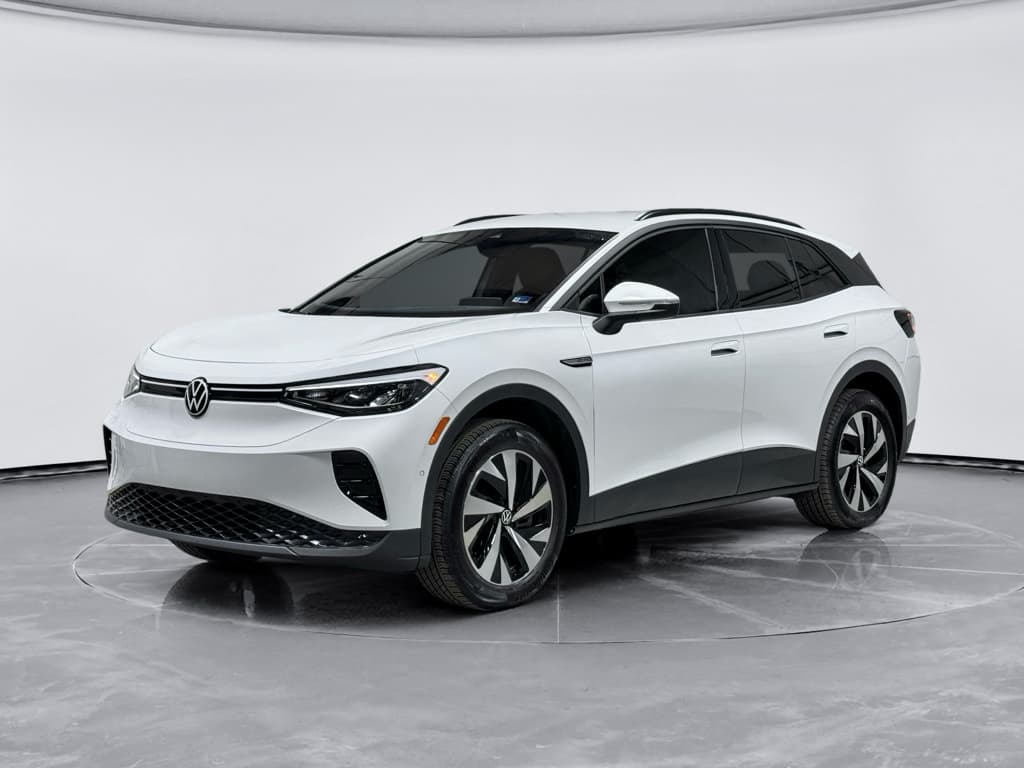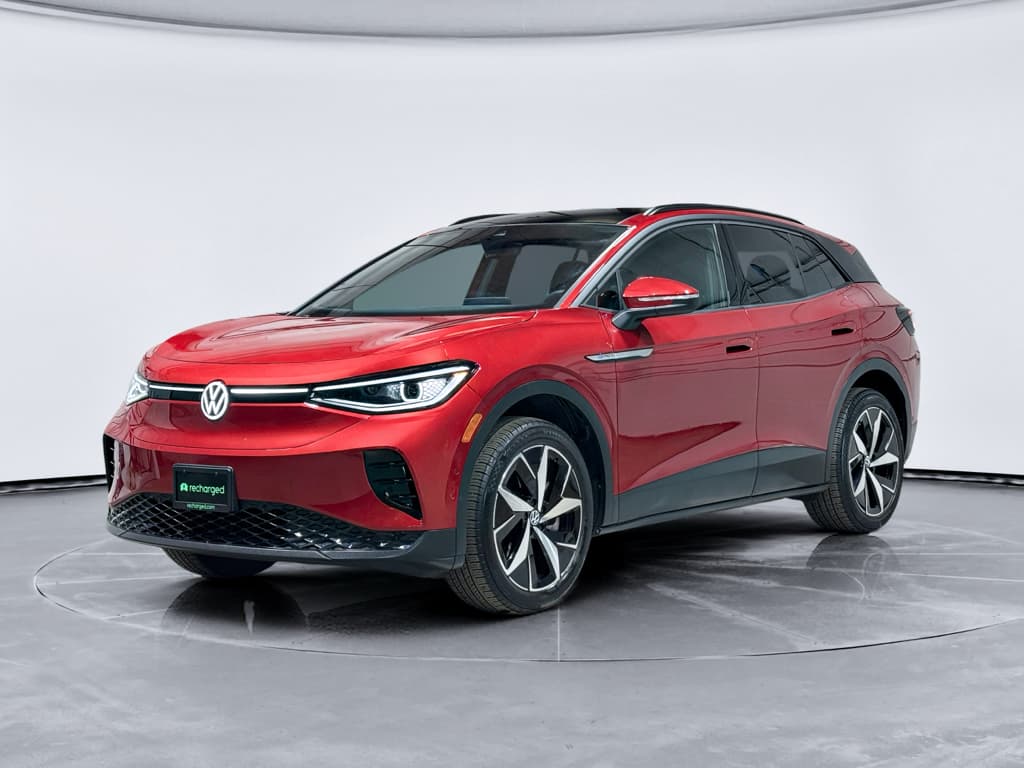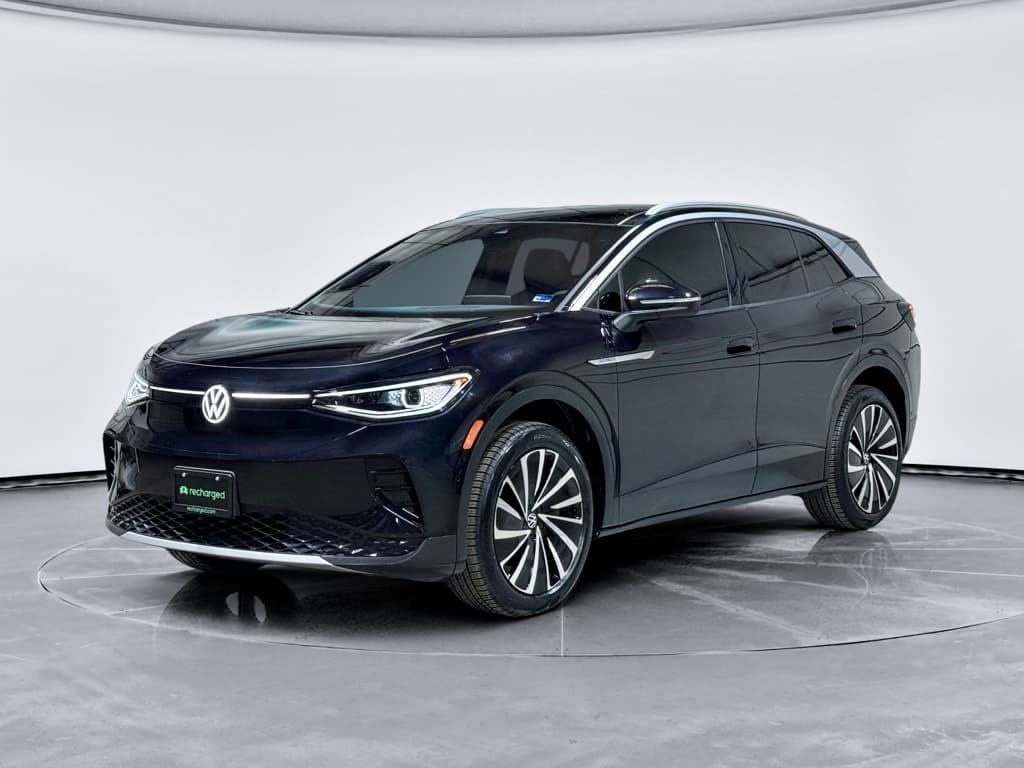
Selling a Volkswagen ID.4 isn’t quite like selling a gas SUV. Shoppers want to know about battery health, charging speeds, software updates, and warranty coverage, on top of the usual mileage and condition questions. This Volkswagen ID.4 selling checklist walks you step‑by‑step through everything you should do before you list your car so you can sell quickly and confidently, without leaving money on the table.
Who this checklist is for
Why a Volkswagen ID.4 selling checklist matters
EV shoppers ask tougher questions
A used ID.4 buyer wants to know more than whether it’s clean and accident‑free. They’ll ask about battery health, real‑world range, whether it still has free Electrify America credits, and how it behaves on DC fast charging. If you can’t answer clearly, you lose trust, and usually, value.
A little prep adds real money
Because the ID.4 is still a relatively new model, condition and documentation can swing value by thousands of dollars. A seller who shows battery reports, software histories, and thoughtful charging habits tends to get better offers than someone who shrugs and says, “it’s fine, I just plug it in.”
How to use this checklist
Step 1: Confirm your ID.4’s basics
Your first job is simple: get the facts straight. The Volkswagen ID.4 lineup has changed quickly since 2021, with different battery sizes, motors, and features. Mis‑stating a trim or battery pack can confuse buyers and hurt your credibility.
ID.4 basics checklist
Identify model year, trim, and drivetrain
Confirm whether you have a 2021, 2022, 2023, 2024, or 2025 ID.4, and the exact trim (Standard, S, Pro, Pro S, AWD, etc.). This affects range, charging speed, and value. You can usually find this on your original window sticker, purchase paperwork, or by decoding the VIN.
Note battery pack size
Most U.S. ID.4s use either the smaller ~62 kWh pack or the larger ~82 kWh pack. The larger battery offers more range and typically improves resale value. If you’re unsure which you have, your window sticker, owner’s manual, or an online VIN decoder can help.
Record current mileage and title status
Buyers will immediately ask about mileage and whether the title is clean, branded, or rebuilt. Pull your title out now and verify everything matches your registration and VIN.
Gather keys, manuals, and accessories
Collect both key fobs, the mobile charging cable, any Level 2 home charger documentation, all‑weather mats, cargo covers, and roof racks. A "complete" ID.4 package photographs better and signals good ownership.
Be precise about trim names
Step 2: Check battery health and charging history
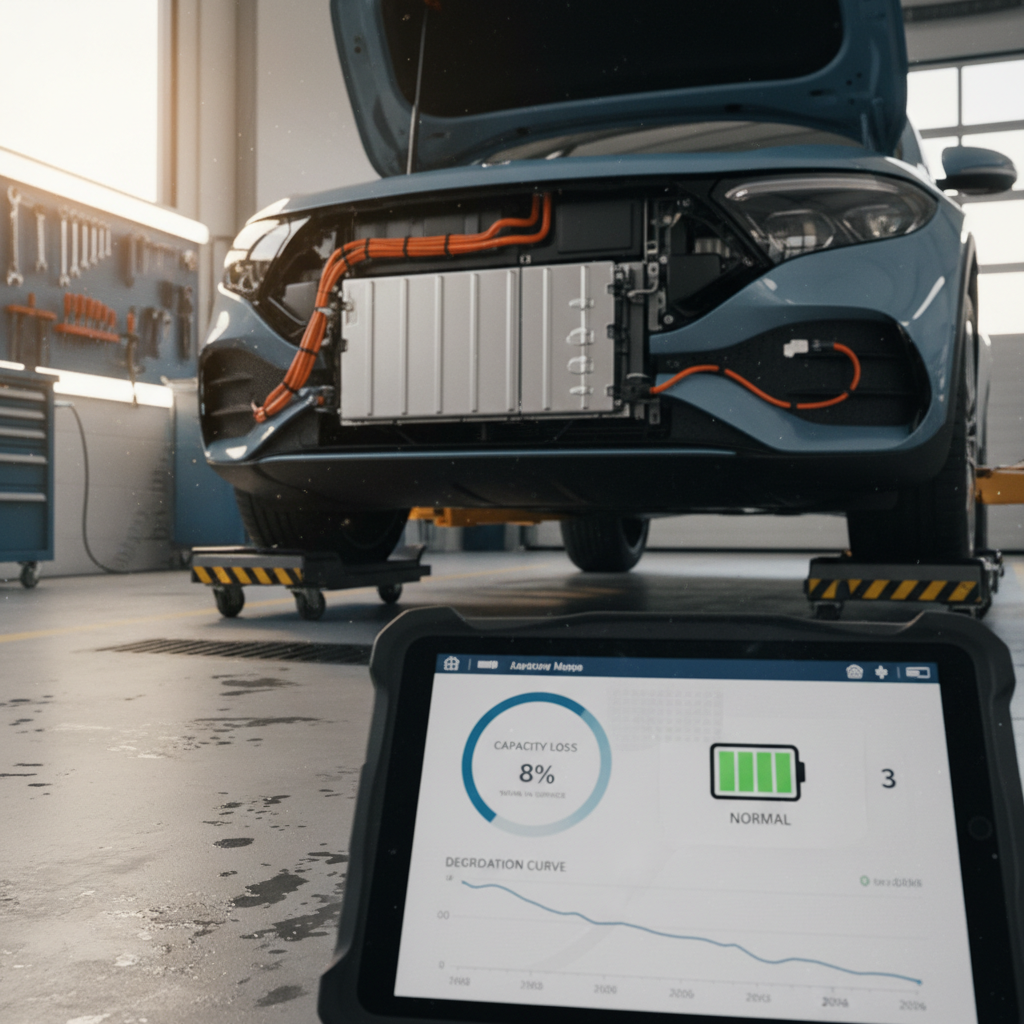
For any EV, the battery is the story. Volkswagen backs the ID.4’s high‑voltage battery for 8 years or 100,000 miles against excessive capacity loss, typically defined as dropping below about 70% of original net capacity. Real‑world data on VW’s MEB‑platform batteries suggests that many ID.4 packs still hold roughly 85–95% capacity around 100,000 miles when treated well, but buyers won’t take that on faith, they want proof.
Volkswagen ID.4 battery health at a glance
Battery health and charging checklist
Document your typical range
Take note of the range you normally see at 80–100% state of charge in mild weather on your usual drive. Compare it to the original EPA estimate for your trim. Being able to say, “At 80%, I still see about X miles” is powerful.
Pull a battery health report if possible
Some third‑party tools and services can estimate state of health using OBD data and charging logs. Recharged’s <strong>Recharged Score Report</strong> does this for you, giving buyers a verified look at your pack’s condition.
Summarize your charging habits
Buyers love to hear that you mostly charged on Level 2 at home, limited daily charging to 80–90%, and used DC fast charging only for road trips. If that describes you, write it down and be ready to share.
Check DC fast‑charging behavior
If you can, do one DC fast‑charge session from roughly 10–70%. Note how quickly the car ramps up and whether it holds a healthy charging curve. If it feels unusually slow on a known‑good charger, that’s worth diagnosing before listing.
Leverage a third‑party battery report
Step 3: Handle recalls, maintenance, and warranties
The ID.4 has seen important software updates and a few recalls, including campaigns related to high‑voltage components and HVAC performance. A car that’s fully up to date is easier to sell and commands more trust, and you don’t want a buyer discovering an open recall before you do.
Service and warranty checklist
Check for open recalls and campaigns
Use your VIN on Volkswagen’s website or NHTSA’s recall lookup to see if any recalls or service campaigns are outstanding. Schedule these with your VW dealer before listing; "all recalls completed" looks great in a description.
Gather service records
Collect invoices for tire rotations, brake service, cabin air‑filter changes, and any warranty repairs or software updates. If you used the included Carefree Maintenance on newer ID.4s, document those visits too.
Confirm remaining warranties
Note the in‑service date so you can calculate how much of the 4‑year/50,000‑mile new‑vehicle warranty and 8‑year/100,000‑mile battery warranty is left. Buyers will ask, and it often justifies a higher asking price.
Address small issues proactively
Fix burned‑out bulbs, worn wipers, warning lights, and minor cosmetic flaws that are cheap to correct. An ID.4 with a glowing TPMS light and chipped windshield is an open invitation for lowball offers.
Don’t hide recall status
Step 4: Set a smart price for your Volkswagen ID.4
Used EV pricing moves faster than used gas SUVs, and the ID.4 is no exception. Incentives on new models, changes in federal tax credits, and regional demand can swing values in a matter of months. Your goal is to price confidently without scaring away good buyers.
Three places to check ID.4 pricing
Blend data sources to avoid over‑ or under‑pricing
Online appraisal tools
Start with tools like Edmunds, KBB, or similar sites to get a ballpark trade‑in and private‑party value for your year, trim, mileage, and ZIP code. Remember: these are averages, not gospel.
Local listings
Search for similar ID.4s (same battery, trim, and mileage range) within 100–200 miles. Note their asking prices, how long they’ve been listed, and whether prices are being reduced over time.
Instant offers & trade‑ins
Get a few real offers, dealer trade‑ins, online car‑buying services, or a marketplace like Recharged. Even if you plan a private sale, hard numbers on paper help you set a realistic floor.
Aim for a realistic spread
Step 5: Detail your ID.4 and take great photos
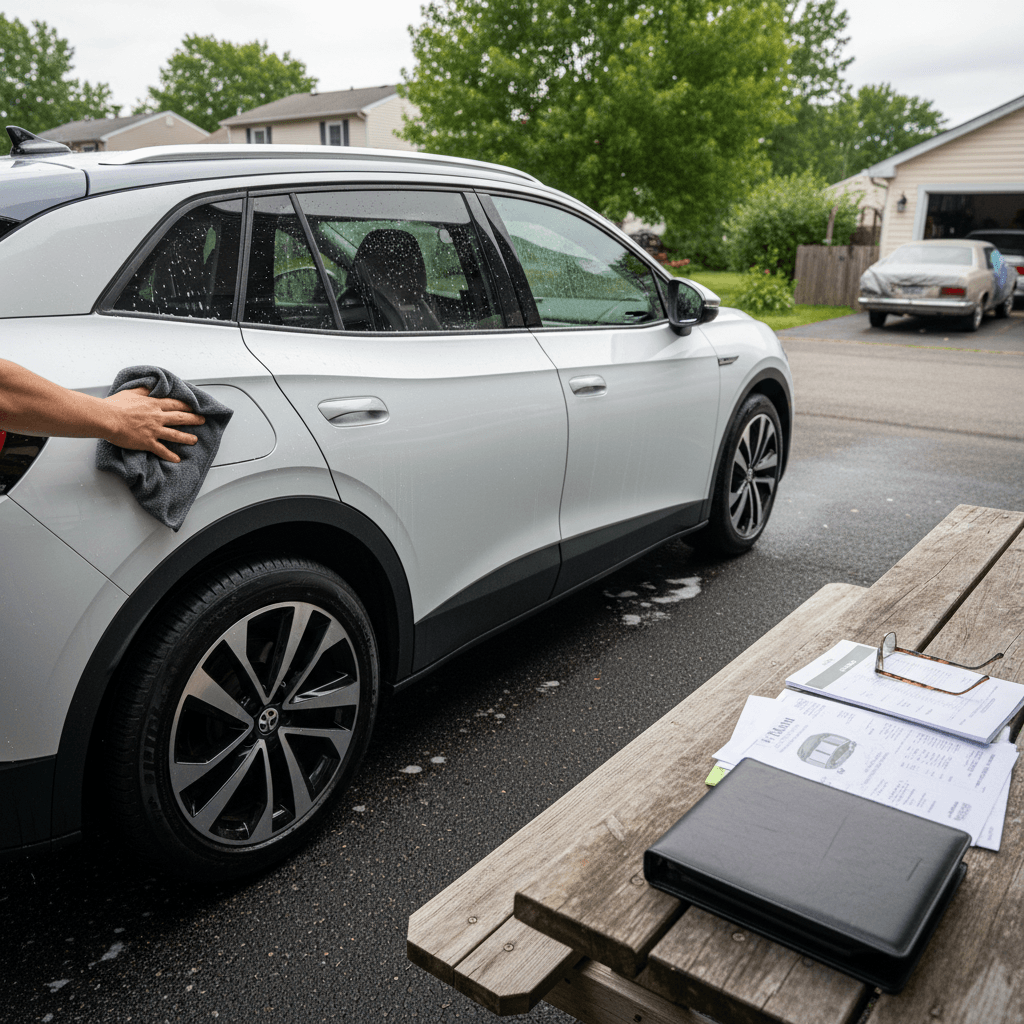
The ID.4 has clean, modern lines that photograph beautifully, if you give it a chance. A quick wash and a few thoughtful photo angles can be the difference between a listing that lingers and one that gets messages the first weekend.
Detailing and photo checklist for your ID.4
Clean inside and out
Wash, dry, and lightly clay the exterior if needed. Vacuum the cabin, clean glass and screens, and wipe down the dash and door panels. Remove personal items from door pockets, cupholders, and cargo area.
Stage a clutter‑free interior
Show off the ID.4’s airy cabin. Remove phone mounts, cables, and random accessories. Arrange the charging cable neatly in the rear underfloor compartment or cargo area for photos.
Shoot in soft daylight
Take photos in the early morning or late afternoon. Capture front three‑quarter, rear three‑quarter, both sides, interior from each door, the digital cockpit, back seats, cargo area, wheels, tires, and any flaws.
Highlight EV‑specific features
Include photos of the charge port open and plugged in, the main infotainment screens, drive‑mode and range displays, and any included Level 2 home charger. These remind buyers they’re getting the full EV experience.
Think like a classified editor
Step 6: Build a trustworthy listing description
Your description should answer the questions a smart ID.4 shopper would ask before they click “contact seller.” You’re not writing ad copy; you’re building confidence.
What to include
- Year, trim, battery, and drivetrain (e.g., 2023 ID.4 Pro S AWD, 82 kWh pack)
- Mileage and remaining factory and battery warranty
- Charging habits (mostly home Level 2, limited DC fast charging, etc.)
- Recent service and recall completion
- Real‑world range you typically see at 80–100% in normal weather
- Reason for selling (upgrading, moving, no longer need two cars, etc.)
Example listing snippet
“2023 Volkswagen ID.4 Pro S AWD, 82 kWh battery, 34,500 miles. Clean title, no accidents. Mostly charged on a 40‑amp Level 2 at home, DC fast only for road trips (about once a month). At 80% in mild weather I still see ~230 miles of range. All recalls and software updates completed at VW dealer; records in hand. Includes original mobile charger, two key fobs, and all‑weather mats.”
Avoid over‑promising
Step 7: Plan safe test drives and charging demos
Most EV‑curious buyers have never driven an ID.4, and many have never used a public charger. A short, confident test drive and a quick charging demo can seal the deal, but you also need to protect yourself and your car.
Test drive and charging demo checklist
Screen buyers politely
Before you meet, ask if they’re pre‑approved or have funds ready, what experience they have with EVs, and whether they have a trade‑in. Serious buyers won’t mind a few basic questions.
Verify license and insurance
Always check a valid driver’s license and proof of insurance before handing over the key. Ride along on the test drive; don’t let strangers drive your ID.4 alone.
Plan a simple route
Choose a 10–15 minute loop with a mix of city and highway driving so buyers can feel the instant EV torque, highway stability, and one‑pedal driving or strong regen modes.
Offer a quick charging walk‑through
If you’re near a public Level 2 or DC fast charger, walk them through how you plug in, start a session in the app, and monitor charging. Buyers moving from gas to EVs find this reassuring.
Protect your data
Step 8: Paperwork, payment, and final handover
Once you have a serious buyer for your Volkswagen ID.4, the final step is making sure money and paperwork change hands cleanly. EV‑specific paperwork is minimal, but attention to detail matters.
Key documents and items to hand over with your ID.4
Use this as your pre‑handover checklist so nothing gets left in a kitchen drawer.
| Item | Why it matters |
|---|---|
| Vehicle title (and lien release, if needed) | Transfers ownership cleanly; a missing lien release can stop registration in its tracks. |
| Bill of sale | Documents price, mileage, and "as‑is" condition for both parties. |
| Odometer disclosure | Required in many states; often part of the title or separate form. |
| Service & recall records | Shows responsible ownership and completed safety work. |
| Charging cable and accessories | Buyers expect the mobile charger, plus any included adapters or roof racks you agreed on. |
| Owner’s manuals and spare key | Small items that reassure the buyer they’re getting a well‑cared‑for car. |
Always follow your state’s specific titling and tax rules when selling a vehicle.
Be picky about payment
Should you sell your ID.4 privately or through a service?
Not everyone wants to photograph, list, and show their ID.4 to strangers for a month. The right path depends on how much time you have, your comfort with negotiations, and whether you’re willing to trade a bit of money for less hassle.
Volkswagen ID.4 selling options compared
Pick the route that matches your time, risk tolerance, and patience
Private sale
Pros: Usually brings the highest price if you follow this checklist, especially for low‑mileage or well‑optioned ID.4s with great battery health.
Cons: More time‑consuming; you handle marketing, buyers, test drives, and paperwork yourself.
Dealer trade‑in
Pros: Fast and simple, especially if you’re buying another car. The dealer handles payoff, paperwork, and sometimes sales tax advantages on the new vehicle.
Cons: Typically the lowest payout, and many dealers still undervalue EVs or don’t understand battery health.
Marketplace or EV specialist (like Recharged)
Pros: EV‑savvy buyers, battery‑health diagnostics, help with pricing, and options like instant offers, consignment, or nationwide buyers. Less legwork for you.
Cons: You may pay a fee or accept slightly less than a perfectly executed private sale, but often much more than a traditional trade‑in.
Where Recharged fits in
Ready to find your next EV?
Browse VehiclesVolkswagen ID.4 selling checklist: quick summary
One‑page Volkswagen ID.4 selling checklist
1. Confirm specs and gather basics
Verify year, trim, battery size, drivetrain, mileage, title status, keys, manuals, and accessories.
2. Document battery health and charging
Note real‑world range, summarize your charging habits, and get a third‑party battery report if possible.
3. Clear recalls and collect records
Complete open recalls, gather service invoices, and calculate remaining vehicle and battery warranty.
4. Research pricing
Blend appraisal tools, local listings, and instant offers to set a competitive yet realistic asking price.
5. Clean, photograph, and write the listing
Detail the car, shoot honest, well‑lit photos, and write a description that answers EV‑specific questions up front.
6. Manage test drives and close the deal
Screen buyers, plan safe test drives, demonstrate charging if needed, choose secure payment, and complete paperwork carefully.
Selling a Volkswagen ID.4 is part used‑car sale, part EV education. The more clearly you can explain your SUV’s battery health, charging behavior, and everyday range, the more comfortable buyers feel paying a strong price. Follow this checklist, and you’ll walk into every conversation prepared, whether you hand over the keys in your driveway, at a dealership, or through an EV specialist like Recharged that can bring a nationwide audience to your used ID.4.