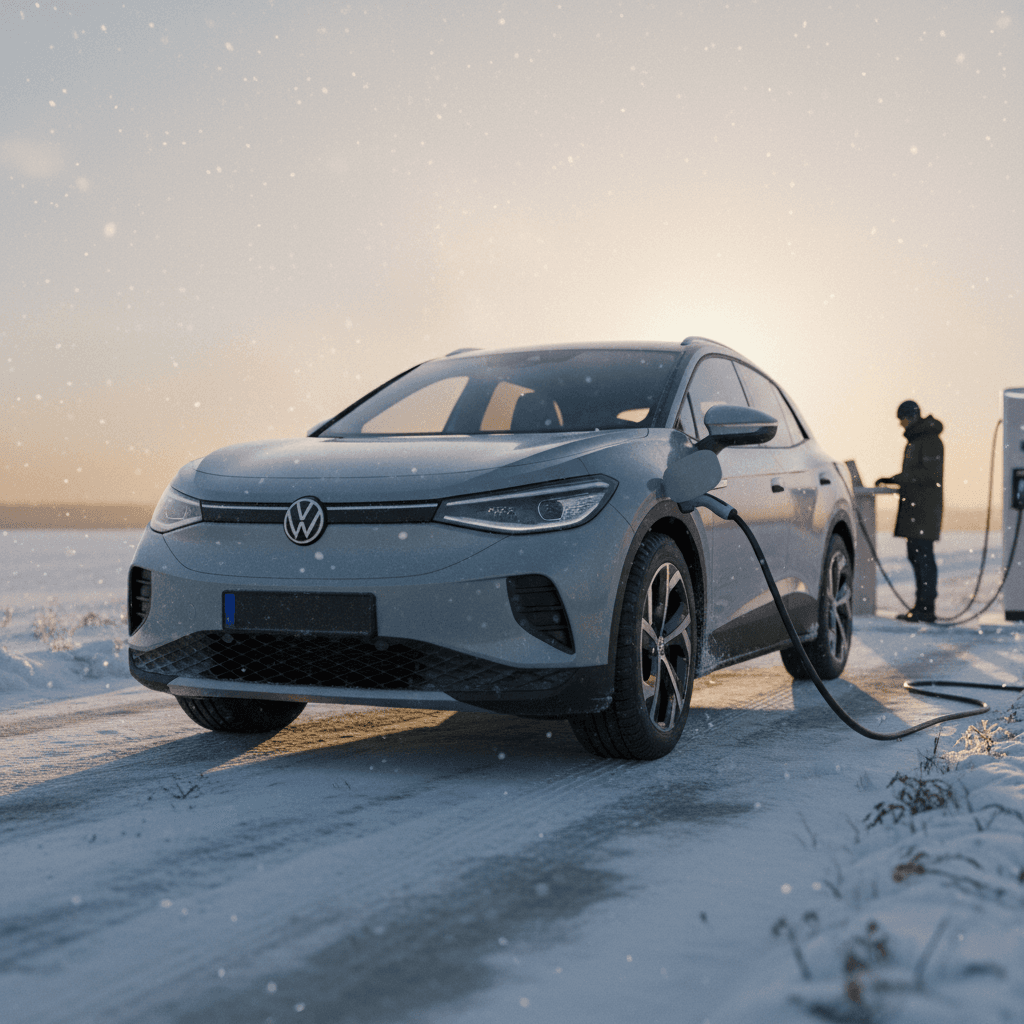
If you live where winter actually means winter, you only really care about one thing: **how far your Volkswagen ID.4 will go in cold weather** with the heat on and real traffic to deal with. The brochure numbers are one thing; February in Minnesota or upstate New York is another. Let’s walk through what you can honestly expect from an ID.4 when temperatures drop, and what you can do to claw back as much range as possible.
Quick context
Volkswagen ID.4 winter range: the short answer
On paper, a modern **Volkswagen ID.4 Pro** with the larger battery is rated around **263–291 miles of EPA range**, depending on year, drive type, and wheel size. In sustained winter conditions (below freezing, heat on, mixed driving), most drivers see **about 65–75% of that rating** in real life.
Typical Volkswagen ID.4 winter range at a glance
Those numbers assume normal winter driving: speeds up to 70 mph, the cabin set in the high 60s or low 70s, and a mix of city and highway. Short hops with lots of cold starts can look worse, while long highway stints after the battery is warmed up may look a bit better.
EPA range vs. winter reality for the ID.4
To make sense of **Volkswagen ID.4 range in cold weather**, you first need to know which ID.4 you’re dealing with. Over the years, VW has sold several battery and drivetrain combinations, each with a different EPA rating.
Volkswagen ID.4 EPA range ratings (approximate)
Representative EPA-rated ranges for common U.S. ID.4 trims. Exact figures vary slightly by model year and wheels, but this is close enough for winter planning.
| Model / battery | Drive | Approx. EPA range (mi) | Notes |
|---|---|---|---|
| ID.4 Standard (62 kWh) | RWD | ~209 | Smaller pack; city-focused |
| ID.4 Pro (77–82 kWh) | RWD | ~263–291 | Most common long-range trims |
| ID.4 AWD Pro (77–82 kWh) | AWD | ~255–268 | More traction, slightly lower range |
| Early ID.4 1st/Pro S (82 kWh) | RWD | ~240–260 | Pre-refresh models |
| Later ID.4 Pro S (82 kWh) | RWD/AWD | High 260s–low 290s | More efficient newer motor |
Use these as the "ideal" baseline before applying winter range loss.
In independent winter tests and owner reports, a Pro RWD ID.4 that can officially do about **270–280 miles in mild weather** will often manage **roughly 190–225 miles** when it’s below freezing with the cabin warm. That’s where the 25–35% winter drop you keep hearing about comes from.
Don’t trust the first winter guess-o-meter
Why the Volkswagen ID.4 loses range in cold weather
The physics don’t change just because there’s a VW badge on the nose. The ID.4 loses range in winter for the same reasons every EV does, plus a couple of model-specific quirks you should know.
- Cold batteries are less efficient. Lithium‑ion chemistry doesn’t like low temperatures. The battery can’t accept or deliver energy as easily, so you burn more kWh per mile to do the same work.
- Cabin heat is energy‑hungry. In an EV there’s no free waste heat from a gasoline engine. Early U.S. ID.4s use a resistive heater that can pull several kilowatts by itself, especially at start‑up.
- Tire and drivetrain losses go up. Cold tires, thicker lubricants, snow, slush, and strong winter winds all make the car work harder. That shows up as higher consumption on the highway in particular.
- Short trips are worst‑case. Warming the battery and cabin takes a fixed amount of energy. If you only drive 3–10 miles at a time, you spend a big chunk of every trip just getting the car up to temperature, then park before the efficiency payoff.
Why the ID.4 can look worse than "average"
How much range loss to expect by temperature
Your exact winter range will depend on wind, snow, elevation, your right foot, and how you use the heat. But based on testing, fleet data, and many owner logs, here’s a realistic rule-of-thumb chart for a **77–82 kWh ID.4 Pro** with mixed driving and the cabin set around 70°F.
Approximate Volkswagen ID.4 winter range by temperature
Rough, real-world expectations for a long-range ID.4 versus a 270-mile EPA rating. Your numbers may be a bit better or worse.
| Outside temp | Driving profile | Approx. usable range | Typical range loss |
|---|---|---|---|
| 50–60°F (cool fall) | Mixed city/highway | 230–250 mi | 10–15% |
| 32–45°F (chilly) | Mixed, heater used | 200–230 mi | 15–25% |
| 20–32°F (freezing) | Mixed, heater on most of trip | 180–215 mi | 25–35% |
| 0–20°F (deep winter) | Urban + highway, snow possible | 160–200 mi | 30–40% |
| Below 0°F (severe) | Short trips, heavy heater use | 130–180 mi | 40%+ on bad days |
These are planning numbers, not promises, build in a safety buffer, especially for highway trips.
A better way to think about it
Heat pump vs. resistive heat: does your ID.4 have it?
One of the biggest variables in **Volkswagen ID.4 range in cold weather** is whether your car has a **heat pump** or only a resistive heater. A heat pump can move heat far more efficiently, especially in the 20–45°F range, which is where many U.S. winters actually live.
ID.4 with resistive heater only
- Common on early U.S.-built ID.4s and some lower trims.
- Uses an electric heating element, like an oversized hair dryer.
- Quick cabin warm‑up, but draws a lot of power at start‑up.
- Owners often see 30–40% range loss in deep winter, especially on short trips.
ID.4 with optional heat pump
- Was offered as an option or in higher trims in many markets.
- Moves heat instead of creating it, so it uses less energy.
- Helps most in the 20–45°F band; benefit shrinks below about 0°F.
- Real‑world reports suggest winter loss closer to 20–25% in moderate cold when used smartly.
Not sure which one you have?
Real-world ID.4 owner experiences in winter
Lab tests are helpful, but winter is messy. ID.4 owners in cold‑climate forums and long‑term reviews tend to report three broad patterns:
- Deep-winter commutes can lose 30–40%. Drivers in the upper Midwest and Northeast commonly see range drop from about 230–250 miles in summer to roughly 150–180 miles on short, cold commutes in January, especially if they park outside.
- Highway road trips magnify the loss. Running 70–75 mph into cold air with the heater humming is tough on any EV. It’s not unusual for an AWD ID.4 rated around 255 miles to realistically plan around 170–190 miles between winter fast‑charge stops.
- Mild-climate owners see much smaller hits. ID.4 drivers in places like coastal California or the Southeast often report winter range only 10–20% below summer, because the battery and cabin never get truly frigid.
"My 2021 ID.4 would do about 230 miles in summer if I babied it. In a Michigan winter, 160 miles felt like the safe number, especially if I wanted the cabin actually warm."
Good news for newer ID.4s
How to maximize your ID.4 range in cold weather
You can’t negotiate with physics, but you can absolutely **tilt the odds in your favor**. These are the habits that make the biggest difference for ID.4 owners once the temperature drops.
Practical ways to stretch Volkswagen ID.4 range in cold weather
1. Precondition while plugged in
Use the ID.4’s climate scheduling or app to warm the cabin and (when supported) the battery while you’re still connected to a Level 2 charger. That way, more of your stored energy goes to driving rather than getting everything up to temperature.
2. Use seat and wheel heaters first
The **seat and steering wheel heaters** sip power compared with blasting the cabin fan. Many owners keep the cabin a couple of degrees cooler and rely on those heated touch points to stay comfortable with less range penalty.
3. Dial back top speed in bad weather
Above about 70 mph, aerodynamic drag and heater load combine to chew through range. Dropping from 75 to 65 mph on a winter highway stint can add dozens of miles of real range in an ID.4.
4. Avoid lots of short, cold trips
If you can bundle errands into one longer outing instead of several 5–10 mile hops, you only pay the battery‑warming penalty once. Your efficiency readout in mi/kWh will look dramatically better.
5. Keep tires properly inflated
Cold air drops tire pressure, and under‑inflated tires waste energy. Check pressures when the weather changes and keep them at the door‑jamb spec or slightly higher if you’re comfortable and within limits.
6. Clear snow and ice from the car
Driving with heavy snow on the roof, ice packed into the wheel wells, or snow‑clogged aero panels all add drag and weight. A quick brush‑off and wheel arch check before you leave helps more than you’d think.
How much can smart habits save?
Planning winter road trips in a Volkswagen ID.4
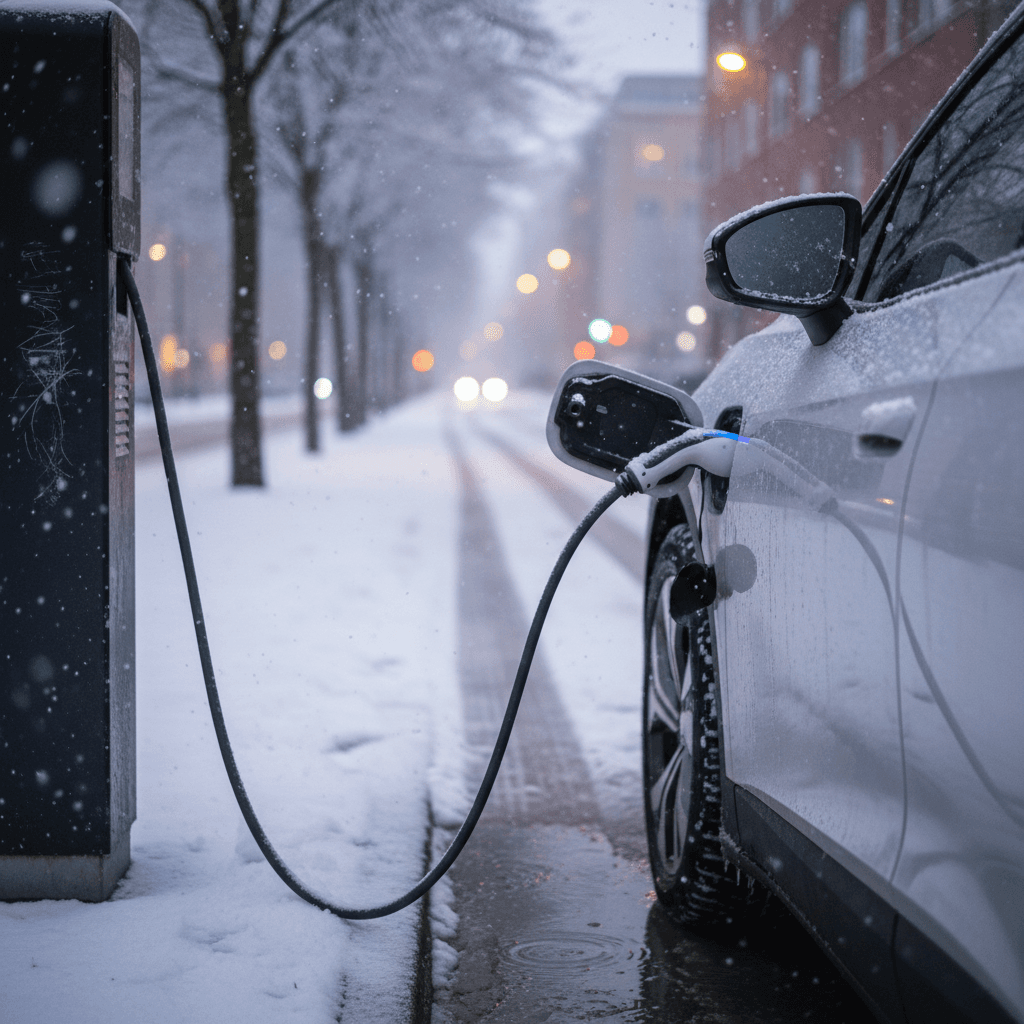
A **Volkswagen ID.4 road trip in cold weather** isn’t impossible, but you do need to adjust your expectations and your stops. The main mental shift is this: in deep winter, your practical highway range is what you’d normally consider a low‑battery buffer in summer.
Winter road-tripping strategies for ID.4 drivers
Plan for more frequent, shorter fast‑charge stops and you’ll be much less stressed.
Plan conservative legs
In warm weather, you might plan 200–220‑mile legs between DC fast chargers. In winter, aim for **120–160 miles** between stops, especially if chargers are sparse or weather is ugly.
Target 10–70% charges
The ID.4 charges fastest from a low state of charge up to around 60–70%. In winter, it can be smarter to stop more often for shorter sessions instead of charging to 90–100% every time.
Favor reliable networks
In freezing weather you don’t have much extra range to hunt for a backup if a charger is down. Use apps that show recent check‑ins and photos, and build in backup sites when you can.
Give yourself a bigger winter buffer
Cold-weather range and shopping for a used ID.4
If you’re considering a **used Volkswagen ID.4** and you live in a four‑season climate, winter performance should be part of your shopping checklist. The good news is that ID.4 batteries have generally held up well; the bigger questions are equipment, usage, and honesty about your range needs.
Winter-specific questions to ask about a used ID.4
1. Which battery and drive type is it?
A smaller‑battery Standard model can feel tight for long winter commutes, while a Pro or AWD Pro has more margin. Know the EPA rating and mentally knock off 25–35% for your climate.
2. Does it have a heat pump?
If you routinely see temps in the 20s and 30s °F, a heat pump can be worth seeking out. Its benefit shrinks in extreme cold, but for shoulder seasons it’s a meaningful efficiency boost.
3. How was it used and charged?
Lots of fast‑charging and parked‑outside winters aren’t necessarily bad, but they’re worth factoring in. A strong service history and sensible charging habits are good signs.
4. What does the battery health report say?
At Recharged, every ID.4 listing includes a **Recharged Score Report** that quantifies battery health and real‑world efficiency, so you aren’t guessing how the car will behave once the temperature drops.
How Recharged can help
FAQ: Common questions about ID.4 range in cold weather
Frequently asked questions about Volkswagen ID.4 winter range
Key takeaways for ID.4 owners
If you’re trying to decode **Volkswagen ID.4 range in cold weather**, the honest answer is this: your ID.4 will not match its summer numbers in January, but with realistic expectations and a few smart habits, it can still be a confident all‑weather daily driver.
- In mixed winter driving, a long‑range ID.4 typically delivers **about two‑thirds of its EPA rating**, more if your climate is mild and your trips are longer.
- Early U.S. cars without a heat pump can lose more range in shallow cold, while later, more efficient trims narrow the gap.
- Preconditioning, smart heater use, moderate speeds, and proper tire care can easily recover **10–20% more usable range** on cold days.
- For winter road trips, plan conservative legs, build in a bigger buffer, and favor reliable fast‑charging networks.
If you’re shopping for a **used ID.4**, especially from a warmer region but planning to use it in a snowy one, lean on data, not guesses. At Recharged, every EV comes with a **Recharged Score battery health and range report**, plus EV‑savvy guidance to help you understand exactly how that car will behave when the mercury drops. That way, your first cold snap in an ID.4 can feel like a science experiment you’re ready for, not a surprise test you didn’t study for.