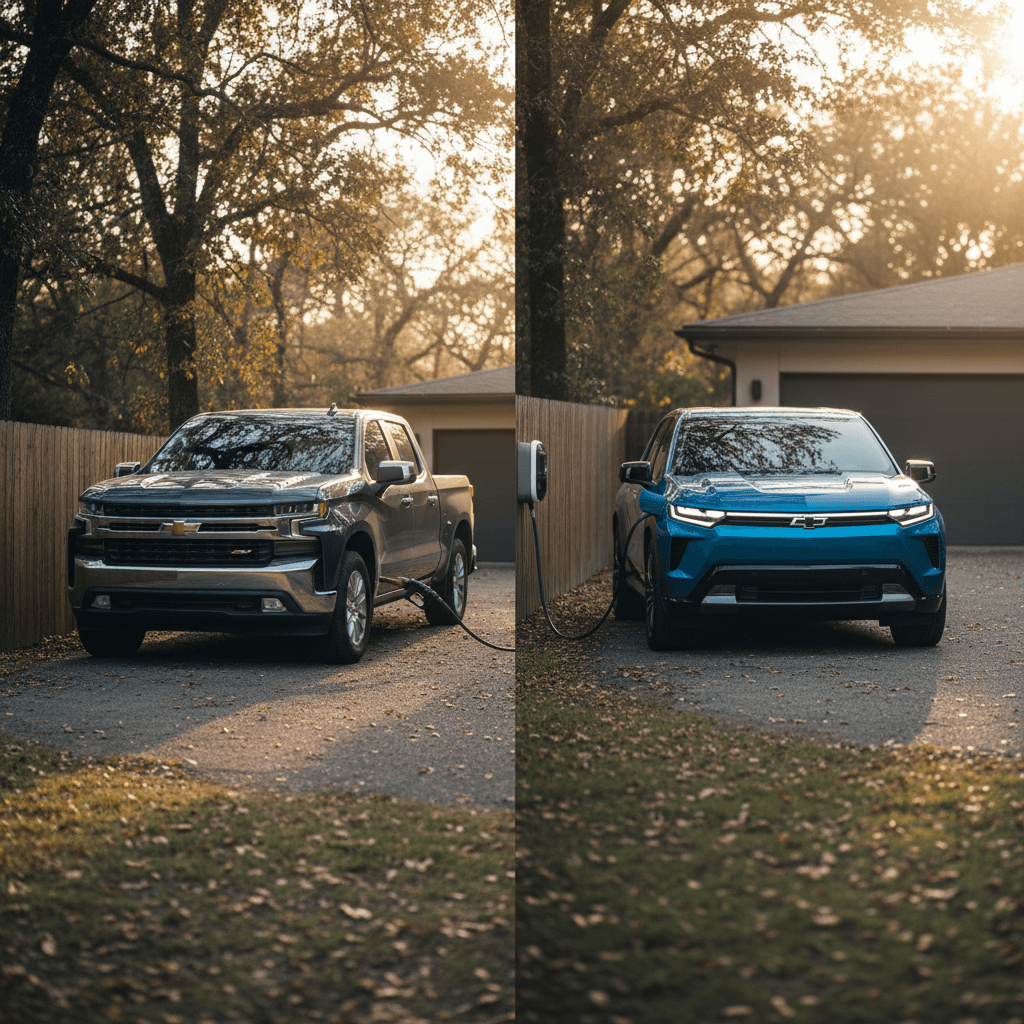
If you’re a long-time Chevrolet Silverado owner, the idea of switching to the Chevrolet Silverado EV is both exciting and a little unnerving. You know what your gas or diesel truck can tow, how it behaves with a load, and what it costs to run. What you don’t know is whether the Silverado EV can actually replace that capability in the real world, or if it’s just a tech toy with a bed.
Who this Silverado EV review is for
Why gas Silverado owners are eyeing the Silverado EV
Top reasons Silverado owners consider the Silverado EV
What we hear most often from traditional truck owners
Cheaper energy per mile
Even with today’s electricity prices, many owners see lower fuel costs versus gasoline, especially if they can charge at home.
Instant torque & smooth power
Dual-motor Silverado EVs deliver over 500 hp in WT trims and up to 760 hp in RST, with instant torque and no gear shifts.
Less maintenance, future-proof powertrain
No oil changes, fewer moving parts, and an 8-year/100,000-mile battery warranty help future-proof your next truck.
There’s also a psychological factor. If you’ve driven Silverados for years, staying in the family with a Silverado EV feels more natural than jumping to a Rivian or Ford Lightning. The cab is familiar Chevy territory in terms of ergonomics and overall feel, even though it’s built on GM’s Ultium EV platform rather than the traditional body-on-frame architecture.
Reality check before you switch
Silverado EV at a glance: specs that matter to truck owners
Silverado EV key numbers current owners care about
Silverado EV trims vs what a gas Silverado owner feels
High-level look at common Silverado EV trims as of 2025–2026 and how they map to typical gas-truck use cases.
| Trim | Typical Range (est.) | Max Towing (approx.) | Use Case vs Gas Silverado |
|---|---|---|---|
| WT Standard / 2WT | High 200s–low 300s mi | ~8,000–10,000 lb | Fleet and value-focused private owners; similar to a nicely equipped work-spec 1500 |
| WT Extended / Max Range (5WT, 8WT) | ~400–490+ mi | Up to ~12,500 lb | Long-day contractors, regional fleets; closest to 2500-style long-range work duty |
| LT Extended Range | ~380–400 mi | Around 10,000–12,000 lb | Everyday family truck that still tows toys and campers on weekends |
| RST Extended / Max Range | ~390–460+ mi | Around 10,000–12,000 lb | High-feature, high-power successor to a loaded gas Silverado High Country/RST |
Exact specs vary by model year and package; always confirm details for the specific truck you’re considering, especially in the used market.
The big shift for a gas Silverado owner is that the Silverado EV bundles power, range, and towing into battery and trim choices. A Max Range WT or RST gives you massive range and tow capacity, but it’s also heavier and more expensive. Shorter-range WTs cost less up front but demand more planning when you’re towing or working all day away from a charger.
Driving experience: gas Silverado vs Silverado EV
From V8 rumble to silent torque
If you’re used to a 5.3L or 6.2L V8, the first thing you notice in the Silverado EV is the instant torque and silence. There’s no downshifting, no waiting for turbos, just a smooth, consistent shove when you roll into the pedal.
Dual-motor setups with up to around 760 hp in RST trims make the truck feel stronger off the line than almost any stock gas Silverado you’ve driven, especially when unladen.
Ride, handling, and 4-wheel steering
The Silverado EV rides on an Ultium skateboard platform with independent suspension all around. Higher-trim RSTs add Adaptive Air Ride and four-wheel steering, so the truck can squat for easier bed access and carve tighter turns than your current crew cab.
Compared with a traditional half-ton, it feels more planted and less bouncy over broken pavement, thanks in part to the low-mounted battery pack.
Test-drive the EV *like* you use your gas truck
Many gas Silverado owners coming into a Silverado EV comment on the one-pedal driving option. With regen cranked up, you can often slow significantly just by lifting off the accelerator, sending energy back into the battery instead of into your brake rotors. It’s a change in driving style, but a lot of owners quickly learn to prefer it in traffic and on grades.
Towing, hauling, and bed utility for real-world work
If you’re reading a Chevrolet Silverado owner switch to Chevrolet Silverado EV review, towing and hauling are probably make-or-break issues. On paper, max towing up to about 12,500 pounds and healthy payload numbers look competitive with your gas truck. But there are real tradeoffs once you connect a trailer.
How towing changes in an EV truck
- For light, flatbed, or utility trailers under ~3,000 lb, many owners report towing as relatively stress-free, with moderate range loss compared with unladen driving.
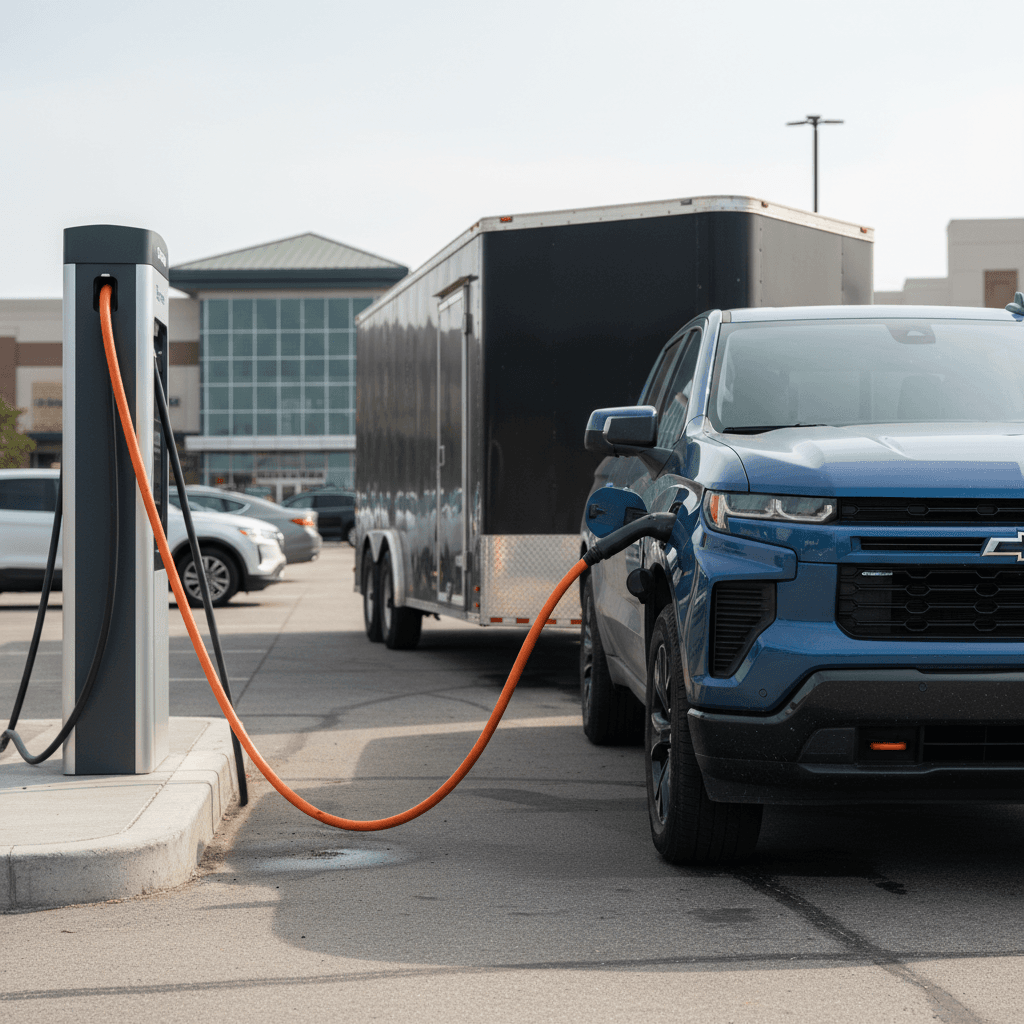
- For mid-weight campers and enclosed trailers in the 5,000–7,500 lb range, expect to stop for DC fast charging more often, your 400–450 mile rated range may behave like 180–250 real miles between stops.
- At or near the max 10,000–12,500 lb tow rating, the Silverado EV can still do the job, but most owners will treat it like a 100–180 mile truck between fast charges, depending on conditions.
Think about your worst-case tow day
On the payload side, the heavy battery eats into available capacity. Max-range RST models, for example, trade some payload for range and features. If you routinely max out your gas truck’s payload with tools, tongue weight, and crew, pay close attention to the payload sticker inside the driver’s door on any Silverado EV you’re considering, especially in the used market, where wheel/tire and accessory choices can change curb weight.
Bed and work-utility features vs your gas Silverado
Where the Silverado EV feels familiar, and where it doesn’t
Crew cab, short bed only (for now)
Early Silverado EVs are crew cab, short bed only. If you’re used to a regular or double cab long-bed work truck, you’re trading bed length for interior space and battery packaging.
Built-in offboard power
Higher trims offer up to 10.2 kW of offboard power through bed outlets, enough to run tools, a camper, or even backfeed a home with proper equipment.
Multi-Flex midgate & tailgate tricks
Like your gas Silverado with Multi-Flex, some EV trims feature a midgate to extend cargo length into the cabin, plus configurable tailgate positions for hauling long material.
Range and charging: what a Silverado owner should expect
Silverado EV range figures span from roughly the high‑200 mile zone on smaller battery WT trucks to just under 500 miles of EPA-estimated range on Max Range Work Truck configurations. That’s enormous for an EV pickup, but remember: rated range isn’t towing range, and your experience will hinge on how and where you charge.
Charging realities for a former gas Silverado owner
1. Home charging is the game-changer
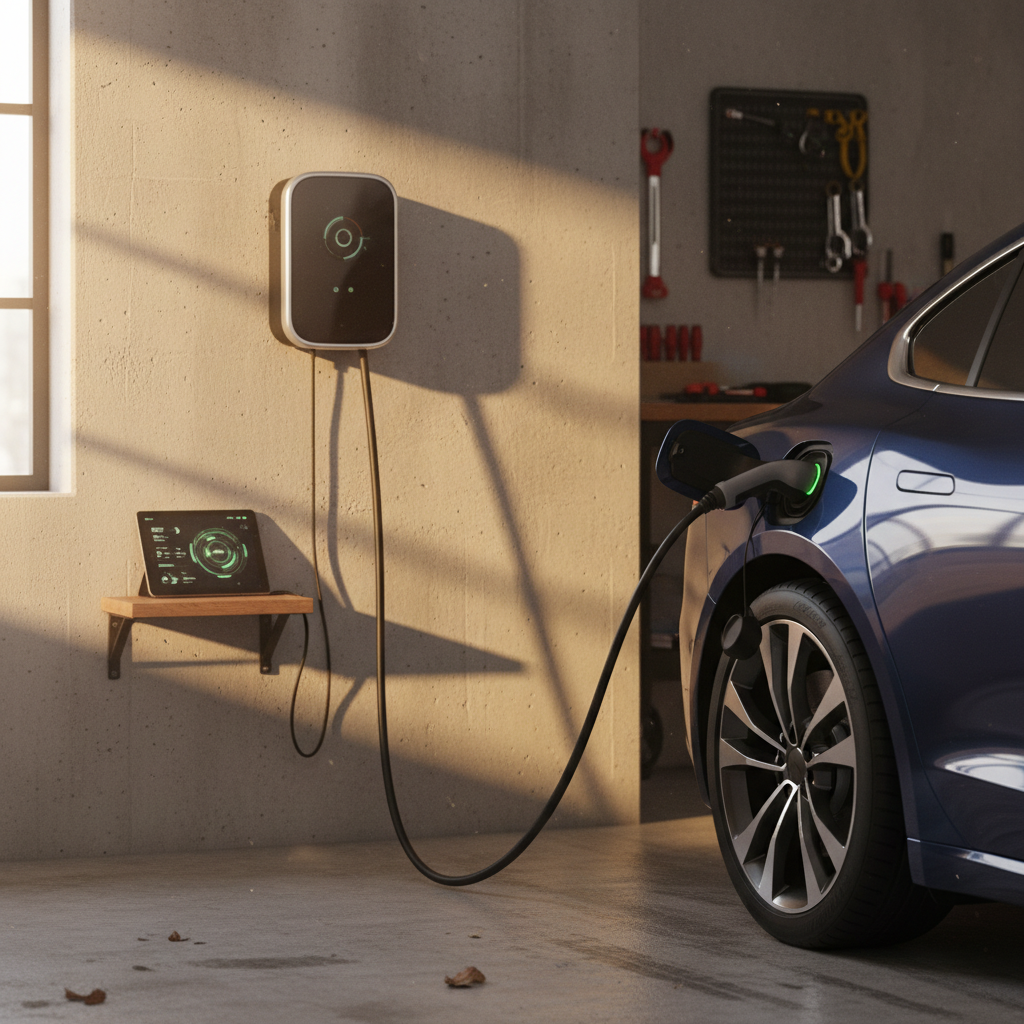
If you can install a Level 2 charger on a 240V circuit, your Silverado EV can start every day with a “full tank.” For many owners, that alone offsets the hassle of the occasional long-trip charging session.
2. Understand DC fast charging speeds
On a compatible DC fast charger, the Silverado EV can accept up to around <strong>350 kW</strong>, making it one of the quicker-charging EVs so far. In practice, you’ll often fast-charge from ~10–20% to 60–80% in roughly 30–45 minutes, depending on conditions and station power.
3. Plan routes around chargers, not just fuel stops
Where a gas Silverado can refuel almost anywhere, an EV truck requires <strong>apps and planning</strong>. Before a trip, map DC fast chargers along your route and near your destination, especially important when towing.
4. Weather and speed hit range harder
Cold temperatures, high speeds, headwinds, and aggressive driving all reduce range more noticeably in an EV than in a gas truck. Many owners learn to drive a bit smoother on highway runs to stretch miles between charges.
5. Destination charging matters
If your campsite, jobsite, or hotel has Level 2 charging, it can completely change the ownership experience by letting you charge where you park instead of burning time at roadside fast chargers.
Pro move: pre-plan with charging apps
Ownership costs, maintenance, and resale value
Energy and maintenance vs gas
If you currently average 15–18 mpg in a gas Silverado, you know how painful 25–30 gallon fill-ups can be. In a Silverado EV, most miles cost less per mile, especially if you can charge at home during off-peak hours.
Maintenance also shifts: no oil changes, fewer fluids, and less brake wear thanks to regen. You still have tires, suspension components, and EV-specific cooling systems to service, but overall shop visits tend to be less frequent.
Insurance and depreciation
Insurance can be higher than a comparable gas truck because of higher MSRP and repair costs, especially for early-model EVs. On the flip side, strong demand for capable electric trucks has kept real-world depreciation relatively competitive so far.
Used Silverado EV prices are starting to normalize as more fleet WTs and early RSTs come off lease or company programs, an opportunity for value-focused buyers.
Where Recharged fits in
Who the Silverado EV fits best among current Silverado owners
Best (and worst) fits for a Silverado EV upgrade
Based on your current gas or diesel Silverado use case
Great fit if…
- You drive under ~200 miles most days and can charge at home or work.
- Your towing is occasional or regional, boats, campers, or equipment mostly within a 100–200 mile radius.
- You want a quicker, smoother truck with less routine maintenance and lower fuel bills.
- You’re willing to learn some new habits around charging and trip planning.
Poor fit (for now) if…
- You routinely tow 400–600 mile days with heavy trailers and tight schedules.
- You don’t have reliable access to overnight or home charging.
- You need long-bed or chassis-cab configurations that the Silverado EV doesn’t yet offer.
- You operate mostly in regions with very sparse DC fast-charging coverage.
Quick checklist: should you switch from gas Silverado to Silverado EV?
5-question litmus test for Silverado owners
1. Daily miles vs rated range
Add up your typical daily miles including side jobs and errands. If you’re routinely under half of the Silverado EV’s rated range (for the trim you’re eyeing), you’re in the sweet spot.
2. Towing pattern
List how often you tow, how far, and how heavy. If most tow days are under 200 miles round-trip with time to charge at home or the destination, the EV can work well.
3. Charging access
Can you install a Level 2 charger at home or work? If not, is there reliable, convenient public charging near your usual routes?
4. Budget vs trims
Are you comfortable with the price of trims that actually meet your needs? A short-range WT may be cheaper, but a <strong>Max Range battery</strong> could be the difference between easy ownership and constant range anxiety.
5. Long-trip expectations
Are you okay with planning longer trips around charging stops, similar to how RVers plan fuel and campground stops today? If that feels like too much friction, waiting a few years might make more sense.
Buying a used Silverado EV: what to look for
Early Silverado EVs are already showing up on the used market, often as former fleet Work Trucks or high-spec RST First Editions. For a current Silverado owner, a used EV can be a smart way to test the waters without paying new-truck money, but you need to shop carefully.
Used Silverado EV checklist for former gas-truck owners
Key items to verify before you buy, especially from non-EV-specialist dealers or private sellers.
| Item to check | Why it matters | What "good" looks like |
|---|---|---|
| Battery health & size | Determines real-world range and future value | Documented battery capacity close to original spec, with a clear battery-size listing (Standard, Extended, or Max Range) |
| DC fast charging history | Heavy fast charging can accelerate wear if abused | Regular use is fine; avoid trucks that lived exclusively on DC fast charging with no clear maintenance history |
| Towing and payload use | Hard commercial towing can stress components | Honest disclosure of use, clean underbody, no signs of repeated overload or hitch damage |
| Software & recall status | EVs depend heavily on software updates | All recalls addressed, latest firmware, no persistent error messages or warning lights |
| Charging hardware & adapters | Missing equipment is pricey to replace | Factory mobile connector present, bed outlets functional, charge ports clean and undamaged |
If you’re buying used through Recharged, these checks are baked into the Recharged Score and inspection process.
Why consider Recharged for a used Silverado EV
Ready to find your next EV?
Browse VehiclesFAQ: Switching from gas Silverado to Silverado EV
Common questions from current Silverado owners
Bottom line: Is the Silverado EV a good upgrade from your gas truck?
If you’re a current Chevrolet Silverado owner, the Silverado EV is one of the most natural on-ramps into electric trucks. It delivers the instant torque, smooth ride, and cutting-edge tech you’d expect from a modern EV, wrapped in a package that still feels like a real Chevy truck. For owners whose lives revolve around regional work, moderate towing, and predictable daily routes, it can absolutely replace a gas Silverado, and often save money over the long haul.
Where it still lags a traditional 1500 or 2500 is in extreme towing days and refueling flexibility. If your world is 500-mile tow days with no time to spare, the charging curve and station coverage in your region may not be ready for a full switch, yet.
The smartest move for many long-time Silverado owners is to run the numbers carefully, test-drive a Silverado EV under realistic conditions, and seriously consider a well-vetted used Silverado EV as a lower-risk first step. If you want help finding one with verified battery health and transparent pricing, Recharged is built exactly for that job.