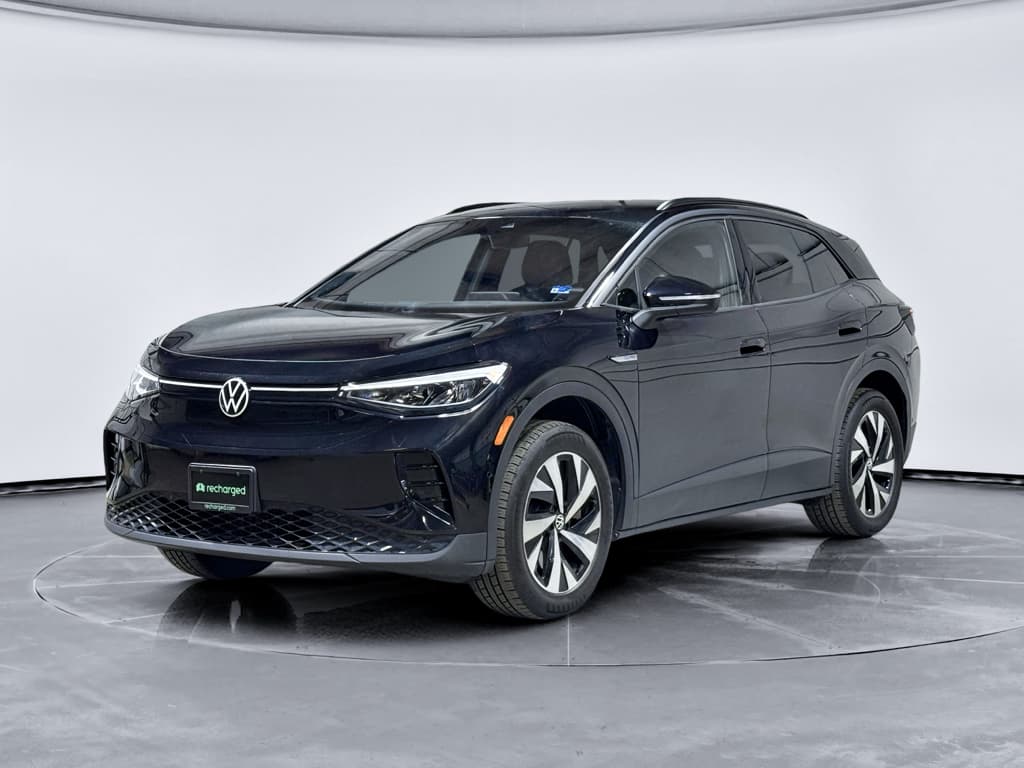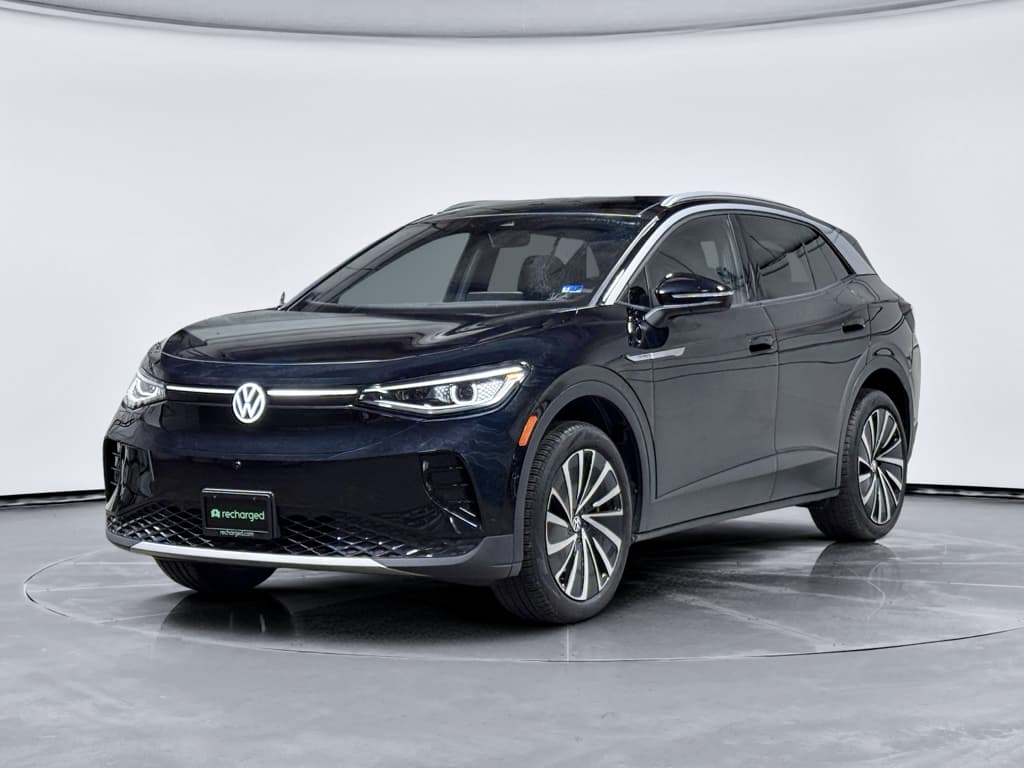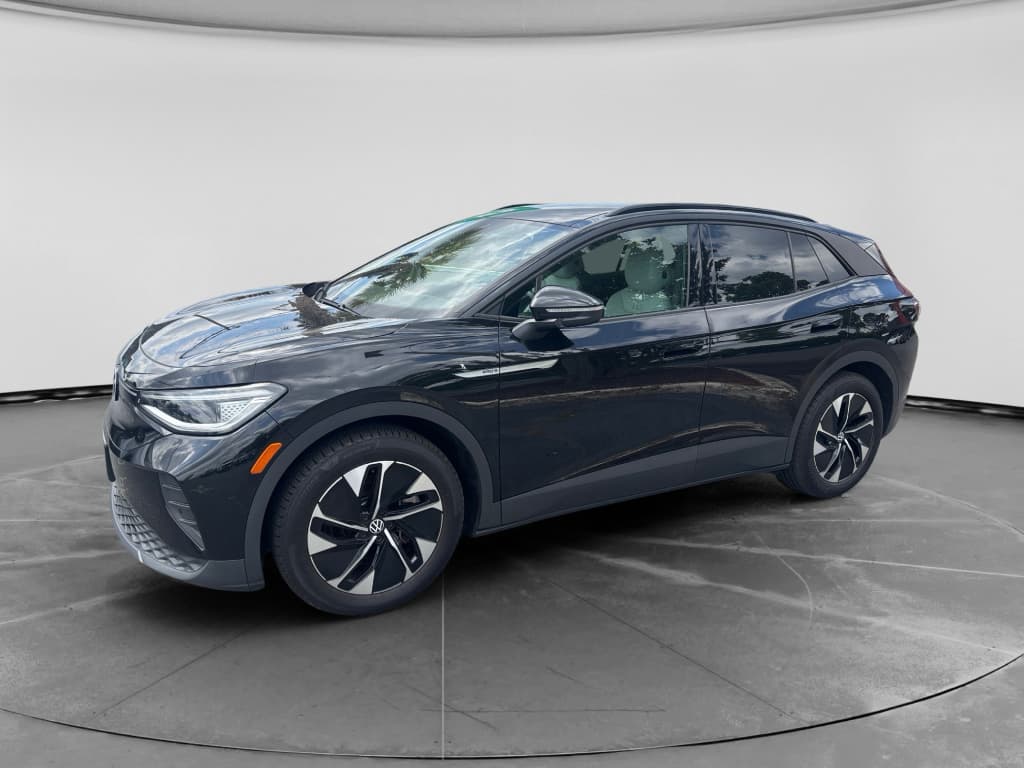
If you’re researching Volkswagen ID.4 common problems in 2026, you’ve probably seen everything from horror‑story Reddit threads to glowing owner reviews. The truth sits somewhere in the middle: the ID.4 has some real weak points, especially around software and the high‑voltage battery, but also a lot of strengths if you know what you’re looking at when you shop used.
Model years covered here
VW ID.4 reliability in 2026: big picture
Across owner surveys and complaint data, the ID.4 tends to score below average for reliability compared with other EVs. Consumer reliability scores in the 2020s have been dragged down by electrical and software issues more than by core battery or motor failures. That’s consistent with what we see in recall campaigns and owner reports: the propulsion hardware is generally solid, but the digital layer sitting on top of it is not as bulletproof as VW buyers expect.
Volkswagen ID.4 reliability snapshot (through early 2026)
How to use this guide
Most common Volkswagen ID.4 problems
When you aggregate recall documents, owner forums, and reliability surveys, four themes show up again and again on the ID.4:
- High‑voltage battery and fire‑risk recalls on many 2023–2025 ID.4s, plus some early battery‑management problems on 2021–2022 cars.
- Charging behavior and charge‑port faults, from cars refusing to DC fast‑charge properly to intermittent port hardware issues.
- Software and infotainment bugs, including laggy or freezing touchscreens, phantom warning lights, and flaky mobile‑app connectivity.
- 12‑volt electrical problems and hardware quirks, especially early 12V battery failures and the well‑publicized electronic door‑handle recall.
Not every ID.4 has every issue
High‑voltage battery issues and fire‑risk recalls
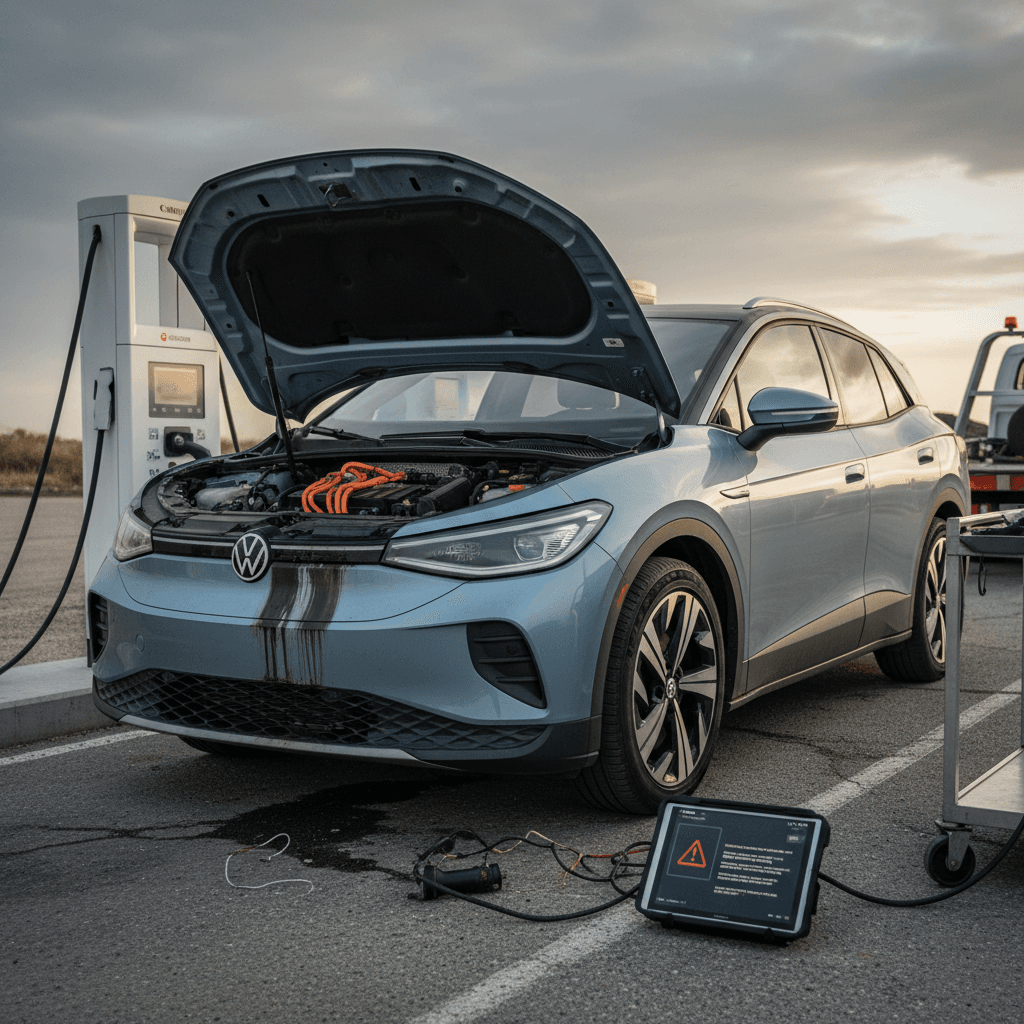
By 2026, the single most serious headline around the ID.4 is its high‑voltage battery recall history. Several campaigns have targeted specific packs and software versions for potential fire risk or unexpected power loss.
Main ID.4 high‑voltage battery problem types
Most used‑market cars will fall into one of these buckets
Fire‑risk recalls
Sudden power‑loss complaints
Charging‑related battery faults
Don’t ignore open battery recalls
What to ask the seller
- Have all high‑voltage battery recalls been completed, with paperwork to prove it?
- Has the pack or any modules ever been replaced under warranty?
- Any history of “Electrical system: Stop!” or similar dashboard messages?
What Recharged checks for you
Every ID.4 listed on Recharged gets a Recharged Score Report with a detailed battery‑health scan and recall review.
- We verify all open recalls and document completed work.
- Our diagnostics pull pack health data rather than guessing from range alone.
- DC fast‑charge behavior and fault codes are checked before a car is listed.
Charging and charge‑port problems
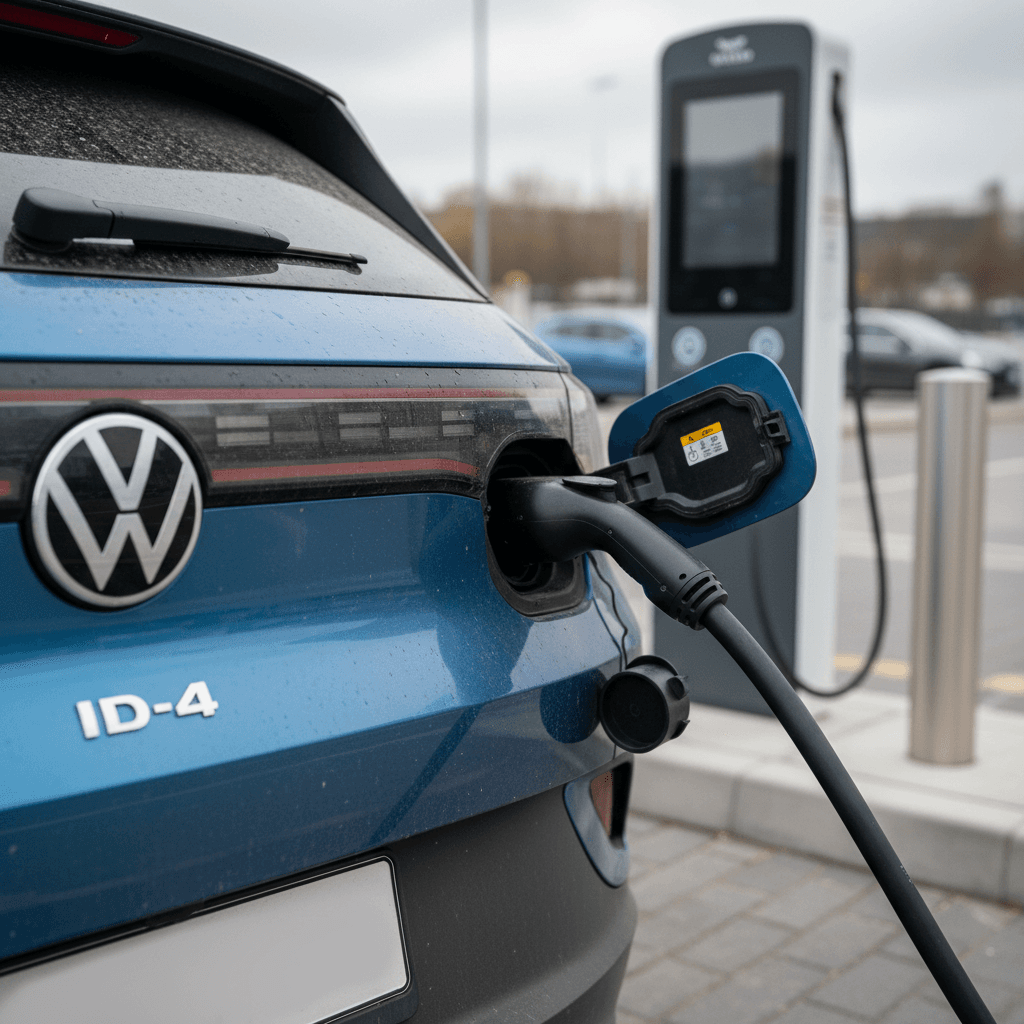
After the big‑ticket battery recalls, the most common day‑to‑day complaints on the ID.4 revolve around charging behavior. Some of this is software; some is physical hardware in the port and onboard charger.
Common VW ID.4 charging complaints
Use this table as a quick diagnostic guide when you test‑drive or inspect a used ID.4.
| Symptom | Likely Cause | Model years where it’s most reported | What you should do |
|---|---|---|---|
| Won’t start DC fast‑charging or stops quickly | Charge‑port fault, contactor issue, or battery‑management bug | 2021–2023 most often | Try multiple stations/networks; check for related TSBs and recall work in the service history. |
| Random error messages when plugging into Level 2 at home | Software glitches, sometimes 12V instability | 2021–2024 | Ask if the vehicle has the latest software; a healthy ID.4 should charge cleanly on a basic 40‑amp Level 2. |
| Charge‑port door or lock sticking | Mechanical wear or misalignment | More common on early 2021–2022 builds | Test the port door repeatedly; a sticky door isn’t a dealbreaker but should be cheap to fix, use it as a negotiation point. |
| Noticeably slow DC fast‑charging versus spec | Battery temperature, state‑of‑charge strategy, or early‑generation pack hardware | All years, but especially pre‑2024 | Verify charging curve with a session from ~10–60% on a 150 kW+ charger; compare to realistic ID.4 curves, not brochure promises. |
If a seller shrugs off repeat charging issues as “just a software bug,” make sure there’s documentation of an actual fix, not just repeated resets.
Test fast‑charging before you buy
Software bugs, infotainment glitches and app issues
If you talk to ID.4 owners for long enough, you’ll hear a common refrain: “The drivetrain is great, the software… not so much.” Early cars in particular suffered from laggy infotainment, random reboots, and half‑baked integration with VW’s Car‑Net / myVW app.
Typical VW ID.4 software & UX problems
Annoying more often than dangerous, but worth checking on a used car
Freezing or slow touchscreen
Flaky mobile‑app connection
Phantom warning lights
Software is a moving target
Quick software sanity check on a test drive
1. Stress‑test the screen
Spend a few minutes switching between navigation, media, climate and drive‑mode screens. A healthy ID.4 might be a bit slow but shouldn’t freeze, go black, or reboot repeatedly.
2. Try voice and steering‑wheel controls
Clunky UX is normal; total unresponsiveness is not. Make sure you can reliably adjust key functions without digging through menus.
3. Check driver‑assist behavior
On a quiet road, gently test adaptive cruise and lane‑keeping. Occasional disengagement is fine; frequent errors or warnings are a red flag if the seller says “it’s been doing that for months.”
4. Verify app pairing (if possible)
If the seller will let you, log into the myVW app and try remote lock/unlock or climate. Flaky pairing on day one doesn’t kill a deal by itself but hints at how much patience you’ll need.
12‑volt battery and other electrical gremlins
Like many modern EVs, the ID.4 relies on a traditional 12‑volt battery to power its computers and relays. If that battery is undersized or poorly managed, you get a whole cascade of weird behavior, from non‑starting cars to dead infotainment with no obvious cause.
Common 12V‑related complaints
- Car won’t “boot up” after being parked, even though the main pack is charged.
- Frequent "Electrical system not working" warnings that clear after towing or charging.
- Random loss of climate control, rear‑view camera, or driver‑assist features until a full power cycle.
What’s improved over time
Volkswagen has quietly upgraded 12V hardware and rolled out control‑logic fixes as failures piled up on early 2021–2022 cars. Later models tend to be more robust, though not immune.
- Stronger 12V batteries on newer cars versus launch‑year units.
- Software tweaks to reduce deep discharge when the car sits.
- Updated components in related recalls (like DC‑DC converter campaigns) on 2023–2025 builds.
Simple pre‑purchase 12V check
Hardware, trim, and door‑handle problems
Beyond the headline‑grabbing battery and software stories, the ID.4 also has some very old‑school car‑problems: trim quality and hardware quirks. The most serious is the electronic door‑handle recall, but there are also minor build‑quality annoyances to watch for.
Notable ID.4 hardware & build‑quality issues
These problems are rarely catastrophic, but they affect daily livability and resale value.
| Issue | Why it matters | Where it shows up | How to check on a used car |
|---|---|---|---|
| Electronic door latches that can open unexpectedly | Safety recall covers many 2021–2024 ID.4s; doors could unlatch while driving in rare cases. | US‑built and some imported ID.4s across multiple years. | Check the VIN for completed recall work and test each door multiple times at city and highway speeds on a test drive (listen for wind noise or warning chimes). |
| Water in door handles or windows mis‑behaving | Moisture or sensor issues causing windows to pinch or re‑open, and handles to behave oddly. | More often on early‑production cars or in wet climates. | Operate all windows and door locks several times; any reversing or re‑opening behavior should be noted and, ideally, documented as previously fixed. |
| Interior rattles and panel gaps | More cosmetic than dangerous but can reflect inconsistent build standards. | Reported across years, somewhat more on early Chattanooga builds. | Drive on rough pavement at low speed with radio off; look closely at dash/door alignment and cargo‑area trim for movement or squeaks. |
For a used‑car buyer, small hardware flaws are bargaining chips, as long as the safety‑critical ones (like door latches) have been properly fixed.
Door‑latch recall is non‑negotiable
How much do these problems really matter?
On paper, the ID.4’s reliability record looks rough: multiple recalls, low owner‑survey scores, and a long list of software complaints. But if you zoom in, you see a pattern common to many first‑wave EVs: electrons good, software and support less good. The electric drive unit and pack chemistry themselves have held up reasonably well so far; most pain points are on the digital and peripheral hardware side.
Where the ID.4 is solid
- Comfortable, quiet highway cruiser with efficient powertrain.
- Spacious cabin and good cargo room for a compact SUV.
- Competitive fast‑charging speeds on well‑behaved examples.
- Long high‑voltage battery warranty that follows the car to the next owner.
Where it lags rivals
- Software experience that feels older than the model year on many cars.
- More recalls and electrical gremlins than top‑tier EVs like Model Y or Ioniq 5.
- Dealer service familiarity with EV diagnostics is still uneven in some regions.
- Resale values that reflect this reputation, both a risk and an opportunity.
Opportunity in a troubled reputation
Shopping for a used VW ID.4 in 2026: what to check
If you’re looking at a used ID.4 in 2026, your job is to separate sorted cars from projects. Here’s a structured way to do that, whether you’re buying locally or online.
Used VW ID.4 due‑diligence checklist (2021–2025 cars)
1. Run the VIN for recalls and software campaigns
Use the NHTSA site or VW’s recall lookup to confirm all open campaigns, especially high‑voltage battery and door‑handle recalls, have been completed. Ask for dealer invoices that show software levels and parts replaced.
2. Review charging history and test in the real world
Ideally, see receipts or logs from public DC fast‑charging and home Level 2 use. On a test drive, plug into a reliable Level 2 and, if possible, a DC fast charger to confirm the car charges without error messages or odd behavior.
3. Inspect for electrical red flags
Scroll through the instrument‑cluster message history and ask directly about any past "Electrical system" or "Drive system" warnings. Repeated, undocumented warnings are a sign to walk away.
4. Ask about 12V battery age and replacements
Get documentation for any 12V battery or DC‑DC converter work. On older cars, assume you’ll replace the 12V if there’s no clear history, it’s a small cost compared to the headaches a weak 12V can cause.
5. Check doors, windows, and interior trim
Open and close every door and window multiple times. Drive on rough pavement with the audio off and listen for rattles. Verify that any door‑latch recall work is both documented and reflected in how the doors feel.
6. Evaluate the software experience
On the test drive, spend time with the infotainment system. Slight lag is normal, but repeated freezes or reboots aren’t. Ask what software version it’s on and whether major updates have been done at a dealer.
How Recharged derisks the used ID.4
FAQ: Volkswagen ID.4 common problems in 2026
Frequently Asked Questions
Bottom line: Is a used ID.4 worth it?
A clear‑eyed look at Volkswagen ID.4 common problems in 2026 shows an EV that’s better than its reputation in some ways and worse in others. The electric hardware is fundamentally solid and backed by a strong battery warranty, but the ID.4’s software maturity, recall history, and 12‑volt system demand more homework than some competitors.
If you’re the kind of driver who values a quiet, practical electric SUV and is willing to trade a bit of tech polish for a lower entry price, a well‑vetted used ID.4 can be a smart buy. Just don’t treat every example as equal. Focus on cars with documented recall repairs, fresh software, stable charging behavior, and clean electrical diagnostics, and consider leaning on EV‑focused retailers like Recharged that surface this information for you up front.