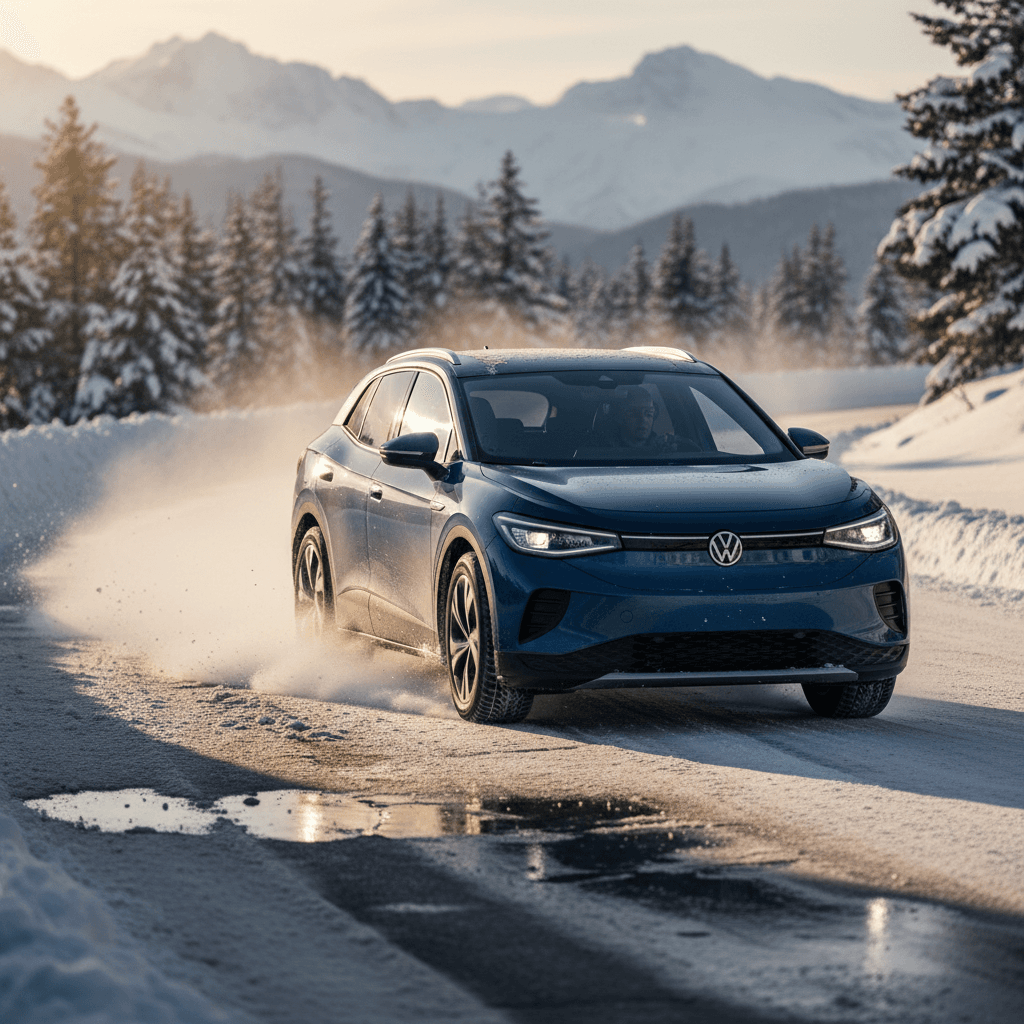
If you live where roads turn into a slurry of snow, ice and road salt for four months a year, you want to know one thing: is the Volkswagen ID.4 one of the best EVs for snow and ice, or just another pretty crossover that panics when the plows fall behind? The answer is nuanced. The ID.4 can be a confident winter tool, especially the dual‑motor AWD versions, but only if you pick the right trim, tires and expectations.
Short answer
VW ID.4 in winter: the quick answer
- AWD ID.4s offer predictable, secure traction in snow with smooth power delivery and fast traction control.
- RWD ID.4s can still do winter duty, but they’re more sensitive to tires and deep slush, especially on hills.
- Real‑world data shows 20–35% winter range loss is normal for many ID.4 models, more in extreme cold or at highway speeds.
- Heated seats, heated steering wheel and remote pre‑conditioning make the cabin feel ski‑lodge cozy even when the battery is working harder.
- Ground clearance is crossover‑average, not Subaru‑heroic, great on plowed roads, more cautious on unplowed backroads.
Think of the ID.4 as the EV equivalent of a well‑sorted, slightly heavy compact crossover: inherently stable, excellent at putting power down smoothly, but not a lifted rally wagon. If you match it with dedicated winter tires and understand its winter range limits, it feels secure and drama‑free on most snowy commutes.
Snow traction: how good is ID.4’s AWD and stability control?
Snow driving is mostly about how gently and quickly the car can meter torque when things get slippery. Electric motors, by design, are very good at this, no gearshifts, no turbos, no slushy torque converter hunting for ratios.
ID.4 traction: AWD vs RWD in winter
Both can work in snow, but they excel at different things.
AWD ID.4 (dual motor)
Best choice if snow and ice are routine, not rare.
- Dual motors can shuffle torque quickly for grip.
- Stability control cuts slip fast, sometimes almost too cautiously.
- Feels secure pulling away on packed snow or slick intersections.
- Climbs moderate snowy grades without drama on good tires.
RWD ID.4 (single motor)
Acceptable in snow with the right tires and a measured right foot.
- Rear‑drive helps traction on acceleration, but can step out if provoked.
- More likely to struggle on steep, unplowed hills or icy driveways.
- Still fine for mostly‑plowed suburban and urban driving.
Traction modes and regen
Volkswagen tends to tune its traction and stability systems conservatively. In practice, that means the ID.4 rarely does anything dramatic in low grip; instead, you’ll feel brief power cuts and pulsing ABS when the car thinks you’re asking too much from the tires. It’s the automotive equivalent of a cautious chaperone: you may not slide gracefully through that snowy corner, but you’re also far less likely to end up in a snowbank.
Ground clearance, weight and snow packing
Winter confidence isn’t just about traction. It’s also about whether the car physically clears the stuff on the road.
Key physical traits that matter in snow
That 6‑ish inches of clearance puts the ID.4 squarely in “urban crossover” territory. On plowed highways and city streets, it feels planted and tracks well in slush ruts. In 8+ inches of unplowed powder, especially the wet, heavy kind, it will begin to push snow with the bumper and belly pan. That’s when even an excellent AWD system becomes secondary to simple physics.
Watch for snow packing under the car
Winter range loss & the heat pump question
Here’s where the romance of silent winter motoring meets the grim reality of thermodynamics. All EVs lose range in the cold; the Volkswagen ID.4 is, candidly, on the higher side of that bell curve, especially in its earlier, non‑heat‑pump U.S. trims.
Typical winter range impact for Volkswagen ID.4
Approximate real‑world winter losses compared with EPA rated range, assuming mixed driving and temperatures around 20–30°F (−6 to −1°C).
| Model / configuration | Heating system | Typical winter range loss | Who this suits |
|---|---|---|---|
| Early ID.4 (no heat pump) | Resistive heater only | ≈30–40% below EPA | Shorter commutes, easy charging access. |
| Later ID.4 with heat pump | Heat pump + resistive backup | ≈20–30% below EPA | Longer commutes, colder climates. |
| High‑speed winter highway use | Any configuration | Up to 40–45% below EPA | Frequent ski‑weekend road‑trippers. |
These are ballpark figures; your results will vary with speed, elevation, wind, tire choice and how aggressively you heat the cabin.
Why the heat pump matters
If your winter driving involves a 10‑mile school run and a 15‑mile commute with easy home charging, even the more thirsty early ID.4s are perfectly workable. If you’re planning regular 150‑mile ski runs at 20°F on the interstate, you’ll want a later model with a heat pump, and you’ll still plan charging stops more carefully than you would in July.
Winter tires vs all‑seasons: the real deciding factor
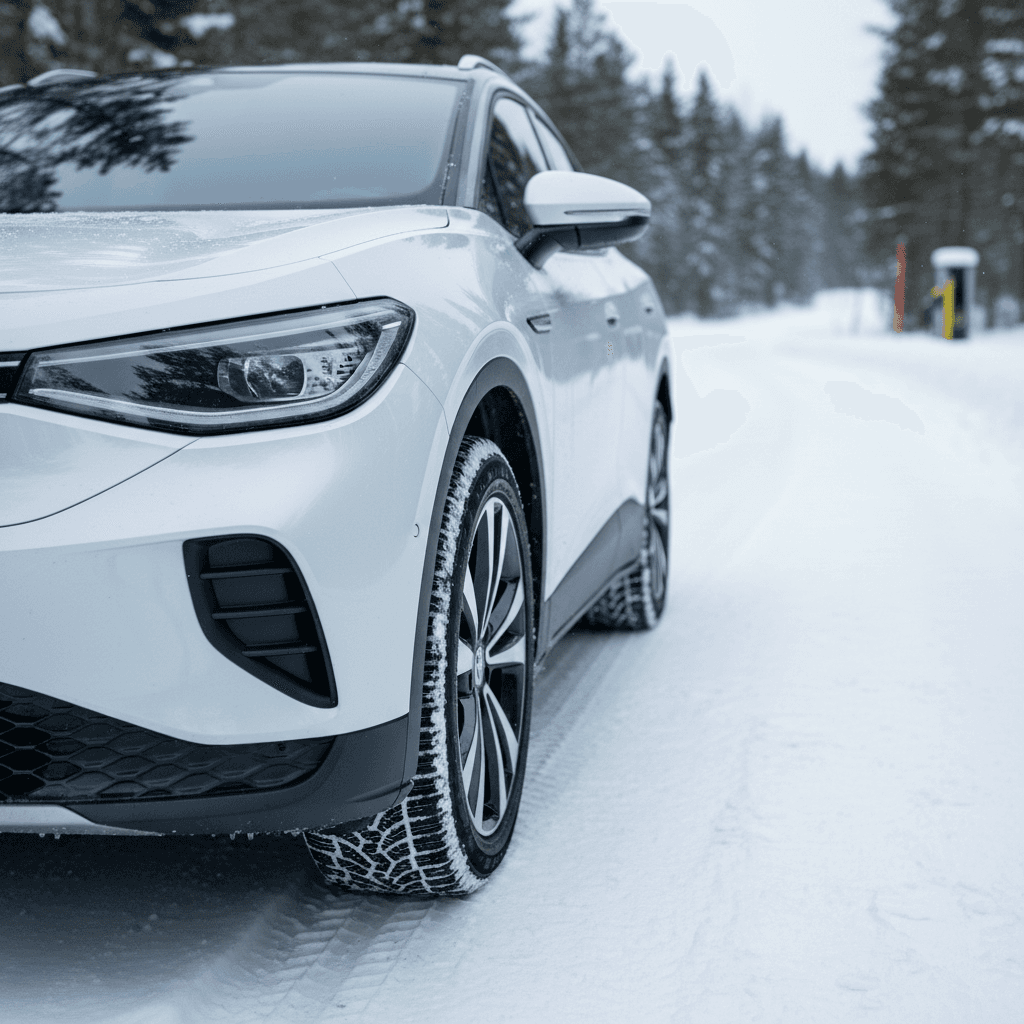
Owners love to argue AWD vs RWD, heat pump vs no heat pump. But the single biggest factor in whether your ID.4 feels surefooted on snow and ice is what’s wrapped around the wheels.
Why dedicated winter tires transform an ID.4
The cheapest way to make your EV feel like a snow specialist.
Softer compound
Winter tires stay flexible in freezing temps where all‑season rubber turns into petrified wood. That flexibility is what gives you bite on ice and packed snow.
Aggressive tread
Deeper grooves and dense “sipes” act like dozens of tiny edges cutting into snow and ice. That improves braking and steering feel, not just acceleration.
Shorter stopping distances
On icy pavement, a winter‑tire ID.4 can stop in dramatically less distance than the same car on all‑seasons. That’s the difference between a close call and a fender repair.
Don’t rely on AWD to fix bad tires
Which Volkswagen ID.4 trims are best for snow and ice?
If we strip away marketing names and look only at winter performance, the best ID.4s for snow share a few traits: dual‑motor AWD, the more efficient HVAC system, and good cold‑weather comfort features.
ID.4 trims and features to look for in snow country
Exact trim names and equipment vary by model year and market, but these patterns hold for U.S. buyers shopping new or used.
| Configuration | Why it’s good in winter | What to double‑check |
|---|---|---|
| AWD Pro / Pro S with heat pump | Best balance of traction, efficiency and comfort; strong performer on snowy commutes and ski trips with winter tires. | Confirm presence of heat pump in the spec sheet; some early U.S. models skipped it. |
| RWD Pro / Pro S with heat pump | Fine for lighter‑snow regions that still get cold; smooth, efficient and stable with proper tires. | Your driveways and hills: if you regularly climb steep icy grades, you may still want AWD. |
| Early RWD ID.4 without heat pump | Acceptable if your trips are short and charging is easy; still benefits from low‑speed traction of EV torque. | Expect bigger winter range hits and longer warm‑up; make sure rated range still meets your winter needs. |
When in doubt, lock in AWD, heated features and the most efficient heating system you can get.
Ideal winter‑spec ID.4
How the ID.4 compares to other EVs in winter
Where the ID.4 shines
- Comfort-first tuning: Soft ride, quiet cabin and strong seat/steering wheel heaters make it feel more German lounge than science experiment.
- Predictable handling: It rarely surprises you; the car would rather understeer gently than swap ends.
- Weight over the driven wheels: The battery pack keeps weight low and centered, helping straight‑line stability in rutted, slushy highways.
Where it trails some rivals
- Winter efficiency: In many independent tests, the ID.4 loses more range in winter than some newer, more efficient EVs with optimized heat pumps.
- Ground clearance: It’s not a faux‑off‑road crossover with silly ride height. In deep unplowed snow, taller rivals may slog further.
- Charging curve in cold: Fast‑charging speeds can drop notably if you arrive with a cold battery and no pre‑conditioning on a DC fast charger.
Context matters
Checklist: setting up your ID.4 for winter duty
Pre‑winter setup for a confident ID.4
1. Choose the right tires and wheels
If you face regular snow and ice, invest in a dedicated set of winter tires, ideally on their own wheels. Dropping from flashy 20" wheels to smaller diameter winter wheels with taller sidewalls can improve ride and grip.
2. Verify heat pump and heated features
Check your VIN build sheet or window sticker to confirm whether your ID.4 has a heat pump and confirm heated front seats, heated steering wheel and heated mirrors, these do a lot of heavy lifting in winter comfort.
3. Dial in your charging routine
Whenever possible, <strong>finish charging just before departure</strong>. A warm, freshly charged battery delivers better range and faster DC charging than one that’s been sitting in sub‑freezing temps overnight.
4. Learn your local winter range
For two or three weeks, reset a trip computer each morning and note miles driven vs battery percentage used in cold weather. That gives you your own real‑world winter range number, not just a guess.
5. Adjust regen and drive modes for snow
Experiment carefully in a safe, empty lot. Many drivers prefer normal drive mode with moderate regen on slick surfaces, especially downhill, for more transparent, ICE‑like behavior.
6. Protect the underbody and seals
Consider routine underbody rinses to clear packed snow and road salt, and keep door seals clean and lightly lubricated to prevent freezing shut.
Driving tips to make your ID.4 feel planted on ice
- Brake and steer like you’re carrying hot coffee. Smooth, early inputs let the ABS and stability control work gently in the background instead of in full panic mode.
- Use gentle throttle from a stop. Even with instant electric torque, the ID.4’s computers can only do so much if you simply floor it on glare ice.
- Watch regen on downhill ice. Strong regen is effectively engine‑braking; if the road is polished, too much can break rear traction. Dial it back if the car feels nervous.
- Give yourself more space. Even on winter tires, your stopping distance on ice will be longer than you’re used to on dry pavement. Double your normal following distance as a baseline.
- Keep an eye on snow ruts. With its fairly wide stance and modest clearance, following deeply worn ruts at speed can tug the steering. Let the car track gently rather than fighting every wiggle.
Buying a used ID.4 primarily for snow driving
If your main question is, “Which used Volkswagen ID.4 is best for snow and ice?”, you’re really buying for three things: traction hardware, heating efficiency and battery health.
What to prioritize in a used ID.4 for winter
A quick framework before you fall for a paint color.
1. AWD and tires
Start with AWD if your region sees real winter, and plan on winter tires regardless. A RWD car on snow tires can be better than an AWD car on worn all‑seasons, but AWD + winters is the sweet spot.
2. Heat pump & comfort
All else equal, a car with a heat pump will feel like less of a range penalty box in January. Heated seats and wheel make it easier to keep the cabin slightly cooler while still feeling comfortable.
3. Battery health transparency
Cold weather exaggerates weak batteries. Shopping through a marketplace like Recharged that includes a Recharged Score battery health report lets you know the pack is still strong before winter spotlight tests it.
Recharged specializes in used EVs, including Volkswagen ID.4 models, and every vehicle comes with a Recharged Score Report that verifies battery health and fair pricing. If you’re cross‑shopping ID.4s for winter, that kind of data is the difference between a car that simply feels “low range in cold” and one that’s genuinely underperforming.
Volkswagen ID.4 winter FAQ
Common questions about the ID.4 in snow and ice
Bottom line: is the VW ID.4 “best” for snow and ice?
Is the Volkswagen ID.4 the outright best EV for snow and ice? Probably not in a world where some newer models pair ultra‑efficient heat pumps with taller ride heights and aggressive all‑weather packaging. But that may be the wrong question. The more useful question is: will an ID.4, especially an AWD, heat‑pump‑equipped one on winter tires, get you to work, to the ski hill and back home in January without drama? On that, the answer is a confident yes.
If you’re shopping used, pay more attention to tires, drivetrain, heating hardware and battery health than to trim names or wheel designs. That’s exactly where a transparent marketplace like Recharged shines: every used EV includes a Recharged Score battery health report, fair‑market pricing and EV‑specialist support, so you can focus on choosing the ID.4 that fits your winter reality, not just the one that photographs well in summer.