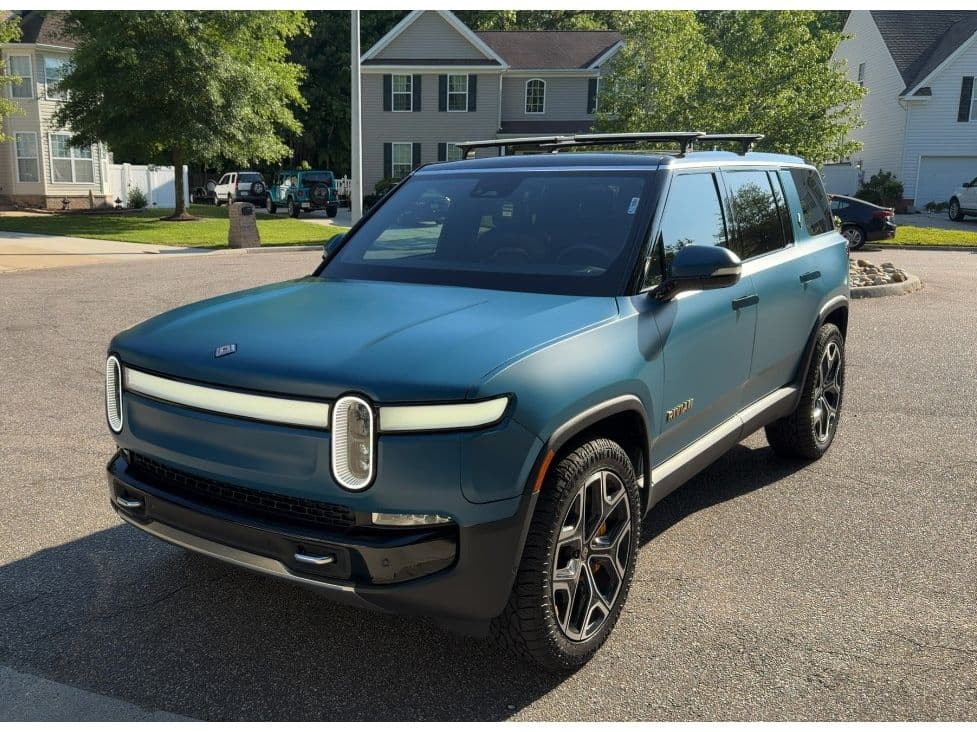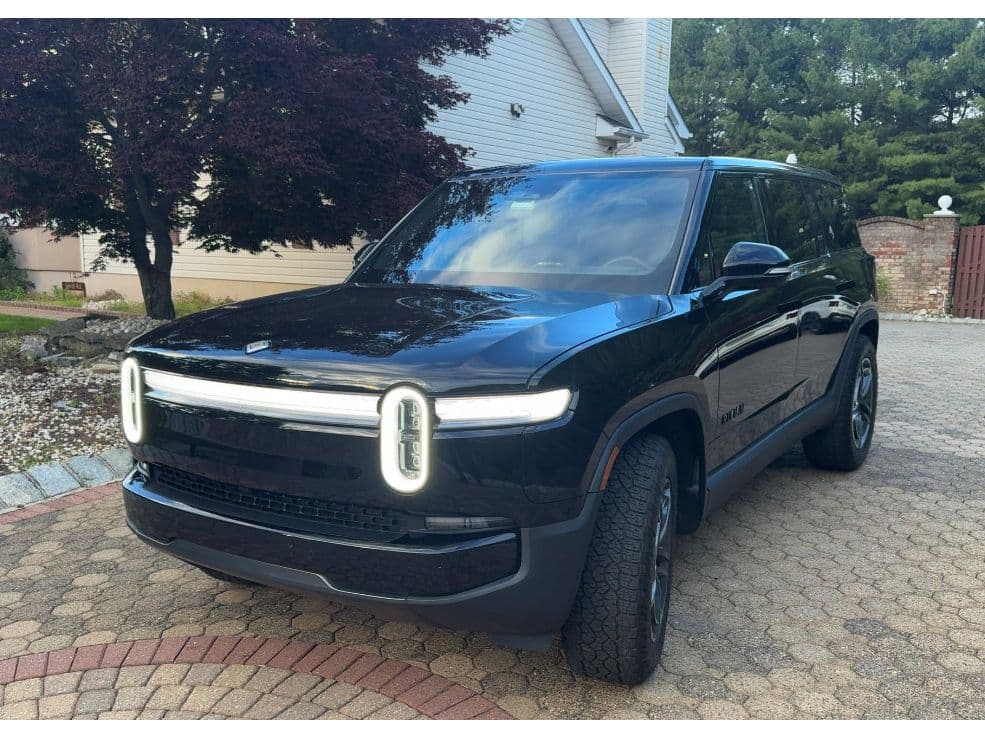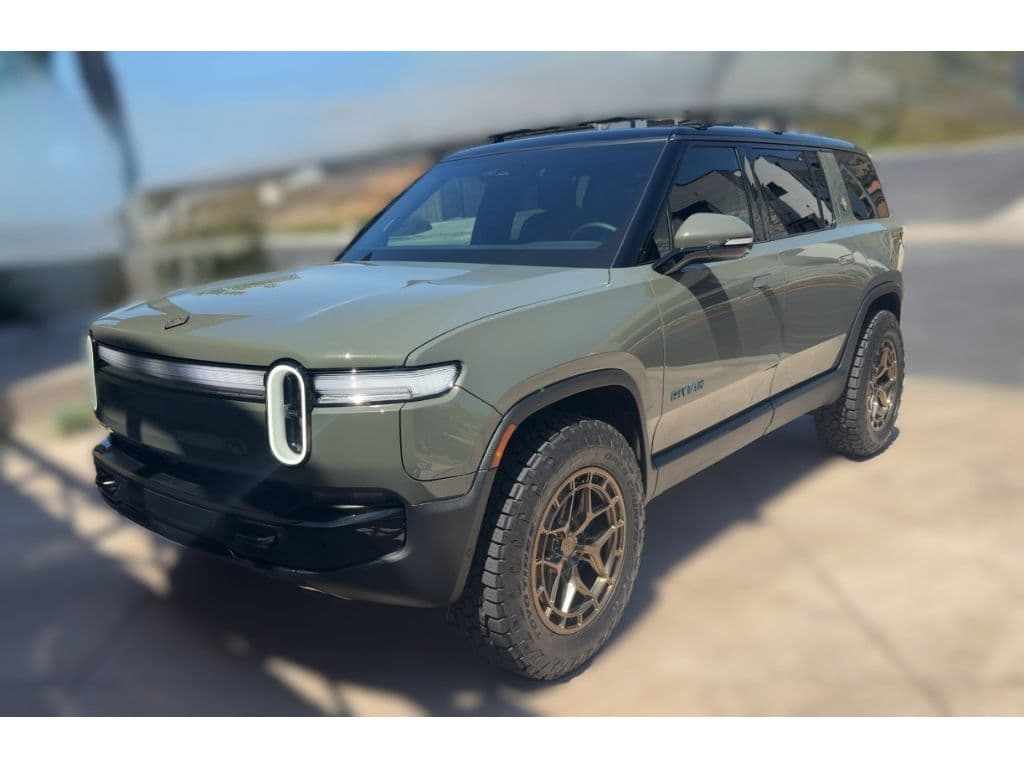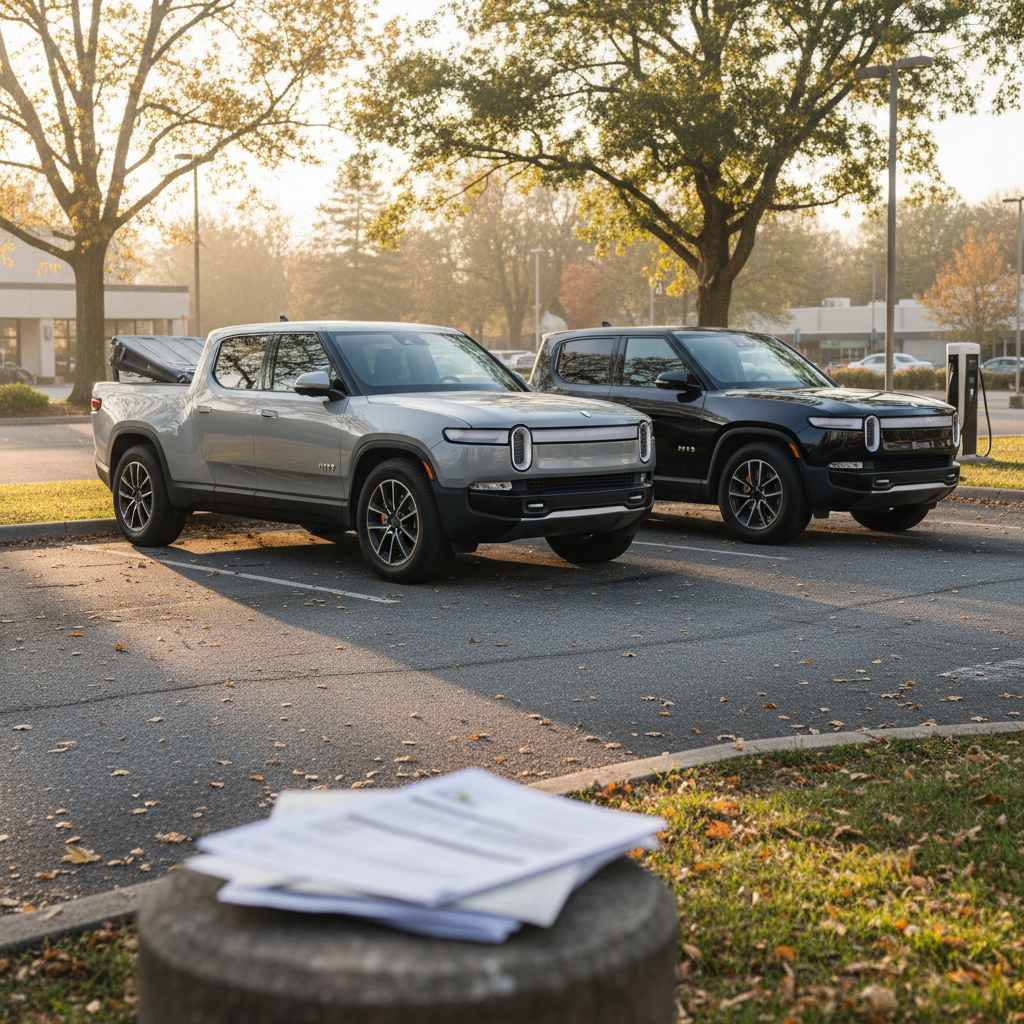
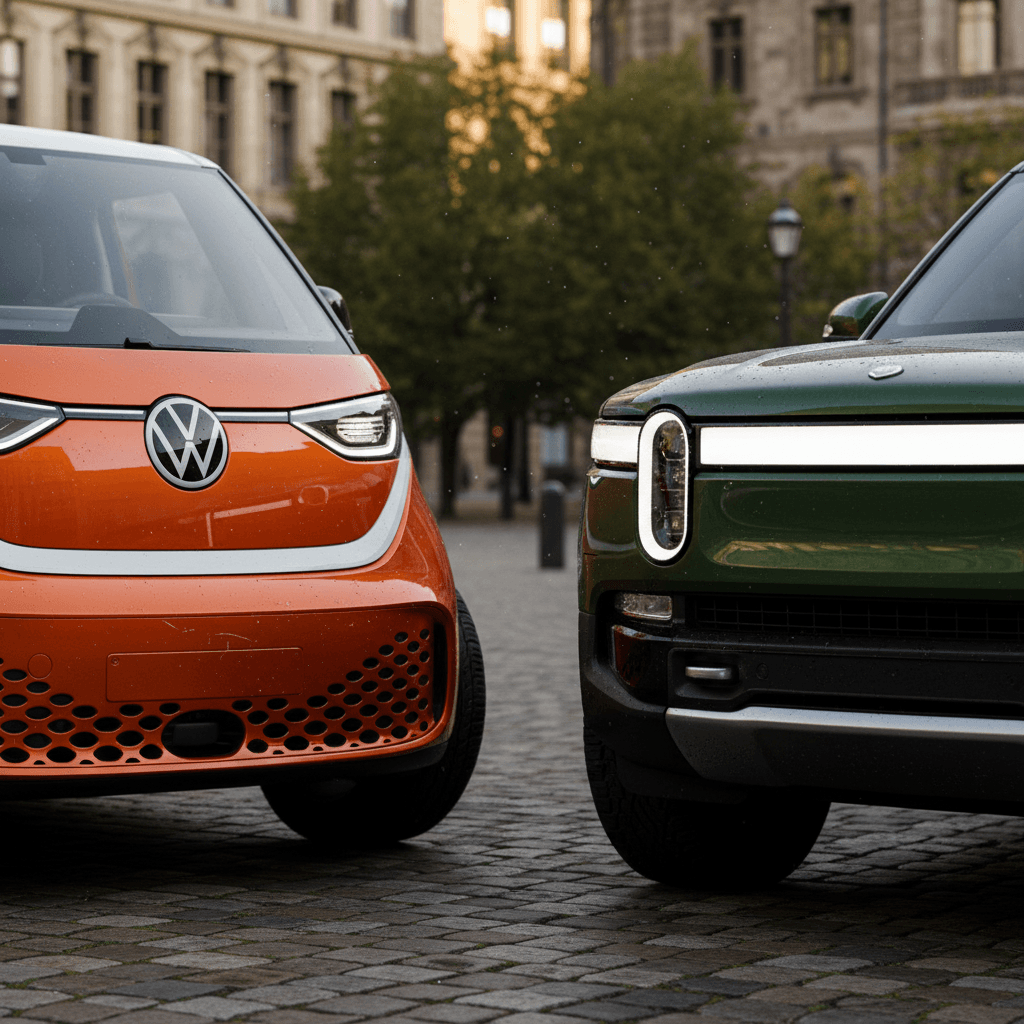
If you’re cross-shopping the Volkswagen ID. Buzz vs Rivian R1S, you’re not just buying an EV, you’re choosing what kind of family you want to be. The ID. Buzz is the friendly, retro-futurist minivan that wants to take your kids to soccer and your dog to the beach. The R1S is the Patagonia catalog that came to life: an overbuilt, over-capable electric SUV that can climb a rock wall on Saturday and ferry car seats on Monday.
Two very different answers to the same question
ID. Buzz vs R1S: who are these for?
Volkswagen ID. Buzz: the extrovert family van
The ID. Buzz is for you if your household calendar looks like controlled chaos: school drop-offs, Ikea runs, weekend beach trips, maybe a small camper trailer one or two times a year. It’s about easy access, flexible seating, and low-stress driving, not spec-sheet dominance.
- Prioritizes cabin space and visibility over off-road bravado
- Seats up to seven (in LWB three-row configuration) with a big, flat cargo area
- Drives more like a tall wagon than a truck-based SUV
Rivian R1S: the overland parenting flex
The R1S is for the family that never met a dirt road it didn’t want to try. Think ski trips, trailheads, national parks, and long interstate hauls, often with a roof box and bikes hanging off the back.
- Serious off-road hardware and height-adjustable air suspension
- Up to three rows of seating with a more upright SUV posture
- Massively more power and range options than the VW, at a price
Start with your weekends
Quick specs: Volkswagen ID. Buzz vs Rivian R1S
Core specs at a glance (U.S. market, 2025 model year)
Headline numbers for typical U.S.-spec configurations. Exact figures vary by trim, wheel choice, and software updates, but this gives you the lay of the land.
| Spec | Volkswagen ID. Buzz (AWD LWB) | Rivian R1S (Dual Motor Max) |
|---|---|---|
| Battery (gross) | 91 kWh | ~149 kWh |
| EPA range (best-case trims) | ~260 mi (est., AWD LWB) | Up to ~410 mi |
| 0–60 mph | Mid-6s (est.) | Low-4s |
| Drivetrain | RWD or AWD | Standard AWD |
| Seats | Up to 7 | Up to 7 |
| Max towing | 3,500 lbs | 7,700 lbs |
| Starting MSRP (2025, U.S.) | Around low-$60Ks | Around upper-$70Ks |
| Body style | Electric van / MPV | Electric SUV |
Numbers are approximate and rounded; always check the specific build you’re considering.
A note on ID. Buzz availability
Price and value: new vs used
How their price stories differ
Spoiler: the R1S is the expensive one, until you look at capability.
Volkswagen ID. Buzz pricing & value
New: U.S. three-row ID. Buzz models have started in the low-$60,000 range before options. Nicely equipped AWD trims can push significantly higher, especially with appearance and comfort packages.
Value story: You’re paying for style and cabin cleverness, not headline range or towing. Compared with a gasoline minivan, the Buzz is expensive; compared with other three-row EVs, it can feel reasonable if you don’t need big batteries.
Rivian R1S pricing & value
New: Recent R1S model years have typically started in the high-$70,000s for Dual Motor variants, with long-range and performance versions climbing well into the $90,000s and beyond.
Value story: The R1S is priced like a luxury adventure SUV because that’s what it is. You’re buying huge battery capacity, serious off-road hardware, and a premium cabin. It’s not an economy play, but compared with gas luxury SUVs that can’t tow or perform like this, it starts to make sense.
Key value questions before you choose
1. What’s your real monthly budget?
Be honest about not just purchase price, but <strong>insurance, charging costs, and financing</strong>. A cheaper ID. Buzz that needs frequent DC fast charging might cost closer to an efficient R1S to run than you expect.
2. Are you paying for capability you’ll never use?
If you’ll never tow more than a small utility trailer and don’t camp off-grid, the R1S’s extreme capability is expensive overkill. In that case, the lighter-duty Buzz might be the smarter buy.
3. How important is resale value?
Early R1S models have held attention thanks to their uniqueness, but values still follow the broader EV market. The ID. Buzz is even more niche. Buying used with a <strong>verified battery report</strong> can protect you from surprises in both cases.
4. Are you willing to shop nationwide?
Both of these are niche vehicles. Being open to a <strong>nationwide search and delivery</strong>, something Recharged can help with, dramatically improves your odds of finding the right spec at the right price.
Space, comfort, and family-friendliness
ID. Buzz: the living room on wheels
The ID. Buzz wins hearts before it moves an inch. Huge glass area, low beltline, and an upright seating position make it feel almost like a rolling sunroom. The flat floor and boxy roofline mean even adults can use the third row without punishment, and the cargo area is naturally cube-shaped and easy to load.
- Sliding rear doors (where equipped) make kid loading far less dramatic in tight parking lots.
- Rear seats fold and remove to create a van-like cargo bay.
- Shorter overall length than many big SUVs, so it’s easier to park than it looks.
R1S: upscale cabin, upright seating
The R1S’s interior feels more like a modern Scandinavian living room crossed with a ski lodge: warm materials, simple lines, big screens. The first two rows are adult-friendly, with plenty of headroom despite the panoramic glass roof. The third row is tighter than the Buzz but fine for kids and short hops for adults.
- Top-hinged rear hatch and large cargo floor, great for gear and dogs.
- Second row folds flat, but the overall space is more SUV-shaped than van-boxy.
- Air suspension lets you lower the body for easier loading when parked.
Family-friendliness verdict
Performance, range, and towing
Power and range comparison highlights
On paper, the R1S absolutely buries the ID. Buzz. Even the more modest Dual Motor R1S variants are dramatically quicker than the VW, with 0–60 mph times in the mid-4-second range and available range figures that make cross-country road trips realistic. The ID. Buzz, by contrast, feels tuned for calm: adequate but unhurried acceleration, range in the mid-200s, and towing numbers that keep you in the ‘small camper and bikes’ category rather than ‘Airstream and two jet skis.’
Beware of real-world range expectations
Charging and road-trip experience
Charging and road trips: where each shines
Neither of these is a city-only EV, but they approach long-distance travel differently.
Battery size & charging curve
ID. Buzz: 91 kWh gross pack, DC fast charging peak around 170–200 kW, but with shorter range you’ll see chargers more often on long trips.
R1S: Much larger packs available, with competitive DC speeds. Fewer but longer stops, and more flexibility on routing.
Networks & route planning
Both rely on the broader CCS/NACS public charging ecosystem, not a proprietary network. That means you’ll use apps like PlugShare, Electrify America, and increasingly NACS-enabled sites for planning.
Rivian’s onboard route planner and trip tools are more adventure-oriented; VW’s approach is simpler but improving.
Road-trip livability
The Buzz is wonderfully bright and airy for passengers on long drives, with huge windows and a relaxed driving position.
The R1S fights back with quieter highway manners, more range headroom, and better composure when fully loaded with gear and people.
Think in hours, not just miles
Tech, interior, and driving feel
VW ID. Buzz: charming but occasionally behind the times
Volkswagen has made meaningful strides with its latest infotainment software versus early ID-family EVs, but you can still feel the corporate UX committee in the room. The main screen is attractive, the materials are playful, and the ambient lighting is fun, yet some menus take too many taps and a few features feel buried.
On the road, the Buzz is all about calm, predictable behavior. Steering is light, body motions are controlled but not sporty, and visibility is superb. It’s the kind of car that makes parallel parking less intimidating, not more.
Rivian R1S: software-native and adventure-first
The R1S is very obviously designed by a tech company that happens to build trucks. The twin screens, camera views, drive modes, and OTA-update cadence feel more Silicon Valley than Wolfsburg. It’s not flawless, some owners complain about glitches and feature regressions, but the ambition is clear.
Behind the wheel, the R1S feels surprisingly athletic for its size. The air suspension and adaptive dampers do a lot of heavy lifting, keeping the truck composed on back roads while still offering a plush ride in Comfort mode.
Driver-assistance differences
Ownership costs and reliability
- Energy costs: Both are heavy three-row EVs; expect similar or slightly higher consumption in the R1S due to weight and power, but its larger battery means fewer deep discharges on a given trip.
- Maintenance: No oil changes, but you still have tires, brakes, cabin filters, and occasional software or hardware service visits.
- Tires: The R1S’s weight and off-road-capable rubber can chew through tires more quickly, especially if you drive it like a sports car. The Buzz’s more modest spec can be cheaper to shoe.
- Repairs and service access: Rivian’s service network is growing but still concentrated around metro areas; VW has an existing dealer footprint but not every store will be equally EV-savvy.
- Software and OTA updates: Rivian leans heavily on over-the-air changes, sometimes fixes, sometimes experiments. VW uses OTA more conservatively, but can be slower to deliver improvements.
Used EVs live and die by battery health
Which one should you buy?
Quick recommendations by buyer type
Use this as a gut-check before you start test-driving, or browsing used listings.
Choose the Volkswagen ID. Buzz if…
- You prioritize easy access, big windows, and kid-friendly ergonomics over raw power.
- Your trips are mostly regional, within a few hundred miles, with occasional road trips you can plan around charging.
- You love the idea of driving something that makes strangers smile at stoplights.
- You rarely tow more than a small trailer or a pair of e-bikes.
Choose the Rivian R1S if…
- You want serious range and towing, plus the ability to explore unpaved roads confidently.
- Your family routinely does long highway drives where range buffer equals peace of mind.
- You value a more luxurious, tech-forward cabin and are comfortable living with an evolving software platform.
- You see this as a do-everything, one-vehicle solution that replaces both a family SUV and an adventure rig.
The brutally honest verdict
How Recharged helps with used ID. Buzz and R1S
Both of these vehicles are likely to spend long lives in the used market: they’re distinctive, they’re expensive new, and they appeal to committed buyers. That makes the second-owner story incredibly important. You’re inheriting not just a battery pack, but all the previous owner’s choices, how they charged, where they lived, what software era the car was born into.
Why to shop niche EVs like these on Recharged
These aren’t anonymous commuter cars. You want transparency, not surprises.
Recharged Score battery diagnostics
Every vehicle on Recharged comes with a Recharged Score Report that includes verified battery health and a detailed look at how the pack is performing. On big-battery rigs like the R1S, and relatively short-range vans like the ID. Buzz, that insight is golden.
Fair market pricing & financing
Our pricing tools look at real-world EV values, not just generic book numbers, so you can see how a particular spec, Max Pack R1S, First Edition Buzz, etc., stacks up. If you need it, you can finance directly through Recharged with a fully digital process.
Nationwide inventory & delivery
These are niche vehicles; your ideal configuration may be three states away. Recharged makes it easy to shop nationwide, get expert EV guidance, and arrange delivery right to your driveway.
Ready to find your next EV?
Browse VehiclesWhether you end up in a cheerful Volkswagen ID. Buzz or a trail-hungry Rivian R1S, the key is matching the vehicle’s personality, and capabilities, to your real life, not your Instagram feed. If you’re ready to see how either one looks in your driveway, start browsing used listings on Recharged, dig into the Recharged Score battery reports, and let an EV specialist walk you through what the specs will actually feel like on your daily route.