If you bought a Volkswagen ID. Buzz early, you’ve lived through the full hype cycle: long waitlists, dealer markups, then big discounts as VW chased volume. Now, heading into 2026, a lot of owners are asking the same question: what is my Volkswagen ID. Buzz trade‑in value in 2026 really going to look like?
Why 2026 is a turning point
Overview: VW ID. Buzz trade‑in value in 2026
VW ID. Buzz 2026 value snapshot (big picture)
Those are directional numbers, not guarantees. The exact Volkswagen ID. Buzz trade‑in value in 2026 for your van will depend heavily on trim, miles, condition, incentives in your state, and how desperately a given dealer needs to move inventory. The rest of this guide is about turning those fuzzy ranges into concrete expectations and a plan to get the best number you can.
How much is a 2025 VW ID. Buzz worth in 2026?
Let’s start with the U.S. long‑wheelbase, three‑row ID. Buzz that began landing in late 2024 and 2025. MSRP for U.S. models landed in the low‑$60,000s for a well‑equipped van, with top trims and options easily climbing higher. Actual transaction prices have often been lower once lease cash, rebates, and dealer discounts are factored in.
Illustrative 2025 VW ID. Buzz values in calendar‑year 2026
These scenarios show how a typical 2025 ID. Buzz might price out in 2026. They’re not quotes, but they mirror what we see across the broader EV and VW ID‑family market.
| Scenario | Original MSRP | Likely 2026 Retail Asking Price | Typical 2026 Trade‑In Range |
|---|---|---|---|
| Low‑mile, top‑trim (AWD, under 10k mi) | $70,000+ | $55,000–$58,000 | $38,000–$42,000 |
| Mid‑trim, average miles (RWD, ~15k–20k mi) | $62,000–$66,000 | $48,000–$52,000 | $33,000–$37,000 |
| Base‑ish trim, higher miles (~25k–30k mi) | $60,000–$62,000 | $44,000–$48,000 | $30,000–$34,000 |
Assumes normal wear, clean title and no major accidents. High‑miles or rough condition can easily move you to the next row down.
These are directional, not promises
- If you paid full MSRP with little or no discount, you’ll feel the hit more sharply.
- If you stacked big lease cash or rebates, your *effective* purchase price was lower, so you may be closer to break‑even than it looks on paper.
- High‑spec First Edition or rare color combos can help on the private‑sale side more than they move dealer trade‑in algorithms.
Why ID. Buzz depreciation looks steep (and what’s actually happening)
If you’ve surfed VW forums or EV Reddit in 2025–2026, you’ve seen the horror stories: huge discounts on new ID. Buzz inventory, lease deals sweetened mid‑contract, and owners complaining they’re underwater only a year or two in. It’s tempting to think the Buzz is uniquely bad, but the reality is more nuanced.
Three forces pushing ID. Buzz values down
You’re not imagining it, but it’s not just the van.
High starting price
The ID. Buzz launched in the U.S. as a niche, imported EV van with a price tag in the $60,000s. That’s premium‑SUV money, and every extra dollar of MSRP becomes potential depreciation later.
Rapid EV price shifts
Across the EV market, new‑car prices and incentives have been volatile. When a brand cuts new‑car prices or juiced lease cash, used values reset almost overnight, especially for models like the Buzz that don’t qualify for U.S. tax credits in a straightforward way.
Dealer discount whiplash
After the launch rush, some dealers have taken $10,000+ off new ID. Buzz vans to clear inventory. That instantly caps what those same dealers will offer on your trade; they won’t pay near what they’re advertising on the hood.
Compared with other EVs
7 factors that shape your ID. Buzz trade‑in offer
What really moves your 2026 ID. Buzz trade‑in number
1. Trim, options and drivetrain
All‑wheel‑drive, three‑row long‑wheelbase Buzz vans with popular tech and comfort packages tend to hold more value than stripped‑down or low‑demand specs. That matters even more in niche segments like electric vans.
2. Actual transaction price, not MSRP
If you bought with heavy rebates or discounts, your effective cost basis is lower. The market doesn’t care what the window sticker said; it only cares what similar vans are actually selling for today.
3. Mileage and usage pattern
A one‑year‑old ID. Buzz with 8,000 miles will be valued very differently from one with 25,000 miles. Frequent DC fast‑charging and heavy commercial use can also make appraisers cautious.
4. Cosmetic condition
Curb‑rashed wheels, interior stains, aftermarket stickers or wraps, or a cracked windshield all give a dealer a reason to shave down the offer. On a $60,000+ vehicle, a few small dings add up quickly.
5. Accident and title history
Even a well‑repaired accident can knock thousands off a late‑model EV’s trade‑in value because it limits how and where the dealer can re‑sell it. Structural or airbag deployments hurt the most.
6. Local demand and incentives
In regions where three‑row EVs and vans are hot, think coastal metro areas, you’ll usually see stronger offers than in markets where the Buzz is more of a curiosity. State‑level incentives for used EVs can help, too.
7. Battery and high‑voltage health
An ID. Buzz whose battery tests within normal degradation for its age and miles will trade closer to guidebook value than one showing unusual capacity loss or repeated high‑temperature fast‑charging events.
How dealers calculate 2026 ID. Buzz trade‑in values
The desk manager’s spreadsheet view
At most franchised dealers, your Volkswagen ID. Buzz trade‑in value in 2026 starts with auction data and wholesale guides. The used‑car manager pulls:
- Recent auction sale prices for similar Buzz vans
- Guidebook wholesale values for your trim, year and miles
- Local retail asking prices on classifieds and listing sites
They work backward from what they think they can retail it for, subtract their target profit, reconditioning costs, and a safety margin, what’s left is your offer.
Why EV math feels harsher
With EVs in 2026, especially imported ones like the ID. Buzz, managers are nervous about future price cuts and incentives. So they often:
- Assume faster‑than‑normal depreciation over the next 6–12 months
- Budget more for potential battery‑related warranty issues
- Limit how much ID. Buzz inventory they want to sit on
That caution shows up as a lower trade‑in number, even when retail prices look healthy online.
Show up with your homework
How to maximize your ID. Buzz trade‑in value
You can’t move macro‑level depreciation, but you can absolutely influence where in the range your particular 2026 ID. Buzz trade‑in offer lands. Think like a dealer: every uncertainty or hassle they perceive becomes a discount. Your job is to remove as many of those excuses as possible.
Practical steps to squeeze the most from your trade
1. Fix cheap, obvious flaws first
Touch‑up paint on small scratches, a professional interior detail, and fixing cheap items like wiper blades or a cracked phone‑mount tab can easily pay for themselves in a stronger offer.
2. Gather documentation
Bring service records, charging history (if you’ve used scheduled low‑rate home charging rather than constant DC fast‑charging), and any battery reports you have. A well‑documented EV is worth more than a mystery van.
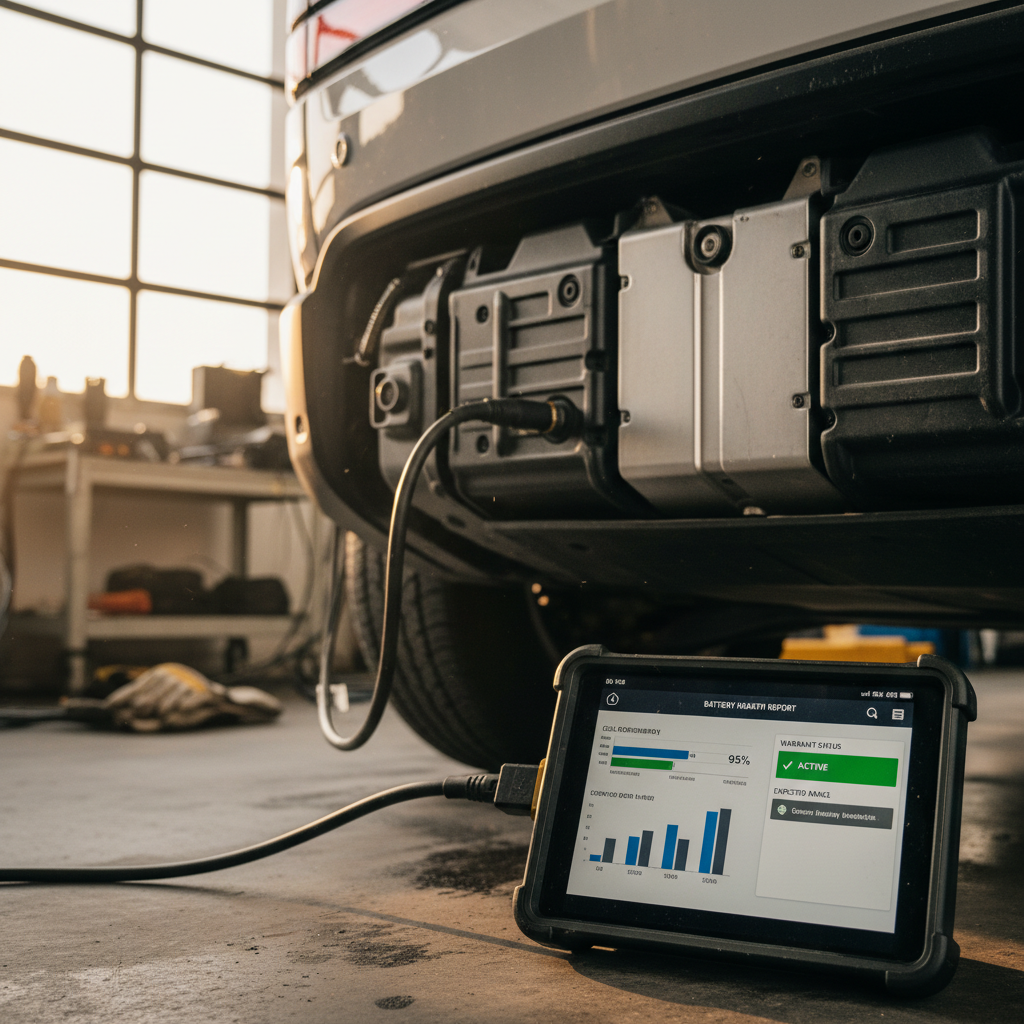
3. Get a battery health report
If your ID. Buzz battery is in good shape, prove it. With Recharged, every vehicle gets a <strong>Recharged Score</strong> that includes verified battery health, which can support a stronger resale or trade figure.
4. Shop multiple offers in a 48‑hour window
Don’t stop at one dealer. Get at least two or three trade‑in or instant‑offer quotes close together in time. That keeps market conditions constant and gives you real negotiating leverage.
5. Time your trade around incentives
If dealers or VW are running big discounts on new Buzz inventory, your trade‑in number may sag. If possible, aim for windows when supply is tighter, early in the model year or just after a strong sales month.
6. Separate the trade from the new‑car deal
Negotiate your new purchase price and financing as if you had no trade‑in. Then bring the Buzz into the conversation. Blended numbers make it easy for a dealer to hide a weak trade behind a discount on the new car.
Where Recharged fits in
Ready to find your next EV?
Browse Vehicles
Trade‑in vs sell private vs sell to Recharged
Three main ways to exit your ID. Buzz in 2026
Each path trades money for time and risk a little differently.
Dealer trade‑in
Pros: Easiest path, sales‑tax credit on the trade amount in many states, done in one visit.
Cons: Often the lowest dollar figure, especially for niche EVs dealers don’t fully understand or want on their lot.
Private‑party sale
Pros: Typically brings the highest price if you price it realistically and market it well.
Cons: Requires time, screening buyers, test drives, and handling payment and paperwork. Some shoppers are still wary of used EVs.
Sell to Recharged
Pros: EV‑specialist valuation, nationwide reach, and options like instant offers or consignment. You tap into buyers specifically shopping for used EVs.
Cons: As with any professional buyer or marketplace, you’re paying for convenience and expertise compared with a top‑dollar private sale.
Think in terms of net outcome
ID. Buzz battery health and resale value
Beneath the retro styling and family‑van mission, the ID. Buzz shares core battery and drive hardware with Volkswagen’s broader ID‑series EVs. That’s good news for 2026 owners: there’s now a meaningful track record for how these packs age in the real world.
- Early‑life degradation is typically modest, often in the low single digits over the first few years, assuming balanced use.
- Cars that live on DC fast‑charging, in extreme heat, or at constant high state of charge show faster capacity loss.
- Volkswagen’s battery warranty (time and mileage limits vary by market) underpins value, but buyers still care about *actual* capacity today, not just paper coverage.
Why a quantified battery report matters
When to trade your VW ID. Buzz (2026–2028 timing)
Timing your exit from a depreciation standpoint
You bought new or nearly new
The steepest depreciation typically hits in the first 24–36 months, especially for higher‑priced EVs like the Buzz.
If you’re already in 2026 and purchased in late 2024 or 2025, the worst drop may already be behind you.
If you’re payment‑sensitive and underwater, it can be worth waiting until you’ve paid down more principal, unless new‑car pricing drops sharply again.
You leased your ID. Buzz
If you took advantage of rich lease incentives, the bank is eating most of the depreciation risk.
In that case, your best “trade‑in” move is often to simply turn it in at lease end and walk away.
If market value ends up higher than the residual (less likely for EVs, but possible), you might be able to buy it out and re‑sell for a small profit or reduced net cost.
You bought used in 2026
If you’re buying a used ID. Buzz in 2026, much of the front‑loaded depreciation has already played out.
You’re likely to see a slower annual percentage drop over the next few years, assuming EV pricing stabilizes.
In that case, your future trade‑in math looks a lot more like a normal used‑car curve than an early‑adopter rollercoaster.
Watch for new‑model or policy shocks
FAQ: VW ID. Buzz trade‑in value in 2026
Frequently asked questions about 2026 VW ID. Buzz trade‑ins
The Volkswagen ID. Buzz was never going to be a depreciation champ, it’s a niche, imported electric van sold at premium‑SUV prices in a rapidly evolving EV market. But as 2026 trade‑in data takes shape, the Buzz looks less like an outlier and more like a textbook example of how early‑run EV economics work. If you understand the forces at play, document your battery health, and shop your options, you can turn a confusing resale landscape into a clear plan. And if you want an EV‑savvy partner in that process, Recharged can help you value, market, and move your ID. Buzz with the same transparency you wish you’d seen on day one.