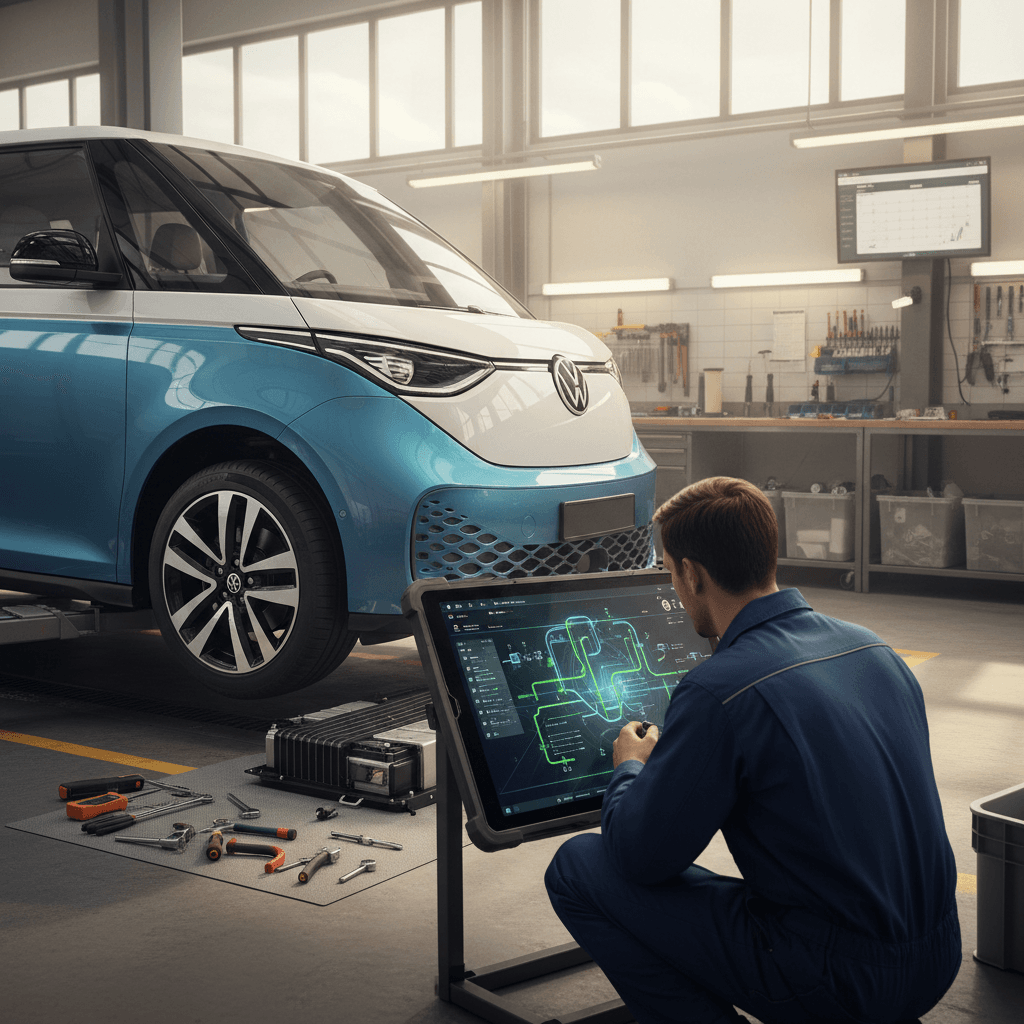
If you’re eyeing a Volkswagen ID. Buzz, especially on the used market, you’re probably wondering what **Volkswagen ID. Buzz maintenance cost in 2026** really looks like. The good news: it’s an EV, so your maintenance schedule is much simpler than a gas van’s. The catch: dealer pricing and regional differences can still add up if you don’t plan ahead.
Quick takeaway
ID. Buzz maintenance cost in 2026: big picture
Volkswagen ID. Buzz maintenance at a glance (2026 estimates)
Those numbers are broad guideposts, not a quote from Volkswagen. Actual **Volkswagen ID. Buzz maintenance cost in 2026** will depend on how you drive, where you service the van, and whether you stick with the dealer or mix in independent EV shops and DIY work.
How often does the ID. Buzz need maintenance?
Unlike a gas van that might ask for an oil change every 5,000–7,500 miles, the **ID. Buzz has no engine oil** and a much lighter routine schedule. What you’re really dealing with are inspections and a few time‑based services.
Typical 2026 Volkswagen ID. Buzz service cadence (North America & Europe)
These are generalized intervals based on Volkswagen EV documentation, ID. family patterns, and early ID. Buzz owner reports. Always confirm against your specific model year’s maintenance booklet and local VW guidance.
| Mileage / Time | What usually happens | Notes |
|---|---|---|
| 5,000 miles / first months | System check or reminder only | Some owners get app prompts; often no formal service is required unless your manual says otherwise. |
| 10,000 miles or 1 year | Inspection, key fluid checks, software & battery diagnostics | First real visit for many U.S. owners; mirrors ID.4 patterns more than traditional gas VW schedules. |
| 20,000 miles or 2 years | Repeat inspection, tire rotation, cabin air filter | May include more detailed brake checks; tire wear can be significant on heavy EV vans. |
| 30,000–40,000 miles | Deeper inspection, possible brake service | Regenerative braking reduces wear, but heavy loads and hills can still eat pads and rotors. |
| 3 years (time‑based) | First brake fluid service | Even without many miles, brake fluid is typically changed on time, not mileage, in modern EVs. |
| 5+ years | Coolant/battery system checks per VW schedule | Still far less complex than a gas van’s cooling and emissions systems. |
Service intervals shown here are approximate and may vary by market, software updates, and model year.
Always follow your manual
Typical 2026 ID. Buzz service pricing
Volkswagen hasn’t published a single global price sheet for **2026 ID. Buzz maintenance**, and U.S. dealer rates vary widely. But we can triangulate from real owner bills, VW’s prepaid maintenance pricing in other markets, and what ID.4 owners pay for similar work.
Realistic 2026 ID. Buzz maintenance cost ranges
Dealer pricing will vary, but these are ballpark figures many owners are seeing or can reasonably expect.
Annual / 10k‑mile inspection visit
Typical range: $200–$350 at a VW dealer
- General inspection and test drive
- HV battery and software diagnostics
- Tire rotation (if needed)
- Fluid checks and top‑offs
Reports from early ID. Buzz owners in late 2025 and early 2026 suggest totals in this zone for the first U.S. services, in line with ID.4 experience.
Brake fluid & deeper service
Typical range: $350–$600 every 3 years or so
- Brake fluid flush
- More detailed underbody and suspension checks
- Cabin filter replacement if due
EVs still need fresh brake fluid periodically; heavier vans like the ID. Buzz can see more aggressive brake use in city and towing duty.
Tires and alignment
Typical range: $900–$1,500 for a full set of quality EV‑rated tires
- Mounting and balancing
- Optional four‑wheel alignment ($150–$250)
Large, heavy EV vans tend to wear tires faster than compact cars, especially with full passenger or camper loads.
Out‑of‑warranty repairs
Typical range: Highly variable; budget a few hundred dollars per year over the long term
- Door hardware, sensors, infotainment issues
- Suspension components on rough roads
- Charging‑port or onboard‑charger work (less common but higher ticket)
EV drivetrains are simple, but the rest of the vehicle, doors, seats, electronics, is still a modern VW minivan.
Consider prepaid maintenance where it makes sense
ID. Buzz maintenance vs. a comparable gas van
It helps to zoom out. Owners aren’t just asking, “What does a Volkswagen ID. Buzz cost to maintain in 2026?” They’re really asking, “Is this cheaper than a gas van like a Chrysler Pacifica, Toyota Sienna, or full‑size passenger van?”
Where the ID. Buzz wins
- No oil changes, spark plugs, timing belts, or exhaust work.
- Fewer moving parts in the drivetrain, so fewer things to wear out over time.
- Regenerative braking usually stretches brake life versus a comparable gas van.
- Most updates delivered via software, not physical parts.
Where gas vans still bite hard
- Regular oil and filter changes (2–3 per year for many families).
- Complex emissions hardware and cooling systems that add high‑dollar repairs.
- Transmission services and potential rebuilds.
- More frequent brake jobs in heavy stop‑and‑go use.
Rule of thumb
Common ID. Buzz maintenance items explained
Even though the ID. Buzz is new, most of what you’ll pay for looks familiar from other EVs and from Volkswagen’s ID.4. Here are the main items that drive **Volkswagen ID. Buzz maintenance cost in 2026** and beyond.
What you’ll actually service on an ID. Buzz
1. Tires and rotations
The ID. Buzz is a tall, heavy people‑mover. That’s great for space, but it’s tough on tires. Plan on rotating every 10,000 miles or so and budgeting for a full set more frequently than on a compact EV, especially if you road trip, tow, or convert it into a camper.
2. Brake inspections and fluid
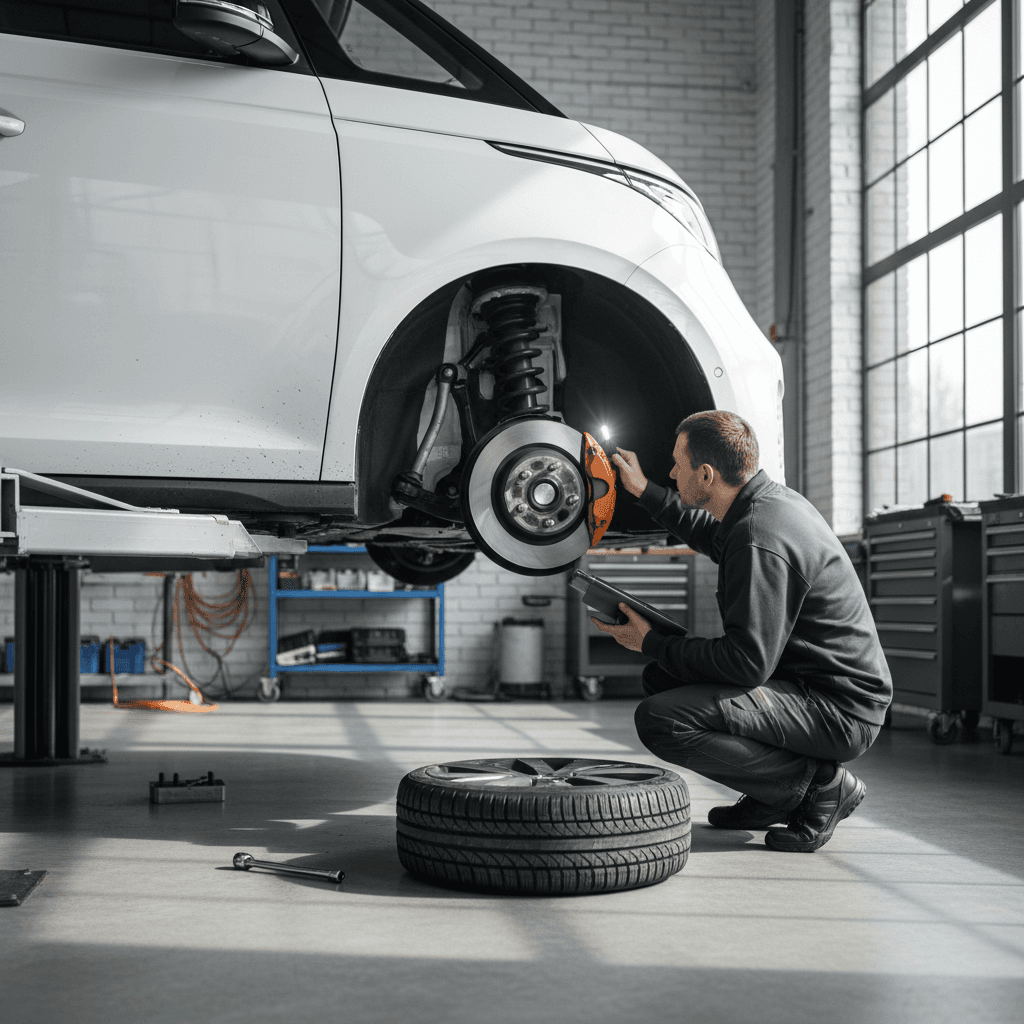
Regenerative braking takes a lot of load off the friction brakes, but the system still needs regular inspection, cleaning in salt states, and fluid replacement on a time basis (often around every 3 years). Skipping this can mean sticky calipers and premature pad/rotor replacement.
3. Cabin air filter
Like any modern vehicle, the ID. Buzz uses a cabin filter to clean the air coming into the interior. Expect replacement every 20,000 miles or so in normal conditions, more often if you drive in dusty areas or city pollution.
4. High‑voltage battery and coolant checks
You’re not “servicing” the main battery often, but technicians will regularly check battery health, module temperatures, and coolant levels during routine visits. This doesn’t usually add much cost by itself, but it’s important for warranty and resale value.
5. Suspension and steering components
Long wheelbase, lots of passengers, and poor roads can stress bushings, ball joints, and control arms. These are wear‑and‑tear parts on any van; on the ID. Buzz they’re one of the few non‑tire items that can generate a sizable out‑of‑warranty bill if ignored.
6. Software and electronics
Most updates are over‑the‑air, but some infotainment or driver‑assist glitches still send owners to the dealer. Often these are handled under warranty; once out of warranty, expect diagnostic time to be the main cost driver.
Don’t ignore minor warning lights
Ways to lower your ID. Buzz maintenance costs
In 2026, you’ve got more options than “whatever the dealer says” when it comes to **Volkswagen ID. Buzz maintenance cost**. A few smart habits can keep your yearly spending much closer to the low end of the ranges above.
Four practical levers to reduce ID. Buzz maintenance costs
You can’t avoid every repair, but you can control when, where, and how the work gets done.
Use miles and time, not just app nags
The Buzz app and in‑car reminders sometimes prompt owners for service well before 10,000 miles, just based on dates. Cross‑check those messages with your maintenance booklet. If the manual says 10k/1 year, you don’t need to rush in at 5,000 miles unless there’s a specific issue.
Mix dealer and independent EV shops
For warranty‑sensitive software and battery work, the dealer still makes sense. For out‑of‑warranty items like tires, basic brake jobs, and alignments, EV‑savvy independents can often do the same job for less, especially in big metro areas.
Choose EV‑rated tires wisely
Cheap tires on a heavy EV van wear quickly and hurt range. A slightly more expensive, low‑rolling‑resistance EV tire can last longer and save you money in electricity, often a better deal over 25,000–35,000 miles.
DIY small items where you’re comfortable
If you’re handy, jobs like cabin air filters and wiper blades are straightforward and YouTube‑friendly. Saving dealer labor on those simple tasks can keep your annual maintenance closer to the bare minimum.
Track total cost per mile
Maintenance considerations for used ID. Buzz buyers
The ID. Buzz is already showing up on the used market, especially as Volkswagen pauses U.S. imports for the 2026 model year and prepares an updated version for around 2027. That pause adds a wrinkle: more of the 2024–2025 stock will change hands as used vehicles just as shoppers are still figuring out what **Volkswagen ID. Buzz maintenance cost in 2026** really looks like.
Checklist before you buy a used ID. Buzz
- Confirm remaining factory warranty and whether it’s fully transferable.
- Ask for a full maintenance history, especially brake fluid and tire replacements.
- Check for any open recalls or service campaigns on software and safety systems.
- Inspect tires for uneven wear that might hint at alignment or suspension issues.
- Look for any charging‑port, door, or seat hardware repairs in the records.
What matters most for long‑term cost
- Documented battery health and no history of fast‑charging abuse only use.
- Evidence that the van hasn’t lived overloaded or towing at the limit constantly.
- Clean accident history, body repairs near the battery and high‑voltage cabling can complicate future work.
- A seller who can explain where and how it’s been serviced, not just “the dealer took care of it.”
Why a third‑party battery and systems report matters
How Recharged helps with ID. Buzz ownership costs
If you’re leaning toward a used Volkswagen ID. Buzz, you don’t have to decode maintenance and battery health on your own. Recharged is built specifically around making **used EV ownership**, including models like the ID. Buzz, as transparent as possible.
What you get when you shop an ID. Buzz through Recharged
Our goal is to turn “What will this cost me?” into a clear, data‑driven answer before you sign anything.
Recharged Score battery report
Every vehicle listed on Recharged includes a Recharged Score Report with verified battery health and diagnostic data. For an ID. Buzz, that means you can see how the pack is aging before you commit, not after your first long trip.
Fair market pricing
We benchmark ID. Buzz listings against nationwide EV pricing and recent sales so you’re not overpaying. That includes reflecting the reality that EV maintenance is typically cheaper than gas, but still real money you’ll spend over time.
EV‑specialist support
Our team focuses on EVs all day. If you’re comparing a used ID. Buzz with another EV, or with a gas van, we can walk through likely maintenance, charging, and battery costs for each path, not just the monthly payment.
Nationwide delivery
Found the right ID. Buzz in another state? We can handle logistics and delivery so you can shop for the best‑cared‑for example, not just the closest one.
Flexible selling & trade‑in options
Already own an EV or gas van? Recharged offers trade‑ins, instant offers, or consignment, helping you roll equity into a lower‑maintenance ID. Buzz without juggling multiple private‑party deals.
Financing tailored to EVs
Our financing options and pre‑qualification tools are designed with EVs in mind, so your lender understands residual values, battery warranties, and the way low maintenance costs affect your real monthly outlay.
Ready to find your next EV?
Browse VehiclesFAQ: Volkswagen ID. Buzz maintenance cost 2026
Frequently asked questions about ID. Buzz maintenance costs
The bottom line: **Volkswagen ID. Buzz maintenance cost in 2026** is far closer to “normal EV” than “mystery minivan.” Routine inspection visits, tires, and the odd brake service are where most of your money will go, and those bills tend to be meaningfully lower than on a comparable gas van over time. If you’re shopping used, pairing clear service records with a verified battery‑health report, like the Recharged Score we include on every vehicle, can turn the ID. Buzz from a question mark into a confidently predictable, low‑maintenance family hauler or adventure van.