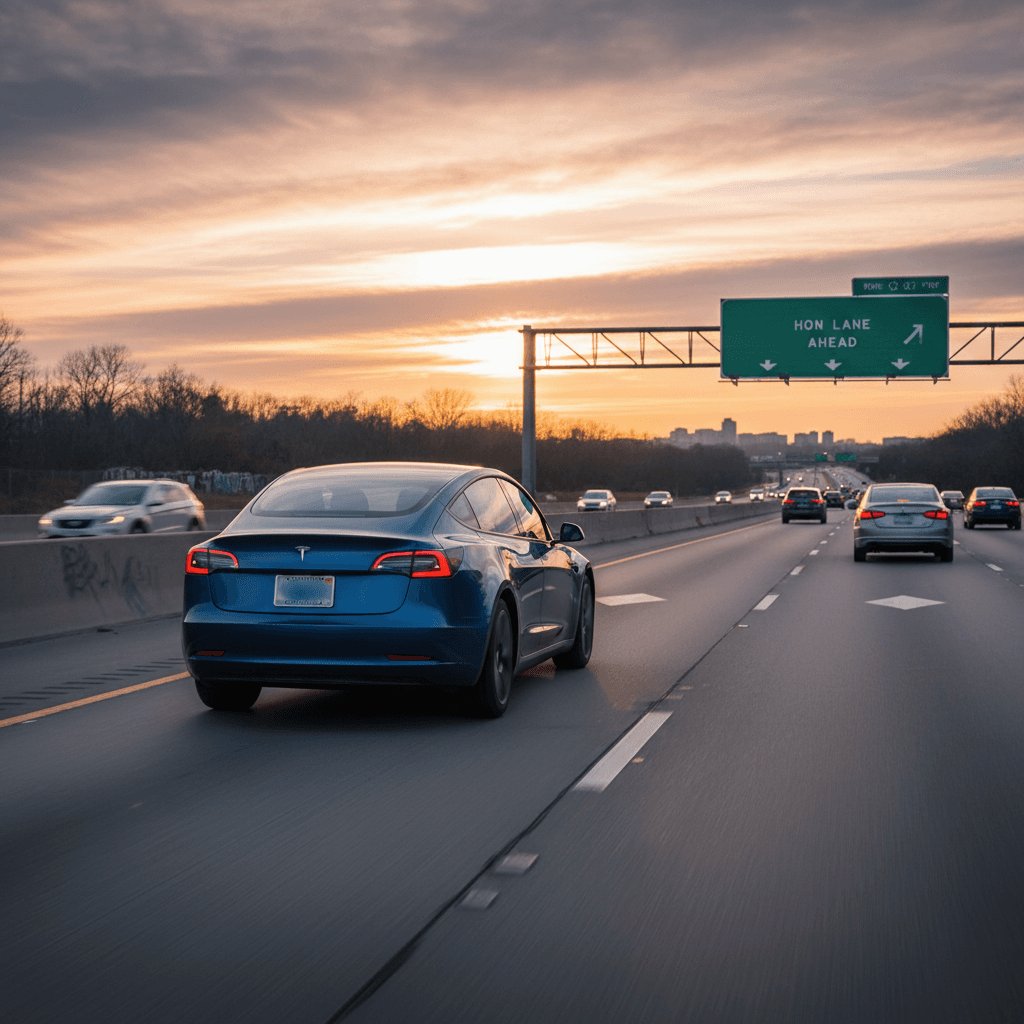
If you drive an electric vehicle in Virginia, especially in Northern Virginia’s notorious traffic, understanding the current Virginia EV HOV lane rules can save you both time and expensive tickets. The rules around clean fuel plates, I‑66 and I‑95 express lanes, and who really qualifies for solo HOV access have changed over the years, and 2026 is very different from the early “free‑for‑all” days for hybrids and EVs.
Quick takeaway
Overview: Virginia EV HOV Lane Rules in 2026
Virginia was one of the early adopters of HOV incentives for cleaner vehicles. For years, certain hybrid and electric vehicles with special plates could ride solo in HOV lanes as a perk for going green. Over time, congestion on key Northern Virginia corridors forced the state to tighten those exemptions, especially on I‑66, I‑95, and I‑495.
- Traditional HOV lanes still exist in some corridors and times of day.
- Many busy corridors have been converted to toll‑based HOT/Express Lanes (HOV‑3+ or pay a toll).
- "Clean Special Fuel" license plates still exist, but their exemption from HOV rules is restricted to specific facilities and plate issue dates.
- Electric vehicles with standard passenger plates are treated like any other car, no special HOV break without enough occupants or a valid toll/transponder.
Rules keep evolving
How Virginia HOV and HOT Lanes Work
To make sense of Virginia EV HOV lane rules, you first need to separate traditional HOV lanes from modern high‑occupancy toll (HOT) or Express Lanes. They look similar on the road, but the rules, and the value of a clean special fuel plate, are very different.
HOV vs. HOT/Express Lanes in Virginia
Know which lane you’re entering before relying on EV perks
Traditional HOV lanes
- Marked with white diamond symbols.
- Require a minimum number of occupants (HOV‑2 or HOV‑3) during restricted hours.
- Not typically tolled.
- Some historically allowed solo use for qualifying clean fuel plates.
HOT / Express Lanes
- Operate on I‑66, I‑95, I‑395, and portions of I‑495.
- If you don’t meet HOV‑3+, you can usually still enter by paying a variable toll.
- Most of these lanes do not grant solo EVs or clean fuel plates free passage, toll or HOV occupancy still required.
- Signage often shows dynamic toll pricing.
Look for the diamonds and toll prices
Clean Special Fuel Plates for EVs
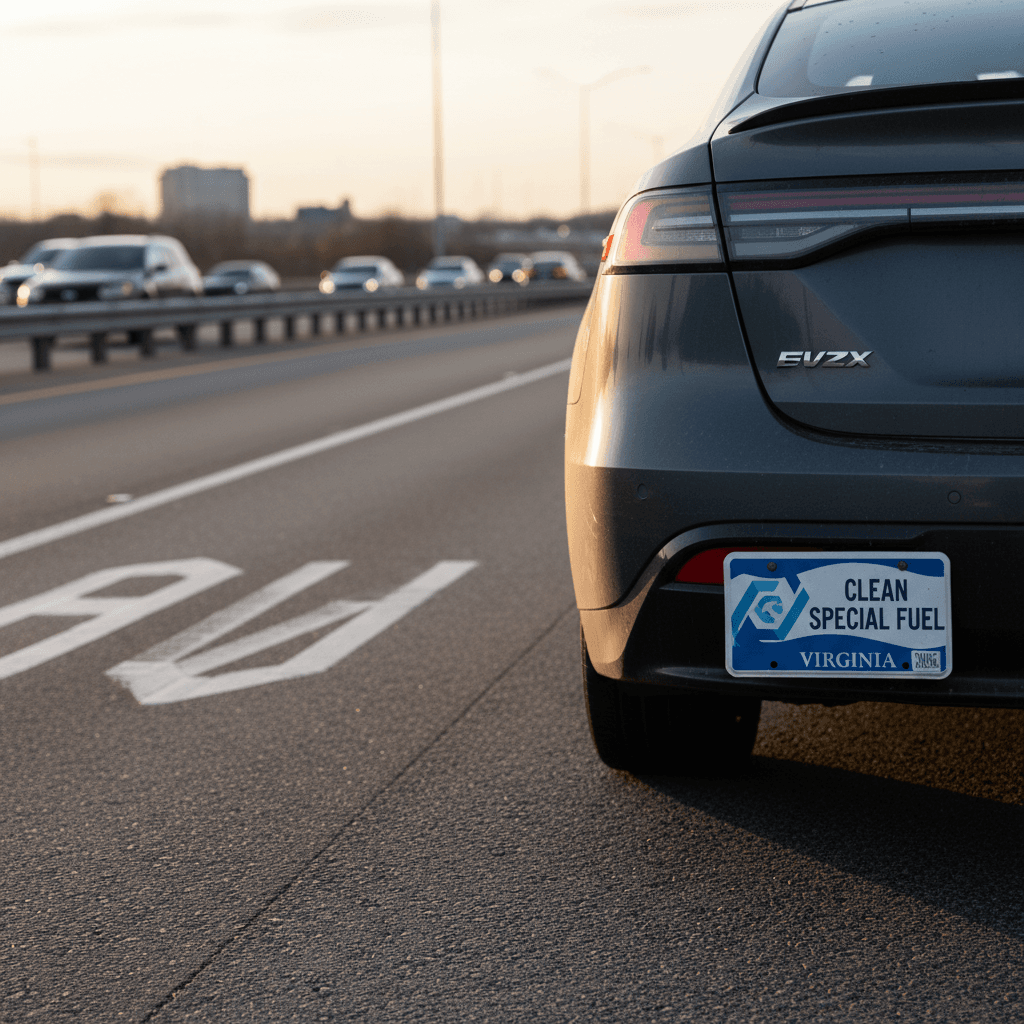
Virginia’s “Clean Special Fuel” license plates were created to encourage ownership of lower‑emission vehicles, including EVs. You’ve probably seen them: a standard Virginia plate with wording like “CLEAN FUEL” or similar language, often on hybrids and early electric models around Northern Virginia.
Clean Special Fuel Plates at a Glance
To qualify for a clean special fuel plate, a vehicle must meet the state’s criteria for alternative fuel or low‑emission status. Fully electric models easily qualify. But the critical nuance for HOV use isn’t just whether your EV can get the plate, it’s when the plate series was issued and which road you’re on.
Old vs. new plate series
Where EV HOV Exemptions Do, and Don’t, Apply
Here’s where most drivers get tripped up. In 2026, there’s no universal rule that says, “If you have an EV or a clean special fuel plate, you can drive solo in any Virginia HOV lane.” Instead, exemptions are carved out corridor by corridor, and they’ve been shrinking over time as traffic increased and express lane projects rolled out.
High‑Traffic Northern Virginia Corridors: What EVs Can and Can’t Do
This table summarizes the general policy direction for major HOV/HOT corridors. Exact rules can change, always verify current details before driving.
| Corridor | Type of Lane Today | Typical HOV Requirement | Clean Fuel / EV Solo HOV Benefit |
|---|---|---|---|
| I‑66 Inside the Beltway | HOT/Express (peak‑direction tolls) | HOV‑3+ for toll‑free travel | EVs must meet HOV‑3+ or pay toll like any vehicle; clean fuel plates do not waive tolls. |
| I‑66 Outside the Beltway | Express Lanes | HOV‑3+ for toll‑free travel | No special solo EV exemption; pay toll or meet full HOV‑3+ rules. |
| I‑95 / I‑395 Express Lanes | HOT/Express | HOV‑3+ for toll‑free travel | EVs treated like other cars: either HOV‑3+ with proper transponder or pay toll. |
| I‑495 Express Lanes (Capital Beltway) | HOT/Express | HOV‑3+ for toll‑free travel | Same as I‑95/I‑395; clean fuel plates don’t override tolls or occupancy rules. |
| Other legacy HOV segments (non‑tolled) | Traditional HOV (select segments) | Often HOV‑2 or HOV‑3 during posted hours | Some limited exemptions survive for specific older clean fuel plate series, but coverage is narrow and time‑of‑day dependent. |
EV ownership and clean special fuel plates provide fewer HOV breaks today than in the early 2000s, especially on converted Express Lanes.
Don’t assume “EV = free HOV” on I‑66 or I‑95
Buying a Used EV in Virginia and HOV Access
If you’re shopping for a used electric vehicle in Virginia, HOV access may be on your wish list, especially if your commute touches the Beltway or I‑66. The reality in 2026 is that HOV perks should be seen as a possible side benefit, not a guarantee or a primary reason to buy a particular car.
Questions to Ask When HOV Access Matters
1. Does the car have a Clean Special Fuel plate today?
If so, note the plate design and any code printed on it. That can help you look up whether that specific plate series ever provided HOV exemptions, and whether those exemptions are still in effect.
2. Will the plate transfer if I buy it?
In many cases, specialty plates are tied to the owner more than the VIN. You may have to apply for your own clean special fuel plate, which might not fall under any grandfathered HOV program that an older plate enjoyed.
3. Which corridors do I actually drive?
If your daily route doesn’t use I‑66, I‑95, or I‑495, and instead relies on local HOV segments, any remaining exemptions may matter more, or not at all. Map your real commute before you chase a particular plate benefit.
4. What does the current policy say, this year?
Because Virginia’s HOV and clean fuel exceptions have sunset dates and corridor‑specific carve‑outs, always confirm the latest rules with VDOT or the Department of Motor Vehicles rather than relying on a salesperson or old blog post.
5. How much is time savings actually worth?
Sometimes, upgrading to an EV with better range, faster charging, or lower operating costs can matter more than shaving a few minutes off one leg of your commute.
Where Recharged fits in
Common Mistakes and Costly Citations to Avoid
Because Virginia’s HOV landscape has changed so much over the last decade, long‑time residents and new arrivals alike can make some expensive assumptions. Here are the patterns enforcement officers see again and again.
- Using an EV with standard plates as if it had HOV privileges. Unless the road you’re on explicitly recognizes solo EVs, and most do not, your car is treated like any other vehicle.
- Assuming an old clean fuel plate still has full HOV rights. Many grandfathered programs were narrowed or sunset altogether, especially on I‑66 and I‑95 as those corridors converted to HOT lanes.
- Confusing “free HOV” with “free tolls.” Even when a lane requires HOV‑3+, you might still need a properly set E‑ZPass Flex transponder for toll‑free travel; otherwise you’re charged like a solo driver.
- Ignoring time‑of‑day restrictions. Some HOV rules only apply during posted rush hours. Being in the lane at noon on a Sunday is very different from 8:00 a.m. on a Tuesday.
- Relying on outdated online posts or word‑of‑mouth. HOV policy in Virginia is a moving target. A forum post from 2017 probably doesn’t match 2026 reality.
Tickets add up fast
How to Check the Current Rules Before You Drive
Because Virginia EV HOV lane rules are corridor‑specific and evolve over time, the smartest move is to treat online guides like this as context, not as a final legal reference. Before you bet your commute on any assumed exemption, take a few minutes to confirm the latest policies.
Three Ways to Verify Today’s HOV Rules
Use official sources before you pull into the diamond lane
1. Check VDOT’s official HOV/HOT resources
2. Use Express Lane operators’ apps and sites
3. Contact DMV about your specific plate
Test‑drive your commute
FAQ: Virginia EV HOV Lane Rules
Frequently Asked Questions
Bottom Line for Virginia EV Drivers
Virginia helped pioneer HOV incentives for cleaner vehicles, but the era of effortless solo HOV access for every hybrid or EV is largely over, especially on I‑66, I‑95, and I‑495. In 2026, Virginia EV HOV lane rules are a patchwork of corridor‑specific policies, limited clean fuel plate exemptions, and rapidly expanding HOT/Express networks that treat EVs much like any other car.
If you’re shopping for a used EV, focus first on fundamentals: verified battery health, range that matches your commute, home and public charging options, and a fair market price. That’s where Recharged puts its energy, with diagnostics-backed Recharged Score Reports, EV‑savvy financing support, and delivery options that make going electric straightforward. HOV access, where it still exists, should be gravy on top, not the foundation of your buying decision.
Before you rely on any plate or policy to beat Northern Virginia traffic, take a few minutes to check the latest state guidance, read the signs carefully, and plan your route. Your EV can absolutely make your commute cheaper, quieter, and cleaner, but only you can make sure it stays on the right side of Virginia’s evolving HOV rules.