If you live in Virginia or drive through the Commonwealth regularly, the strength of the Virginia electric car charging network can make or break your EV experience. The good news: Virginia is now a top‑10 state for public chargers, and new fast‑charging sites are filling in the gaps along I‑64, I‑81, and I‑95. This guide walks you through what exists today, what’s coming next, and how to confidently charge an EV, new or used, across Virginia.
Snapshot: Virginia is now a top‑10 EV charging state
Why Virginia’s EV charging network matters right now
Virginia sits at the crossroads of East Coast travel. Interstates I‑95, I‑81, I‑64, I‑77, and I‑85 all cut through the state, carrying commuters, military families, and long‑haul travelers. For EV drivers, that makes the strength of the Virginia electric car charging network critical: it determines whether a trip from Northern Virginia to the Outer Banks or from Richmond to Roanoke feels routine or risky.
- Virginia ranked in the national top 10 for total public EV charging ports as of January 2025, with roughly 4,900 public chargers statewide.
- EV registrations in Virginia jumped from roughly 30,000 to nearly 85,000 in just one year, one of the fastest growth rates in the country.
- Federal NEVI funding and utility‑backed programs are actively targeting gaps on key highway corridors and in urban centers.
Used EV shopper tip
The state of Virginia’s electric car charging network today
Virginia EV and charging by the numbers
On the ground, Virginia’s EV charging landscape breaks into three main buckets: highway fast charging for road trips, urban and community Level 2 charging for destination top‑ups, and home charging for overnight fueling. All three are expanding, but at different speeds and in different parts of the state.
Three layers of Virginia’s EV charging network
Understanding where each type fits your daily driving
DC fast charging (Highways)
Best for: Road trips and quick top‑ups.
Where: Along I‑95, I‑81, I‑64, and growing along I‑77 and I‑85.
Speed: 20–80% in ~20–45 minutes, depending on vehicle and charger power.
Level 2 public charging (Cities)
Best for: Parking a few hours, downtowns, workplaces, garages.
Where: D.C. suburbs, Richmond, Hampton Roads, Charlottesville, Roanoke, college campuses.
Home charging
Best for: Overnight charging, it’s where most EV miles are refueled.
Where: Single‑family homes with a 240V circuit, increasingly supported by Dominion Energy programs.

Highway fast charging: NEVI funds and corridor build‑out
For many drivers, the biggest question isn’t “Can I charge in my neighborhood?”, it’s “Can I get from Northern Virginia to South Carolina without sweating my state of charge?” Virginia’s highway fast‑charging network is in catch‑up mode, but the pace is accelerating thanks to federal NEVI funding and private investment.
Where NEVI is focused in Virginia
Interstate corridors targeted for new or upgraded fast‑charging sites under Virginia’s NEVI program.
| Corridor | Role | Typical gaps being filled | What it means for drivers |
|---|---|---|---|
| I‑95 | East Coast backbone | Fewer fast chargers in rural stretches between Northern Virginia and North Carolina | More consistent DC fast options between D.C. suburbs, Fredericksburg, Richmond, and down toward Emporia. |
| I‑81 | Mountain corridor | Sparse coverage in the Shenandoah Valley and southwest Virginia | More reliable charging for long‑haul traffic, college trips, and tourism between Winchester, Roanoke, and Bristol. |
| I‑64 | East‑west link | Gaps between Richmond, Charlottesville, and the I‑81 junction | Smoother EV travel between Hampton Roads, Richmond, Charlottesville, and West Virginia. |
| I‑77 & I‑85 | Southern connectors | Fewer high‑powered sites near the North Carolina border | More redundancy for drivers heading toward Charlotte, Greensboro, and the Carolinas. |
| I‑295 | Bypass loop | Limited DC fast coverage at some interchanges | Additional options that let you bypass I‑95 congestion without risking range. |
Awarded projects will help close remaining fast‑charging gaps so stations are no more than 50 miles apart along Alternative Fuel Corridors.
NEVI in plain language
Main fast‑charging players in Virginia
- Electrify America, EVgo, and ChargePoint operate many of the CCS fast chargers you’ll find at Walmarts, grocery centers, and travel plazas.
- Tesla Superchargers dominate the fast‑charging map today; more of these sites are gradually opening to non‑Tesla EVs via adapters and, in some cases, built‑in Magic Dock hardware.
- New joint‑venture networks backed by legacy automakers are beginning to appear at major truck stops and convenience stores, especially along high‑traffic interstates.
What to look for when planning a trip
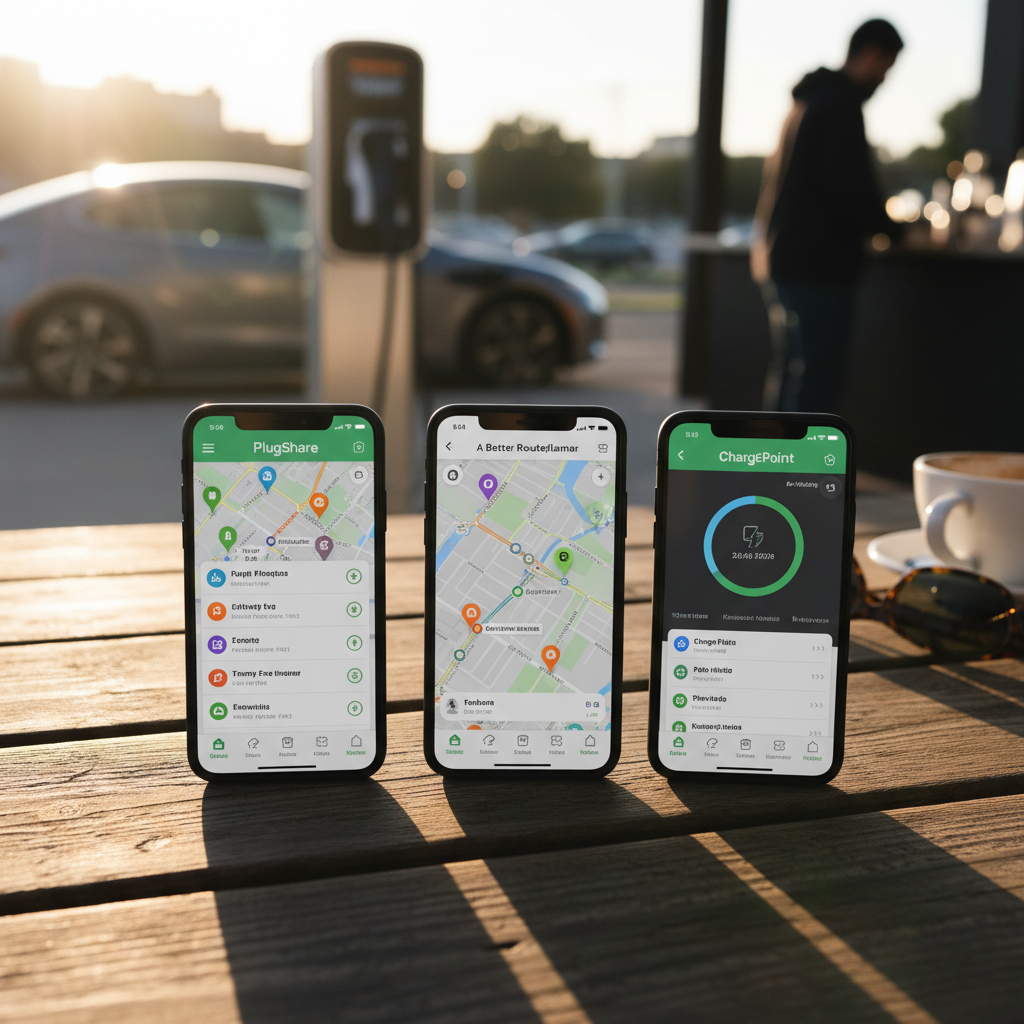
- Check at least two apps (for example, PlugShare plus your vehicle or network app) before a long drive.
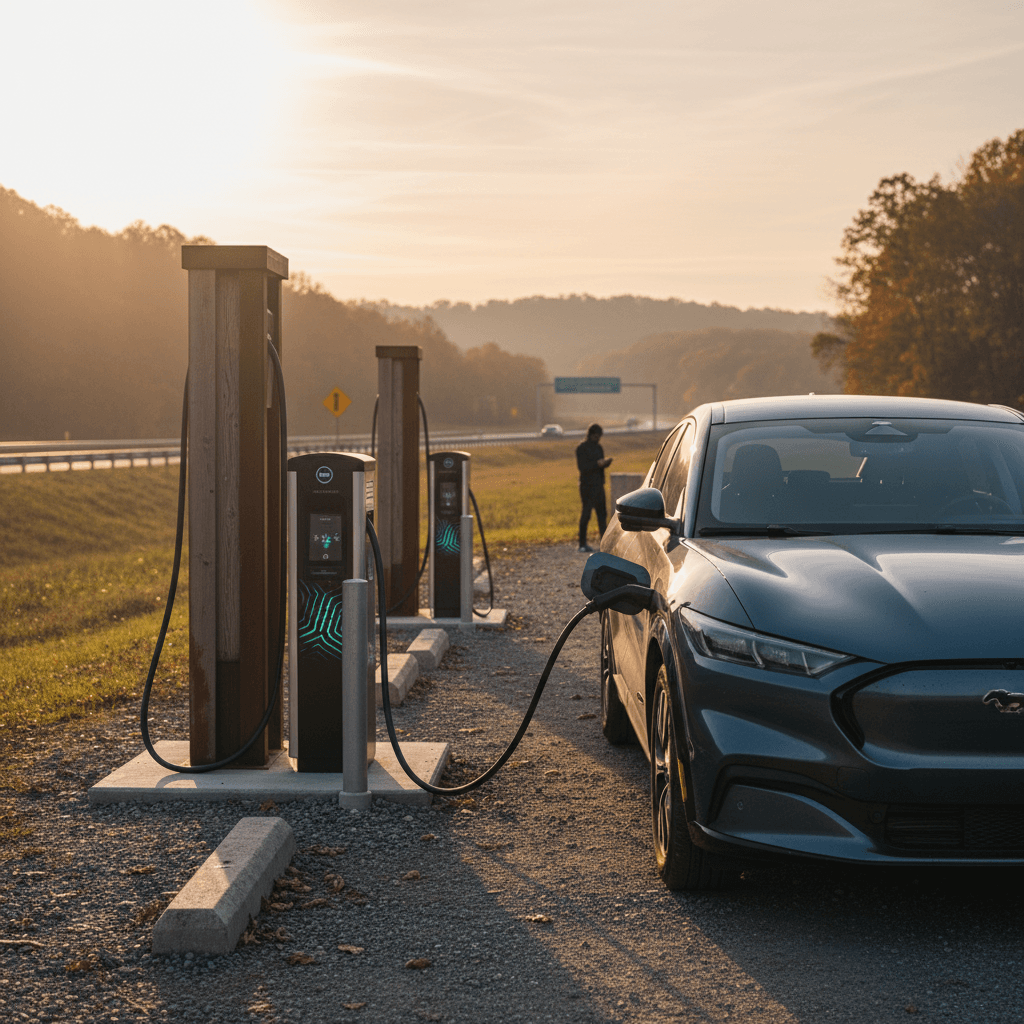
- Prioritize highway sites with multiple stalls (4+ ports) to avoid being stranded if one unit is down.
- Filter for the connector type your EV uses today: CCS, CHAdeMO, or NACS (Tesla/North American Charging Standard).
- Look at recent check‑ins and reviews, they’re the best early warning for reliability issues.
City and community charging across Virginia
Highways get a lot of attention, but for daily life, Level 2 public charging in cities and towns often matters more. That’s where you’ll plug in while you work, shop, or attend a game, especially if you live in a condo or apartment without assigned parking.
Where Virginia’s public charging is densest
Patterns that matter if you live, work, or shop in these regions
Northern Virginia & D.C. suburbs
High concentration of Level 2 and DC fast chargers at offices, garages, shopping centers, and transit hubs. Arlington County, for example, has expanded from about 15 to more than 30 county‑owned public charging stations, with more in the pipeline.
Richmond & Central Virginia
Growing mix of Level 2 and fast chargers clustered around downtown, Short Pump, Midlothian, and near major interchanges on I‑64 and I‑95. This is also where Recharged operates its Experience Center, making it easy to test‑drive used EVs and see local charging in action.
Hampton Roads & Coastal
Steady growth in Level 2 chargers near bases, hospitals, shipyards, tourist spots, and large retail centers in Virginia Beach, Norfolk, Chesapeake, and Newport News.
Smaller markets aren’t being ignored
How to quickly find city and community chargers in Virginia
1. Start with your car’s native app
Most newer EVs include built‑in navigation that can show real‑time charger availability and route you to compatible stations along your path.
2. Layer in a third‑party map
Apps like PlugShare, ChargeHub, or A Better Routeplanner can reveal community chargers not yet fully integrated into automaker maps, especially in college towns and smaller cities.
3. Check your workplace and local government
Many Virginia employers and municipalities quietly add Level 2 chargers in garages and parking lots. Look at your city, county, or employer sustainability pages for details.
4. Watch for parking‑garage signage
Downtown garages in places like Arlington, Alexandria, Richmond, and Norfolk now routinely dedicate a handful of spots to EV charging, often for the same price as regular parking.
Home charging and Dominion Energy support
While public infrastructure gets the headlines, most EV miles in Virginia are still powered at home. For single‑family homeowners, that typically means a Level 2 charger on a 240‑volt circuit. Dominion Energy Virginia has launched several programs to make that easier and cheaper, especially since late 2024.
Dominion Energy programs that affect home and network charging
Why your utility matters just as much as public networks
Residential Charger Program
Launched in 2024, this turnkey offering helps customers install a Level 2 home charger and pay for the equipment and installation over time on their utility bill. Income‑qualified households may be able to access chargers and installation at little or no upfront cost, removing a major barrier to EV ownership.
EV Charger Rewards
A demand‑response program that pays you for allowing Dominion to briefly manage your smart Level 2 charger during peak demand events. Eligible customers can receive an upfront enrollment incentive for buying a qualifying Wi‑Fi–enabled charger, plus annual bill credits for staying enrolled, as long as they are not already on certain time‑of‑use plans.
Stack your savings
If you’re shopping for a used EV through Recharged, factor home charging into the deal from day one. Our EV specialists can help you understand whether a simple NEMA 14‑50 outlet and portable Level 2 cord will meet your needs, or whether a wall‑mounted charger makes more sense based on your panel capacity, commute, and budget.
Planning a road trip on Virginia’s EV charging network
Road‑tripping across Virginia in an EV is far more realistic in 2025 than it was just a few years ago, but it still isn’t as brainless as driving a gasoline car. You’ll want to think through connector types, charging stop spacing, and backup options, especially if you’re in a used EV with a smaller battery.
Step‑by‑step: planning a reliable Virginia EV road trip
1. Map your exact route, not just your destination
Instead of asking, “Can I get from D.C. to Virginia Beach?”, plot the actual highways and typical traffic you’ll hit and overlay fast‑charger locations along that corridor.
2. Plan stops around 10–20% buffer
Aim to arrive at highway fast chargers with 10–20% battery remaining, especially in winter or over the mountains along I‑81. This leaves room for unexpected detours or queues.
3. Prioritize larger sites with amenities
Favor locations with at least 4 fast‑charging stalls, good lighting, and restrooms or restaurants you’d be comfortable visiting at night. Upcoming sites at big travel centers and truck stops often check these boxes.
4. Check recent reliability reviews
Use apps with user check‑ins to see whether chargers were recently reported as working. Prior issues aren’t a deal‑breaker, but several recent “down” reports are a red flag.
5. Understand your car’s peak charging power
A 350 kW charger won’t help if your car tops out at 100 kW. Knowing your EV’s limit helps set realistic expectations for stop length and total travel time.
6. Have a Plan B every 50–75 miles
Before you leave, identify backup stations roughly every 50–75 miles along your route in case your first choice is offline or blocked.
Don’t ignore weather and elevation
What Virginia’s charging network means for used EV buyers
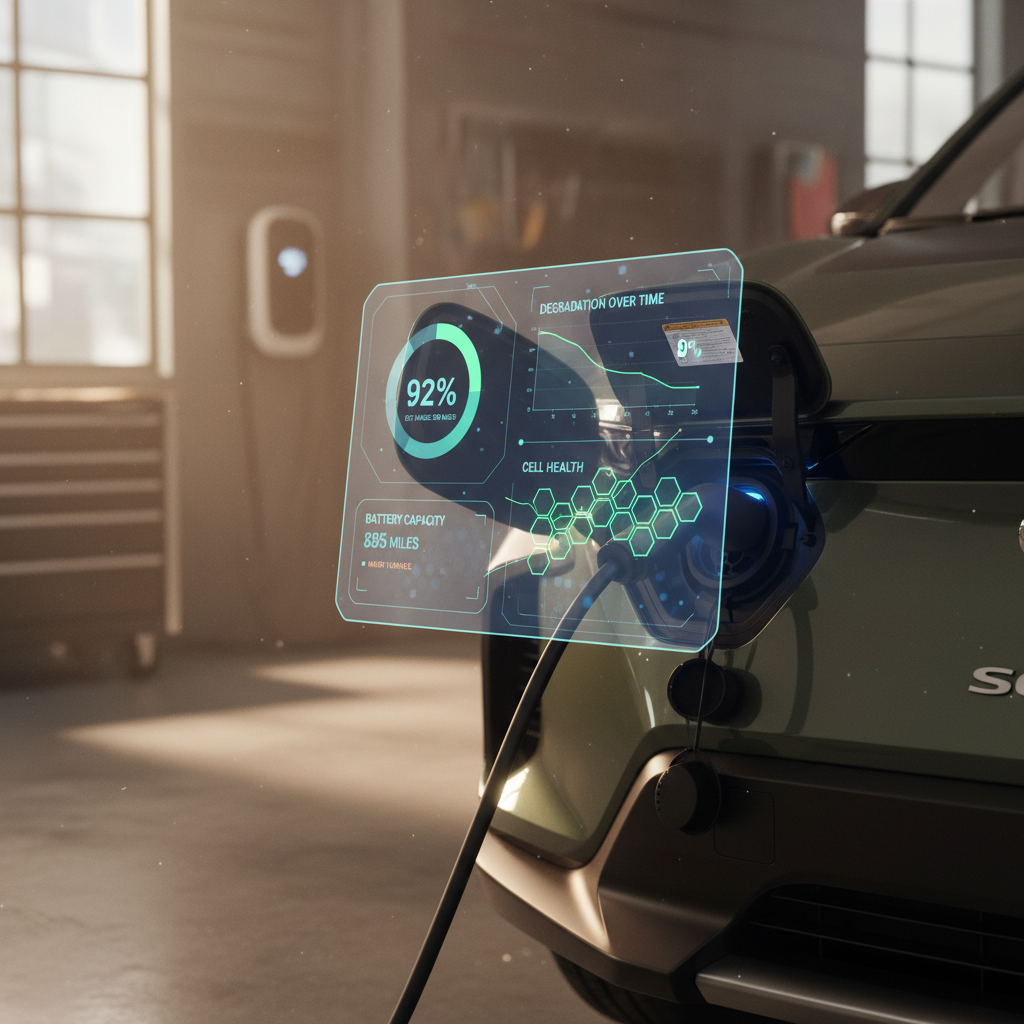
If you’re shopping the used market, Virginia’s evolving charging network should shape how you choose an EV just as much as price, color, or tech features. Battery health, connector type, and DC fast‑charging support will all affect how easy your life is on this particular network.
Match your used EV to Virginia’s charging reality
Three common buyer profiles and what they should prioritize
Urban / suburban commuter
Lives: Northern Virginia, Richmond, Hampton Roads.
Charging: Home Level 2 or reliable workplace charging.
What to prioritize: Solid battery health and Level 2 efficiency. DC fast speed matters less, as long as highway trips are occasional.
Blue Ridge & rural driver
Lives: Shenandoah Valley, Southwest Virginia.
Charging: Home Level 2, limited public options.
What to prioritize: Larger usable battery (or plug‑in hybrid), strong cold‑weather range, and compatibility with the nearest DC fast corridor (usually I‑81 or I‑77).
Frequent regional road‑tripper
Drives: Regular runs on I‑95, I‑64, or I‑81 between states.
What to prioritize: A used EV with robust DC fast‑charging support, connector flexibility (CCS today, NACS adapter availability), and a charging curve that stays strong above 50%.
How Recharged helps de‑risk used EV charging
Common charging pitfalls in Virginia and how to avoid them
Even with a growing charging network, EV drivers in Virginia still hit avoidable snags. Many of them come down to overconfidence, old habits from gasoline driving, or not understanding how your specific vehicle behaves on fast chargers.
Common pitfalls
- Assuming HOV incentives still apply: Recent rule changes have removed solo‑EV access to certain HOV lanes during peak hours, so you can’t rely on special plates to beat traffic anymore.
- Arriving with single‑digit battery: Stretching range too far, especially on I‑81’s hills or in winter, is still one of the fastest ways to turn an easy trip into a nail‑biter.
- Relying on a single network app: No provider is perfect on uptime or coverage. Planning only through one app leaves you vulnerable to outages or card‑reader glitches.
- Ignoring connector transitions: As more stations add NACS (Tesla‑style) plugs and some older CHAdeMO ports disappear, older EVs may face fewer compatible stalls in certain locations.
Practical fixes
- Drive the route once like a shakedown run: For new‑to‑you EVs, especially used, do a lower‑stakes highway loop close to home before relying on fast charging for a high‑stakes trip.
- Keep a 15–20% arrival target: Treat that as your “reserve tank” and only dip below if you have a nearby backup charger identified.
- Carry network cards and apps: Install and set up payment for at least Electrify America, EVgo, and ChargePoint; consider Tesla’s app if your EV can use Superchargers.
- Ask about adapters when buying used: Some used EVs in Virginia already include CCS, CHAdeMO, or NACS adapters. Knowing what’s in the trunk can instantly expand your charging options.
Don’t bypass electrical safety at home
Frequently asked questions about Virginia’s EV charging network
Virginia EV charging network: FAQs
The bottom line for EV charging in Virginia
Virginia’s electric car charging network is no longer an early‑adopter experiment. With thousands of public chargers, rapidly growing DC fast coverage on I‑95, I‑81, and I‑64, and utility programs that make home charging easier, the Commonwealth has crossed an important threshold: for many drivers, charging is now a planning exercise, not a gamble.
That doesn’t mean EV ownership is friction‑free. Rural gaps remain, winter highway range still requires respect, and connector standards are in the middle of a transition. But if you understand how the network is built, fast‑charging corridors for trips, Level 2 in cities and at home for everything else, you can confidently daily‑drive and road‑trip an EV in Virginia today.
If you’re considering a used EV, the next step is to choose a car that fits both your routes and Virginia’s charging reality. Recharged combines verified battery health data, fair pricing, and EV‑specialist guidance to help you pick the right vehicle, line up home charging, and hit Virginia’s roads with a clear plan for where, and how, you’ll plug in.