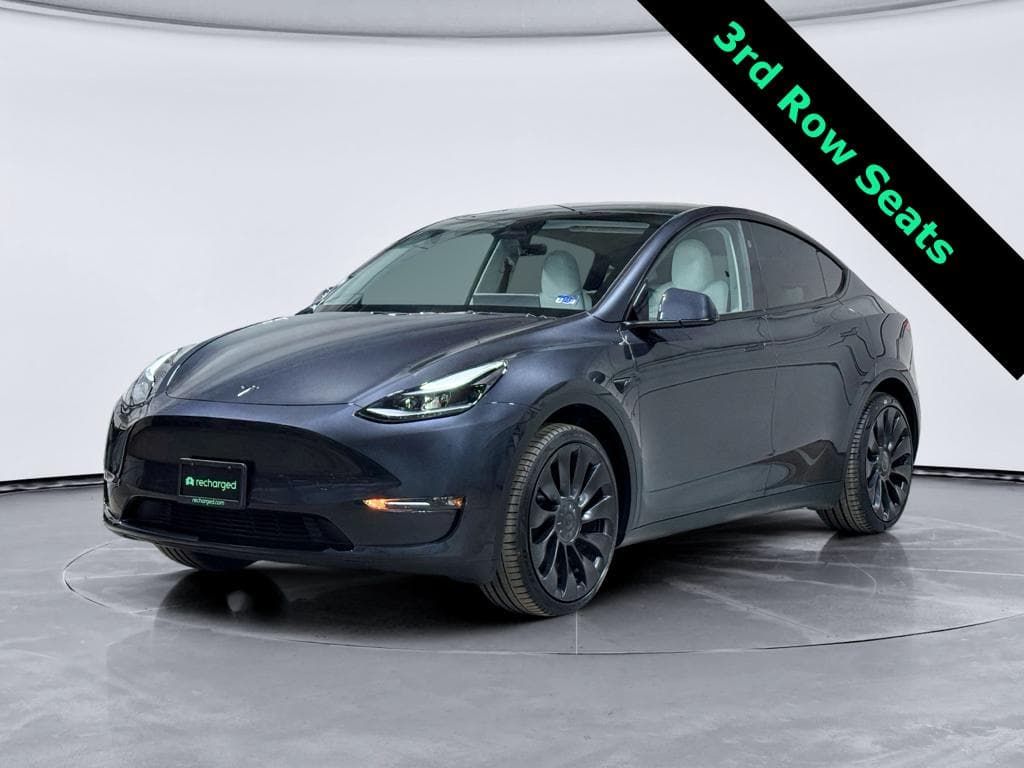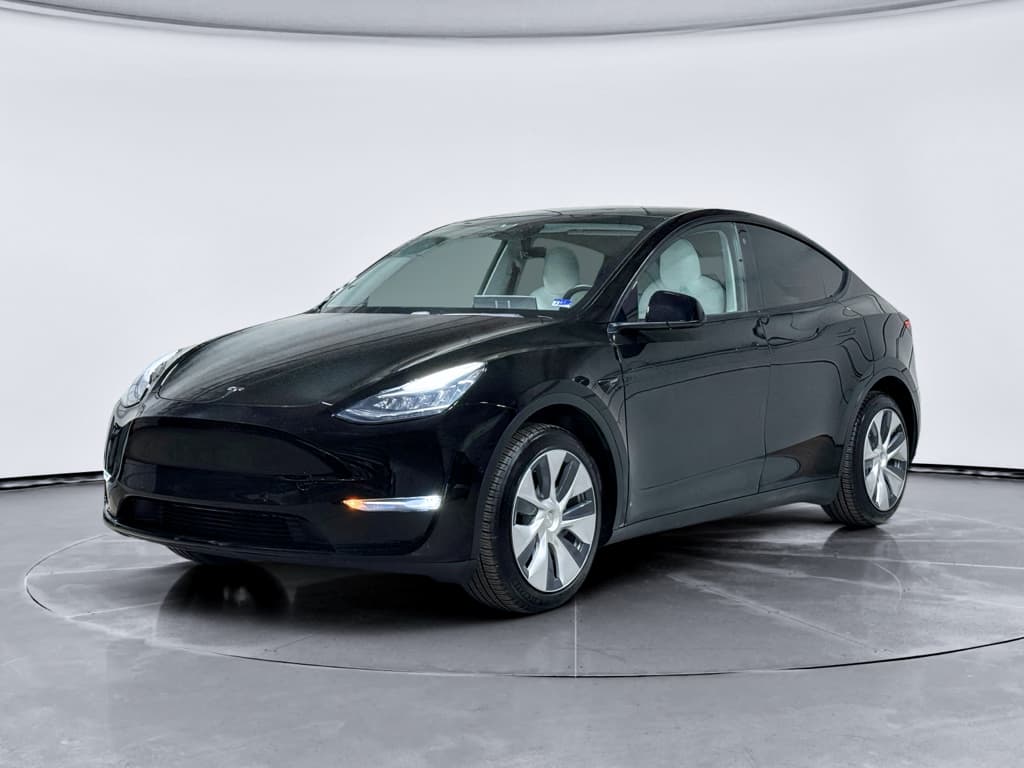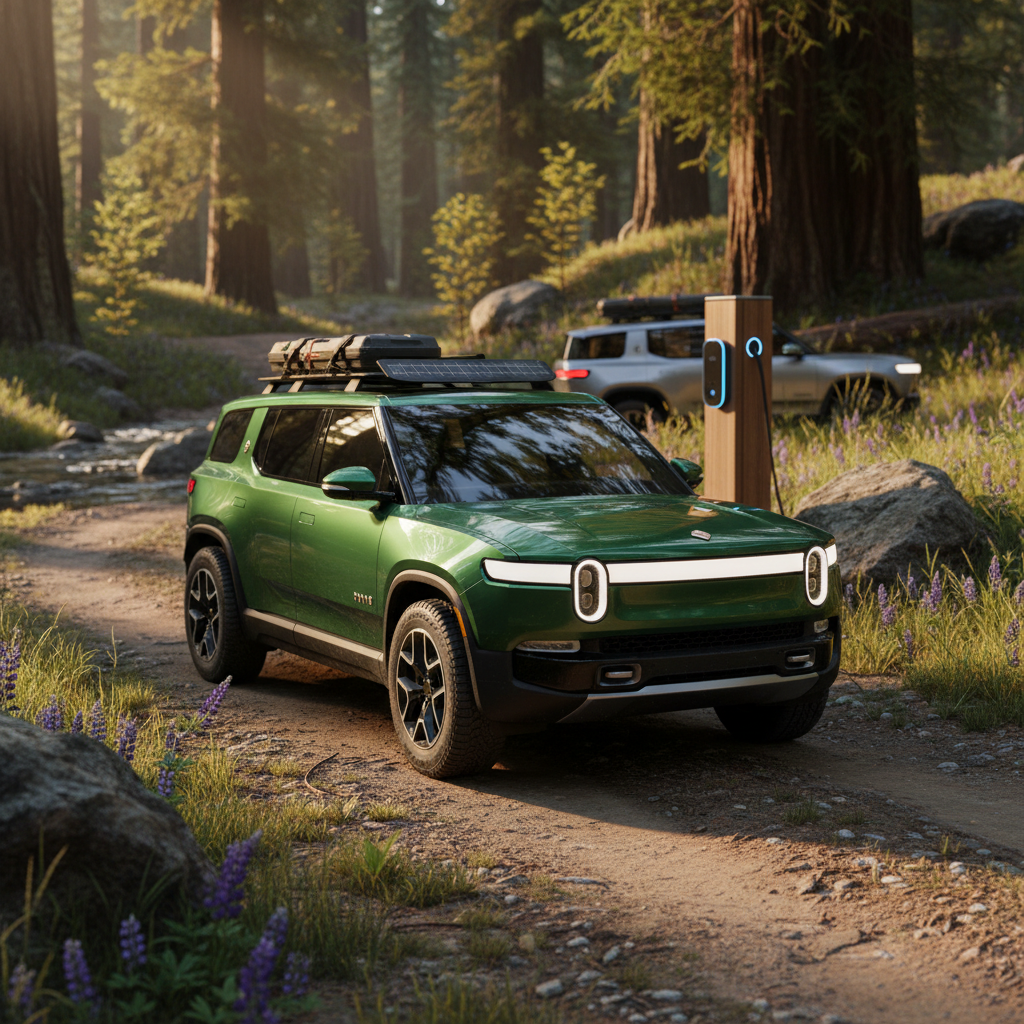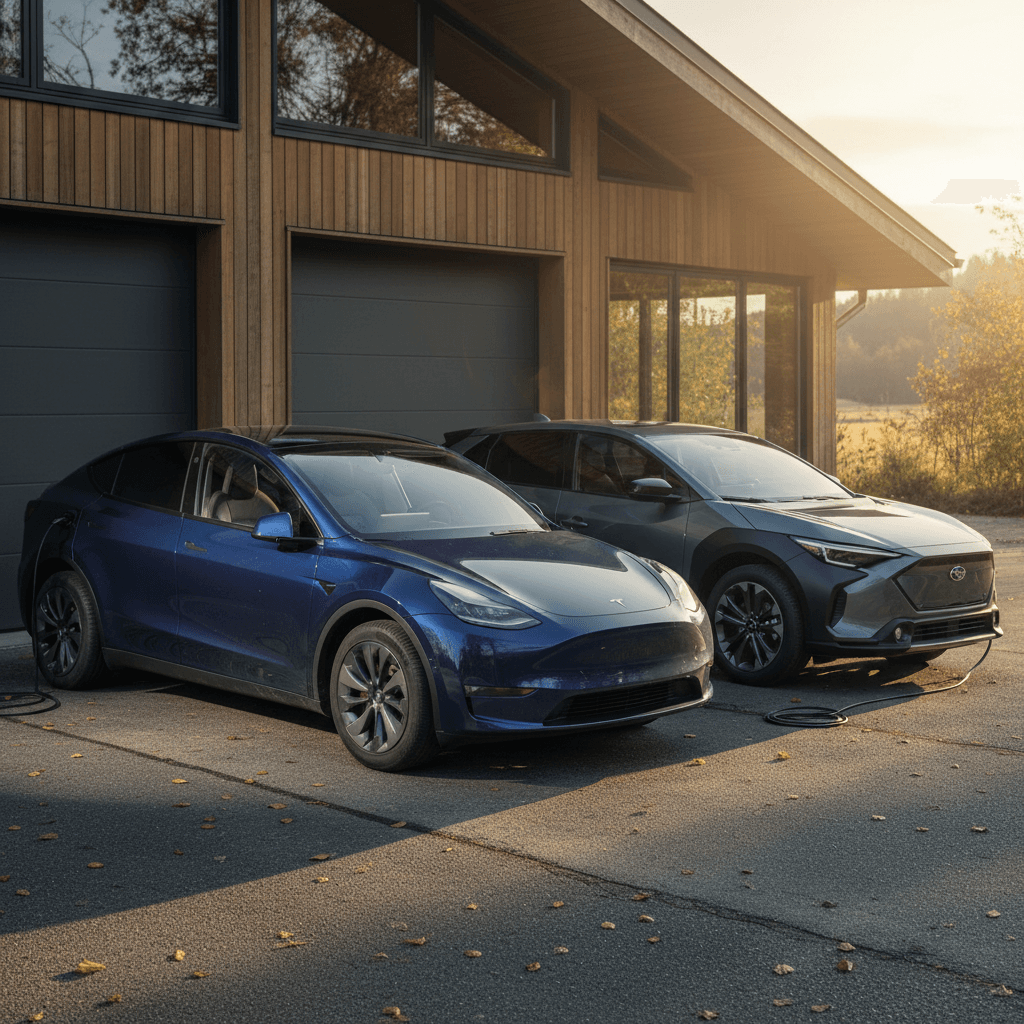
Shopping for a used electric SUV in 2026 and torn between a used Tesla Model Y and a Subaru Solterra? On paper they occupy the same slot, compact, all‑electric, all‑wheel‑drive crossovers, but in the real world they’re very different propositions. One is a range and charging monster with Silicon‑Valley manners. The other is a mountain‑goat Subaru that just happens to be electric.
Two similar shapes, two very different missions
Overview: used Model Y vs Solterra in 2026
In the U.S. used market in early 2026, you’ll typically find more used Model Ys than Solterras, and at roughly similar headline prices. But they don’t deliver the same value. The Model Y dominates on range, charging speed, and software. Its Supercharger access and long legs make it the de‑facto choice if your EV has to pull double duty as a road‑trip car. The Subaru Solterra fights back with standard dual‑motor AWD, generous ground clearance, and a more traditional SUV feel that will comfort Subaru loyalists coming out of an Outback or Forester.
Used EV SUV snapshot in 2026 (U.S.)
Quick specs and key differences
Used Tesla Model Y vs Subaru Solterra: core specs
Approximate U.S. specs for common trims you’ll see on the 2023–2024 used market. Always verify exact equipment on the specific VIN you’re considering.
| Spec | Used Tesla Model Y Long Range AWD (2022–2024) | Subaru Solterra AWD (2023–2024) |
|---|---|---|
| Battery capacity | ~75–82 kWh usable (varies by build year) | ~72–71.4 kWh usable |
| EPA range (best‑case trims) | Up to ~330 mi (19" wheels, mild temps) | Around 227 mi (U.S. AWD trims) |
| Drivetrain | Single‑ or dual‑motor; RWD or AWD depending on trim | Dual‑motor AWD standard |
| DC fast‑charge peak | Up to ~250 kW Supercharging | Roughly 100–150 kW peak depending on charger and conditions |
| 0–60 mph | ~4.4–4.8 s (Long Range), quicker for Performance | High‑7 to low‑8 seconds |
| Ground clearance | About 6.5–6.8 in | ~8.3 in (SUV‑like) |
| Towing (when equipped) | Up to 3,500 lbs with factory or approved hitch | Not rated for substantial towing in U.S. market |
| Cargo volume | Very generous; rear hatch + deep under‑floor + frunk | Comparable rear space, no usable frunk |
| Infotainment | Single 15" touchscreen, Tesla OS, OTA updates | Central + driver screens, Toyota/Subaru‑style UI |
Numbers are manufacturer or EPA figures when new; used vehicles will vary based on condition and tires.
Start with range and charging
Price, value, and depreciation
Used EV pricing has been a roller coaster. Aggressive new‑car discounts through 2024 and 2025 pushed used EV prices down, then the loss of certain federal used EV tax credits in late 2025 nudged used Tesla pricing back up slightly as demand stayed strong. In 2026, both models sit in the same broad price neighborhood, but with different value stories.
Typical 2026 used pricing ranges
Exact numbers will vary by mileage, region, trim, and condition, use these as directional brackets, not gospel.
Used Tesla Model Y
For 2022–2024 Long Range or similar trims, many buyers are seeing:
- Low‑ to mid‑$30,000s for clean, sub‑40k‑mile examples
- Older, higher‑mile cars dipping into the high‑$20,000s
- Performance models and 7‑seaters commanding a premium
Because of volume, you’ll simply have more choice in year, color, and options with the Model Y.
Used Subaru Solterra
Fewer Solterras are on the market, so data is thinner, but broadly:
- Early 2023–2024 Solterras often list in the high‑$20,000s to low‑$30,000s
- Heavier discounts are common where inventory sat due to range concerns
- Regional demand is stronger in Subaru‑heavy markets (Pacific Northwest, Mountain West, Northeast)
A Solterra can undercut a comparable Model Y on price, but you’re trading away range and charging speed for that savings.
Watch the total cost, not just the sticker
Battery, range, and real-world usage
On range, this isn’t a fair fight. A healthy used Model Y Long Range still comfortably beats a Solterra when both were new, and the gap only widens as loads, weather, and speed pile on.
Used Tesla Model Y
- Long Range AWD examples were rated up to around 330 miles EPA when new.
- In practice, many owners see 240–280 miles of comfortable highway range at 70–75 mph in mixed conditions.
- Battery packs have generally held up well; modest degradation is common but rarely catastrophic by 40–60k miles.
- Energy efficiency is a strong suit: sleek shape, efficient motors, and good thermal management help in winter.
Subaru Solterra
- U.S. AWD versions carry official range figures around 227 miles.
- Real‑world highway range can dip into the 160–190‑mile window, especially in cold climates or at 75+ mph.
- The tall stance and standard AWD are great for traction, less great for aero drag.
- Battery capacity is similar on paper, but Solterra works harder to push boxier sheetmetal through the air.
Cold‑climate buyers: this is where it hurts
Charging speeds and road‑trip viability
Charging is where the Model Y feels like a product of Tesla’s charging‑network obsession, and where Solterra still feels like a first‑effort EV from a conservative automaker.
Charging comparison: road‑trip friendliness
Assuming healthy batteries on 2023–2024 examples and access to strong DC fast chargers.
Peak DC fast‑charge power
- Model Y: Peaks around 230–250 kW on many Superchargers when conditions are ideal.
- Solterra: Updated 2024 software improved things, but you’re still looking at roughly 100–150 kW max depending on charger and temperature.
10–80% fast‑charge time (best case)
- Model Y: Often ~20–25 minutes when arriving warm at a high‑power Supercharger.
- Solterra: Subaru quotes roughly ~35 minutes from 10–80% on a capable DC fast charger.
Network experience
- Model Y: Native integration with Tesla Superchargers plus growing access to third‑party networks via adapters.
- Solterra: CCS public charging only; quality wildly depends on local infrastructure and operator reliability.
Why Supercharger access still matters in 2026
Driving experience, AWD, and ride comfort
Both of these are all‑wheel‑drive electric crossovers, but they approach the road from opposite philosophies: Tesla chases efficiency and responsiveness; Subaru chases stability and confidence on bad surfaces.
How the Model Y drives
- Quick, almost to a fault. Even non‑Performance trims feel brisk; instant torque makes passing effortless.
- Ride quality varies. On 20" or 21" wheels, some buyers complain about stiffness and noise over broken pavement.
- Handling is very composed, with a low center of gravity and precise steering, but it still feels like a tall hatch, not a sports car.
- AWD traction is excellent in rain and light snow, though ground clearance limits true off‑road antics.
How the Solterra drives
- Less dramatic, more familiar. Acceleration is adequate rather than exciting; think decent gas crossover, not sports EV.
- Ride is tuned for comfort and compliance, especially over rough or unpaved roads.
- X‑MODE and traction programming give the Solterra real Subaru character on dirt, snow, and steep driveways.
- Extra ground clearance makes it easier to live with on rutted roads, snowbanks, and camping tracks.
If your driveway is a trailhead
Interior space, tech, and ease of use
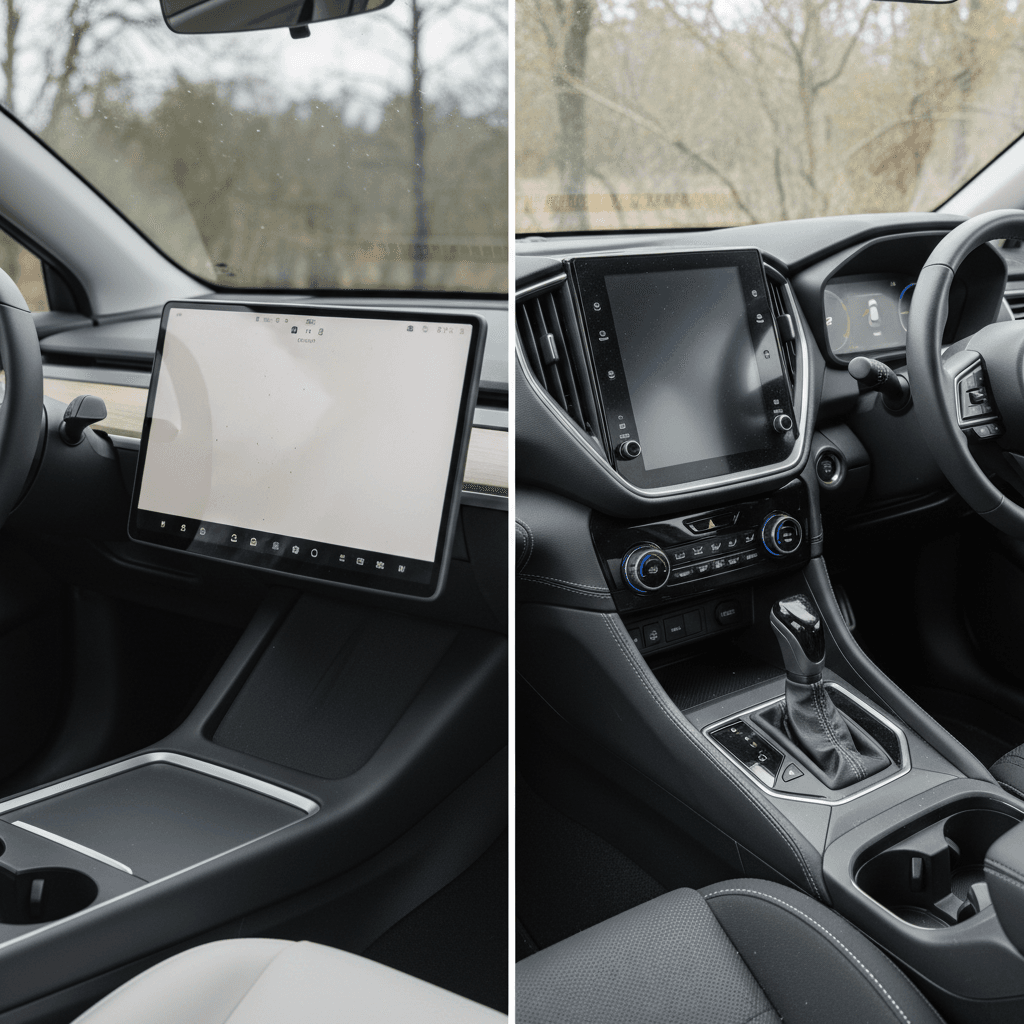
Inside, these two SUVs feel like they’re from different decades. The Model Y is minimalist to the point of provocation: one big screen, almost no buttons, and software for nearly every interaction. The Solterra is closer to a modern Subaru/Toyota: familiar controls, visible gauges, and fewer menus between you and the basics.
Cabin, cargo, and tech comparison
Both are perfectly usable family crossovers, but they prioritize different things.
Space & practicality
- Model Y: Huge cargo area with a low floor and under‑floor storage, plus a small frunk. Optional 3rd row in some trims, though best for kids.
- Solterra: Square cargo opening and good rear headroom; no frunk. Fixed AWD hardware under the hood occupies space.
Tech & user experience
- Model Y: Brilliant navigation with integrated Supercharger planning, frequent over‑the‑air updates, strong driver‑assist suite; but the lack of physical controls annoys some drivers.
- Solterra: Conventional gauges plus center screen, familiar Subaru/Toyota UI, native Android Auto and Apple CarPlay support. Software updates are less frequent and less transformative.
“The Tesla feels like a rolling smartphone; the Solterra feels like a Subaru that happens to plug in.”
Ownership costs and reliability
You’re not just choosing a vehicle, you’re choosing an ecosystem. Tesla and Subaru handle service, parts, and software in very different ways, and that shows up in long‑term ownership.
Used Model Y ownership
- Running costs: Excellent energy efficiency and wide access to lower‑cost charging can make daily driving very cheap compared to gas or less‑efficient EVs.
- Service: Tesla’s service network has grown, but wait times can still be long in some regions. Mobile service is a big plus when available.
- Reliability: Drivetrain and battery have been generally solid; most complaints focus on early build quality quirks, rattles, or trim issues rather than catastrophic failures.
- Resale: Even after price swings, demand for used Model Ys remains high, supporting resale value.
Solterra ownership
- Running costs: Less efficient aerodynamics and shorter range mean more frequent DC fast charges on trips and slightly higher kWh consumption day‑to‑day.
- Service: Subaru’s dealer network is broad and familiar, but EV‑specific expertise can vary by location.
- Reliability: As a newer model, long‑term data is still emerging. Early software updates notably improved charging behavior, underscoring how dependent it is on ongoing calibration.
- Resale: Lower demand and tight‑knit Subaru loyalist circles mean Solterra depreciation is still finding its level in 2026.
How Recharged de‑risks a used EV
Which used EV SUV should you buy?
If you strip away branding and fan loyalty, the decision matrix is actually straightforward. The used Tesla Model Y is the default answer for most U.S. buyers because of its range, charging experience, and software ecosystem. The Subaru Solterra becomes the right answer for a narrower but very real slice of drivers who prioritize terrain and familiarity over efficiency and tech.
Best fit: used Tesla Model Y vs Subaru Solterra
Choose a used Tesla Model Y if…
You regularly drive more than 150–180 miles in a day or take frequent highway trips.
You want the convenience and reliability of the Tesla Supercharger network for road‑tripping.
You value a strong software experience, navigation, app integration, and frequent OTA updates.
You’re comfortable with a minimalist interior and don’t mind learning Tesla’s interface.
You care about long‑term resale value and broad market demand.
Choose a used Subaru Solterra if…
Your daily driving is short to moderate and mostly within one metro area.
You live in snow country or on rough roads and want Subaru‑style ground clearance and traction controls.
You or your household already love Subaru and prefer a familiar dealer/service experience.
You mostly charge at home and use DC fast charging only occasionally.
You’ve found a Solterra at a meaningful discount versus similar‑year Model Ys.
Put simply: if your EV has to be the family’s everything‑car, school runs, Costco, and Thanksgiving three states away, the used Model Y is the safer, easier choice in 2026. If you need an all‑weather, all‑surface Subaru that happens to be electric, and your life fits inside its range envelope, a Solterra can be a charming, left‑field pick. Either way, go in with your eyes open about battery health, charging behavior, and how you actually use your cars, not just how they look in a spec table.
Checklist: what to inspect before you buy
Used Model Y vs Solterra: buyer’s inspection checklist
1. Confirm battery health and DC charging behavior
Ask for recent fast‑charge logs or have the vehicle fast‑charged during inspection. On both models, you want to see stable charging curves and no unexpected throttling. At Recharged, this is built into the Recharged Score battery health diagnostics.
2. Verify range against your real use case
Don’t just trust EPA numbers. Map your longest typical drive and add a winter buffer. If the Solterra barely covers it on paper, assume you’ll need extra stops when it’s cold, windy, or you’re fully loaded.
3. Inspect tires, brakes, and suspension
EVs are heavy. Uneven tire wear or tired suspension bushings show up earlier than many buyers expect, especially on heavier wheels or rough roads. Budget accordingly if the car needs rubber or alignment work.
4. Test all driver‑assist and safety systems
In a Model Y, verify adaptive cruise, Autopilot features, and cameras. In a Solterra, confirm EyeSight and parking aids behave as expected. Malfunctioning sensors or cameras can turn into expensive repairs.
5. Check charging hardware and cables
Inspect the mobile connector, wall‑charging history (if available), and any adapters. Look for bent pins, overheating discoloration, or frayed cables. Confirm that public chargers recognize the car without repeated handshake failures.
6. Review software, recalls, and warranty
Make sure the car is on current software and that open recalls have been addressed. For newer examples, confirm how much factory battery and drivetrain warranty remains, and whether it transfers to you.