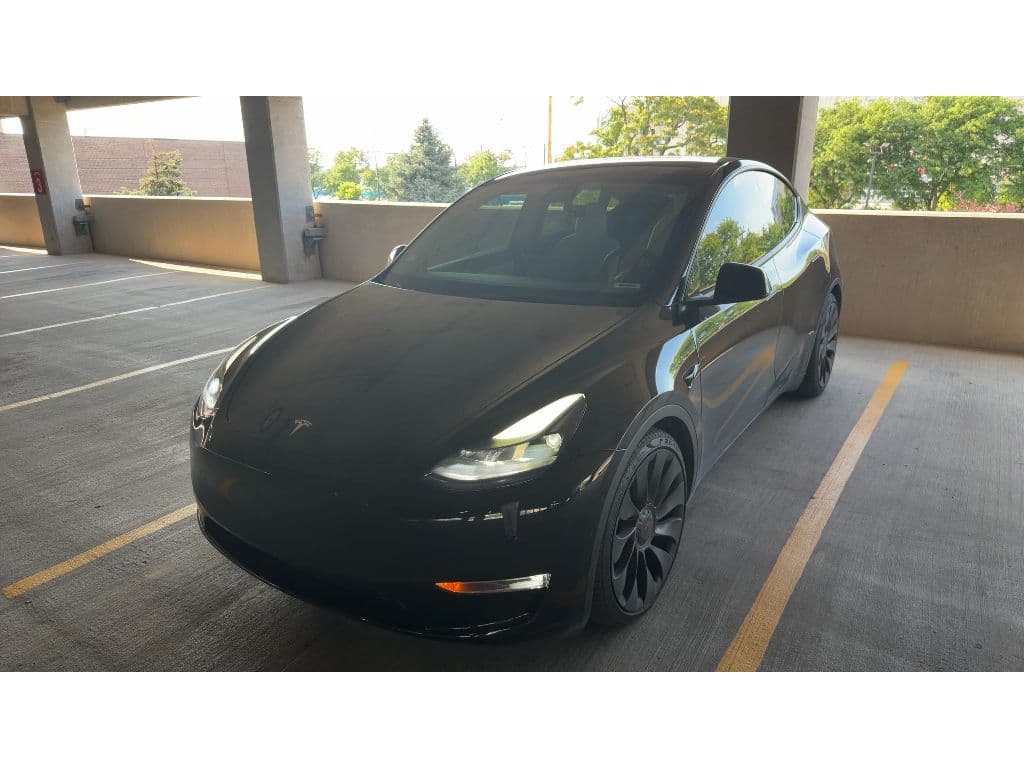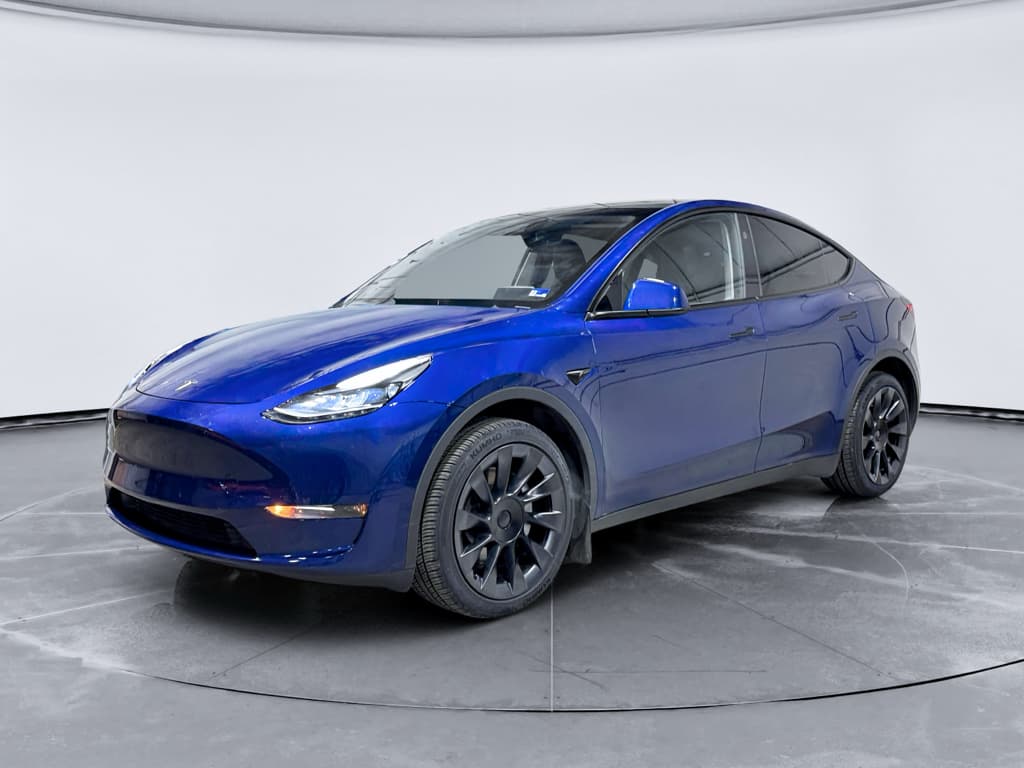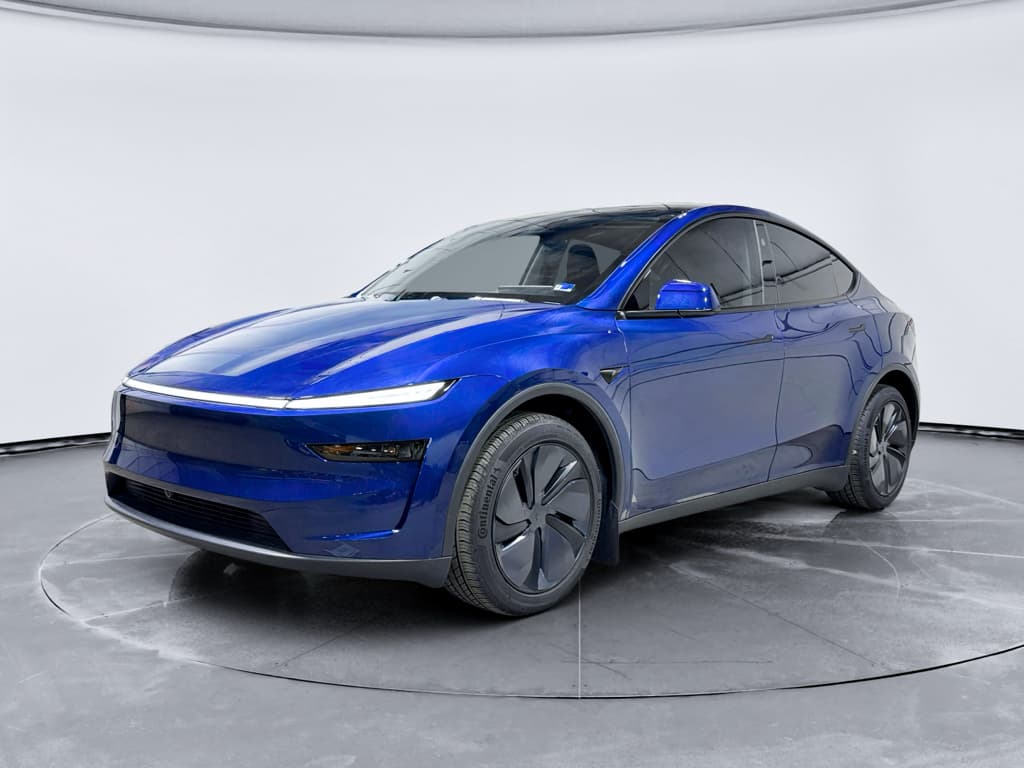
If you’re cross-shopping the Tesla Model Y vs Ford Mustang Mach-E, you’re looking at two of the most important electric SUVs on the market. They’re similar in size and mission, but they take very different approaches to performance, tech, and day-to-day livability, especially once you start looking at used examples.
Quick take
Tesla Model Y vs Mustang Mach-E: who each suits best
Which EV SUV is right for you?
High-level fit before we dive into the details
Tesla Model Y: best for
- Frequent road-trippers who want seamless access to Tesla’s Supercharger network.
- Efficiency-minded drivers who care about range per kWh and low running costs.
- Tech-forward shoppers comfortable with a minimalist interior and touch-screen controls.
- Resale-focused buyers who want one of the strongest value stories in the EV market today.
Ford Mustang Mach-E: best for
- Drivers who prefer a more conventional cabin with physical controls and a distinct gauge cluster.
- Performance enthusiasts drawn to the GT or Rally trims and the Mustang nameplate.
- Shoppers who live near strong DC fast-charging options from third-party networks.
- Value hunters who can take advantage of aggressive lease deals or used prices that undercut the Model Y in many markets.
Used vs new perspective
Pricing, trims, and incentives
Both EVs cover a wide spread from sensible commuter to very quick performance machine. Exact MSRP and lease deals move month by month, but in broad strokes the Model Y tends to sit slightly higher on price while offering stronger range, and the Mach-E often undercuts Tesla or matches it with rich incentives and dealer discounts.
Typical trims you’ll see most often (recent model years)
Representative trims and starting prices for late-2024/2025 model years in the U.S. New pricing is approximate before destination and local fees; used prices vary by mileage and condition.
| Model | Common trims | Approx. new starting price (USD) | Typical used sweet spot |
|---|---|---|---|
| Tesla Model Y | RWD, Long Range AWD, Performance | High $40Ks–mid $50Ks before incentives | 2–4 years old, Long Range AWD with 30k–60k miles |
| Ford Mustang Mach-E | Select, Premium, GT, Rally | Low $40Ks–high $50Ks before incentives | 2–4 years old, Premium or Select, often priced below comparable Model Y |
Always check current offers and used listings in your area, these figures are benchmarks, not hard quotes.
Federal tax credits and leases
On the used side, the Model Y generally commands higher prices because it’s the best-selling EV in the U.S. and demand remains strong. The Mach-E often represents more metal for the money, which can be good news if you’re the one buying, and less good news if you’re trading out early.
Range and charging: Model Y vs Mach-E in the real world
Headline range and charging figures (recent model years)
If you’re worried about long-distance road trips, range and charging speed matter more than almost anything else. On paper and in independent testing, the Tesla Model Y has the edge in both efficiency and real-world range. Long Range and newer rear‑wheel‑drive trims commonly post EPA estimates from the high 200s to mid‑300s in miles, with strong efficiency numbers per kWh. The Mustang Mach‑E, especially with the larger 91 kWh battery, can get within striking distance on total range but typically uses more energy to do it.
Charging is the second big separator. Tesla’s Supercharger network remains the gold standard in the U.S. in terms of reliability, density, and ease of use. Plug in a Model Y, and billing, authentication, and pre‑conditioning are handled seamlessly in the Tesla ecosystem. The Mach‑E can now access some Superchargers via the NACS connector rollout, but in practice many Mach‑E owners still rely heavily on third‑party networks, where station uptime and maximum charging power vary more widely.
Apartment dwellers: plan your charging first
Performance, driving feel, and ride comfort
Tesla Model Y
- Powertrains: Single‑motor rear‑wheel drive and dual‑motor all‑wheel drive, plus a Performance trim.
- Acceleration: Even non‑performance versions feel quick; Performance variants dip well into the mid‑3‑second 0–60 mph range in recent updates.
- Driving feel: Light, immediate throttle response with a focus on efficiency. Steering is accurate but not especially chatty. Ride quality ranges from firm to busy on big wheels.
Ford Mustang Mach-E
- Powertrains: Standard‑range and extended‑range batteries, rear‑ or all‑wheel drive, plus hot‑rod GT and Rally versions.
- Acceleration: Upper trims with the extended‑range battery can be seriously quick, high‑performance variants rival or slightly edge the Model Y Performance in some tests.
- Driving feel: Heavier, more planted feel with a bit more road feedback. The “Mustang” tuning leans sportier, especially in GT/Rally trims.
From behind the wheel, the Model Y feels like a very quick, very efficient family appliance, that’s meant as a compliment. It’s easy to drive, easy to park, and the power is always there when you need it. The Mach‑E injects a little more personality, with drive modes and styling that lean into the Mustang heritage.
Ride comfort comparison
Interior space, cargo, and family practicality
Both of these EVs are genuinely usable family vehicles, with two rows of adult‑friendly seating and a useful frunk. Where they diverge is in third‑row availability and interior philosophy. The Model Y offers an optional small third row in some trims, turning it into a 7‑seater in a pinch. Those rearmost seats are best for kids, but they can be a lifesaver for school runs or occasional carpool duty.
Cargo space is another quiet Tesla advantage. With the rear seats folded, the Model Y offers roughly low‑70s cubic feet of total cargo volume plus a useful front trunk. The Mach‑E’s rear cargo area is competitive, and its frunk is slightly larger than Tesla’s in some specs, but total volume behind the front seats trails the Model Y.
Cabin and practicality highlights
How they differ when you live with them every day
Tesla Model Y interior
- Clean, minimalist dash dominated by a 15‑inch landscape‑oriented touchscreen.
- No traditional instrument cluster; all driving info lives on the center screen.
- Lots of glass and an airy feel, especially with the large glass roof.
- Optional third row in some configurations; great for kids, tight for adults.
Ford Mustang Mach-E interior
- More traditional layout with a driver display plus a large portrait‑oriented center screen.
- Physical volume knob and some hard buttons ease the learning curve.
- No third‑row option; strictly a two‑row, five‑seat SUV.
- Cargo area is generous but slightly smaller overall than Model Y when seats are folded.
Car seats and kids
Tech, infotainment, and driver-assistance systems
Both SUVs are tech‑heavy, but they come from very different software philosophies. Tesla runs a tightly integrated system centered on the big central screen, with frequent over‑the‑air (OTA) updates. Ford gives you a more conventional layout with Sync‑based infotainment and the option of BlueCruise hands‑free driving on many Mach‑E trims.
Key tech differences that matter in daily use
Tesla’s software-first approach
Navigation, charging stops, trip planning, and energy usage are all tightly integrated. Over‑the‑air updates routinely add or change features, sometimes in ways you don’t expect. If you like being on the cutting edge, this can be a plus.
Ford’s more familiar interface
The Mach‑E’s portrait screen and physical volume knob give it a smartphone‑like feel without going full tablet‑on‑wheels. There’s a separate driver display ahead of you, which many drivers prefer over glancing sideways for speed and range.
Autopilot vs BlueCruise
Basic Tesla Autopilot is standard on the Model Y and handles lane‑keeping and adaptive cruise on highways. Ford’s BlueCruise offers hands‑free driving on mapped roads via a subscription after a trial period. Which is better for you depends on whether you value hands‑free capability or prefer to avoid monthly software fees.
App experience and remote features
Tesla’s app is mature and widely praised for reliability, scheduling charging, and pre‑conditioning. FordPass has improved, but some owners still report more hiccups, especially around public‑charging integration.
All-screen isn’t for everyone
Reliability, safety, and recalls
On safety, both SUVs perform well. Recent model years of the Tesla Model Y have earned 5‑star overall NHTSA ratings and strong scores from IIHS, including Top Safety Pick+ in certain years. The Mustang Mach‑E has scored well in crash testing too, with top marks in most IIHS categories and 5‑star NHTSA ratings on many trims as data has accumulated.
Reliability is more nuanced. Early build years of both vehicles saw typical first‑generation EV issues: software bugs, trim rattles, and the occasional high‑voltage component hiccup. As of 2024–2025, both have benefited from running changes and OTA updates, but you should still inspect any used example carefully and review open recalls.
Recent Mach-E door latch recall
Battery warranties are similar: typically around eight years / 100,000+ miles on high‑voltage components for both brands, varying slightly by model year and market. The health of that battery is the single biggest factor in long‑term EV satisfaction, which is where a third‑party evaluation like the Recharged Score battery health diagnostics can de‑risk a used purchase.
Used market, depreciation, and resale value
Where Model Y and Mach-E sit in the EV market
Because the Model Y sells in such large numbers and remains in high demand, it tends to hold its value better than most EVs, including the Mach‑E. That’s good if you’re thinking about resale, but it also means you’ll usually pay more up front for a similar‑age, similar‑mileage example.
The Mach‑E, by contrast, has generally seen steeper early‑life depreciation. As a used buyer, that can be a real advantage: you’re often getting a lot of performance and equipment for the money. Just make sure you’re comfortable with Ford’s software ecosystem and the charging plan you’ll rely on day to day.
Where Recharged fits in
Recharged data
Used Tesla Model-Y battery health
89%
avg remaining capacity
From Recharged battery inspections, not manufacturer estimates.
- Lowest
- 77%
- Median
- 89%
- Highest
- 100%
- Est. range
- 281 mi avg
- Cell balance pass
- 100%
- Quick charges
- 23 avg
- Slow charges
- 76 avg
Average cell imbalance: 6.4 mV
Based on vehicles Recharged tested as of Jul 23, 2026
Recharged data
Used Tesla Model-Y prices at Recharged
$32,599
median list price
Current list prices for matching inventory at Recharged.
- Lowest
- $22,998
- Average
- $33,334
- Highest
- $45,954
Average Recharged Score on these listings
4.8 / 5
Range
4.4 – 4.9
Based on available listings as of Jul 23, 2026
Ready to find your next EV?
Browse VehiclesHow to choose between the Tesla Model Y and Mustang Mach-E
Step-by-step checklist to pick the right EV SUV for you
1. Map your charging reality
Decide where 80–90% of your charging will happen. If you have or can install Level 2 at home, both vehicles work well. If you’ll rely heavily on DC fast charging, the Model Y’s integration with Superchargers and strong efficiency give it a notable edge in most regions.
2. Be honest about your tech comfort
Are you excited by a minimalist, software‑driven cockpit and willing to live mostly on a touchscreen? Then the Model Y is a natural fit. If you’d rather have a gauge cluster, a volume knob, and a more familiar layout, the Mach‑E will likely feel less stressful from day one.
3. Decide how much performance you really use
Both are quick. Performance‑oriented Mach‑E GT/Rally and Model Y Performance trims are thrilling, but they cost more and can dent efficiency and ride comfort. For most daily driving, the mainstream trims already deliver strong acceleration.
4. Compare total cost of ownership, not just MSRP
Factor in tax credits, electricity vs gasoline costs in your area, insurance, and expected resale value. A slightly more expensive Model Y might pencil out better over five to seven years thanks to efficiency and stronger resale, especially if you drive a lot.
5. Cross-shop real used examples
If you’re shopping used, pull up actual listings for both. You may find a low‑mile Mach‑E Premium for significantly less than a comparable Model Y, or a well‑optioned Model Y Long Range that’s surprisingly close in price to a base Mach‑E once you factor in incentives.
6. Get the battery checked
For any used EV, Tesla or Ford, ask for a detailed battery‑health view, not just an instrument‑panel range estimate. A Recharged Score battery diagnostic can confirm whether the pack is behaving as expected for its age and mileage before you sign anything.
If you prioritize range and charging convenience…
The Tesla Model Y is hard to beat. Its combination of strong efficiency, long range options, and tight integration with the Supercharger network makes it the default choice for long‑distance drivers and anyone who wants the simplest fast‑charging experience.
If you want character and value in the used market…
The Ford Mustang Mach‑E shines. You’ll often find well‑equipped used examples at attractive prices, and the driving experience, especially in GT or Rally trims, has more of the playful feel you’d expect from something wearing a Mustang badge.
In the end, there’s no universal winner in the Tesla Model Y vs Ford Mustang Mach‑E matchup, only the right match for how and where you drive. Start with your charging situation, your comfort with all‑screen controls, and your budget for a high‑quality used example. Then let real vehicles, not just spec sheets, make the final case. If you’d like a second set of eyes on battery health, pricing, and configuration, a used EV specialist at Recharged can walk you through both options and help you land on the SUV that fits your life, not just your spreadsheet.