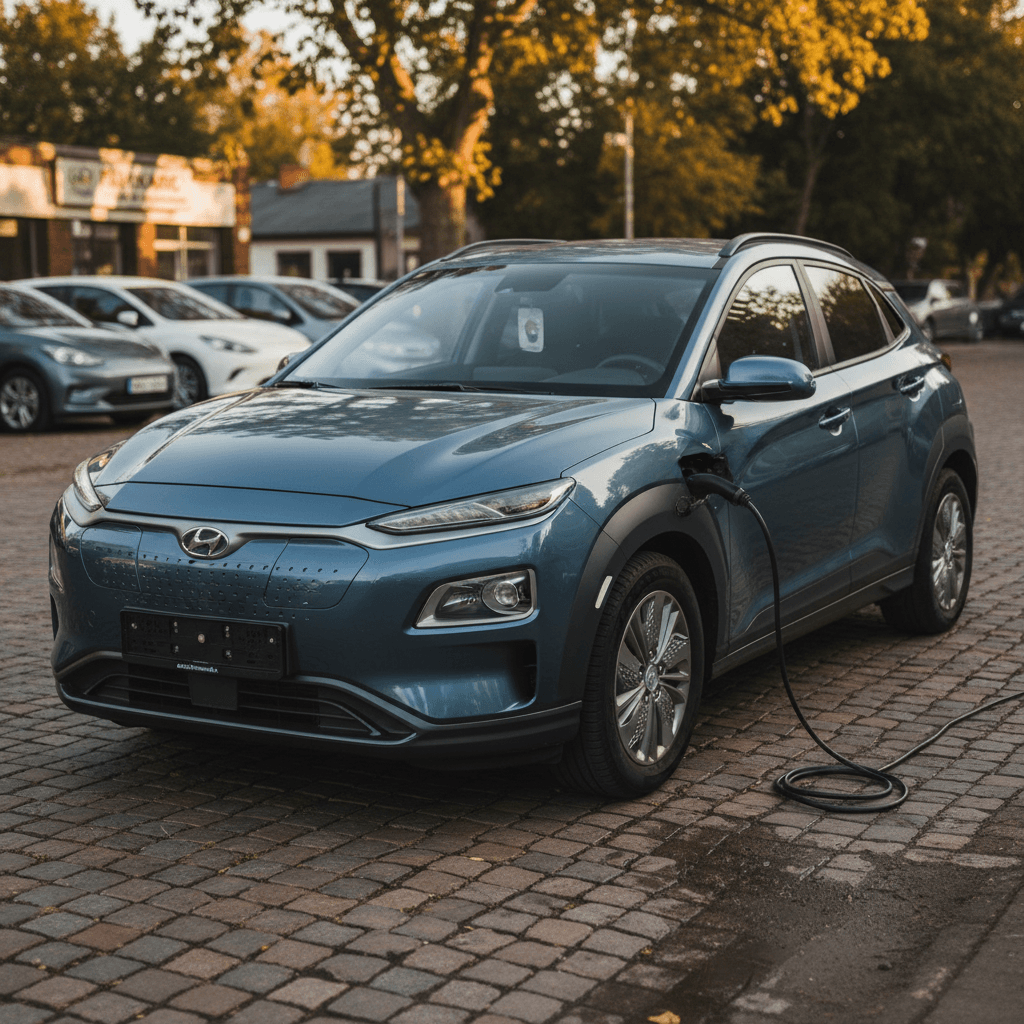
If you’re shopping for a used EV and keep seeing the 2021 Hyundai Kona Electric pop up at tempting prices, you’re not imagining things. This is one of the quiet overachievers of the EV world: compact, frugal, a little quirky, and, on the right terms, a very smart buy.
Snapshot verdict
Why the 2021 Kona Electric still matters in 2026
On paper, the 2021 Hyundai Kona Electric is yesterday’s tech: a subcompact crossover with a 64 kWh battery, front-wheel drive, and DC fast charging that tops out around 100 kW. In reality, it remains one of the most efficient EVs on sale, new or used. Recent real‑world testing has Kona Electric delivering roughly 4.3 miles per kWh, better than many newer, more expensive EVs. That means you squeeze serious range out of a relatively modest battery pack, which keeps weight and running costs down.
Because it’s a 2021, it also sits in a sweet spot for used buyers: new enough to feel modern, old enough to have taken a big depreciation hit. That combination, high efficiency plus softened pricing, is exactly why you’re seeing so many 2021 Kona Electrics on your radar.
2021 Hyundai Kona Electric fast facts
Key specs: 2021 Hyundai Kona Electric at a glance
2021 Hyundai Kona Electric specifications
The 2021 Kona Electric was sold mainly in select U.S. states, in three trims that all share the same battery and motor.
| Item | Spec |
|---|---|
| Battery | 64 kWh lithium-ion polymer |
| Motor | Front-mounted permanent-magnet, 201 hp, 291 lb-ft |
| Drivetrain | Front-wheel drive only |
| EPA range | 258 miles |
| On-board AC charger | 7.2 kW Level 2 |
| Max DC fast charge | Up to 100 kW (CCS) |
| 0–60 mph | ~6.4 seconds (manufacturer/independent tests) |
| Cargo volume | 19.2 cu ft (rear seats up) |
| Towing | Not rated for towing in the U.S. |
Key hardware is identical across SEL, Limited and Ultimate; differences are mostly features.
Trim cheat sheet
Battery, range & real-world efficiency
The heart of the 2021 Kona Electric is its 64 kWh battery pack, good for an EPA‑rated 258 miles of range. In normal mixed driving, suburbs, some highway, reasonable climate control, you can expect something in the 230–260 mile window, depending on weather and your right foot. The Kona’s party trick is its thrift: real‑world testers continue to see around 4 mi/kWh or better, which means you can treat that 64 kWh pack like a much larger one.
- Warm weather city driving: 260+ miles on a charge is realistic if you’re gentle.
- Cold climates: expect a noticeable winter hit; think 180–210 miles if it’s consistently below freezing and you use cabin heat.
- Highway at 70–75 mph: efficiency drops; planning around 200–220 miles between stops is more sane.
Cold-weather behavior
Charging: home setup and road-trip reality
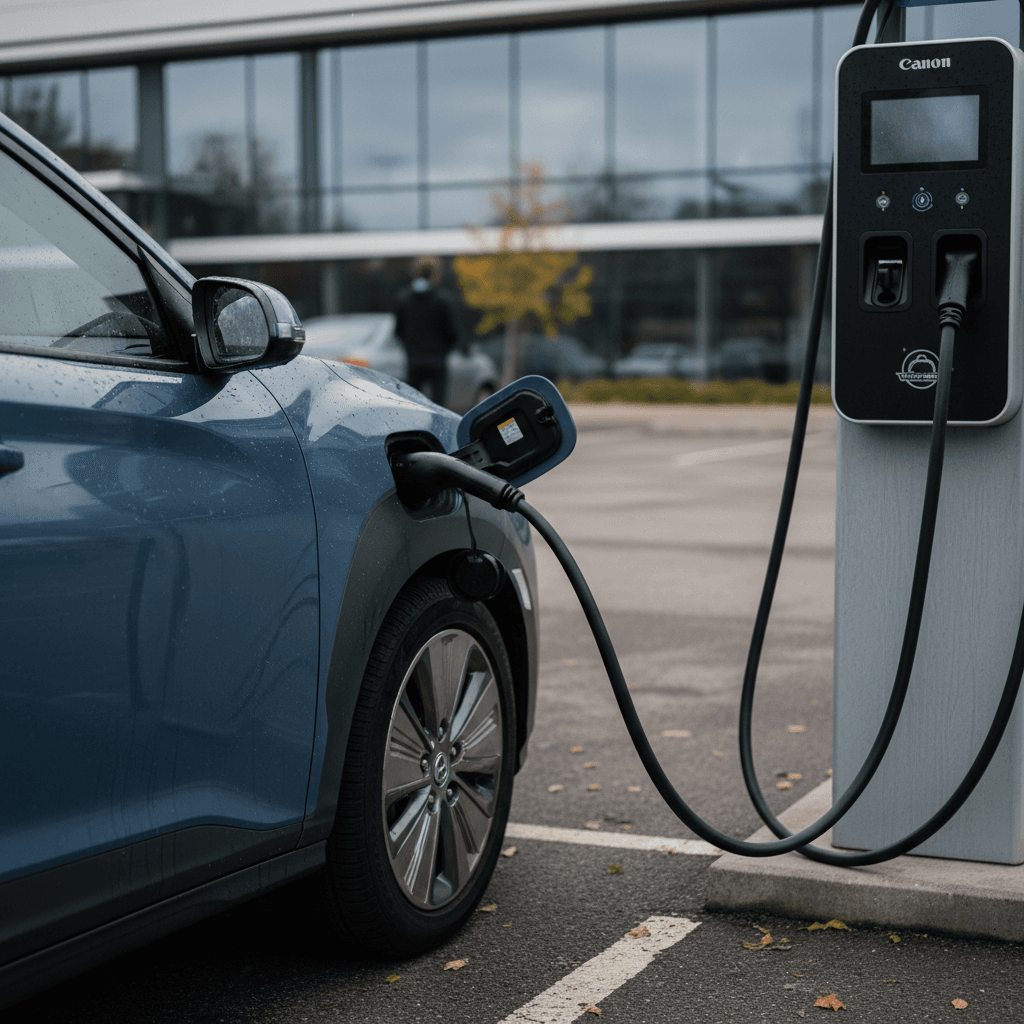
At home, the 2021 Kona Electric has a 7.2 kW onboard charger. On a typical 40‑amp Level 2 station (32 A delivered), you’ll add roughly 25–30 miles of range per hour and go from low state of charge to near‑full in about 8–9 hours. In practice, you plug in at night and wake up topped off; for daily commuting, it’s effortless.
How the 2021 Kona Electric charges in the real world
What to expect at home, in town, and on the highway
Level 1 (120V)
Best for: Very light use or as a backup.
- 2–4 miles of range per hour
- Think overnight top‑ups, not full charges
- Fine if you drive less than ~30 miles/day
Level 2 (240V)
Best for: Primary home charging.
- ~7.2 kW onboard charger
- 10–80% in roughly 6–7 hours
- Ideal for overnight charging in a driveway or garage
DC fast charging
Best for: Road trips and quick top‑ups.
- Up to ~100 kW on CCS
- 10–80% in roughly 35–50 minutes
- Charging slows notably above 80% to protect the battery
Road-trip reality check
On public networks, the 2021 Kona Electric uses the CCS combo standard, so you’re relying on networks like Electrify America, EVgo, and regional providers. With Tesla’s Supercharger network gradually opening to non‑Tesla EVs via adapters and NACS stalls, future flexibility improves, but today, assume you’ll live mainly in the CCS world.
Home charging + used EV = power move
Driving experience: performance and comfort
On the road, the 2021 Kona Electric feels like a small car that discovered torque. The single front motor makes 201 hp and 291 lb‑ft, which in a subcompact crossover is enough to make traffic lights feel like job interviews for your self‑control. Around town it’s punchy and eager; 0–40 mph is where this car lives its best life.
Acceleration & handling
- Quick off the line: Around 6–7 seconds 0–60 mph, depending on testing, faster than many gas crossovers.
- Light, tidy handling: Battery mass is low and centered, so it feels planted but not sporty; think "confident commuter" more than canyon‑carver.
- Front‑drive only: You can spin the front tires on wet pavement if you floor it out of a corner. Traction control steps in quickly.
Ride & refinement
- Firm ride: Short wheelbase and curb weight mean it can feel busy over broken pavement.
- Quiet drivetrain: Nearly silent motor and good wind isolation at urban speeds.
- Highway manners: Stable and predictable, but crosswinds remind you this is a tall, narrow vehicle.
City car done right
Interior, tech & practicality
Inside, the 2021 Kona Electric feels more like a well‑equipped compact hatchback than a true SUV. Materials are solid if not luxurious, and in Limited and Ultimate trims you get leather, heated seats, and a generally upscale vibe for the price bracket. The dashboard layout is clean and familiar Hyundai: physical buttons for climate, a central touchscreen for navigation and media, and clear digital instrumentation for speed and state of charge.
Interior strengths and compromises
Where the 2021 Kona Electric shines, and where it doesn’t
Strengths
- Feature-rich for the money: Even SEL has modern safety tech, Apple CarPlay/Android Auto, and useful driver aids.
- Easy-to-use controls: Real buttons and knobs for climate and audio, great when you’re wearing gloves.
- Good seating position: You sit slightly high with excellent visibility, ideal for urban driving.
Weak points
- Back seat space: Rear legroom is tight for adults; treat it as a 2+2 for long trips.
- Cargo volume: At about 19 cubic feet, the hatch is fine for groceries, less ideal for big road‑trip gear.
- No frunk: Unlike some EVs, there’s no front trunk to expand storage.
Family-hauler caveat
Reliability, known issues & battery health
Hyundai’s early battery‑electric efforts, including the Kona Electric, have generally held up well mechanically. Fewer moving parts than a gas Kona means no oil changes, no spark plugs, no transmission fluid services. But there are still a few important things to know when looking at a 2021 specifically.
- Battery recalls: Early Kona Electrics in some markets were subject to battery recall campaigns for potential fire risk. Many 2021 U.S. cars benefited from updated packs or software from the factory, but it’s critical to check recall completion on any used example.
- DC fast-charging performance: Owners occasionally report lower‑than‑advertised charging speeds on some public stations, often tied to station issues, cold packs, or high state of charge. Expect real‑world peaks lower than the theoretical 100 kW.
- 12V battery and software gremlins: Like many EVs, the Kona can be sensitive to a weak 12V battery, which can trigger odd warning lights or glitches. A fresh 12V battery every few years is cheap insurance.
- Brake and tire wear: The car’s weight and instant torque can be hard on tires if driven aggressively, but strong regen braking helps brakes last a long time.
Non‑negotiable: check recall and battery status
Used pricing, depreciation & overall value
Because EV values have been on a roller coaster, it’s worth zooming in on what a 2021 Kona Electric tends to cost today. When new, these cars lived in the high‑$30Ks to mid‑$40Ks depending on trim. In today’s used market, examples typically trade well under half of their original MSRP, often clustering in the mid‑teens to around $20,000 depending on mileage, condition, trim, and local incentives.
Value snapshot for a 2021 Kona Electric (approximate)
The headline: the Kona Electric is no longer a novelty purchase priced for early adopters. It’s a rational appliance now, which is exactly what you want in a used EV. But because values vary wildly by state incentives and local demand, the real metric you should care about is cost per mile of usable range: how many dollars you’re paying for each mile of real‑world range the car still delivers.
How Recharged helps you price a used Kona Electric
Who the 2021 Kona Electric is (and isn’t) for
Great fit if you:
- Do most of your driving in the city or suburbs and want excellent efficiency.
- Have access to home Level 2 charging or reliable workplace charging.
- Don’t need huge rear‑seat space, think couples, singles, or small kids.
- Want a car that feels familiar, with simple controls and a normal, upright seating position.
- Care more about value and low running costs than cutting‑edge styling.
Probably not for you if you:
- Regularly road‑trip long distances and want ultra‑fast 150–250 kW DC charging.
- Need generous rear legroom or a truly big cargo area.
- Live in a region with very sparse CCS infrastructure and no home charging.
- Are chasing the latest in‑car tech, giant screens, or hands‑free driving features.
Shopping checklist for a used 2021 Kona Electric
Essential checks before you buy a 2021 Kona Electric
1. Verify recalls and software updates
Use Hyundai’s VIN lookup or ask the seller for documentation showing all recalls, especially any battery or BMS campaigns, are complete. Updated software can also improve charging behavior and range estimates.
2. Get a real battery health report
Don’t rely solely on the in‑car state‑of‑charge or range guess-o‑meter. A professional battery diagnostic, like the <strong>Recharged Score battery health report</strong>, reveals usable capacity and cell balance so you know how much range you’re actually buying.
3. Inspect tires, brakes and suspension
Heavy EVs eat tires faster than comparable gas cars, especially if driven hard. Uneven tire wear or vibrations over bumps can signal neglected alignment or suspension issues, budget accordingly.
4. Test DC fast charging
If possible, plug the car into a nearby CCS fast charger during your test drive. Confirm it charges as expected, communicates properly with the station, and doesn’t throw errors as it ramps up power.
5. Check charging equipment and settings
Make sure the included charge cable works and the car’s charging timers, max current settings, and charge‑limit options are accessible and understandable. A reset or misconfigured schedule can masquerade as a charging "problem."
6. Evaluate interior space for your life
Bring the family, car seats, strollers, or whatever you regularly haul. The Kona’s back seat and cargo hold are on the small side, better to find that out in a parking lot than on your first Ikea run.
Let Recharged do the homework
Ready to find your next EV?
Browse Vehicles2021 Hyundai Kona Electric FAQ
Frequently asked questions about the 2021 Kona Electric
Final thoughts: should you buy a 2021 Kona Electric?
Four model years on, the 2021 Hyundai Kona Electric has settled into its true role: not a futuristic experiment, but a highly efficient, slightly modest, deeply competent electric appliance. It won’t win beauty contests or tech‑showroom glory, and it’s not the right answer if you demand huge space or blazing‑fast charging. But if you want an affordable, easy‑to‑live‑with EV that sips electrons and shrugs off daily commuting, it’s still one of the standouts in the used market.
The key is to buy with your eyes open: verify battery health, confirm recall completion, test charging behavior, and make sure the cabin really fits your life. Do that, and a well‑bought 2021 Kona Electric can deliver years of quiet, low‑cost miles. If you’d rather not navigate that alone, Recharged can help you compare options side by side, understand true battery condition with a Recharged Score report, and handle everything from trade‑in to nationwide delivery, so you can skip the guesswork and just enjoy the drive.