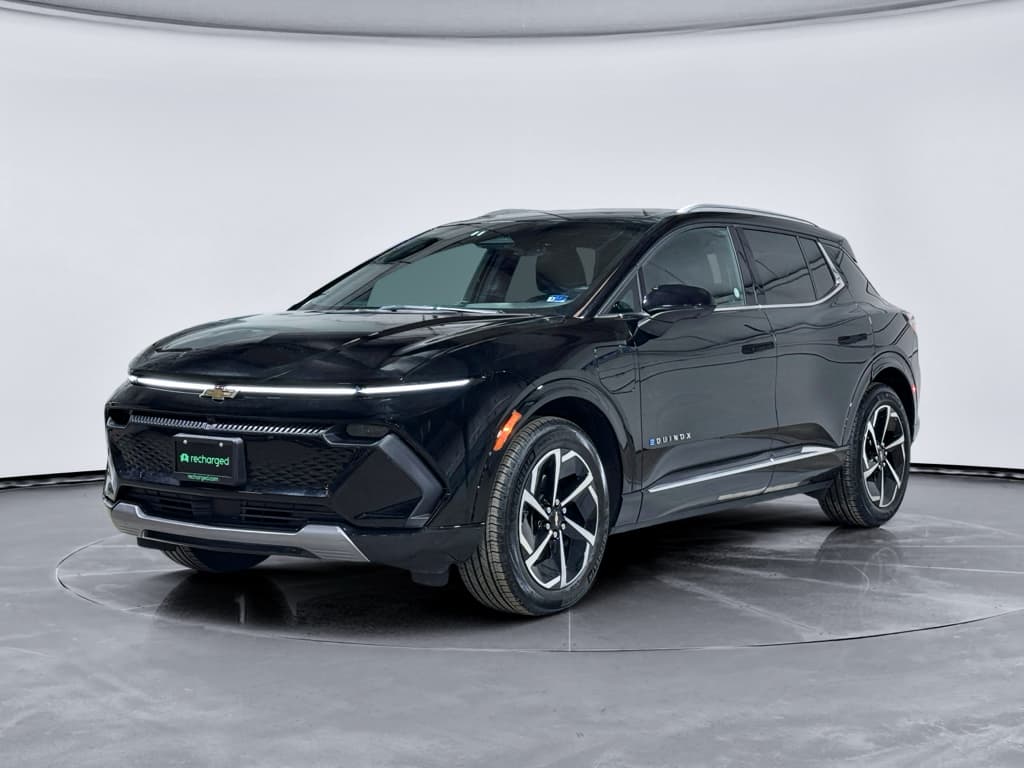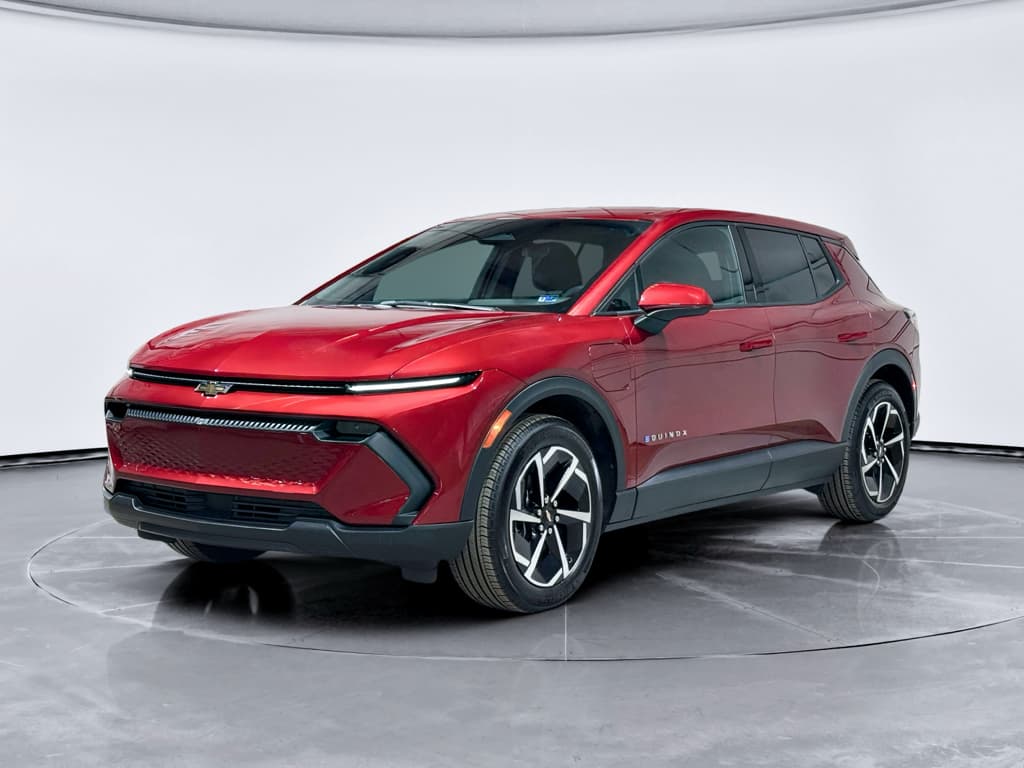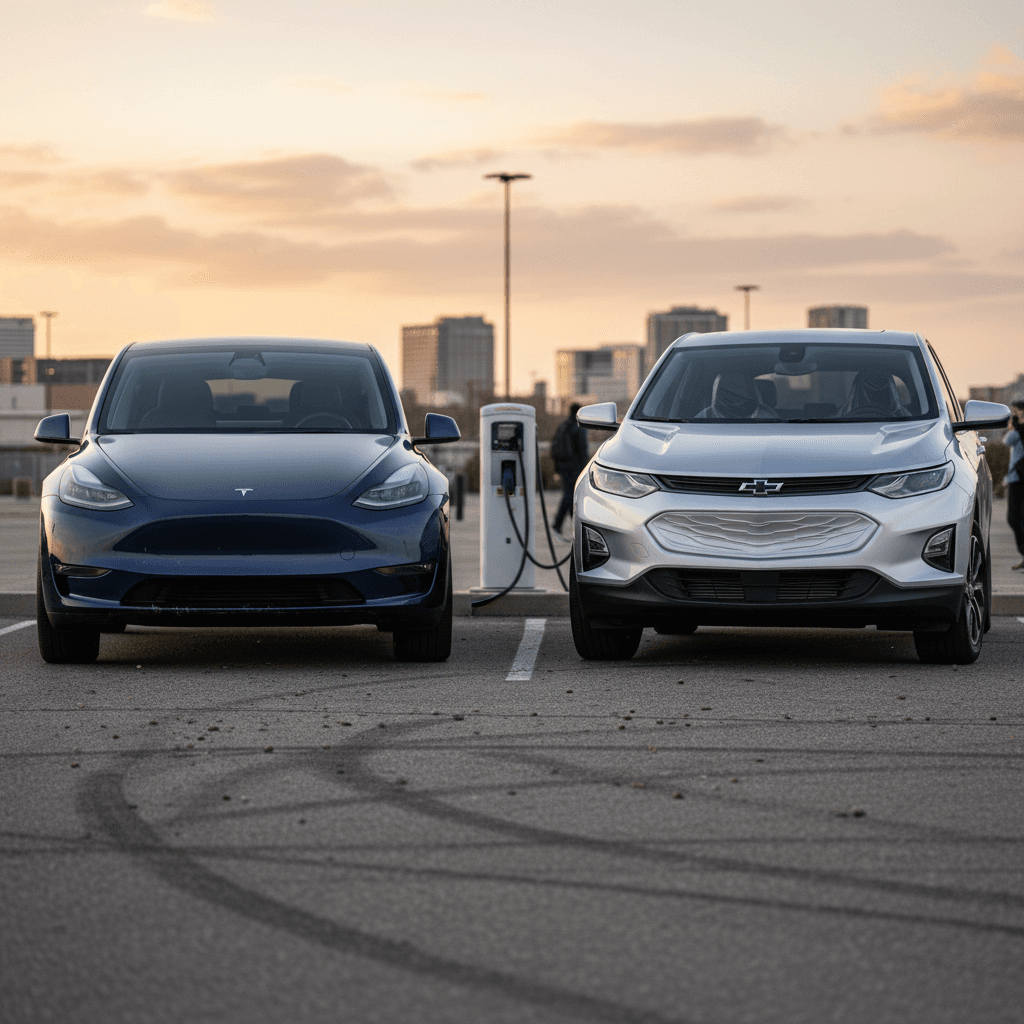
You’re cross‑shopping the **used Tesla Model Y**, America’s EV default setting, against Chevrolet’s shiny new **Equinox EV** in 2026. On paper they’re the same idea: compact electric crossover, around 300 miles of range, five real seats. In practice, they come from different planets: Silicon Valley software appliance versus Midwestern family wagon with a plug. This guide walks through price, range, charging, comfort, tech, and long‑term costs so you can decide which one actually fits your life.
Context: why this match‑up matters in 2026
Who this 2026 comparison is really for
- You’re in the U.S., shopping an **SUV‑style EV** as your primary family car.
- You’re weighing a **2–4‑year‑old Tesla Model Y** (2022–2024 especially) against a **brand‑new Chevrolet Equinox EV**.
- You care about **range and road‑trip charging**, but you’re also watching your budget.
- You’re trying to guess how these choices will age over the next **5–8 years**, battery health, software support, resale value.
We’ll focus on realistic used‑market pricing for 2022–2024 Model Y Long Range and Performance examples versus 2025–2026 Equinox EV trims (LT and RS) you’re likely to find on dealer lots now. When we talk numbers, assume a typical U.S. buyer in a mainstream market, not a unicorn deal, not California‑only pricing.
Quick specs: used Model Y vs Equinox EV
Core specs snapshot (typical 2022–2024 Model Y vs 2026 Equinox EV)
Representative trims most shoppers cross‑shop in 2026. Exact numbers vary by wheel size and options, but this gives you the lay of the land.
| Used Tesla Model Y Long Range (AWD) | Chevrolet Equinox EV LT (FWD) | Chevrolet Equinox EV eAWD (LT/RS) | |
|---|---|---|---|
| EPA range (mi) | ~300 (mid‑cycle estimate) | up to 319 | around 307 |
| Battery (kWh, gross) | ~75 | ~85 | ~85 |
| 0–60 mph | ~4.5–4.8 sec (AWD) | ~6–7 sec (est.) | quicker but still comfort‑tuned |
| Drive layout | Dual‑motor AWD | Single‑motor FWD | Dual‑motor AWD |
| Max DC fast‑charge | ~250 kW peak (Supercharger) | up to ~150 kW | up to ~150 kW |
| Seating | 5 (some used 7‑seat builds) | 5 | 5 |
| Towing | 2,000 lbs (with tow package) | Not primary focus | TBD / modest light‑duty |
| Charge-port standard | NACS (Tesla) | NACS on 2026+ US builds | NACS on 2026+ US builds |
Specs are approximate U.S. figures for commonly cross‑shopped trims.
Specs don’t tell the whole story
Pricing and value: 2026 market reality
Typical 2026 U.S. pricing snapshot
In 2026, used **2022–2024 Tesla Model Y Long Range** examples commonly land in the **low‑to‑mid $30,000s** for average mileage and clean histories, with Performance models and very low‑mile units stretching higher. A similarly equipped **new 2026 Equinox EV LT or RS** will usually pencil out closer to the **high $30,000s into the $40,000s** once you add destination, dealer fees, and a few comfort options.
Why the used Model Y feels like a bargain now
- Steep early depreciation means someone else already paid the tech‑tax for you.
- Plenty of supply, Model Y has been the volume EV, which holds **used prices down**.
- You can often step into **more range and performance** for the same monthly payment as a lesser new car.
Where the Equinox EV fights back
- Full **new‑car warranty** and fresh battery coverage out to 8 years / 100k+ miles.
- Potential eligibility for **federal or state incentives** that many used Teslas don’t qualify for anymore.
- No guesswork about how a prior owner treated the battery or brakes.
Watch the monthly, not just MSRP
Range, battery and efficiency
Both vehicles live around the magic **300‑mile EPA range** mark in their popular trims. But they get there in different ways, and that matters for long‑term ownership.
Range & battery: how they really compare day to day
Not all 300‑mile EVs feel the same once you load them with kids, dogs, and highway speeds.
Used Tesla Model Y
- Typical usable battery: ~75 kWh in Long Range variants.
- Real‑world highway range: often 240–280 miles depending on wheels and climate.
- Excellent efficiency; you tend to use **fewer kWh per mile** than in the Chevy.
Chevrolet Equinox EV FWD
- Ultium pack around 85 kWh with EPA up to ~319 miles on FWD trims.
- Real‑world: plan on **250–290 miles** at U.S. freeway speeds.
- Heavier and less slippery than the Tesla, but tuned for comfort, not hyper‑miling.
Cold‑weather & degradation
- Both will lose range in winter; Tesla’s heat pump and preconditioning are mature.
- Ultium chemistry should age gracefully, but long‑term field data is newer.
- A **Recharged Score battery‑health check** can de‑risk a used Model Y purchase dramatically.
Battery health: advantage, data
Charging experience: Superchargers vs Ultium networks
Here’s where philosophy really diverges. Tesla built an EV and an ecosystem. GM built an EV and is renting an ecosystem from everybody else.
Tesla Model Y: still the easiest road‑trip EV
- Native access to the **Supercharger network** with NACS. Plug in, walk away.
- Excellent route planning that bakes in charging stops and preconditions the pack.
- Peak DC rate around 250 kW, but the real magic is **consistency and uptime**.
- Increasing access to third‑party CCS/NACS networks as well, if you want backup options.
Equinox EV: more choices, more homework
- Built on GM’s Ultium platform with DC fast‑charging up to around 150 kW.
- Uses the **Ultium Charge 360** ecosystem to tie together networks like EVgo, Electrify America, and others.
- Public charging is improving, but you’ll juggle **multiple apps, pricing schemes, and reliability levels**.
- Home Level 2 charging is straightforward on both cars, plan on a 240V circuit and a 32–48A charger.
Think about your real charging life
Interior space, comfort and practicality
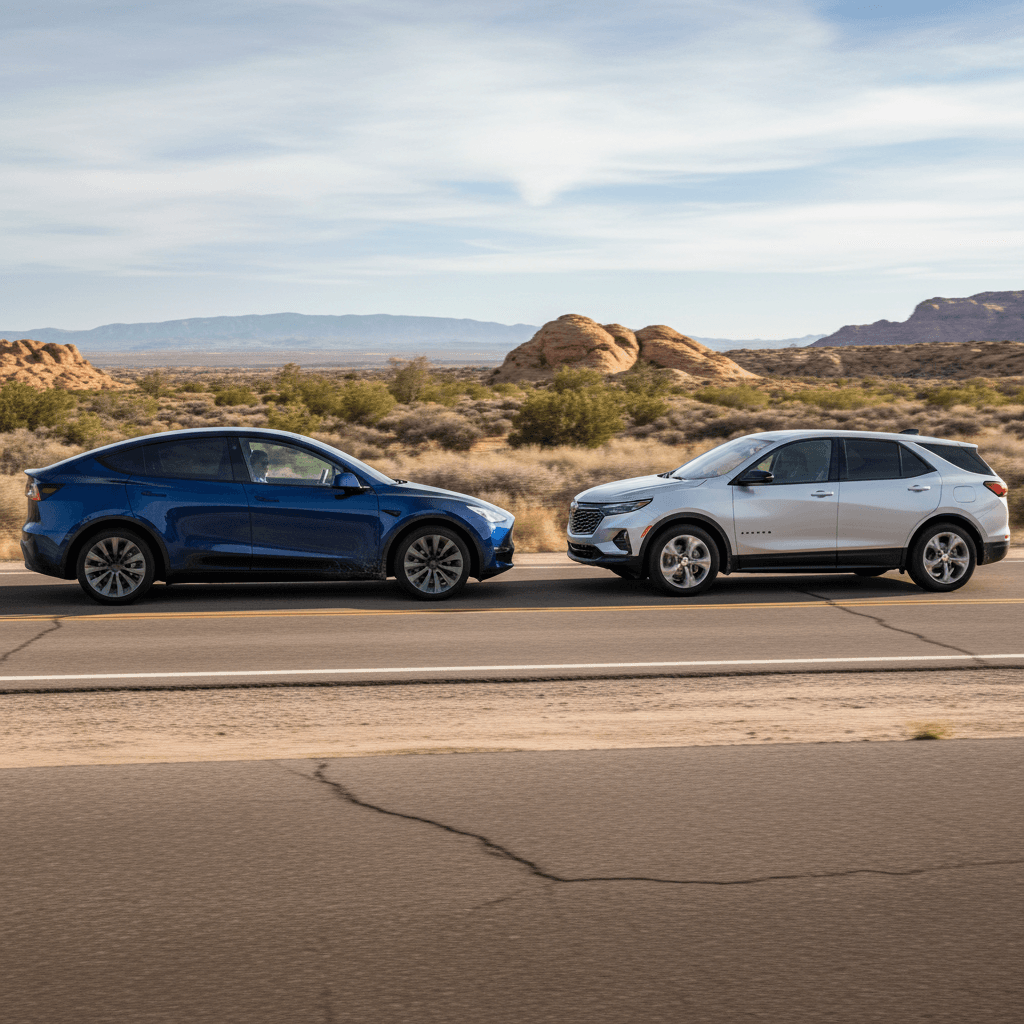
Living with them: minimalism vs familiar comfort
Both are roomy; they just express it differently.
Space & seating
- Both seat **five adults** comfortably; some used Model Ys have an optional small third row.
- Model Y’s **hatch opening and deep well** make it a cargo monster.
- Equinox EV feels more like a traditional compact SUV inside, friendly for first‑time EV families.
Comfort & ride
- Model Y: firm, almost sporty, with more road noise. Great for drivers, less so for motion‑sick kids.
- Equinox EV: softer, quieter, clearly tuned for **school‑run duty** and long, relaxed drives.
- If your commute is pothole country, the Chevy will likely feel kinder to your spine.
Ergonomics & usability
- Model Y’s **single screen** and lack of physical buttons can polarize. Elegant or infuriating, depending on you.
- Equinox EV gives you **real buttons for core functions** plus modern screens, a gentle learning curve from a gas Equinox.
- Car seats and grandparents tend to prefer the Chevy layout.
Tech, safety and driving experience
Both are loaded with active safety features and driver‑assistance tech. The difference is in polish and philosophy: Tesla treats your car like an iPhone on wheels, Chevy treats it like a car that happens to have a big screen.
Used Tesla Model Y
- Huge central touchscreen running **Tesla’s in‑house OS** with frequent over‑the‑air updates.
- Excellent navigation and range prediction, plus robust **app‑based control** (preconditioning, remote start, location, more).
- Autopilot standard, with some used cars carrying paid‑for enhanced Autopilot or FSD features.
- Safety crash scores are strong, and Tesla’s active‑safety tuning is aggressive but effective.
Chevrolet Equinox EV
- Modern digital cluster plus center screen running GM’s infotainment, now Google‑built‑in on many trims.
- Comfortable suite of safety tech: lane‑keeping, adaptive cruise on many trims, blind‑spot monitoring, etc.
- GM’s **Super Cruise** appears on some Ultium SUVs; exact availability by Equinox EV trim will matter if hands‑free driving is a must‑have.
- Software update cadence is more traditional; you’re not living in a beta program.
Used‑car tech gotcha
Ownership costs, depreciation and warranty
Operating costs for both SUVs will be far below a comparable gas crossover, electricity versus gasoline, fewer moving parts, no oil changes. The big differences show up in **depreciation curves and warranty coverage**.
Key ownership questions to ask yourself
1. How long do you plan to keep it?
If you’re in it for 3–4 years, a used Model Y that’s already taken its biggest depreciation hit can be very cost‑effective. If you’re thinking 8–10 years, the Equinox EV’s full new‑car warranty and younger battery are compelling.
2. How comfortable are you with repair networks?
Tesla’s service footprint is improving but still thinner than Chevy’s dealer network in some regions. On the flip side, Tesla parts and expertise are increasingly common at independent EV shops.
3. What’s your tolerance for tech aging?
A 2022 Model Y will still feel modern in 2026, but Tesla’s relentless software cadence can make older hardware feel left behind faster. The Equinox EV may age more gracefully because it’s less software‑centric to begin with.
4. Are you banking on tax credits?
A new Equinox EV may qualify for federal or state EV incentives in 2026 that many used Teslas can’t access. That can swing a decision all by itself.
Warranty snapshot
Which EV SUV fits you? Buyer scenarios
Real‑world buyer types and the better fit
Performance‑curious commuter
You drive 40–60 miles a day but love a car that feels quick and responsive.
A used Model Y Long Range or Performance will feel **noticeably faster** than an Equinox EV.
Supercharger access makes last‑minute road‑trip decisions painless.
Verdict: <strong>Used Tesla Model Y</strong> is the more satisfying daily toy that also happens to be a family hauler.
Young family, first EV
Car seats, strollers, grandparents, and school runs define your life.
You want **familiar controls**, softer ride, and a dealer down the street.
Lower‑stress new‑car warranty matters more than 0–60 bragging rights.
Verdict: <strong>Chevrolet Equinox EV</strong> feels like a natural upgrade from your gas crossover.
Long‑distance road‑tripper
You do multi‑state drives several times a year.
Charging reliability and route planning trump interior décor.
Tesla’s network and software are still the **road‑trip reference standard**.
Verdict: <strong>Used Model Y</strong> wins unless you’re deeply tied into GM’s Ultium ecosystem already.
Budget‑sensitive but warranty‑focused
You’re stretching to get into an EV at all and need predictable costs.
A discounted or incentivized Equinox EV lease can undercut a used‑car loan payment.
You value a clean restart on maintenance history more than bleeding‑edge tech.
Verdict: Lean **Equinox EV**, especially if your state stacks EV incentives.
How Recharged helps with used Model Y shopping
If this comparison nudges you toward the **used Tesla Model Y**, the next challenge is sorting the heroes from the horror stories, battery health, hard‑driven rideshares, sketchy accident repairs. That’s exactly what **Recharged** is built to handle.
Shopping a used Model Y with more signal, less noise
What you get with every Model Y on Recharged.
Recharged Score battery report
EV‑specialist guidance
Trade‑in, financing, and delivery
You can still cross‑shop in real time
FAQ: Used Tesla Model Y vs Chevy Equinox EV
Frequently asked questions
Bottom line: 2026 verdict
If you want the **sharpest driving experience, the best road‑trip charging, and maximum efficiency per dollar**, a well‑vetted **used Tesla Model Y** remains the benchmark electric family SUV in 2026. It’s quicker, smarter on long trips, and, thanks to early depreciation, often astonishing value on the used market. But if you prize **ride comfort, a familiar interior, and the peace of mind of a brand‑new warranty** above all, the **Chevrolet Equinox EV** is a deeply rational choice that asks less of your family’s learning curve.
The right answer isn’t which spec sheet wins. It’s which of these two electric futures you want living in your driveway. Run the numbers, be honest about how you actually drive, and if the scale tips toward a used Model Y, let Recharged handle the hard part, battery diagnostics, pricing sanity checks, financing, trade‑in, and delivery, so your first (or next) EV feels like an upgrade, not a science experiment.