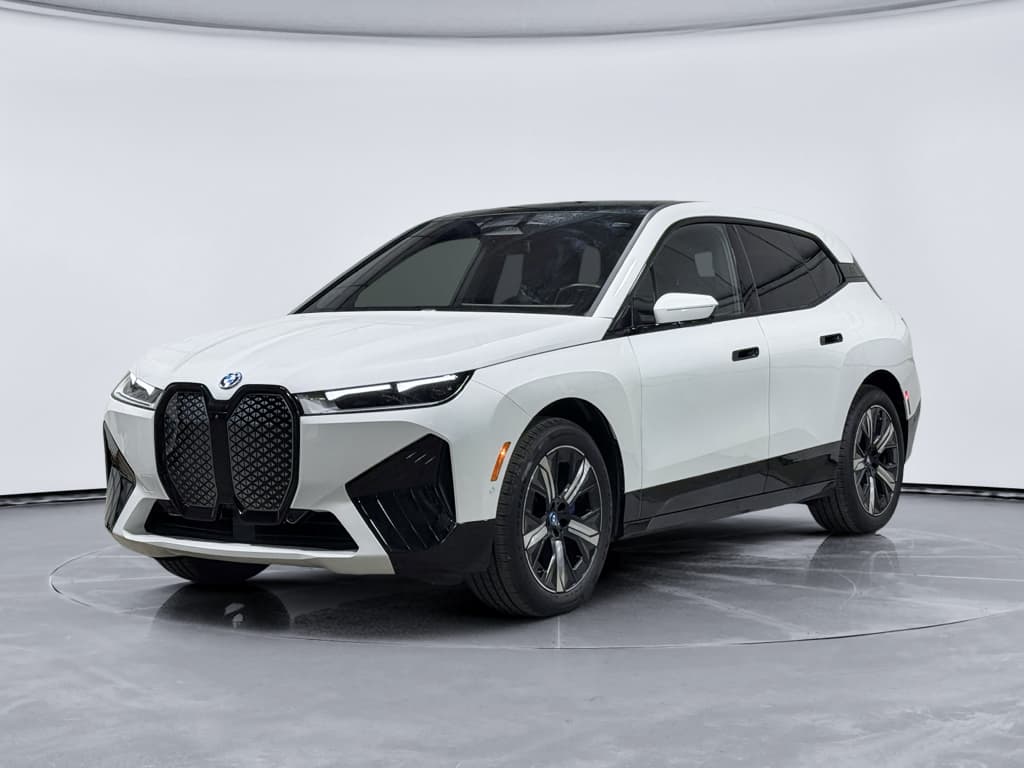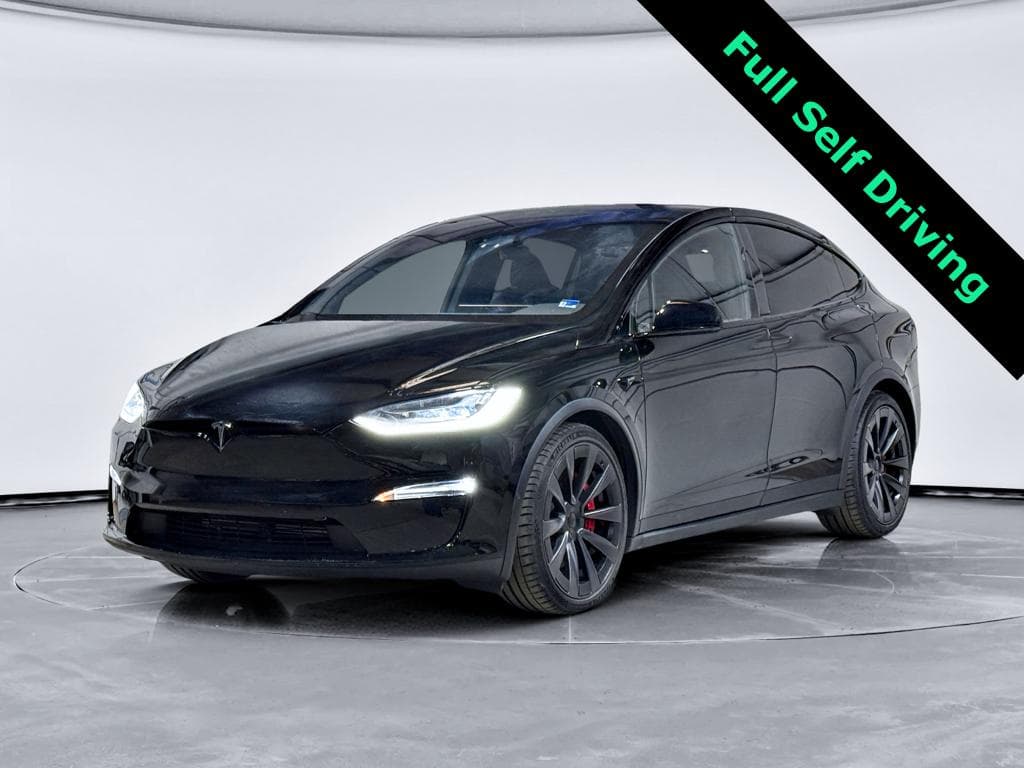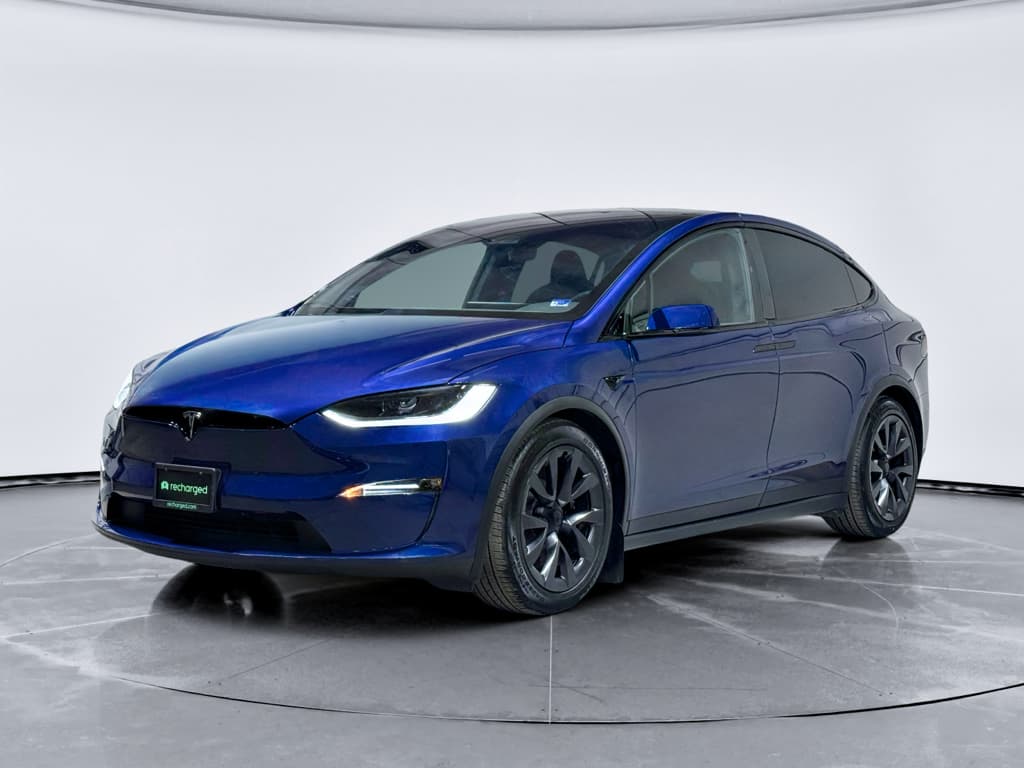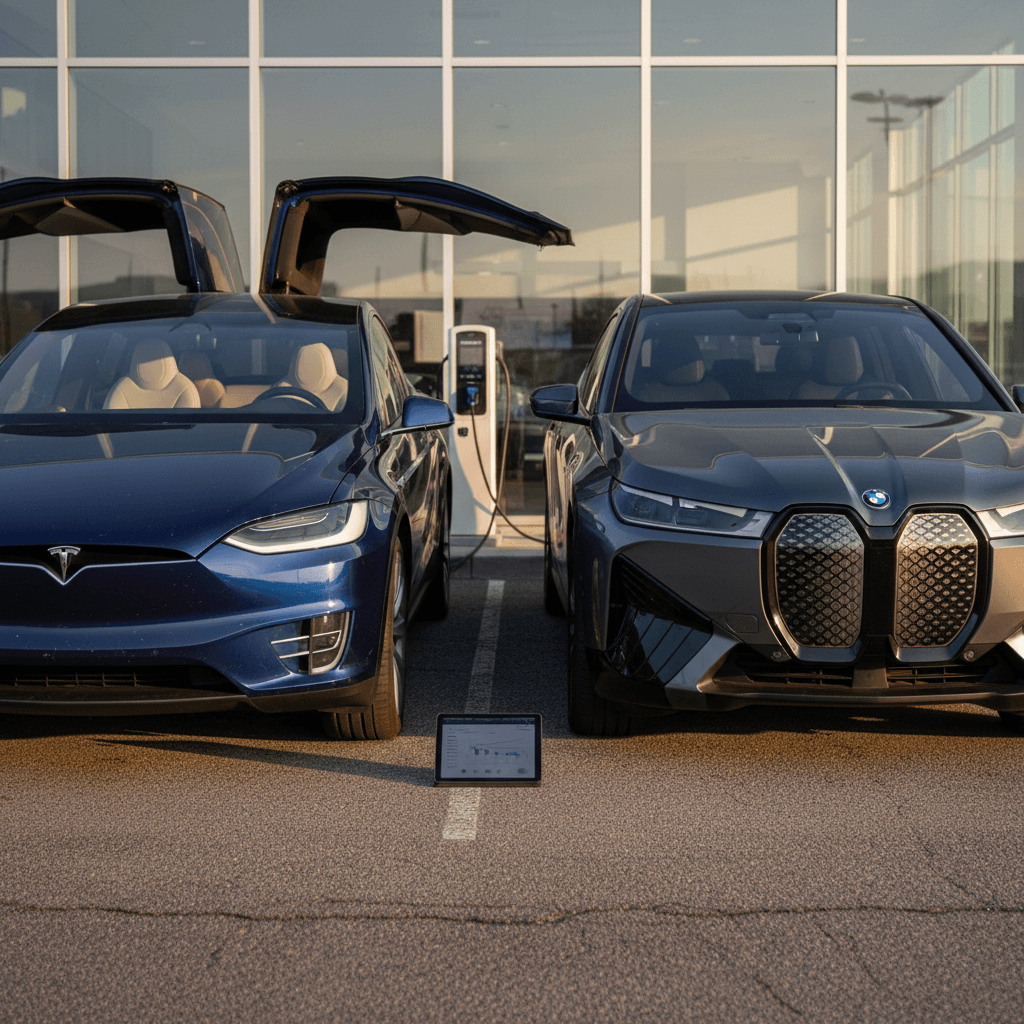
If you’re shopping for a used luxury electric SUV in 2026, the inevitable matchup is a used Tesla Model X vs BMW iX. Both deliver big range, serious performance, and family‑friendly space, but they’re very different ownership experiences. This guide walks you through how they compare on price, range, charging, practicality, reliability, and which one makes more sense as a used buy in the U.S. market right now.
Model years we’re really talking about
Overview: Used Model X vs BMW iX in 2026
High‑level verdict at a glance
Both are strong choices, but they win for different types of buyers.
Used Tesla Model X: where it wins
- Supercharger access and dense fast‑charging network in the U.S.
- Three‑row seating and optional 7‑seat layout.
- More dramatic performance, especially in Plaid trim.
- Large used inventory, wide price spread from high‑$40Ks to $90K+.
Used BMW iX: where it wins
- Quieter, more refined ride and top‑shelf interior finish.
- Excellent efficiency and strong 300+ mile EPA range in xDrive50.
- Traditional doors and controls; fewer gimmicks, fewer squeaks.
- BMW dealer network and conventional warranty/service experience.
In simple terms, the Model X is the EV icon with the charging network, while the iX is the more conventional luxury SUV that just happens to be electric. Your choice hinges on how much you value three rows, road‑trip charging simplicity, brand perception, and how comfortable you are with Tesla’s service model and quirks like falcon‑wing doors.
Quick specs: Tesla Model X vs BMW iX
Core specs for typical used Model X and BMW iX examples
Approximate U.S.‑market specs relevant to 2026 used buyers. Always verify for the exact VIN you’re considering.
| Used Tesla Model X (2021–2023 LR) | Used Tesla Model X Plaid (2021–2023) | Used BMW iX xDrive50 (2022–2025) | Used BMW iX M60 (2023–2025) | |
|---|---|---|---|---|
| EPA range (mi) | ~348–351 | ~333 | ~305–324 | ~274–288 |
| 0–60 mph | ~3.8 s (LR) | ~2.5 s | ~4.4 s | ~3.6 s |
| Battery (usable est.) | ~95–100 kWh | ~95–100 kWh | ~105–112 kWh | ~105–112 kWh |
| Max DC fast charge | Up to 250 kW (Supercharger) | Up to 250 kW | Up to 195 kW (CCS) | Up to 195 kW |
| Onboard AC charger | 11.5 kW | 11.5 kW | 11 kW | 11 kW |
| Drive | Dual‑motor AWD | Tri‑motor AWD | Dual‑motor AWD | Dual‑motor AWD |
| Seating | 5, 6 or 7 | 6 or 7 | 5 only | 5 only |
| Towing capacity | Up to 5,000 lb | Up to 5,000 lb | Not rated for towing in U.S. (varies by region) | Not rated for towing in U.S. |
Specs vary by wheel size, trim, and model year; use this as a directional guide, not a build sheet.
Always double‑check actual spec sheets
Used pricing and depreciation trends
2026 used‑market snapshot (typical U.S. asking prices)
By 2026, both the Tesla Model X and BMW iX have done their steepest depreciation, which is good news if you’re buying used. New MSRPs flirting with or above six figures have translated into 20–40% discounts on the secondary market once these SUVs are three to four years old.
Used Tesla Model X pricing patterns
- Older 2017–2019 Long Range and 75D/100D examples can slip under $45,000, but often with higher miles and older hardware.
- 2020–2022 Long Range models typically land in the $55,000–$75,000 band depending on mileage, options, and condition.
- Plaid trims sit at the top of the heap; clean, low‑mile 2022–2023 Plaids can still command $80,000+.
- Options like six‑seat interiors and Full Self‑Driving may nudge prices, but condition and battery health matter more in 2026.
Used BMW iX pricing patterns
- Early 2022 iX xDrive50s often list in the mid‑$50Ks to mid‑$60Ks, reflecting BMW’s typical first‑owner depreciation.
- 2023–2025 xDrive50s tend to sit from the high‑$60Ks into the $80Ks depending on packages and mileage.
- M60 models hold value a bit better but still undercut their original sticker by tens of thousands.
- Many iX units are coming off leases, so you may find lower‑mileage, well‑serviced examples compared with similar‑year Model X inventory.
How Recharged helps on pricing
Range, battery, and real‑world efficiency
On paper, both SUVs deliver more than enough range for daily use and long trips, but the details matter. Wheel size, climate, and driving speed can reshuffle the hierarchy between a used Tesla Model X and a used BMW iX.
Range and efficiency: what you’ll actually see
EPA labels are only a starting point; here’s how they translate to 2026 daily life.
Tesla Model X (2020–2023)
- EPA figures around 330–350 miles for Long Range, low‑330s for Plaid.
- At 70–75 mph, many owners report 250–290 miles of usable highway range in mild weather.
- Cold climates can shave 20–35% off those numbers, especially on short hops.
- Larger 20–22 inch wheels and performance driving nibble away at efficiency.
BMW iX xDrive50 / M60 (2022–2025)
- EPA range up to around 305–324 miles on xDrive50 with smaller wheels; M60 is lower but still near 280 miles.
- Real‑world testing has shown 270–300 miles is realistic at highway speeds in mild temps.
- The iX is impressively efficient for its size; many drivers beat EPA around town.
- As with the Tesla, large wheels and cold weather cut into range noticeably.
Battery health on used examples
Ready to find your next EV?
Browse VehiclesIf you frequently drive long highway stretches, the Model X Long Range holds a slight edge on outright range, while the iX xDrive50 counters with strong efficiency and a very predictable consumption pattern. For suburban commuting, either will feel like overkill on range, battery health and charging access matter more than the label number.
Charging speed and road‑trip usability
The biggest separation between a used Model X and a used BMW iX in 2026 isn’t the cars themselves, it’s the charging ecosystem you plug into. Tesla’s Supercharger network is still the benchmark for simplicity, but CCS networks have been catching up, and NACS adoption is changing the landscape.
Tesla Model X: Supercharger advantage (with some caveats)
- Access to the dense Supercharger network, still the easiest fast‑charging experience in most of North America.
- Peak DC rates around 250 kW on modern hardware, with 10–80% sessions commonly in the 25–35 minute range when the battery is warm.
- Plug‑and‑charge simplicity: pull up, plug in, billing handled through your Tesla account.
- Some older Model X units may have slightly lower peak charge rates; check the charge curve data where possible.
BMW iX: CCS today, NACS tomorrow
- Uses the CCS standard in 2022–2025 model years, tapping networks like Electrify America, EVgo, ChargePoint and others.
- Peak DC charge power up to roughly 195 kW; 10–80% fast charge typically lands in the 30–35 minute window on a strong charger.
- Charging experience is more fragmented, app juggling, card taps, and occasional station issues are still part of CCS life in some regions.
- BMW is rolling into the NACS/Tesla‑connector era; by the time you’re several years into ownership, adapter and/or native NACS access should further improve road‑trip flexibility.
Road‑tripping strategy in 2026
Space, practicality, and towing
The Model X and iX live in the same ballpark on exterior size, but they answer different questions on the inside. One is a three‑row family hauler, the other a two‑row lounge.
How they work as actual family vehicles
Think car seats, Costco runs, and ski trips, not just spec sheets.
Tesla Model X practicality highlights
- Available in 5, 6, or 7‑seat layouts; the only one here with a true third row.
- Falcon‑wing rear doors make third‑row access easy when they work well, especially in tight lots.
- Large frunk plus rear cargo area; plenty of space for strollers and luggage.
- Up to around 5,000 lb towing when properly equipped, though frequent heavy towing will dent range.
BMW iX practicality highlights
- Strictly a two‑row SUV, but with excellent rear legroom and a very airy cabin.
- Traditional rear doors and seating make child‑seat installation simple.
- Spacious cargo area behind the second row, but no third row or usable frunk.
- Towing capability in North America is limited or absent depending on trim and market, check the specific VIN and local rating.
A word on falcon‑wing doors
If you need three rows or meaningful towing, the iX simply can’t fill that role today, this is where a used Model X is in its element. If you want a quiet, comfortable, two‑row luxury EV that feels more like a conventional SUV inside, the iX is the better everyday tool.
Tech, driving feel, and comfort
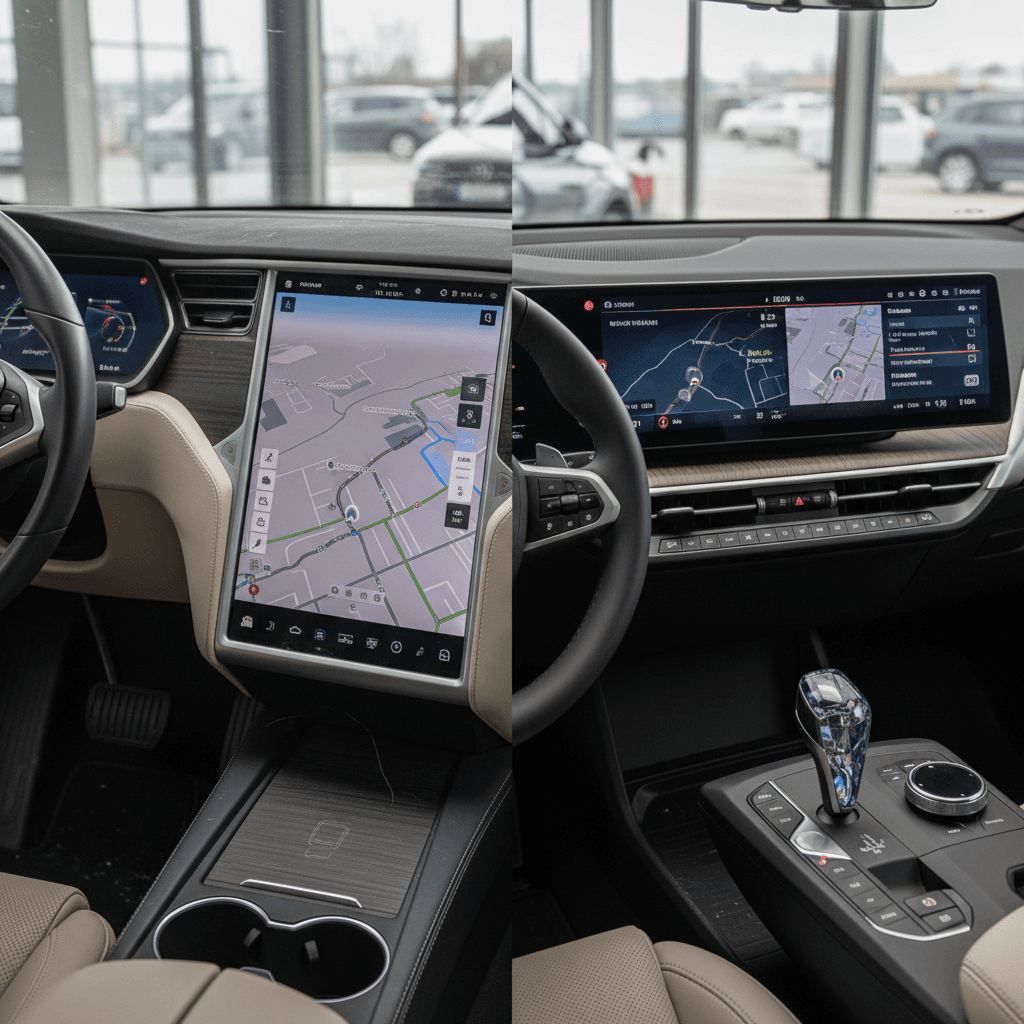
On technology, both SUVs lean hard into screens and software, but the philosophies diverge. Tesla keeps pushing a minimalist, over‑the‑air‑driven cockpit, while BMW blends digital with traditional luxury cues.
What it’s like to drive a used Model X
- Instant, almost violent acceleration in Plaid trims; Long Range is still sports‑car quick.
- Steering is light and quick; air suspension can feel firm over broken pavement on some setups.
- Single large center screen runs nearly everything, HVAC, driving controls, even some service adjustments.
- Frequent over‑the‑air updates can add features or tweak behavior, but also occasionally shuffle menus and settings.
- Cabin noise and build feel have improved over the years but can still trail the BMW in perceived solidity, especially on rough roads.
What it’s like to drive a used BMW iX
- Calm, refined demeanor with strong but less shocking acceleration in xDrive50; M60 brings serious shove with more theater.
- Excellent noise isolation and ride comfort; many reviewers put it near the top of the class for long‑distance comfort.
- Curved dual‑screen setup paired with iDrive; still plenty of physical controls including a crystal‑style rotary controller and buttons.
- BMW’s driver‑assistance suite (adaptive cruise, lane keeping, parking aids) feels familiar to anyone coming from a modern BMW.
- Interior materials, woods, fabrics, seats, often feel more premium and durable than many Teslas of similar age.
Tech that actually matters day to day
Reliability and ownership experience
You’re not just buying a used EV, you’re buying into a service ecosystem. The Model X and iX bring different risk profiles here, and the right choice depends on your tolerance for quirks vs. your need for traditional dealership support.
Common pain points owners talk about
Patterns from owner forums, early data, and service reports.
Used Tesla Model X concerns
- Falcon‑wing door hardware and sensors can be failure points on some vehicles.
- Air‑suspension components have seen replacements on higher‑mile examples.
- Interior squeaks/rattles and panel alignment issues show up in some owner reports.
- Tesla’s service centers can be hit‑or‑miss on scheduling depending on your region; mobile service helps in some markets.
Used BMW iX concerns
- Early build software glitches and occasional infotainment bugs, most fixable with updates.
- Collision repairs and battery‑related work are expensive; verify prior damage and insurance history.
- As a newer product line, long‑term high‑mile data is still building, but core driveline components are so far behaving well.
- Traditional BMW dealer network means more familiar service experience, but also BMW‑typical labor rates.
Why a third‑party health check matters
If you’re risk‑averse and want a predictable dealer relationship, the iX will probably feel safer. If you’re comfortable with app‑based service scheduling and you’re willing to accept some quirkiness for the sake of Supercharger access and three rows, a well‑vetted Model X can still be a very rewarding choice.
Which used EV SUV fits you best?
Match the SUV to your priorities
Think about how you actually drive, not just which spec sheet looks better.
Growing family, one‑car household
Leaning toward: Tesla Model X
- Need a third row and room for kids plus gear.
- Plan regular highway trips to visit family.
- Live near Superchargers and value simple road‑trip charging.
Commuter or executive shuttle
Leaning toward: BMW iX
- Mostly two to four passengers, with back‑seat comfort a priority.
- Prefer a quiet, refined ride and classic luxury interior.
- Already have a second vehicle for towing or extra seating.
Weekend trips and mixed use
Either can work, pick by ecosystem
- If you road‑trip often on long interstate routes, the Model X has the edge.
- If your area has reliable CCS and you prefer BMW’s luxury touch, the iX is compelling.
- In both cases, battery health and prior owner habits matter more than trim name alone.
In 2026, there isn’t a single “winner” in the used Tesla Model X vs BMW iX comparison, only a better fit for your routes, your family, and your risk tolerance. The Model X remains the three‑row EV icon with unmatched Supercharger convenience; the iX is the quieter, more conventional luxury SUV that just happens to be fully electric. The smartest move is to drive both, pull independent battery‑health data, and let the numbers, and your daily reality, decide.
Checklist: what to inspect before you buy
Used Model X and BMW iX pre‑purchase checklist
1. Pull a battery‑health report
Ask for a recent battery diagnostic such as a Recharged Score report. Look for signs of unusual degradation, rapid DC fast‑charging abuse, or BMS faults. Healthy packs are far more important than leather options.
2. Verify fast‑charging behavior
For a Model X, confirm Supercharger eligibility and run at least one fast‑charge session to see if it reaches expected speeds. For an iX, test a CCS fast‑charger you’re likely to use and watch for stalls that ramp slowly or fail to start.
3. Inspect doors, seals, and glass
On a Model X, operate falcon‑wing doors repeatedly in different spaces and listen for binding or error messages. On an iX, check frameless doors, window seals, and any panoramic glass for wind noise and water‑leak history.
4. Check suspension and tires
Both vehicles are heavy, high‑torque EVs. Look for uneven tire wear, clunks over bumps, or warning lights related to air suspension or chassis systems. Budget for high‑performance EV tires sooner than you might expect.
5. Review software and options
Confirm software version, active driver‑assist features, and any transferred packages (like Tesla’s premium connectivity or BMW’s subscription‑based features). These can affect both value and day‑to‑day enjoyment.
6. Scan service history and accidents
Ask for a full service and repair history plus a vehicle‑history report. Pay extra attention to any high‑voltage repairs, structural collision work, or repeat issues with doors, electronics, or coolant leaks.
7. Test your daily use case
Simulate your real driving: highway commute, parking garage, kids’ school run, or a sample road trip leg. If possible, do an extended test drive so you know how each SUV fits your actual routine, not just a spec sheet.