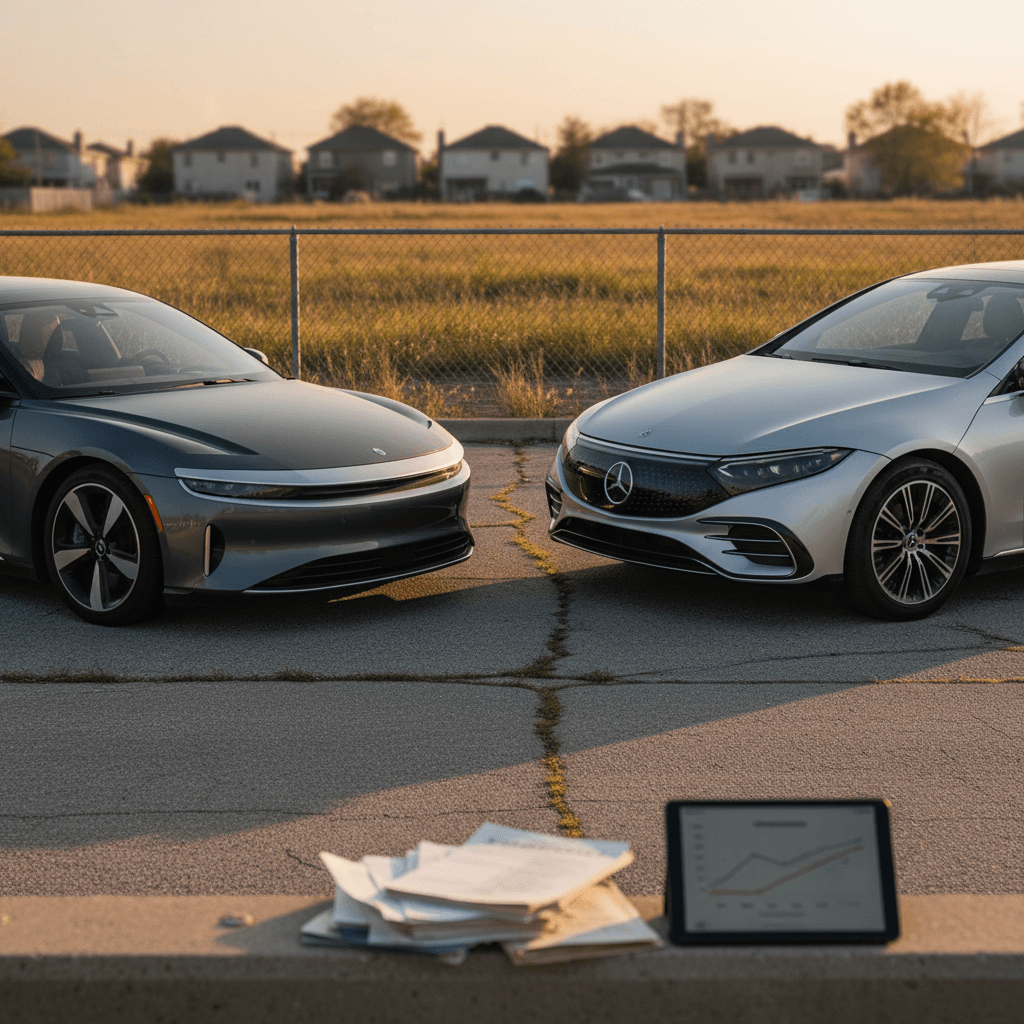
You’re shopping for a flagship electric sedan and keep circling the same dilemma: used Tesla Model S vs Mercedes EQS. One is the OG long‑range EV with a massive charging network and blistering performance. The other is Mercedes’ halo EV, wrapped in S‑Class levels of comfort and tech. On the used market, both can look tempting, but they deliver very different ownership experiences.
Two luxury EVs, two personalities
Used Model S vs EQS: who each car really suits
Tesla Model S: best for road‑trippers and tech‑leaning drivers
- You drive long distances and want 400+ miles of rated range on newer cars.
- You value fast, simple access to the Supercharger network.
- You prefer a minimalist cabin and crisp, phone‑like software.
- You’re okay with firmer ride quality and some cabin noise compared with Mercedes.
Mercedes EQS: best for comfort‑first luxury buyers
- You want an EV that feels like a modern S‑Class with a battery.
- You prioritize a plush, quiet ride over ultimate range or acceleration.
- You love rich materials, ambient lighting, and Mercedes’ Hyperscreen‑style interface.
- You mostly drive in town or on moderate‑length trips where 330–350 miles is plenty.
Start with your lifestyle first
Quick specs: used Tesla Model S vs Mercedes EQS
Core spec comparison (typical 2022–2024 cars)
Approximate specs for common dual‑motor Model S and EQS 450+/580 sedans. Exact numbers vary by year and trim, so always confirm on the specific VIN you’re considering.
| Spec | Used Tesla Model S (Long Range / Dual Motor) | Used Tesla Model S Plaid | Used Mercedes EQS 450+ | Used Mercedes EQS 580 4MATIC |
|---|---|---|---|---|
| EPA range (mi) | ~400–405 | ~390–396 | ~340–352 | ~340–345 |
| Battery (usable, kWh) | ~95–100 | ~95–100 | 108.4 | 108.4 |
| 0–60 mph (sec) | ~3.1–3.7 | ~2.0 | ~5.9 | ~3.7–4.0 |
| DC fast‑charge peak | Up to 250 kW Supercharger | Up to 250 kW Supercharger | Up to ~200 kW CCS | Up to ~200 kW CCS |
| Length | ~196 in | ~196 in | 205.4 in | 205.4 in |
| Drive layout | Dual‑motor AWD | Tri‑motor AWD | RWD | Dual‑motor AWD |
| Tech vibe | Minimalist, software‑first | Minimalist, software‑first | Hyper‑lux, Hyperscreen‑style | Hyper‑lux, Hyperscreen‑style |
Model S dominates range and raw performance; EQS counters with comfort and refinement.
Spec sheets don’t show wear and tear
Driving range and charging: clear edge to Tesla
If you judge used Tesla Model S vs Mercedes EQS strictly on range and charging, the Model S wins this round. Recent Long Range cars are rated around 400–405 miles, with Plaid models just under that, and they tie directly into Tesla’s huge Supercharger network. The EQS 450+ and 580 sit mostly in the 340–352‑mile EPA range band, which is still generous, but not quite Tesla‑long.
Range and charging experience at a glance
Think beyond numbers on paper, consider how each car feels to live with on a road trip.
Real‑world range
Model S: Owners commonly see highway ranges in the 320–360‑mile ballpark on newer cars when driven at U.S. freeway speeds, depending on wheels and weather.
EQS: With its heavier body and softer tuning, realistic highway range is usually 280–320 miles for most trims.
Fast‑charging speed
Tesla Model S can pull up to ~250 kW at newer V3 Superchargers, adding a big chunk of range in 15–20 minutes when the pack is warm.
Mercedes EQS peaks around ~200 kW on CCS fast chargers, typically needing just over 30 minutes from 10–80%.
Network and ease of use
Model S: Route planning and Supercharger integration are all baked into the native navigation. You plug in a destination; the car handles stops.
EQS: Uses a patchwork of public DC fast networks and Mercedes me Charge billing. It’s improved, but station quality varies more by operator.
What this means for you
Comfort, space, and interior feel
Tesla Model S: clean, modern, a bit austere
- Design: Ultra‑minimal dashboard, big center screen, very few physical buttons.
- Seats: Comfortable but on the firmer side; earlier cars can feel narrow for broad‑shouldered drivers.
- Noise: Quieter than an average car, but not as hushed as the EQS, especially on coarse pavement.
- Practicality: Huge hatchback opening, split‑fold rear seats, deep front trunk. It’s a packaging marvel.
Mercedes EQS: lounge‑quiet cocoon
- Design: Sweeping ambient lighting, rich materials, and available Hyperscreen giving an unbroken wall of glass.
- Seats: Softer, more heavily bolstered with extensive adjustability and available massage.
- Noise: Exceptional sound insulation and aero: wind and road noise are very muted.
- Practicality: Traditional trunk instead of hatch; still large, but less flexible for bulky cargo.
If you live in your car, EQS shines
Tech, infotainment, and driver assistance
Both cars are tech powerhouses, but they approach it differently. The Model S feels like an iPad on wheels: quick over‑the‑air updates, a snappy interface, and native trip planning built around Superchargers. The EQS wraps its tech in a more traditional luxury shell with complex but very configurable menus, beautiful graphics, and strong driver‑assistance options.
Tech showdown: software vs spectacle
Ask yourself whether you prefer clean simplicity or customizable complexity.
Tesla Model S tech strengths
- Interface: Simple, fast, and generally intuitive, especially if you’re used to smartphones.
- Navigation: Excellent EV‑aware routing with automatic Supercharger stops and live stall data on newer software.
- Updates: Frequent over‑the‑air feature additions and tweaks; a 3‑year‑old Tesla may feel more current than its age suggests.
- Driver assist: Autopilot and available Enhanced Autopilot / FSD vary a lot by build date and options, test them yourself on a used car.
Mercedes EQS tech strengths
- Hyperscreen (on many trims): Massive curved glass panel with multiple displays and rich graphics.
- MBUX: Deep customization, strong voice commands, plenty of EV‑specific data screens.
- Driver assist: Adaptive cruise, lane centering, and automatic lane change that feel very polished when properly calibrated.
- Luxury extras: Available head‑up display, augmented‑reality navigation, and outstanding ambient lighting.
Test the driver‑assist yourself
Battery health and longevity on the used market
With any used EV, especially high‑dollar luxury models, battery health is the whole ballgame. The good news: both the Model S and EQS use large packs that age more gracefully than many first‑generation EVs, provided they haven’t been abused by constant DC fast‑charging or extreme heat.
Real‑world battery health insights
On a used Tesla Model S, you can quickly see indicated range at 100% charge. Many 5‑ to 7‑year‑old cars still show 80–90% of original capacity, but there are exceptions. Early packs (2012–2016) tend to have more variance than newer chemistry. For the Mercedes EQS, fewer third‑party data sets exist simply because the car is newer, but the big 108.4‑kWh pack and efficient aero mean that even with modest degradation you’re usually left with very usable range.
How Recharged de‑mystifies battery health
Used EV battery checklist: questions to ask on any Model S or EQS
1. What’s the indicated range at full charge?
Ask the seller to show you the car at or near 100% and compare the indicated range to the original EPA figure. A healthy car will usually be within ~10–15% depending on age and climate.
2. How was the car typically charged?
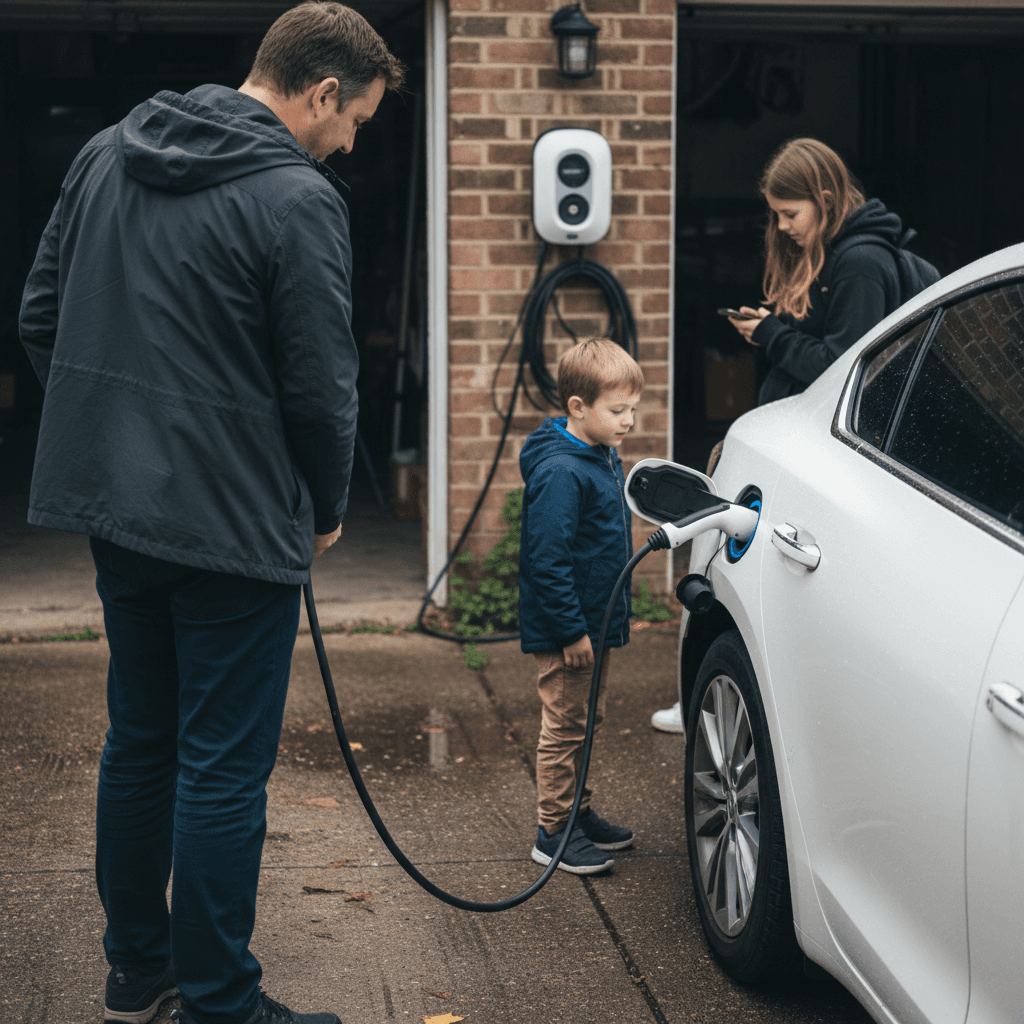
Mostly home Level 2 charging is ideal. A history dominated by DC fast‑charging, especially in hot regions, can accelerate wear.
3. What climate did it live in?
Hot‑weather cars (Phoenix, Las Vegas, South Texas) often show more degradation than those from cooler coastal or northern regions.
4. Any pack or high‑voltage repairs?
A properly documented pack repair isn’t necessarily a deal breaker, but you want to see who did the work and why.
5. Is the car still under battery warranty?
On some younger examples, part of the original 8‑year battery warranty may still remain, adding peace of mind.
Ownership costs: depreciation, maintenance, and insurance
Both cars avoid oil changes and most traditional engine service, but their ownership costs diverge once you factor in depreciation, parts pricing, and insurance. On the used market, these are no longer six‑figure new cars, but your budget still needs to respect their original price class.
Where the money goes after you buy
Fuel is cheap. Tires, brakes, and repairs on flagship EVs are not.
Depreciation
Model S: Took its biggest hit in the first few years but tends to hold value well now, especially long‑range and Plaid trims. Tesla’s brand recognition and charging network help.
EQS: Being newer and more expensive when new, early EQS cars often show steeper percentage depreciation. For used buyers, that can mean a lot of car for the money.
Maintenance and repairs
Both: Expect wear items like tires, brakes (especially on heavy EQS), cabin filters, and suspension bits.
Model S: Tesla service centers and third‑party specialists are widespread in many metro areas.
EQS: Mercedes dealer network is strong, but some EV‑specific parts can be pricey and may need to be ordered.
Insurance and incidentals
Insurance on either flagship EV is often higher than on a mainstream EV thanks to expensive bodywork, sensors, and wheels.
Shop quotes on specific VINs; a Plaid Model S on 21‑inch wheels may cost more to insure than a softly‑tuned EQS 450+ on smaller rims.
Don’t ignore repair estimates
Which used luxury EV is right for you?
Model S vs EQS: recommendations by buyer type
If you see yourself in one of these profiles, you’re halfway to a decision.
Choose a used Tesla Model S if…
- You do frequent road trips and want the easiest experience at public fast chargers.
- You care more about range and acceleration than pillow‑soft ride quality.
- You like simple, app‑centric tech and frequent software updates.
- You want hatchback practicality plus a front trunk.
Choose a used Mercedes EQS if…
- You spend a lot of time in traffic and want the quietest, most comfortable cabin you can afford.
- You prefer a traditional luxury feel with rich materials and a softer ride.
- You mostly drive under 250 miles in a day, with occasional longer trips.
- You love ambient lighting, advanced seat features, and the theatre of Mercedes’ cabin design.
There’s no wrong answer between a well‑vetted used Tesla Model S and a carefully chosen Mercedes EQS, but there is a right answer for you. If your life is full of long‑distance drives and you want the least friction at public chargers, the Model S is hard to beat. If your days are spent gliding around town and you prize quiet, comfort, and that old‑world Mercedes feel in a new‑world EV, the EQS will make you smile every time you close the door.
How Recharged helps you shop used luxury EVs confidently
Flagship EVs are wonderful to drive, and unforgiving if you buy the wrong one. That’s why Recharged was built specifically around used electric vehicles rather than gas‑car assumptions.
- Every vehicle on Recharged comes with a Recharged Score Report that includes verified battery health and pack diagnostics, so you’re not guessing about the most expensive component in the car.
- Our pricing tools benchmark fair market values for specific trims, options, and mileage, helping you see whether that Plaid or EQS 580 is priced realistically.
- EV‑specialist advisors can walk you through differences between trims (Autopilot levels, EQS packages, wheel sizes) and how they affect range, comfort, and resale.
- You can finance, apply a trade‑in, or even sell your current EV through Recharged with options like instant offer or consignment.
- Nationwide delivery and a digital‑first experience mean you can shop for a Model S in California or an EQS in New York without burning vacation days.
Ready to compare real cars, not just spec sheets?
Ready to find your next EV?
Browse Vehicles