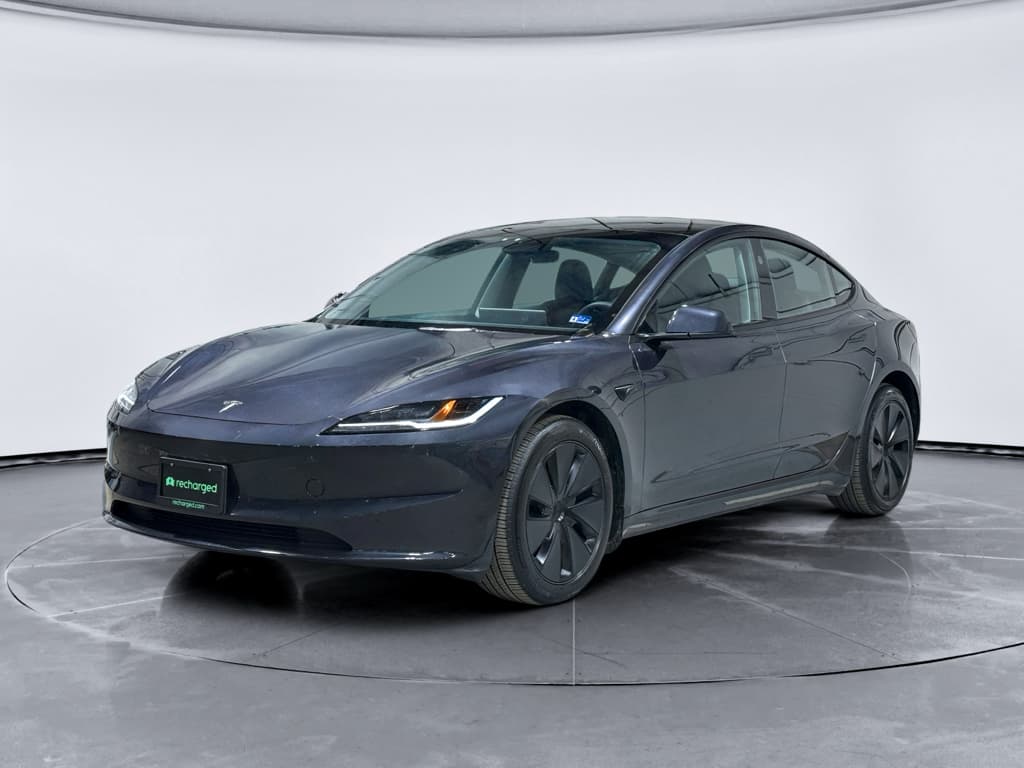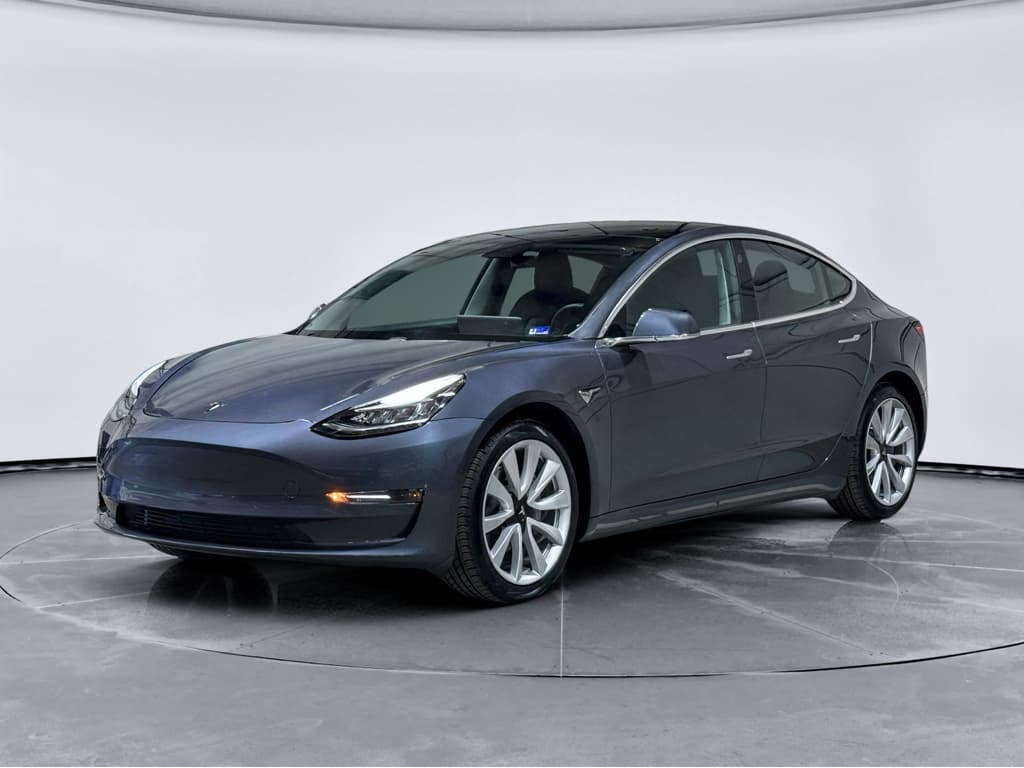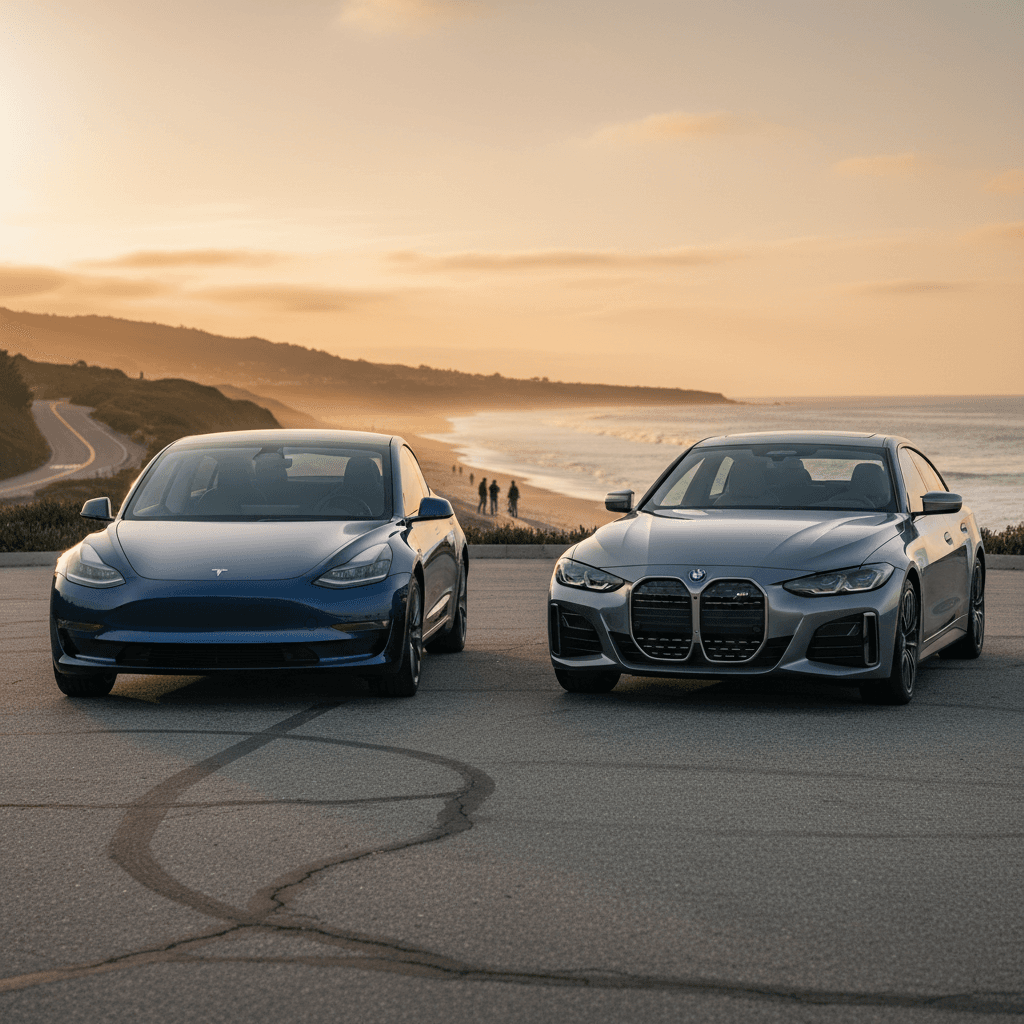
If you’re cross‑shopping a used Tesla Model 3 vs BMW i4, you’re already looking in the right place: both are excellent compact electric sport sedans. The real question is which one fits your life, budget, and charging situation better in the used market.
Two Great Choices, Different Personalities
Overview: Used Tesla Model 3 vs BMW i4
Tesla Model 3 (used)
- Strengths: Excellent efficiency, huge Supercharger network, strong software & over-the-air updates, abundant supply and trim choice.
- Weaknesses: Simpler interior fit/finish, some build-quality complaints in early years, ride can feel firm.
- Best for: Drivers who prioritize charging convenience, efficiency, and a tech-forward feel over traditional luxury.
BMW i4 (used)
- Strengths: Classic BMW driving feel, upscale interior, quiet highway manners, robust performance in all trims.
- Weaknesses: Heavier and generally less efficient than a similar Model 3, relies more on third‑party fast charging.
- Best for: Shoppers who want a familiar luxury-car experience with EV power and don’t mind planning fast‑charge stops a bit more carefully.
Key Specs at a Glance (Typical U.S. Trims)
Which Years and Trims Matter Most Used
To keep this comparison grounded for used shoppers, let’s focus on the most common model years and trims you’ll see on U.S. lots today.
Core Used Trims You’ll Actually See
Focus your search on these versions for best value and support.
Used Tesla Model 3: Key Trims
- Standard Range / RWD: Rear‑wheel drive, smaller battery. Earlier cars labeled Standard Range/Standard Range Plus, newer just "Rear‑Wheel Drive." Best price, shortest range.
- Long Range AWD: Dual‑motor all‑wheel drive, larger pack. Typically the sweet spot for range and performance.
- Performance: Dual‑motor with more power, lower ride, and stickier tires. Fastest but slightly less efficient.
Most of the used market today is 2018–2023, with refreshed "Highland" cars only just starting to appear off lease.
Used BMW i4: Key Trims
- eDrive35: Single‑motor RWD, smaller usable battery (around mid‑60 kWh). Entry price, solid range for daily use.
- eDrive40: Single‑motor RWD with larger battery (around 80+ kWh). Strong combination of range and smooth power.
- xDrive40: Dual‑motor AWD (newer), similar pack to eDrive40 with more traction and power.
- M50 xDrive: Dual‑motor performance flagship, roughly 536 hp and 0–60 mph in the mid‑3‑second range.
Most used i4s on the U.S. market today are 2022–2024 cars.
Trim Shopping Tip
Range & Battery Health in the Real World
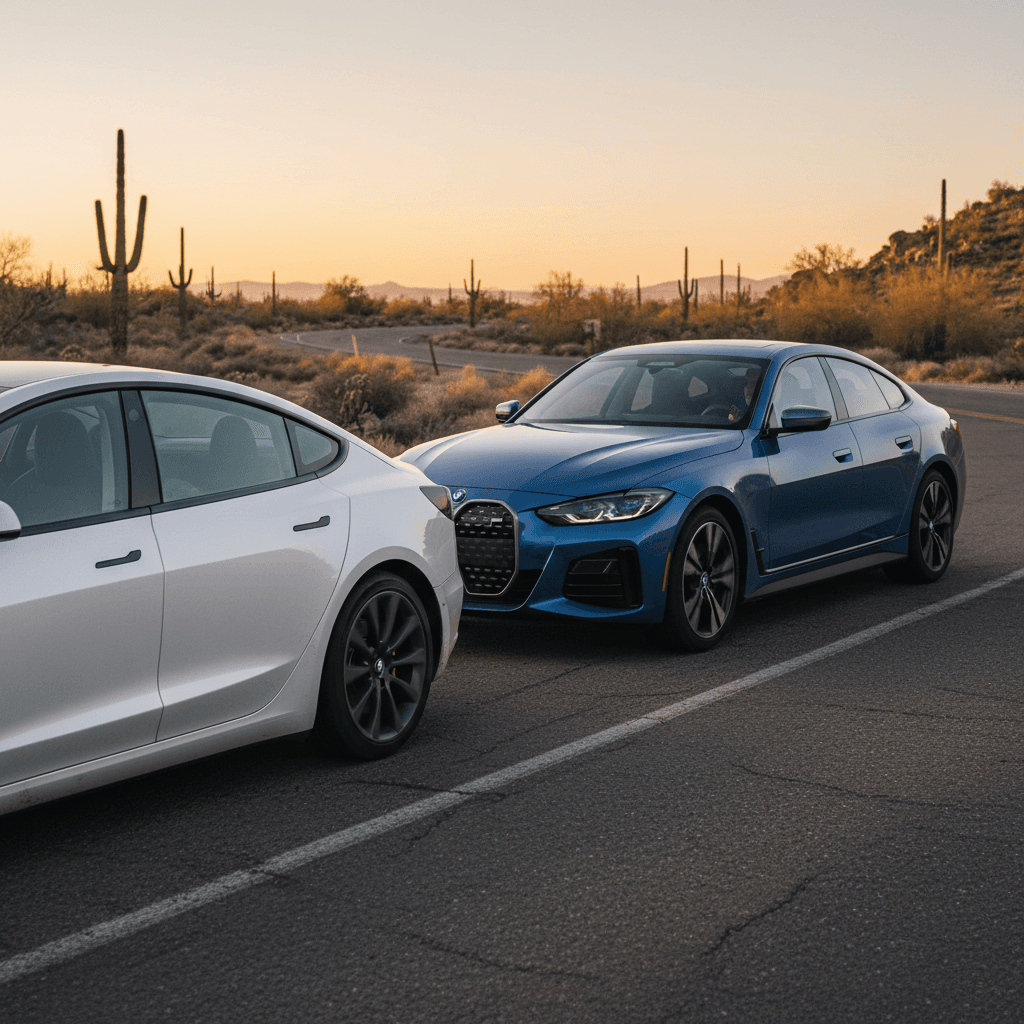
Range is where spec sheets can mislead you. Both cars post impressive EPA numbers, but real‑world results depend heavily on driving style, temperature, and wheel choice. Independent testing has found that many popular EVs, including recent Model 3 variants, can fall roughly 8–15% short of their advertised range in mixed real‑world driving. The i4 can also underperform its EPA numbers, especially in higher‑power M50 form with larger wheels.
Typical EPA Range by Popular Trim (New)
Use these numbers as a starting point; a used car’s real‑world range will be lower depending on age, mileage, climate, and tires.
| Model | Drivetrain | Approx. EPA Range | Notes |
|---|---|---|---|
| Tesla Model 3 RWD (Standard/Rear‑Wheel Drive) | RWD | ~260–272 mi | Smaller pack; best for city/suburban drivers. |
| Tesla Model 3 Long Range | AWD | ~333–358 mi | Excellent balance of range & performance. |
| Tesla Model 3 Performance | AWD | ~296–315 mi | More power, slightly less range. |
| BMW i4 eDrive35 | RWD | ~252–276 mi | Smaller battery but still solid range. |
| BMW i4 eDrive40 | RWD | ~283–301 mi | Best range in the i4 lineup with smaller wheels. |
| BMW i4 M50 xDrive | AWD | ~227–269 mi | Performance focus; larger wheels can cut range further. |
Ranges are approximate EPA values for newer model years; expect some real‑world reduction and modest degradation in used vehicles.
Real-World vs Sticker Range
Battery Health: How Do These Packs Age?
Both Tesla and BMW use liquid‑cooled lithium‑ion packs with sophisticated thermal management, and both back them with long warranties when new. In practice, most owners report modest degradation over the first 80,000–100,000 miles when the car is driven and charged normally. The bigger concern in the used market isn’t so much which brand is better, but how the previous owner treated the battery, lots of DC fast charging, frequent 100% charges, or long storage at very high or very low state of charge can accelerate wear.
How Recharged Measures Battery Health
Charging Experience: Tesla Superchargers vs Public Networks
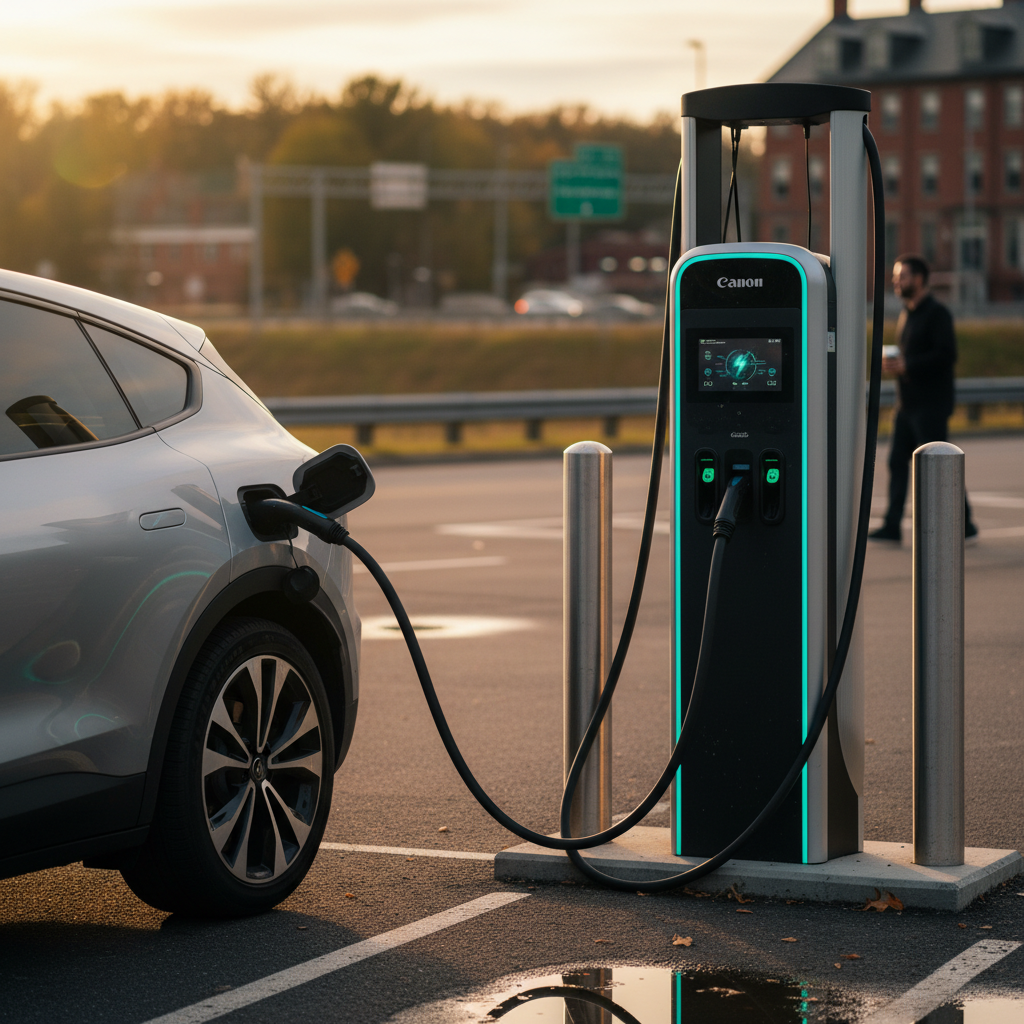
Charging is one of the biggest day‑to‑day differences between a used Tesla Model 3 and a BMW i4 in the U.S. Both can plug into the same Level 2 home and workplace chargers, but their fast‑charging stories diverge.
Tesla Model 3: Supercharger Advantage
- Connector: Uses Tesla’s NACS port. Many newer non‑Tesla EVs are moving to this standard, but Tesla drivers have used it from day one.
- Network: Direct access to thousands of Supercharger stalls across North America, with plug‑and‑charge convenience and predictable pricing.
- Peak DC speed: Up to around 250 kW on compatible V3/V4 Superchargers, meaning a 10–80% top‑up in roughly 25–30 minutes when conditions are ideal.
- Planning: Tesla’s built‑in navigation automatically routes you through Superchargers and estimates charge time, very helpful for new EV drivers.
BMW i4: Public DC Fast Charging
- Connector: CCS combo port on current U.S. i4s. Some future BMWs will adopt NACS, but used i4s today are almost all CCS.
- Network: Relies on third‑party DC fast chargers (Electrify America, EVgo, ChargePoint, etc.). Coverage is improving quickly, but station reliability can vary by region.
- Peak DC speed: Up to around 200 kW in many trims on capable chargers, with 10–80% charges in roughly 30 minutes under good conditions.
- Planning: BMW’s native navigation plus apps like PlugShare or A Better Routeplanner work well but require a bit more setup than Tesla’s one‑brand ecosystem.
Charging Decision Shortcut
Performance, Driving Feel & Comfort
On paper, both the Model 3 and BMW i4 offer performance that would have embarrassed many sports sedans just a few years ago. In the real world, their personalities differ enough that most shoppers will prefer one over the other after a good test drive.
How They Drive: Side‑by‑Side Impressions
Both are quick; they just prioritize different things.
Tesla Model 3 Driving Feel
- Acceleration: Even the base RWD Model 3 feels brisk; Long Range and Performance trims are genuinely quick, with Performance versions hitting 60 mph in around 3 seconds in ideal conditions.
- Handling: Low center of gravity and quick steering give a light, agile feel. Ride can be firm, especially on 19‑inch or 20‑inch wheels.
- Noise: Cabin is quieter on later build years, but tire and wind noise are more noticeable than in the i4, especially on coarse pavement.
BMW i4 Driving Feel
- Acceleration: eDrive35 and eDrive40 are strong, smooth, and more than quick enough for daily use; M50 delivers full‑on sports‑sedan thrust with 0–60 mph times in the mid‑3‑second range.
- Handling: Feels like a traditional BMW: planted, confident, with more steering feel and a heavier overall demeanor.
- Noise: Generally quieter and more refined than most Model 3s, especially at highway speeds.
Enthusiast Take
Tech, Interior & Everyday Usability
Inside, these two cars answer the same question, “what should an electric sedan cabin be?”, with completely different philosophies. Neither is wrong; it’s all about what you prefer day to day.
Tesla Model 3 Interior
- Design: Extremely minimalist: one central screen, almost no physical buttons, and a clean, airy dashboard.
- Controls: Nearly everything is on the touchscreen, including wipers and most drive settings. Easy once learned, but can feel odd at first.
- Software: One of Tesla’s strongest points, frequent over‑the‑air updates, slick navigation, built‑in streaming apps, and intuitive phone key access.
- Cargo & space: Good rear‑seat room for a compact sedan, plus front trunk (frunk) storage. Hatchback‑style cargo opening is still reserved for the Model Y; the 3 has a conventional trunk.
BMW i4 Interior
- Design: More traditional luxury car layout with high‑quality materials, clear gauges, and BMW’s Curved Display blending digital cluster and central screen.
- Controls: Combines a central touchscreen with physical buttons and the iDrive controller. Easier for some drivers to operate by feel without looking away from the road.
- Software: Feature‑rich and improving quickly, though menus can be deeper than Tesla’s straightforward approach.
- Cargo & space: Practical hatchback liftgate makes loading bulky items easier than in the Model 3.
Ergonomics Note
Depreciation, Used Pricing & Value
Both Tesla and BMW EVs have seen faster early depreciation than many gas counterparts, which is painful for first owners but great news if you’re buying used. The Model 3 has been in volume production longer and sold in far higher numbers, so used prices span a much wider range than the relatively newer and rarer i4.
How Value Typically Shakes Out (High‑Level Trends)
Exact prices vary by year, mileage, condition, and incentives, but these patterns are common in today’s used market.
| Aspect | Used Tesla Model 3 | Used BMW i4 |
|---|---|---|
| Initial Depreciation | Steep in first 3 years, then levels off as demand for affordable EVs remains strong. | Also steep early on; luxury branding and lower volume can mean fewer deep‑discount outliers. |
| Availability | Very high, easy to cross‑shop dozens of cars in a radius. | Lower volumes; you may find only a handful of i4s locally. |
| Negotiation Room | Pricing more transparent in many markets due to volume; still room to negotiate based on condition and battery health. | Fewer comps can make pricing feel less clear; strong condition & options packages hold value. |
| Long‑Term Value | Solid so far due to charging network and brand recognition in EV space. | Strong if you value BMW build quality and driving feel, but future charging standards and demand will matter. |
Use this as a directional guide, not a price sheet. Always compare real vehicles in your area.
How Recharged Helps on Price
Ownership Costs & Reliability
Day‑to‑day running costs for both the used Model 3 and BMW i4 are dominated by electricity and tires rather than oil changes or complex engine services. Where they differ is in warranty coverage, service network, and some reliability pain points.
What It’s Like to Live With Each Car
Charging costs are similar; service experiences differ.
Tesla Model 3 Ownership
- Service: Tesla’s service centers and mobile technicians handle most needs; some regions have limited capacity, so appointment lead times can vary.
- Common issues (early years): Panel‑gap complaints, interior squeaks/rattles, and occasional paint flaws. Many owners see few problems beyond wear items.
- Software & features: OTA updates keep features fresh; advanced driver‑assistance systems are widely praised but should be tested carefully on a used car.
BMW i4 Ownership
- Service: BMW’s existing dealer network handles EVs alongside gas models, which can be reassuring if you like a traditional dealership service experience.
- Common issues: So far, no single widespread problem dominates, though as with any luxury car, out‑of‑warranty repairs can be expensive if something major fails.
- Warranty: Many used i4s will still be within their original bumper‑to‑bumper and battery warranties, which can make them especially attractive at 2–4 years old.
Don’t Skip a High‑Voltage Inspection
Who Should Buy a Used Model 3 vs BMW i4
At this point, you probably see that there’s no universal winner, there’s a better fit for how you drive, where you live, and what you value most. Here’s a simple way to match each car to different types of buyers.
Choose a Used Tesla Model 3 If…
- You road‑trip frequently and want effortless Supercharger access.
- You care more about efficiency and tech than about traditional luxury trim.
- You want the broadest selection of used EVs at varying prices and mileages.
- You’re comfortable with a minimalist cabin and touch‑screen‑heavy controls.
- You like the idea of frequent software updates and new features appearing over time.
Choose a Used BMW i4 If…
- You prioritize refinement, quietness, and classic BMW driving feel.
- You live near reliable CCS fast‑charging and mainly drive within a few hundred miles of home.
- You’re coming out of a 3 Series or similar and want a familiar, upscale cabin.
- You’re eyeing an M50 or xDrive40 and value performance as much as efficiency.
- You’re shopping in the 2–4‑year‑old range where many i4s are still under comprehensive warranty.
Quick Inspection Checklist for Either EV
A used EV inspection is a little different from kicking the tires on a gas car. Here are the key items you or your inspector should focus on when evaluating a used Tesla Model 3 or BMW i4.
Used Model 3 & BMW i4 Inspection Checklist
1. Verify Battery Health & Estimated Range
Ask for a recent battery health report or have one run. Compare the car’s displayed full‑charge range to what it should be when new, accounting for some normal degradation.
2. Check DC Fast‑Charging History
Heavy use of DC fast charging isn’t a deal‑breaker, but a car that lived on fast chargers may show more degradation. Look for documentation or ask the seller how the car was typically charged.
3. Inspect Wheels, Tires & Brakes
Both cars are heavy and powerful. Uneven tire wear, curb rash, or scored rotors can signal hard use. Replacing performance tires isn’t cheap, so budget accordingly.
4. Test All Driver‑Assistance Features
On a test drive, confirm adaptive cruise, lane‑keeping, parking sensors, cameras, and parking assist (where equipped) all function smoothly. Calibration problems can be costly to sort out.
5. Look for Water Intrusion & Underbody Damage
Check trunk wells, door seals, and underbody panels for signs of impacts or leaks. EV battery packs are usually well‑protected, but collision or off‑road damage can be expensive.
6. Confirm Charging Accessories & Software Status
Make sure home charging cables, adapters, and any included wallbox equipment are present. On Teslas, verify account transfer and available software features; on BMWs, check that connected services are active or can be renewed.
Make It Easy With Recharged
Ready to find your next EV?
Browse VehiclesFAQ: Used Tesla Model 3 vs BMW i4
Frequently Asked Questions
Bottom Line: How to Decide With Confidence
If you want the most efficient, tech‑forward experience with the easiest long‑distance charging, a used Tesla Model 3, especially a Long Range, remains a benchmark choice. If you’d rather have the feel of a traditional European luxury sport sedan with electric power and a quieter, more insulated ride, a used BMW i4 will likely make you happier every time you walk up to it.
The key is to shop specific cars, not just badges: compare battery health, charging options where you live, remaining warranty, and how each car feels on real roads. Working with Recharged, you’ll get a clear Recharged Score battery report, fair market pricing, financing options, and expert EV guidance. That way, whether you end up in a Model 3 or an i4, you’re not just buying an electric car, you’re buying the right used EV for the way you actually drive.