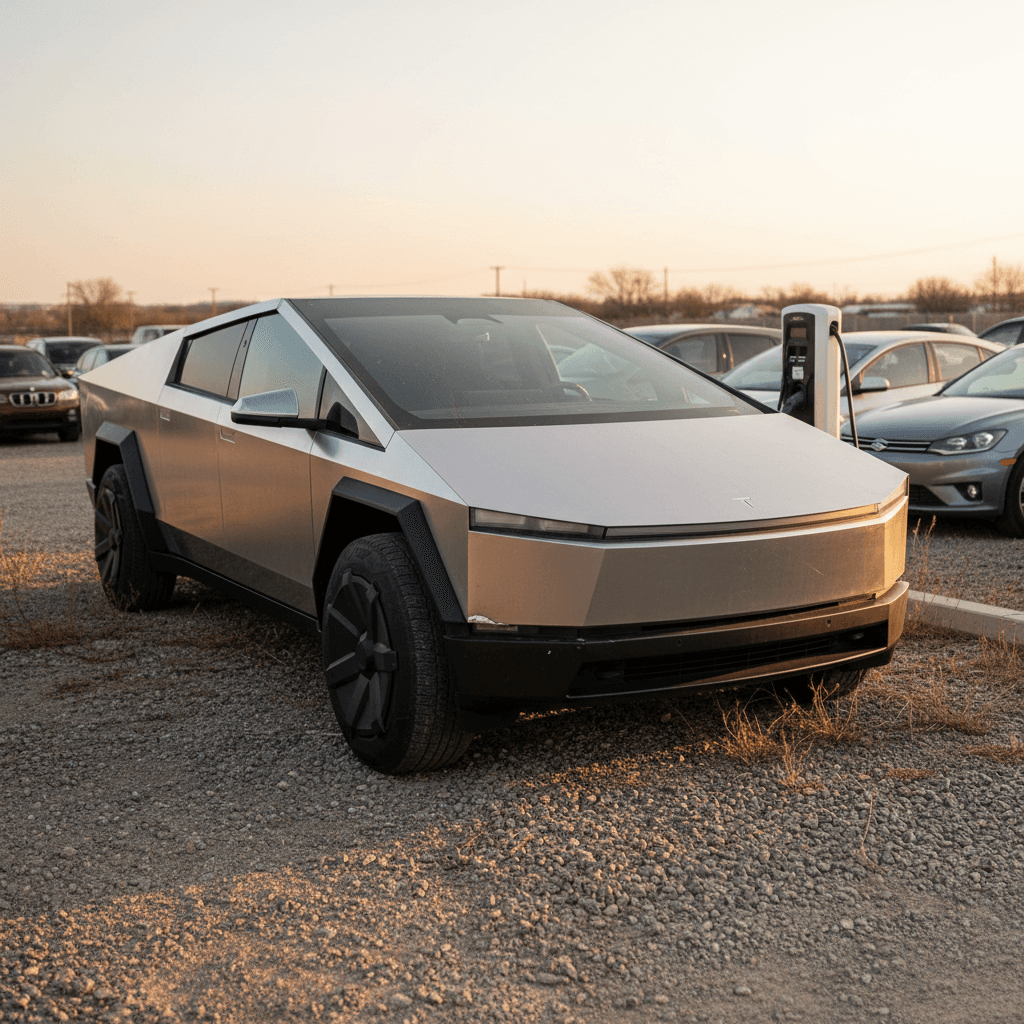
If you were waiting for the dust to settle before buying a used Tesla Cybertruck, 2026 is the first year you can shop it like a normal used truck instead of a meme on wheels. Prices have come down from early‑2024 madness, recalls and real‑world range are better understood, and there’s finally enough inventory that you can be choosy. This 2026 used Tesla Cybertruck buying guide walks you through pricing, trims, battery health, recalls and the exact inspection steps to take before you wire five figures for a stainless-steel wedge.
Quick Take
Should You Buy a Used Tesla Cybertruck in 2026?
Start with the big question: should you buy a used Cybertruck at all in 2026? For the right driver, yes. For others, a Rivian R1T, Ford F‑150 Lightning or even a traditional half‑ton may make more sense.
Who a Used Cybertruck Fits (and Who It Doesn’t)
Match the truck’s personality to your real life, not your social feed.
Who It’s Great For
- Drivers who want a high‑visibility, high‑conversation truck and don’t mind attention.
- Owners with access to home charging and occasional long trips.
- Shoppers who value Supercharger access and strong acceleration more than traditional truck image.
Who Should Think Twice
- Apartment dwellers without reliable overnight charging.
- Contractors who need fender‑bending work trucks and inexpensive body repairs.
- Buyers on a tight budget spooked by potential repair costs.
Key Trade‑Offs
- Wild styling and speed vs. mainstream appeal.
- Fast DC charging vs. heavy weight and range drop when towing.
- Falling prices vs. uncertain long‑term resale value.
Reality Check on Image
Cybertruck Trims, Specs and What They Mean Used
Most of the used market in 2026 is made up of trucks built from late 2023 through 2025. You’ll see early Foundation Series trucks, the volume All‑Wheel Drive model, the high‑output Cyberbeast, and a growing number of later Rear‑Wheel Drive Long Range trucks that pulled prices down.
Core Tesla Cybertruck Trims You’ll See Used in 2026
Exact specs vary by build date and options, but this table captures the big ideas for used shoppers.
| Trim (common used names) | Drivetrain | Est. EPA range when new* | 0–60 mph (approx.) | Max tow rating (approx.) | Typical buyer profile |
|---|---|---|---|---|---|
| Rear‑Wheel Drive Long Range | RWD, single motor | ~320 mi | ~6.5 sec | ~7,500 lbs | Drivers who want the look and bed space more than max performance. |
| All‑Wheel Drive / Dual Motor | AWD, dual motor | ~340 mi | ~4.0–4.5 sec | ~11,000 lbs | All‑arounder; balances speed, tow rating and price. |
| Cyberbeast / Tri‑Motor | AWD, tri motor | ~300 mi | ~2.6–2.7 sec | ~11,000 lbs | Enthusiasts chasing maximum acceleration and bragging rights. |
Always confirm the exact configuration in the listing and against Tesla’s current specs, as software and hardware changed quickly in the first production years.
About Those Range Numbers
Stainless Exoskeleton & Weight Class
All Cybertrucks use an ultra‑hard stainless steel exoskeleton instead of traditional painted steel panels. It resists small dings well but complicates body work and refinishing. Many configurations are heavy enough to sit in higher GVWR classes, which can have implications for registration, commercial use rules and even certain tax treatments in the U.S.
What That Means Used
- Minor cosmetic damage is often left alone; pristine trucks carry a premium.
- Major repairable damage can be more expensive than on a conventional pickup.
- Weight and size mean this is not a city‑friendly runabout, especially if parking is tight where you live.

2026 Used Tesla Cybertruck Pricing & Value Trends
Used Cybertruck Market Snapshot Heading Into 2026
By April 2026, the Cybertruck’s used‑market story is no longer about wild markups; it’s about how far and how fast prices fell from the peak and where they’re stabilizing. Tesla’s frequent new‑vehicle price changes and incentives have whipsawed used values, and quality headlines, good and bad, show up directly in asking prices at auction and in retail listings.
What Drives a Used Cybertruck’s Price in 2026
1. Build year and trim
Earlier 2024 Foundation Series trucks can carry collector cachet, but many shoppers now prefer later builds that benefited from running changes and recall fixes. Tri‑motor Cyberbeast models still command a premium over dual‑motor and rear‑drive trucks.
2. Mileage and usage pattern
A 20,000‑mile truck used mostly for commuting will generally be worth more than a similar‑mileage truck that has done heavy towing off‑road. Service records, alignment reports and even tire wear patterns tell a story here.
3. Recall and repair history
Cybertruck has seen multiple high‑profile recalls. Trucks with all campaigns completed and documentation in hand are easier to finance, insure and resell than those still waiting for work.
4. Cosmetic condition of stainless panels
Unlike a painted F‑150 or Silverado, blending repairs on bare stainless steel is tricky. Deep scratches, stretches or sharp dents can knock thousands off values, especially on the driver’s side and tailgate.
5. Software and options
Features like Autopilot or Full Self‑Driving capability, premium interior options, rear steering and tonneau covers influence price. On used trucks, buyers are finally pricing those options based on real utility, not just window‑sticker cost.
6. Local supply vs. demand
In 2026, we’re seeing Cybertrucks migrate from coastal trophy garages into mainstream truck markets. In some regions they’re still rare; in others they sit on lots longer than Rivian or Lightning rivals. That gap shows up in the numbers.
Leverage Live Market Data
Recalls, Quality Issues and Repair Reality
The Cybertruck’s first years were busy ones for Tesla’s quality and service teams. Early owners dealt with panel alignment issues, water leaks, pedal and trim concerns, and a series of recalls that occasionally grabbed headlines. That history matters when you’re buying used, not because every truck is a disaster, but because you want to know exactly what’s been fixed, and what hasn’t.
Common Early‑Run Cybertruck Concerns
You’re not just buying a truck, you’re buying its repair story.
Fit & Finish
- Panel gaps and misaligned doors or tailgate.
- Wind noise from frameless glass or trim.
- Uneven stainless brushing from prior “fixes.”
Water Leaks & Seals
- Reports of water intrusion at the roof or tonneau.
- Door seals that squeak or bind.
- Check for musty smells or staining in the cabin.
Recall Work
- Pedal, trim and body‑panel related recalls.
- Software updates that change driving behavior.
- Owner compliance varies, verify on every truck.
Never Skip a Recall Check
Collision & Body Repair Costs
Stainless exoskeleton or not, the Cybertruck is still metal that can bend. The difference is how you fix it. Many traditional body shops have little to no experience working with its panels, and some simply won’t touch it. Those that do may charge a premium while they learn, and that uncertainty is already priced into clean, accident‑free trucks.
Mechanical & Electrical Repairs
The skateboard battery pack, drive units and steer‑by‑wire systems are complex but modular. Tesla service centers remain the primary option for major work in 2026. Independent EV specialists are starting to step in, but coverage varies wildly by region, so call around your metro area before you commit.
Battery, Range and Towing on a Used Cybertruck
The Cybertruck’s giant battery pack is both its superpower and its biggest long‑term question mark. You’re not just buying range; you’re buying years of charge cycles, fast‑charge sessions, towing duty and storage habits that you can’t see with the naked eye.
Battery & Range: What Matters Most Used
On a used truck, you care less about the exact EPA rating and more about current battery health. How quickly does it lose miles at 75 mph? How much range drops when you hook up a trailer? Does charging behavior look normal on both AC and DC fast charging?
Bring Data to the Test Drive
Towing is another make‑or‑break factor. On paper, Cybertruck’s tow ratings rival or beat many half‑tons, especially in dual‑motor and Cyberbeast form. In practice, the combination of weight, aero drag and limited charging options at RV parks or remote trailheads means you’ll want to model your routes carefully before committing to a used truck as your primary tow rig.
Pre-Purchase Inspection Checklist for a Used Cybertruck
Cybertruck is different enough from a conventional pickup that your inspection process should be more methodical. You’re looking for normal used‑truck issues plus a few that are Cybertruck‑specific.
Step‑by‑Step Used Cybertruck Inspection
1. Run the VIN for recalls and title issues
Check Tesla’s recall tools, NHTSA, and your state’s DMV or a title‑check service. Walk away from trucks with branded titles unless you fully understand the damage and your insurance options.
2. Inspect stainless panels in bright, even light
Look for stretches, ripples, sharp dents and inconsistent brushing direction. Stand at multiple angles; damage that doesn’t show in photos can jump out in person. Ask directly about any prior body work.
3. Check glass, seals and roof for leaks
Use a hose test if the seller allows. Inspect headliner edges, floor mats, under‑seat carpet and the bed for water stains or mold odors that suggest past intrusion issues.
4. Scan the suspension, steering and tires
Uneven tire wear, clunks over bumps, or a steering feel that wanders can point to alignment or component problems, especially on trucks that have seen off‑road miles or curb strikes.
5. Verify charging behavior on AC and DC
If possible, plug into a Level 2 charger and a DC fast charger or Supercharger. Watch for errors, unexpected cutoff, or unusually low charge rates compared with other owners’ reports for similar trucks.
6. Review software, options and driver‑assist status
Confirm which driver‑assist features are active on the truck today, not just listed on the original window sticker. Some software‑based options don’t automatically transfer between owners without Tesla’s blessing.
7. Pull service history and inspection reports
Dealers and serious private sellers should be able to document prior repairs and recall completion. At Recharged, every Cybertruck listing includes a detailed service rundown, inspection findings and a Recharged Score battery‑health summary.
Use a Third‑Party EV Inspection
Financing, Insurance and Total Cost of Ownership
Once you’re comfortable with the truck itself, you still have to make the numbers work. Cybertruck is expensive to buy, potentially expensive to fix, but relatively cheap to “fuel” compared with a gas or diesel half‑ton. The way you finance and insure it can amplify or blunt those trade‑offs.
Financing a Used Cybertruck
- Not all lenders treat EV trucks the same as gas pickups; some still apply slightly more conservative loan‑to‑value ratios.
- A truck with open recalls or a salvage history may be difficult to finance at all.
- Because values have fallen from early highs, avoid over‑extending on long terms; a 72‑ or 84‑month loan on a rapidly depreciating truck can leave you upside‑down.
Recharged offers EV‑friendly financing with lenders who understand Cybertruck’s resale data, so your approval and terms are based on real market conditions, not guesswork.
Insurance and Running Costs
- Insurance carriers are still pricing in repair complexity, so quotes can be higher than a comparable Silverado EV or F‑150 Lightning in some ZIP codes.
- Shop multiple insurers and ask specifically how they handle stainless body repairs and EV battery damage.
- Electricity costs remain a bright spot: home charging, especially on off‑peak rates, should undercut gasoline spending by a wide margin, even on this heavy truck.
Pre‑Qualify Before You Shop
How Recharged Simplifies Buying a Used Cybertruck
Buying a used Cybertruck isn’t like grabbing a used compact SUV. You’re dealing with unique materials, a fast‑evolving software platform and a truck whose resale curve is still taking shape. That’s where a specialist marketplace like Recharged changes the experience.
Why Shop a Used Cybertruck Through Recharged
You get more than a listing, you get a playbook.
Recharged Score Report
EV‑Specialist Support
Digital Purchase & Delivery
Ready to find your next EV?
Browse VehiclesIf you already own a Cybertruck and are eyeing something else, Recharged can help on the other side of the equation too, with instant offers or consignment that reflect current market realities instead of last year’s hype.
Used Tesla Cybertruck FAQ for 2026
Frequently Asked Questions About Used Cybertrucks in 2026
Bottom Line: Who a Used Cybertruck Fits in 2026
In 2026, a used Tesla Cybertruck is no longer an impulse buy for early adopters; it’s a legitimate used‑truck option with its own pros and cons. If you want a conversation‑starting electric pickup with serious acceleration, access to Tesla’s Supercharger network and you’re comfortable managing recalls and repair uncertainty, a carefully vetted used Cybertruck can be a smart, even surprisingly affordable, way to get there.
The key is doing your homework: understand trims, inspect stainless panels in person, verify recall and service history, and insist on real battery‑health data. If you’d rather not tackle that alone, shopping through Recharged means every Cybertruck comes with a Recharged Score Report, EV‑specialist support, and a digital buying experience designed for used EVs, not just used cars. That’s how you turn a viral truck into a rational purchase in 2026.