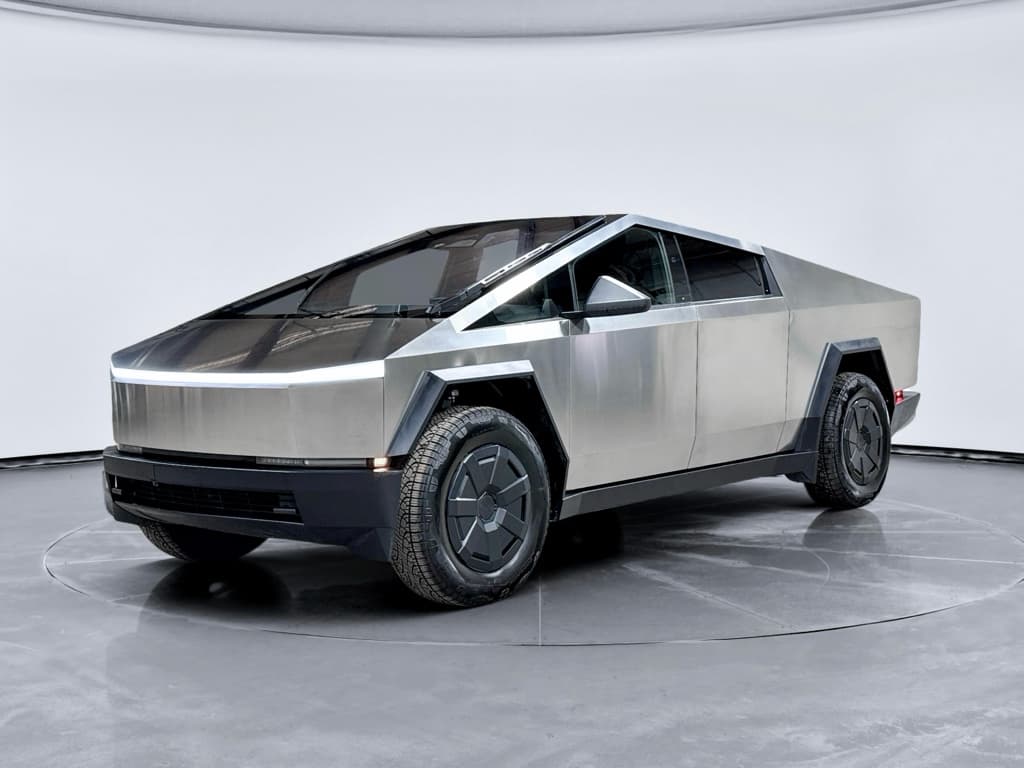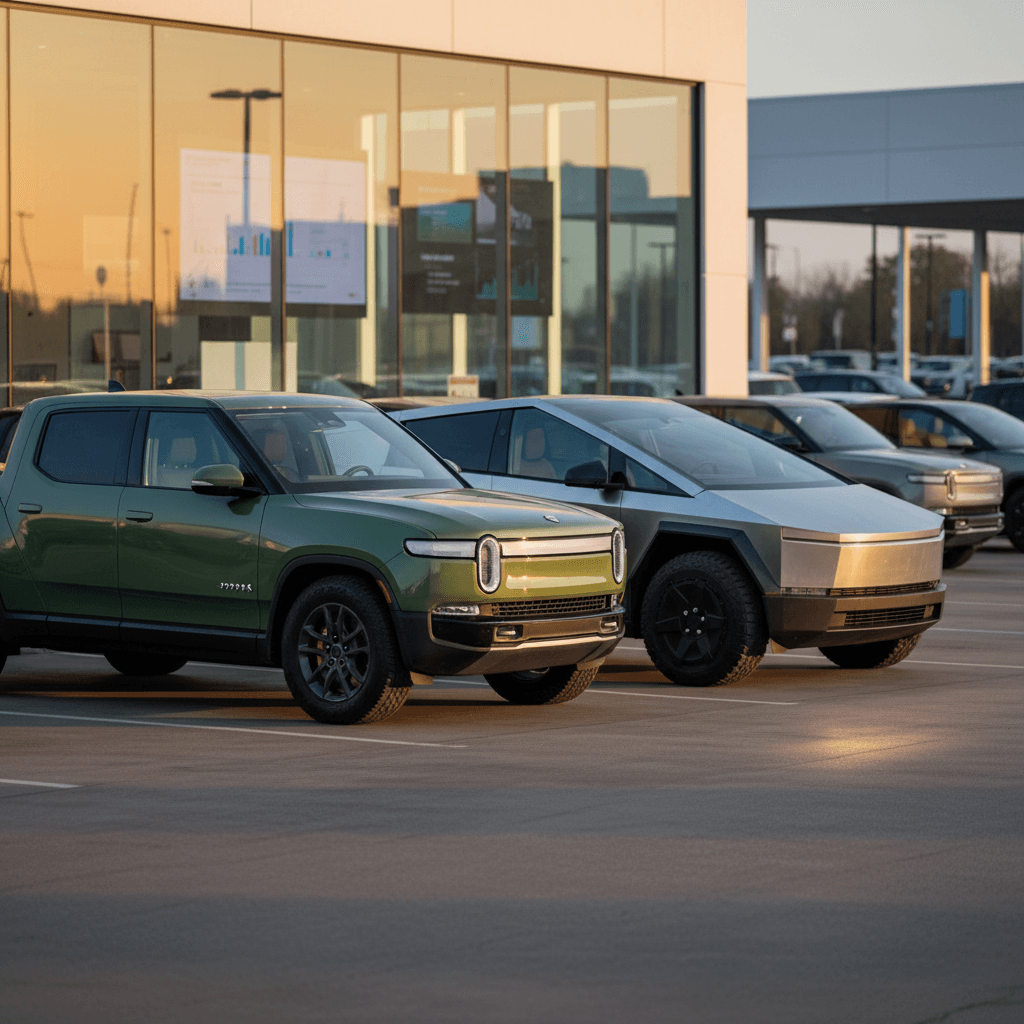
If you’re cross‑shopping a used Rivian R1T vs Tesla Cybertruck in 2026, you’re not just picking a truck. You’re choosing a daily life, a road‑trip partner, and a long‑term experiment in electric pickup ownership. Both are wildly capable. Both have baggage. The trick is figuring out which one fits your real world, not just your Instagram feed.
Two very different visions of an electric truck
Who this used R1T vs Cybertruck guide is for
- You’re shopping the used market in 2026, not placing a new‑build order.
- You want a truck that can realistically tow, haul, and road‑trip without constant charger math.
- You’re trying to understand real‑world range, reliability, and depreciation, not just brochure specs.
- You’re deciding between listings for a used Rivian R1T and a used Tesla Cybertruck, or you’re considering trading one for the other.
We’ll focus on the dual‑motor and Max‑battery R1T trucks most common on the used market, and 2024–2025 Cybertruck All‑Wheel Drive and Cyberbeast models that are now showing up used in meaningful numbers.
Quick answer: Rivian R1T vs Cybertruck in the 2026 used market
At a glance: who should buy which?
Short version before we dive into the details
Choose a used Rivian R1T if…
- You want a truck that drives like a luxury SUV, not a science project.
- Off‑road ability, ride comfort, and interior quality matter more than drag‑strip speed.
- You value a more conventional body that fits garages and tight parking spots.
- You’re okay with slightly lower efficiency if the truck feels cohesive and refined.
Choose a used Tesla Cybertruck if…
- You care about headline performance and Supercharger access more than polish.
- You want the biggest lightning rod in the parking lot and don’t mind the attention.
- You’re comfortable living with a first‑generation Tesla product with recalls and quirks.
- You’re willing to trade traditional practicality for futuristic looks and tech.
Reality check for 2026 shoppers
Specs at a glance: Used Rivian R1T vs Tesla Cybertruck
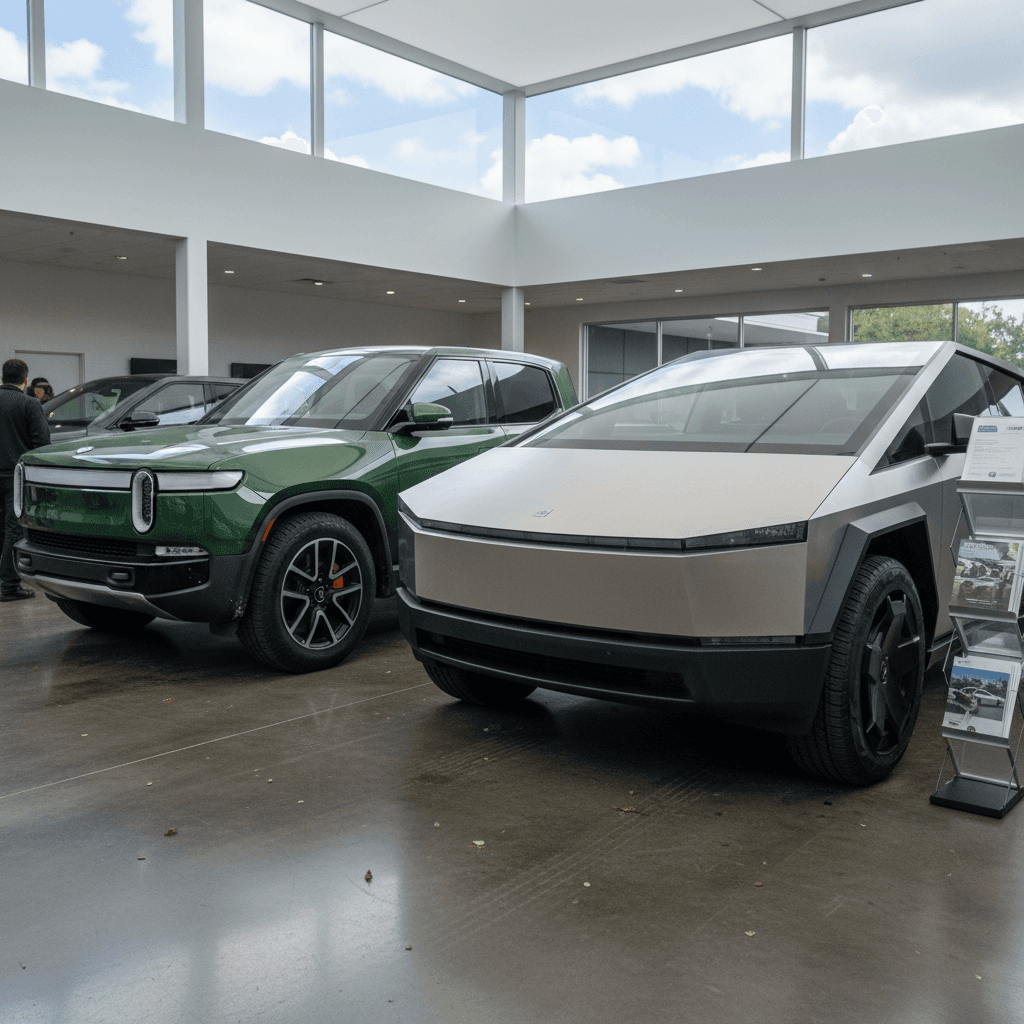
Core specs: popular used configurations
Approximate specs for common 2023–2025 Rivian R1T and 2024–2025 Tesla Cybertruck trims you’ll actually see on used lots in 2026. Always verify exact equipment on the specific VIN you’re shopping.
| Truck | Typical used trims (2026) | EPA range (best‑case) | 0–60 mph (approx.) | Max towing | Bed length |
|---|---|---|---|---|---|
| Rivian R1T | Dual Motor Large / Max pack | 352–410 mi (Dual Max, depending on wheels) | ~3.0–3.5 sec (Quad), ~4.0–4.5 sec (Dual) | 11,000 lb | 4.5 ft |
| Tesla Cybertruck | AWD / Cyberbeast | ~320–340 mi (AWD), ~300 mi (Cyberbeast, no extender) | ~4.1 sec (AWD), ~2.6 sec (Cyberbeast) | 11,000 lb (AWD/Cyberbeast), ~7,500 lb (base variants) | 6 ft |
Specs are ballpark figures; options, wheels, and software updates can change numbers slightly.
On paper it’s a draw. In practice, it’s not.
Used electric truck market context, early 2026 (U.S.)
Used pricing and depreciation in 2026
Let’s talk about what you’ll actually pay. Numbers vary by spec, miles, and condition, but by spring 2026 there’s a clear shape to both markets.
Used Rivian R1T pricing (early 2026)
- Early 2022–2023 R1T Dual Motor Large pack trucks are now commonly in the high‑$50Ks to mid‑$60Ks range, depending on miles and options.
- Later 2024 Dual Motor Max pack trucks with nicer wheels and packages often sit in the low‑$70Ks, down noticeably from original stickers that pushed into the $90Ks.
- Rivian’s generous early pricing and later MSRPs mean some first owners took a hit, but you benefit: there’s enough supply now that you can walk from any truck that doesn’t pencil out.
Used Tesla Cybertruck pricing (early 2026)
- 2024–2025 Cybertruck AWD trucks that once flipped for six‑figure premiums have settled into roughly the low‑$70Ks to high‑$80Ks band.
- Cyberbeast models still command a premium, but discounting on new ones and recall headlines have dragged used ask prices down faster than Tesla expected.
- Because Tesla has already tweaked trims and pricing, used values feel less predictable than R1T today. Two nearly identical trucks can be tens of thousands apart depending on seller expectations.
How to know if the price is fair
Real-world range and charging experience
Range only matters in the real world, not on the window sticker. That means highway speeds, winter temps, crosswinds, and whether you’re dragging a camper behind you.
Range and charging: how they behave once you leave the driveway
Both can go far. One does it with fewer surprises.
Rivian R1T real‑world range
- Dual Motor Large pack trucks commonly see 260–320 miles on the highway, depending on wheels and weather.
- Max pack R1T can stretch into the 350–390‑mile real‑world zone if you keep speeds sane and wheels efficient.
- On CCS fast chargers, Rivian’s curve is good, but not class‑leading; plan on longer top‑ups than Tesla, especially above 60–70% state of charge.
Tesla Cybertruck real‑world range
- AWD Cybertruck typically lands in the 260–310‑mile real‑world highway band, again sensitive to speed and weather.
- Cyberbeast’s huge power and sticky tires can knock that under 260 highway miles if you drive it like it dares you to.
- On NACS Superchargers, charging starts fast and stays fast longer; road‑tripping feels more like a modern Tesla sedan than a science experiment.
Charging networks: CCS vs NACS in 2026
Range questions to ask before you buy used
1. What’s the truck’s wheel and tire setup?
Big all‑terrain tires look fantastic but can chop <strong>30–60 miles</strong> off highway range on both R1T and Cybertruck. Verify what’s on the truck today, not just what it shipped with.
2. What’s the battery health?
A used EV truck lives or dies by its pack. Recharged’s <strong>battery health diagnostics</strong> give you real, measured capacity so you’re not guessing how much range you’ve lost.
3. How often will you fast‑charge?
If you live on the interstate and road‑trip monthly, Cybertruck’s Supercharger access is a major perk. If most of your life is within 80 miles of home, either truck works beautifully with a solid home charger.
4. How cold is your climate?
Both trucks lose range in freezing temps, but the less aerodynamic R1T and its roof racks tend to pay a slightly higher penalty at highway speeds.
Towing, hauling, and work-truck duty
On paper, both trucks tow up to 11,000 pounds in their stronger trims. In the real world, towing in an EV is all about how much range you have left after you hitch up and how calm the truck feels when loaded.
Towing and payload comparison
What most used‑market buyers actually experience when they hook up a camper or a work trailer.
| Truck | Max tow rating | Typical towing range (mid‑size camper) | Payload considerations | Towing feel |
|---|---|---|---|---|
| Rivian R1T | 11,000 lb | ~120–180 mi between fast charges with a 4,000–6,000 lb trailer | Shorter bed and integrated gear tunnel eat into payload planning, but air suspension helps level loads. | Feels planted and confidence‑inspiring; Rivian’s drive modes make towing approachable even for first‑timers. |
| Tesla Cybertruck AWD/Cyberbeast | Up to 11,000 lb (lower on entry trims) | ~110–170 mi typical with similar trailers, slightly better on gentle terrain. | Longer bed helps packaging; pay close attention to tongue weight and payload because stainless body doesn’t mean infinite capacity. | Huge power masks weight easily; steering feel and suspension tuning are still evolving through software, so test with a load if you can. |
Assumes mid‑size travel trailers and real‑world driving, not gentle lab loops.
Don’t let the tow rating fool you
Comfort, usability, and livability
Rivian R1T: the adventure luxury truck
- Ride and handling: Air suspension, quiet cabin, and tidy dimensions make it feel more like a high‑end SUV with a bed.
- Interior: Warm, modern, with excellent seats and materials that feel upscale even a few years in.
- Usability: The 4.5‑ft bed is short but clever; the gear tunnel storage and integrated crossbar system turn it into a Swiss Army knife for outdoor life.
- Parking: Easier to live with in cities and older garages than Cybertruck’s bigger footprint and sharper corners.
Cybertruck: the rolling concept car
- Ride and handling: Fast, flat, and dramatic, but the steering and suspension can feel less settled, especially compared with the R1T’s maturity.
- Interior: Futuristic and minimalist to a fault; if you like traditional gauges and knobs, you will not find them here.
- Usability: The 6‑ft bed and sail panels are great for sheet goods and tools, less great for tight urban parking ramps.
- Parking: Width, length, and visibility make it more demanding day‑to‑day; be honest about your driveway and garage dimensions.
Daily driver verdict
Reliability, recalls, and build quality
Both of these trucks are first‑generation products from relatively young truck builders. That’s exciting, but it also means recalls, software updates, and the occasional “why is it doing that?” moment.
How the two trucks are aging by 2026
Neither is perfect. One feels less experimental than the other.
Rivian R1T reliability picture
- Early 2022 trucks had their share of service bulletins and teething issues, but by 2024 hardware quality improved noticeably.
- Most common used‑market complaints now are software gremlins, minor trim issues, and occasional suspension or alignment quirks, not catastrophic failures.
- Rivian’s smaller service footprint means you should check where the nearest service center is, but owner satisfaction remains high among drivers who understood they were buying an early‑run EV truck.
Cybertruck reliability picture
- Cybertruck arrived with a flurry of recalls, from sticky accelerator pedals to lighting and trim concerns, and more than one highly publicized fire or failure.
- Stainless panels hide minor dings but can make panel alignment and repair work tricky, especially outside Tesla’s own centers.
- Software is powerful and frequently updated, but you are very much a beta‑tester; behavior can change across updates without warning.
Service access matters more than brand
Ownership costs, insurance, and long‑term value
Fuel savings are the easy part: replacing 15 mpg truck fuel bills with off‑peak home charging is a win for either of these rigs. The trickier questions are insurance, tires, and resale value.
- Insurance: Both trucks are expensive, heavy, and packed with tech. Stainless Cybertruck bodywork and high‑profile crash stories have pushed some insurers to charge a premium. R1T insurance is still high, but feels more like other luxury trucks and SUVs.
- Tires: Aggressive all‑terrain tires on heavy EV trucks disappear quickly. Budget for frequent, expensive tire replacements on both, especially if you push them off‑road or tow regularly.
- Resale value: R1T has already done much of its early‑adopter depreciation, and values feel like they’re settling into a predictable curve. Cybertruck, by contrast, has gone from hype premiums to heavy discounts on new inventory, which has dragged used values down sharply and made future resale harder to predict.
- Warranty: Many 2022–2023 R1Ts still have years of battery and powertrain coverage left. 2024–2025 Cybertrucks do as well, but check in‑service dates, some early trucks accumulated miles fast with flippers and demo use.
Run the total cost of ownership, not just the payment
Which truck fits which buyer?
Match the truck to your life, not your social feed
Daily driver + weekend adventure
You commute, haul kids and dogs, and hit the trailhead or ski hill most weekends.
You might tow a small camper or boat a few times a year, but not cross‑country every month.
Garage fit and everyday comfort matter more than shock value at Cars & Coffee.
<strong>Best fit:</strong> Used Rivian R1T Dual Motor Large or Max pack. It behaves like a premium SUV that happens to be brilliant off‑road.
Road‑warrior and performance junkie
You love road trips and plan to live at DC fast chargers more than most people.
You care more about acceleration and Supercharger access than cabin warmth and small‑item storage.
You’re comfortable with first‑gen Tesla quirks and willing to ride the recall wave.
<strong>Best fit:</strong> Used Tesla Cybertruck AWD if you want balance, Cyberbeast if you simply must have the fastest thing on four giant tires.
Heavy towing and work duty
You tow regularly, maybe for work, and you’re honest about weights and routes.
You have access to fast charging on your routes and can plan stops around real‑world 100–170‑mile towing range bands.
You’re willing to rent a gas HD truck for truly heavy or remote jobs.
<strong>Best fit:</strong> Either truck can work, but the R1T’s calmer chassis and Rivian’s towing‑focused drive modes make it the less stressful choice for many first‑time EV towers.
Design statement and tech toy
You want a vehicle that starts conversations every time you park it.
You’re okay with occasional panel weirdness, software surprises, and being a rolling prototype.
You see recalls as part of the adventure, not a deal‑breaker.
<strong>Best fit:</strong> Cybertruck, no contest. Just go in with your eyes open, not just wide.
How Recharged helps you compare and buy confidently
Used electric trucks are too complex, and too expensive, to buy on vibes alone. That’s exactly why Recharged exists. Whether you’re torn between a used Rivian R1T and a used Tesla Cybertruck, or just trying to understand what a particular VIN is really worth, we give you tools instead of sales pressure.
Why shop used R1T and Cybertruck with Recharged?
Data, diagnostics, and EV‑specialist support in one place
Recharged Score battery diagnostics
Transparent market‑based pricing
End‑to‑end EV‑specialist support
Ready to find your next EV?
Browse VehiclesIn 2026, the smart move isn’t to ask which truck is universally “better.” It’s to ask which one fits the life you actually live, your commute, your trips, your driveway, your appetite for risk. For many shoppers, a used Rivian R1T is the calmer, more cohesive answer. For others, the Tesla Cybertruck’s performance and Supercharger access are worth the drama. With the right data and a clear look at battery health, you can’t really be wrong, only more or less prepared.