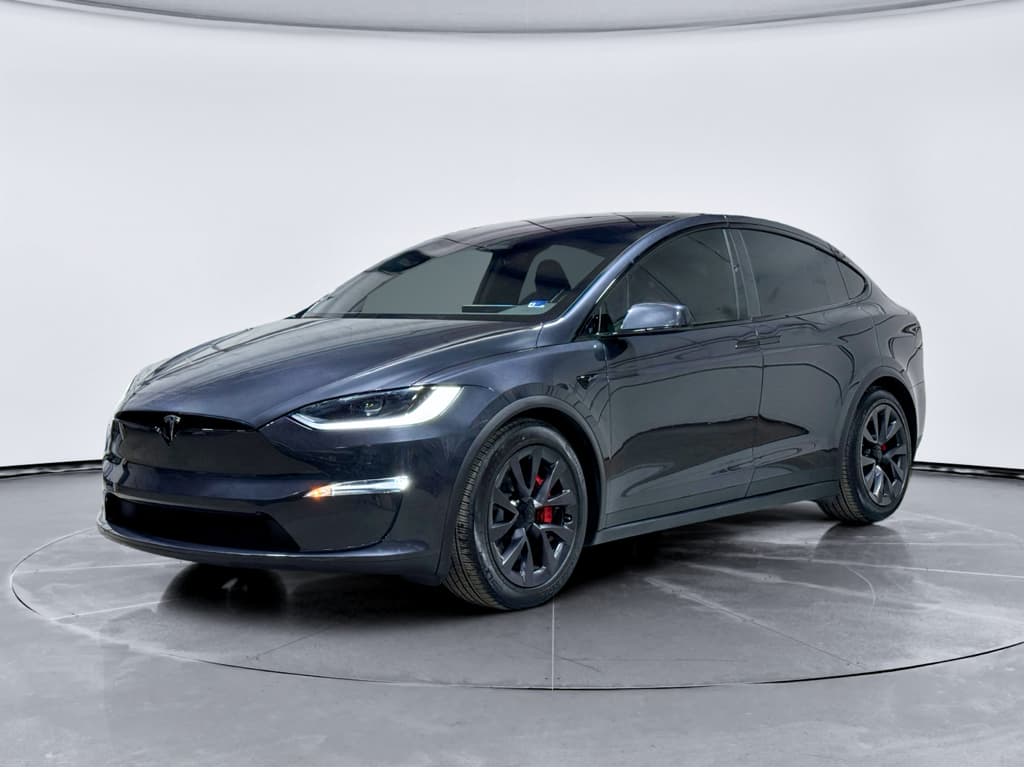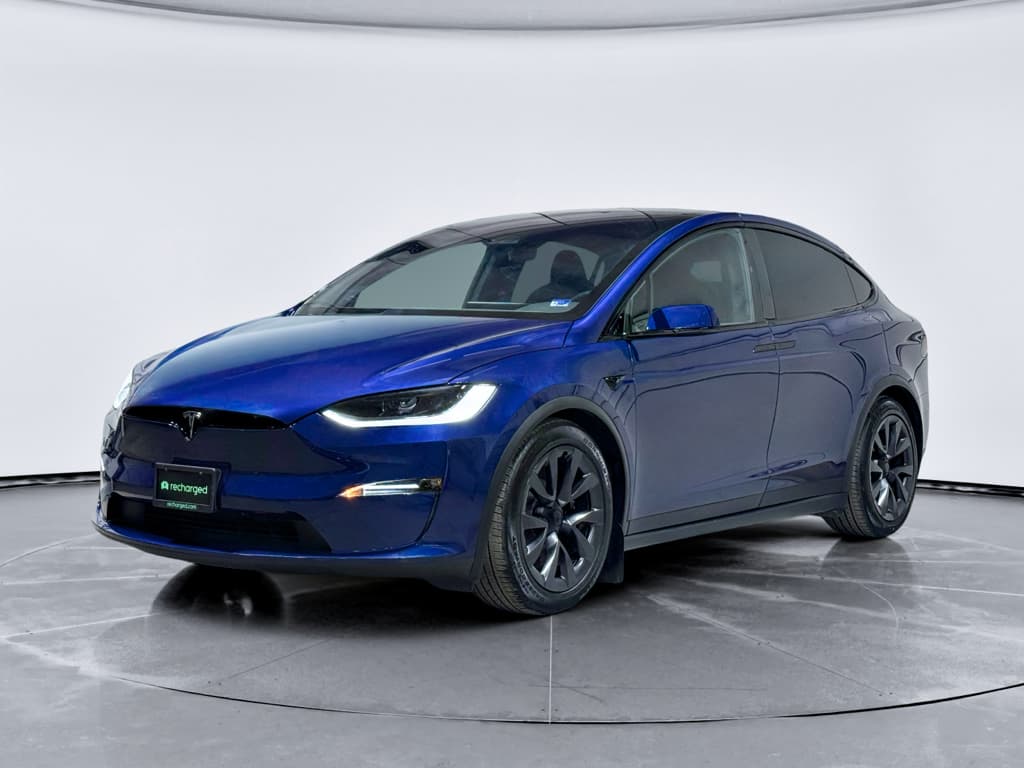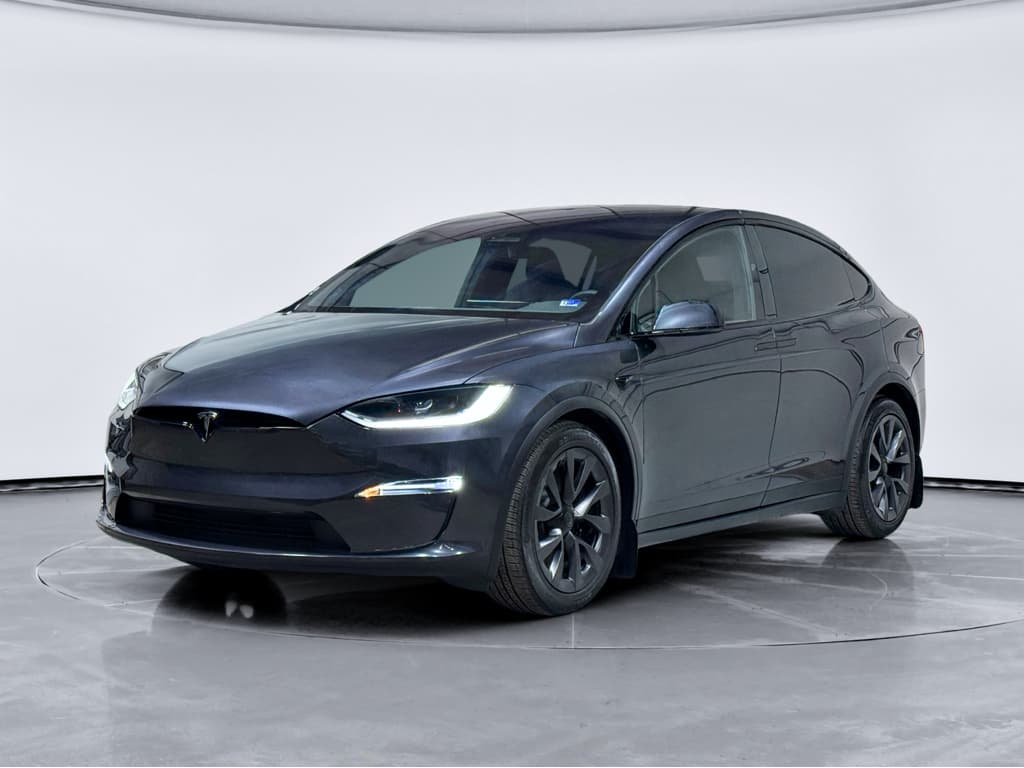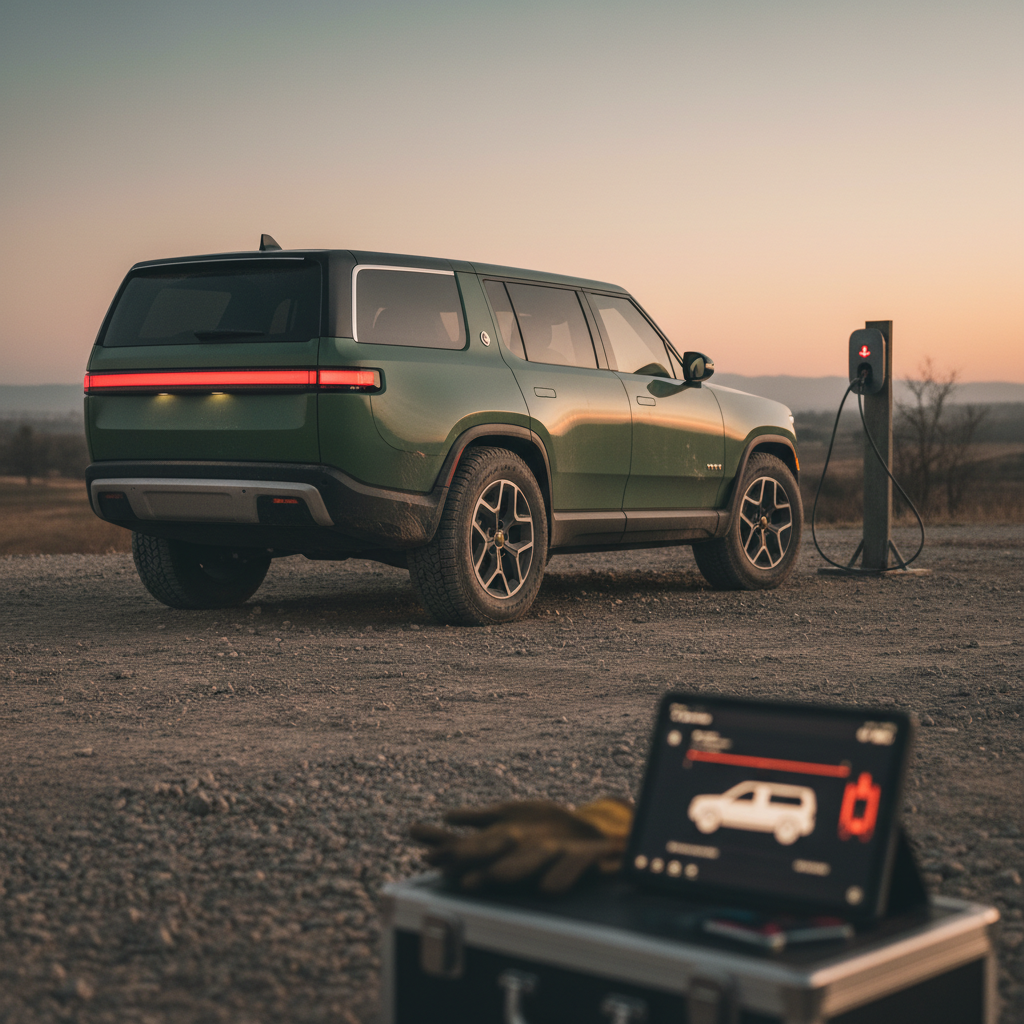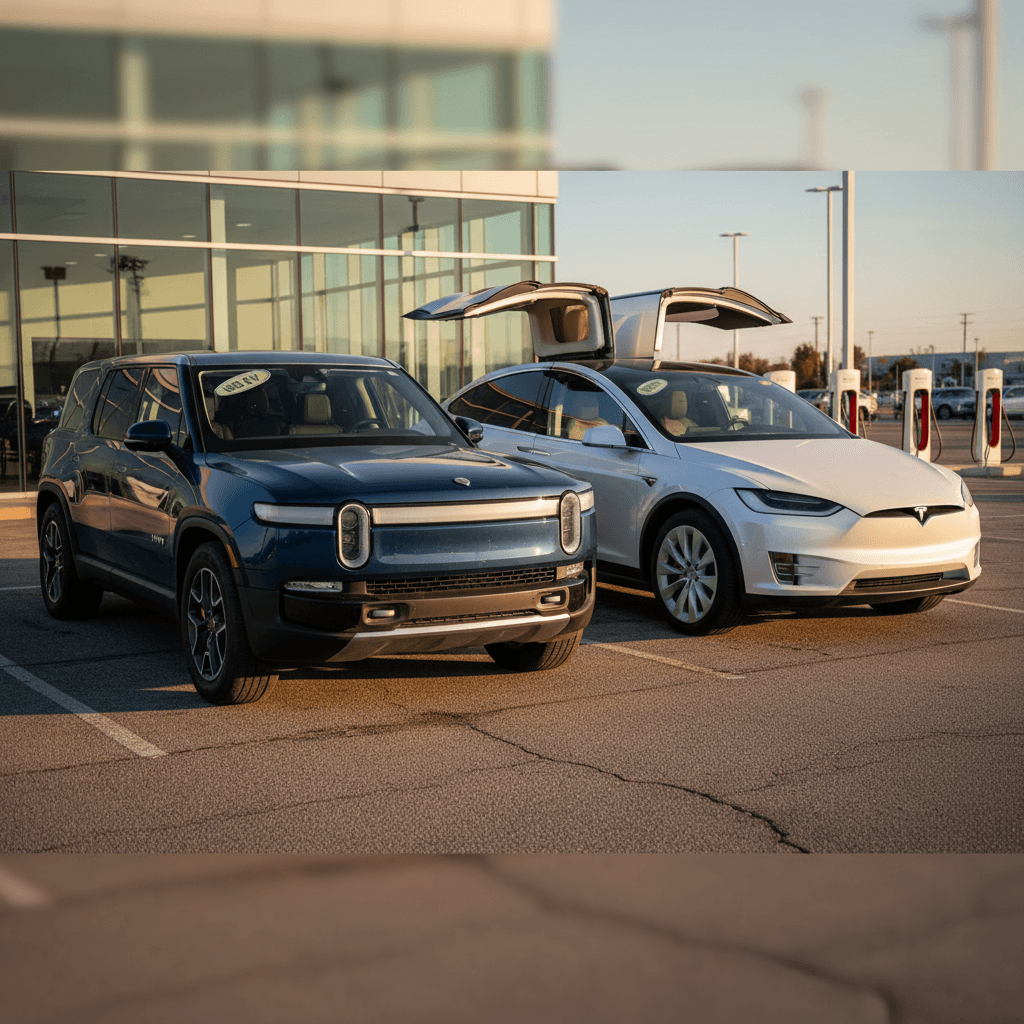
If you’re cross‑shopping a used Rivian R1S vs Tesla Model X in 2026, you’re not alone. These are the two flagship three‑row electric SUVs that promise serious range, real performance, and family‑friendly space, at prices that look far more attractive used than they did new. But they take very different approaches, and the right choice depends on how you’ll actually use your EV.
2026 used‑market reality
Who this R1S vs Model X comparison is for
- You’re considering a used luxury three‑row EV SUV for your family or adventure lifestyle.
- You’re debating between the Rivian R1S’s rugged, off‑road image and the Tesla Model X’s efficiency and charging network.
- You want clear guidance on range, towing, space, reliability, and total ownership cost in the real world, not just brochure numbers.
- You’re curious how a Recharged Recharged Score battery health report can de‑risk a big used‑EV purchase.
Snapshot: used Rivian R1S vs Tesla Model X in 2026
Core specs: used R1S vs Model X (typical 2022–2024 examples)
High‑level comparison of common configurations you’ll see on the used market in 2026. Exact specs vary by year, motor, wheels and software updates.
| Rivian R1S (Dual/Large pack) | Tesla Model X (Dual Motor) | |
|---|---|---|
| EPA range (approx.) | 305–321 miles depending on wheels/pack | 330–348 miles depending on wheels |
| 0–60 mph | About 3.0–4.5 seconds (Performance vs standard | Around 3.8 seconds (non‑Plaid) |
| Drivetrain | Standard AWD, off‑road focus | Standard AWD, on‑road focus |
| Seating | 3 rows, 7 seats (2‑3‑2) | Up to 7 seats (2‑3‑2) or 6 with captain’s chairs |
| Towing capacity | Up to 7,700 lb | Up to 5,000 lb with tow package |
| Charging connector (US) | CCS on earlier builds, NACS on newest; often adapters in play by 2026 | NACS (Tesla) |
| Character | Adventure/off‑road SUV | Aero‑slick, tech‑heavy family hauler |
Always verify exact specs on the specific VIN you’re considering.
How to use this guide
Used luxury EV SUV market: what you’re walking into
Used pricing, depreciation and value
Early buyers of both the R1S and the Model X absorbed heavy depreciation as prices and incentives shifted. By 2026, you benefit from that reset, but the pattern is different for each brand.
Used Rivian R1S pricing trends
- Many 2022–2023 R1S models that stickered in the high‑$80,000s to $90,000s now trade well below that, especially higher‑mile quad‑motor versions.
- Rivian is a newer brand, so the used market is still finding its level. That uncertainty can mean more truck for the money if you buy carefully.
- Heavy options (Max pack, quad/tri‑motor, big wheels) took the steepest initial hit but remain desirable if you want performance and range.
Used Tesla Model X pricing trends
- The Model X has been around longer, so there’s a wider price spread, from older high‑mileage examples in the $30k–$40k range up to late‑model, low‑mile HW4 trucks still commanding serious money.
- Tesla’s frequent new‑car price changes pull used values up and down. When Tesla cuts new prices, older X values usually follow.
- Desirable options like six‑seat interiors and newer Autopilot hardware help late‑model X values stay relatively strong.
Don’t buy on price alone
Range, performance and driving character
On paper, both SUVs deliver more than enough thrust and range for typical American driving. The differences show up in how they deliver that performance and how the numbers change with options like wheel size and towing.
Range and performance: where each SUV shines
These are ballpark figures for popular configurations you’ll see on the used market in 2026. Always verify specs against the actual VIN.
Daily driving range
Rivian R1S: Most dual‑motor Large‑pack R1S SUVs land around the 300–320‑mile EPA range mark, with big 22‑inch wheels nibbling some of that away. It’s plenty for commuting and weekend adventures.
Tesla Model X: Generally more efficient, with many dual‑motor X examples in the low‑to‑mid‑300‑mile range on the EPA cycle. Aero‑focused design and software tuning pay off in highway efficiency.
Acceleration & feel
Rivian R1S: Even non‑performance versions feel muscular, with instant torque and a solid, truck‑like stance. Performance‑oriented tri/quad‑motor versions can be outrageously quick.
Tesla Model X: The X feels lighter on its feet, with a lower, more car‑like driving position. Non‑Plaid models are still sports‑car quick, while Plaid is frankly overkill for most families.
Real‑world efficiency
Rivian R1S: Boxier shape and all‑terrain tires on some trims mean higher consumption, especially at 70+ mph or in cold weather. Think in terms of frequent 250–270‑mile legs on road trips.
Tesla Model X: Better aero and software‑managed thermal systems give the X an edge on long highway stints, particularly if you stick with smaller wheels and modest speeds.
Cold‑weather reality check
Space, practicality and family duty
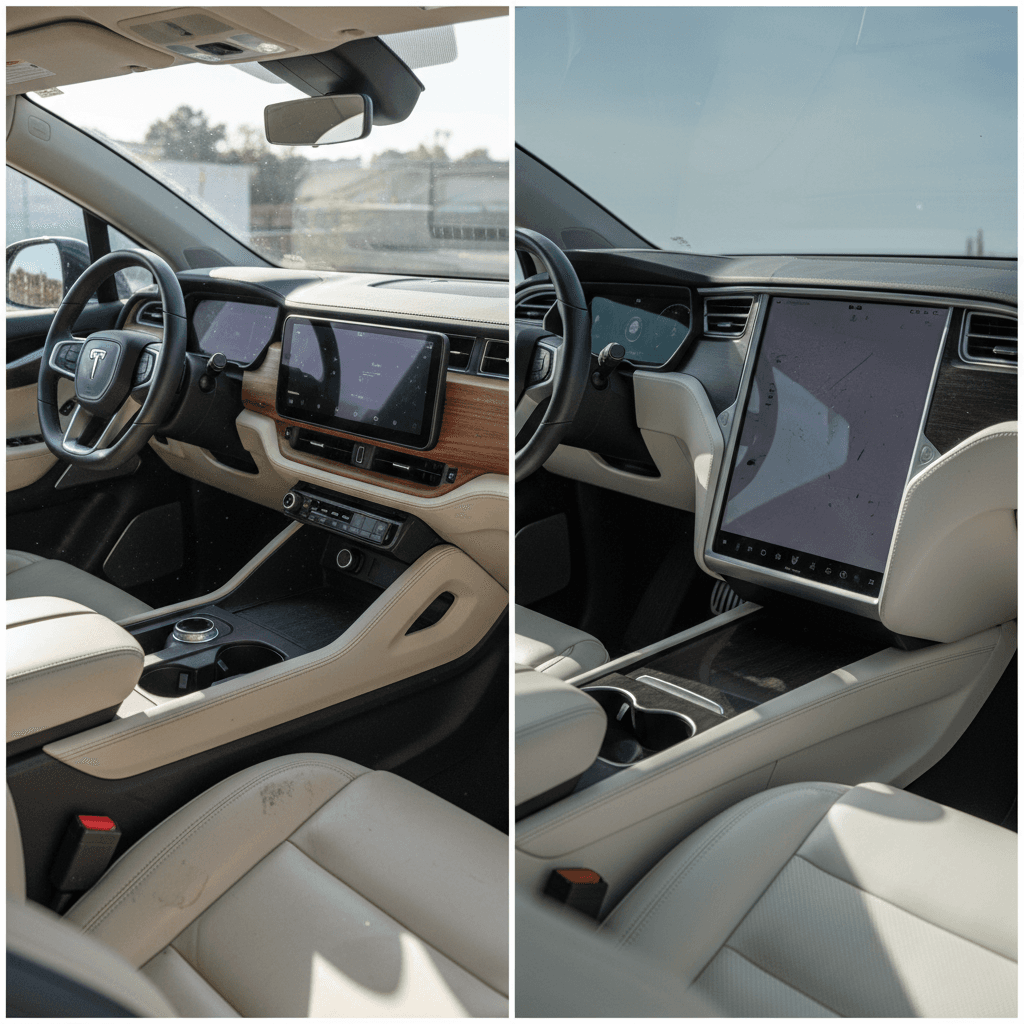
If you’re hauling kids, dogs, skis and everything else that comes with family life, the way these SUVs use their footprint matters as much as the spec sheet.
Rivian R1S: adventure‑first packaging
- Shorter overall than a Model X but taller and boxier, which helps headroom and cargo stacking.
- Standard three‑row, seven‑seat layout with a conventional rear hatch and folding second/third rows.
- Flat load floor and rugged materials make it feel at home with bikes, camping gear and muddy boots.
- Rear glass and pillars are more upright, which can improve outward visibility when backing or towing.
Tesla Model X: sleek family hauler
- The Model X’s Falcon Wing rear doors make third‑row access fantastic in tight parking lots, but they add complexity and potential repair cost.
- Seating varies: five‑seat, six‑seat (captain’s chairs) and seven‑seat layouts exist, so check the exact configuration.
- Lower roofline and sloping rear hatch give a more car‑like feel, but slightly compromise bulky cargo compared with the R1S’s boxy rear.
- Cabin feels airier up front thanks to the huge windshield and minimalist design.
Family‑use verdict
Towing, off‑road ability and winter traction
Here’s where the personalities really diverge. The R1S is engineered as an adventure rig first and a luxury shuttle second. The Model X does the opposite.
Capability comparison: towing & off‑road
Approximate capabilities for popular configurations. Always confirm towing ratings and equipment for the specific vehicle you’re considering.
| Rivian R1S | Tesla Model X | |
|---|---|---|
| Max towing (approx.) | Up to 7,700 lb with proper equipment | Up to 5,000 lb with tow package |
| Off‑road hardware | Adjustable air suspension, multiple off‑road drive modes, generous ground clearance | Lower ride height, more road‑oriented tires, limited off‑road focus |
| Approach/departure angles | SUV‑like, optimized for trails and rough roads | More crossover‑like; careful on ruts and rocks |
| Snow/ice confidence | Excellent with appropriate tires; software‑managed traction and weight distribution help | Also strong with winter tires; lower ground clearance makes it feel more like a car in snow |
Payload and tow ratings depend on equipment and year, verify on the door‑jamb label and owner’s manual.
Winter and mountain driving
Charging experience and road‑trip usability
On a used EV, the charging story is really about connector types, software and where you live. By 2026, the lines between "Tesla charging" and "everyone else" are blurring, but they haven’t disappeared entirely.
Charging: what matters for a used R1S or Model X
Both SUVs support DC fast charging and home Level 2, but the ownership experience differs.
Public fast‑charging experience
Rivian R1S: Uses CCS on earlier years and NACS on newer ones, and can access growing multi‑brand networks plus, increasingly, Tesla Superchargers via adapters or built‑in NACS. Availability will depend on your region and the specific vehicle’s hardware.
On a good DC fast charger, expect 10–80% in roughly 30–40 minutes, depending on battery size and temperature.
Tesla Supercharger advantage
Tesla Model X: Enjoys the most seamless access to the dense Supercharger network using the native NACS connector and Tesla’s own software. Plug‑and‑charge billing and route planning are still best‑in‑class.
If your lifestyle includes frequent cross‑country road trips, this convenience still tilts the scale toward the Model X in much of the U.S.
Home charging is the great equalizer
Tech, interior experience and learning curve
Both the R1S and Model X feel like rolling software platforms. That’s exciting, until you inherit someone else’s bugs. When you buy used, you want to know how that tech has aged.
Rivian R1S: warm, modern and adventurous
- Interior design mixes clean screens with earth‑tone colors and real‑feeling materials that suit its adventure brief.
- Rivian’s UI is attractive and relatively intuitive, but some functions remain app‑heavy and over‑the‑air updates can significantly change the interface over time.
- Owners praise the sound system, seating comfort and the sense of occasion every time you get in.
Tesla Model X: minimalist tech pod
- The Model X cabin is pared down, dominated by the center touchscreen. Later models use the horizontal screen layout, yoke or steering wheel, and a very software‑centric user experience.
- This minimalism can feel futuristic or cold, depending on your taste. The flip side is excellent integration between nav, energy management and charging.
- Falcon Wing doors and huge windshield remain unique, but they’re also additional systems to maintain on an older vehicle.
Software quirks on used EVs
Reliability, maintenance and ownership costs
Neither of these is a low‑tech, set‑and‑forget vehicle. But the nature of the risks is different, and that matters a great deal on a used purchase.
Ownership reality: what can go wrong (and what usually doesn’t)
Good news: battery packs are generally robust. The bigger concerns are suspension, doors and electronics.
Battery & drivetrain
So far, large‑pack batteries in both R1S and Model X have shown slower degradation than many feared, provided they’re not fast‑charged all the time and have been kept within reasonable state‑of‑charge limits.
This is where a Recharged Score battery health report is crucial, giving you measured capacity and high‑voltage system checks.
Suspension & body
Rivian R1S: Heavy curb weight, air suspension and off‑road use can accelerate wear on control arms, bushings and tires.
Tesla Model X: Air suspension plus complex Falcon Wing doors mean more moving parts. Past owners report door alignment and seal issues if repairs weren’t done properly.
Electronics & features
Both SUVs are loaded with cameras, sensors and screens. Out‑of‑warranty repairs on things like adaptive headlights, infotainment units or Falcon Wing mechanisms can be pricey.
That’s why many used buyers gravitate toward vehicles still within some factory coverage or choose third‑party protection.
Luxury EV repairs aren’t cheap
How to shop a used R1S or Model X smartly
Shopping a used Rivian R1S vs Tesla Model X isn’t just about specs; it’s about minimizing unknowns. Here’s a practical checklist to take with you, whether you buy locally, online, or through Recharged.
Used R1S vs Model X purchase checklist
1. Start with the right generation
On a Model X, understand which Autopilot hardware, battery revision and screen layout you’re getting. On an R1S, note motor configuration (dual vs tri/quad) and battery pack (Standard, Large, Max) so you can sanity‑check range and performance claims.
2. Demand battery and charging data
Ask for documented fast‑charging history if available and <strong>a current battery‑health assessment</strong>. A Recharged Score report includes measured capacity, DC fast‑charge exposure indicators and high‑voltage system diagnostics.
3. Inspect suspension and tires closely
Look for uneven tire wear, clunks over bumps and any signs of misalignment. These big, heavy SUVs work their suspensions hard, and replacing components is not a small‑ticket item.
4. Test every door and seat function
On a Model X, cycle the Falcon Wing doors repeatedly and check for smooth operation and seal integrity. On an R1S, confirm folding mechanisms, powered seat sliders and the hatch all work without hesitation or noises.
5. Evaluate real charging options
Map your daily routes and road‑trip corridors against CCS/NACS and Supercharger coverage. If you’re leaning Rivian, factor in adapter availability and which networks are strong where you live.
6. Buy from an EV‑savvy source
Franchise dealers and private sellers don’t always understand EV quirks. Buying from an EV‑focused marketplace like <strong>Recharged</strong> means you get people who live and breathe this segment, plus digital paperwork, financing and nationwide delivery if you need it.
Which one should you buy in 2026?
If you came here hoping for a single winner between a used Rivian R1S and a used Tesla Model X in 2026, the honest answer is that each dominates in different arenas. That’s not a cop‑out; it’s what makes this choice so interesting.
Quick verdict: which SUV fits which buyer?
Use this as a starting point, then look at specific vehicles and their condition reports.
Choose a used Rivian R1S if…
- You prioritize adventure capability, trails, ski trips, rough driveways, towing a real camper.
- You prefer a boxy, upright SUV with rugged materials and a warm interior vibe.
- You’re comfortable living slightly off the bleeding edge of charging convenience in exchange for a more distinctive, go‑anywhere personality.
- You’re working with an EV‑savvy seller who can document battery health and software status.
Choose a used Tesla Model X if…
- You value efficiency, range and charging convenience above all, especially for frequent highway road‑trips.
- You like minimalist interiors, deep software integration and are intrigued (not alarmed) by Falcon Wing doors.
- You want easy access to the Tesla Supercharger network without thinking about adapters.
- You’re willing to pay a bit more for a better‑sorted used market and broader parts/service ecosystem.
How Recharged fits in
Ready to find your next EV?
Browse Vehicles