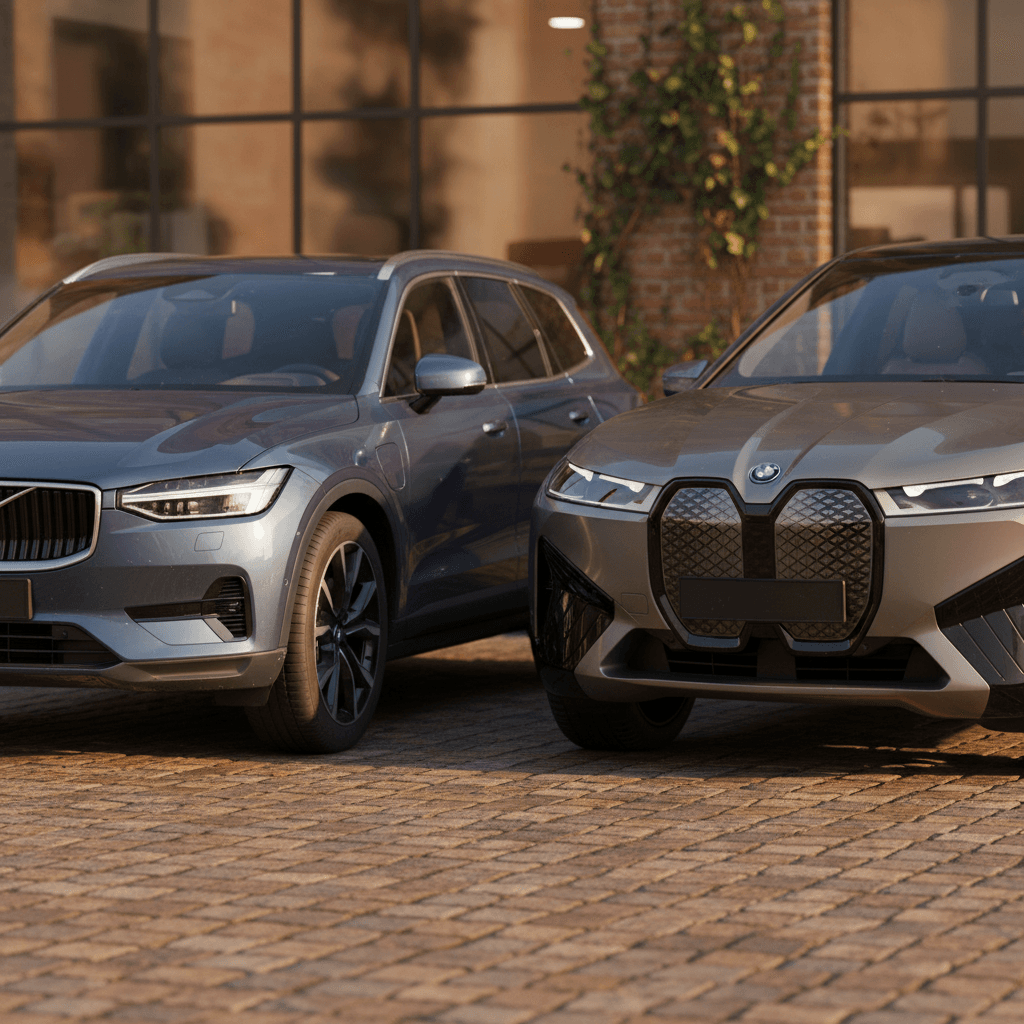
If you’re hunting for a premium electric SUV on the used market, the used Polestar 3 vs Volvo EX90 matchup is hard to ignore. They’re corporate cousins that share a platform and battery tech, but they target slightly different buyers: the Polestar 3 plays the sporty two‑row role, while the EX90 is Volvo’s family‑focused three‑row flagship. On the used market, those differences show up in price, practicality and day‑to‑day ownership.
Sister SUVs, different missions
Overview: Used Polestar 3 vs Volvo EX90
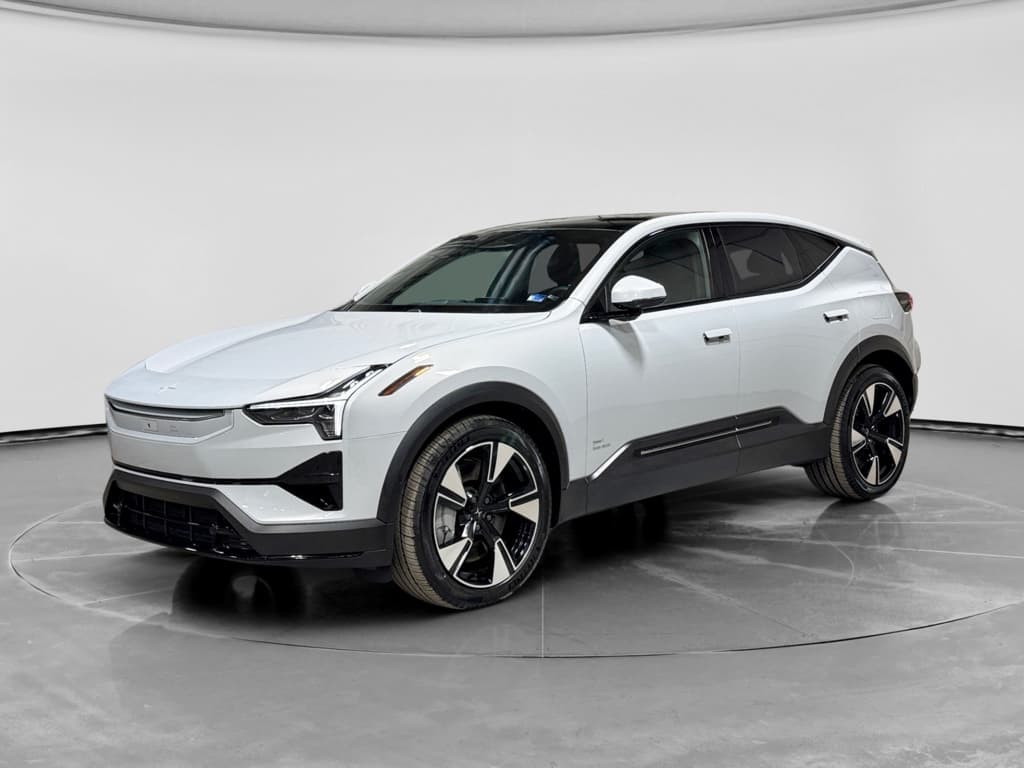
Polestar 3: Electric performance SUV
- Seats: 5 (two rows)
- Target buyer: Couples or small families who want a stylish, driver‑focused EV with long range.
- Notable strengths: Sleek design, strong performance, long‑range RWD option, Google‑based tech, lower weight than EX90.
- Main trade‑offs: No third row, less total cargo space, more taut ride in performance‑oriented trims.
Volvo EX90: All‑electric family flagship
- Seats: 6 or 7 (three rows)
- Target buyer: Families who need three rows and prize safety and comfort over outright sportiness.
- Notable strengths: Standard dual‑motor AWD, available captain’s chairs, huge safety feature set, upscale cabin.
- Main trade‑offs: Heavier and larger, shorter real‑world range than a Polestar 3 RWD, typically higher price used.
Headline specs at a glance (new benchmarks)
Quick take: Which EV SUV fits you?
Who should buy which?
Match the SUV to your actual life, not just the spec sheet.
Choose a used Polestar 3 if…
- You don’t need a third row and mostly drive with 1–3 people on board.
- You value range and efficiency, especially the RWD version with longer highway legs.
- You like a more athletic driving feel and sleeker styling.
- You prefer a slightly smaller footprint that’s easier to park in the city.
- You want to take advantage of rapid early depreciation to get a lot of EV for the money.
Choose a used Volvo EX90 if…
- You routinely use three rows, kids, car seats, grandparents, or car‑pool duty.
- You want Volvo’s maximal safety tech and are willing to pay for it.
- You drive in bad weather and want standard dual‑motor AWD.
- You’re stepping out of a luxury three‑row SUV and don’t want to give up space.
- You’re comfortable with a higher purchase price and slightly shorter range to get that space.
Pricing: Used market values and depreciation
Because both of these EVs only hit U.S. roads in the mid‑2020s, every example on today’s market is effectively a late‑model used vehicle. That’s good news for you: early luxury EVs often depreciate faster than their gas counterparts, and we’re already seeing that trend play out with the Polestar 3 and, to a lesser extent, the Volvo EX90.
Typical pricing: Used Polestar 3 vs Volvo EX90 (early market snapshot)
Approximate asking prices you might see for low‑mileage used examples in the U.S. Pricing will vary by trim, mileage, condition and region.
| Model (used) | Typical model years | Common mileage range | Approx. asking price range | Notes |
|---|---|---|---|---|
| Polestar 3 | 2025–2026 | 3,000–20,000 miles | Low‑to‑mid $50,000s up to low $80,000s | RWD and non‑Performance dual‑motor trims tend to be cheaper than Performance models. |
| Volvo EX90 | 2025–2026 | 3,000–20,000 miles | High $60,000s to high $80,000s+ | Three‑row packaging and Volvo badge help EX90 hold a bit more value early on. |
Use these numbers as directional guidance, then verify with current local listings and tools like the Recharged Score Report.
How Recharged can help on price
- Expect faster early depreciation on high‑MSRP EVs. A new Polestar 3 can crest $80,000 equipped; early used examples already dip into the $50,000s depending on trim and miles.
- The EX90’s combination of three rows and Volvo’s brand equity tends to slow depreciation a bit, but it still falls faster than a comparable gas XC90.
- Lease returns and demo units will be your pricing sweet spot, lots of warranty left, but a meaningful discount versus new.
Range, battery and charging
Under the skin, these SUVs share a lot of hardware. Both use large‑capacity battery packs, high‑output dual‑motor setups (with a single‑motor Polestar 3 variant available) and 250‑kW‑class DC fast‑charging capability. Range and efficiency, though, diverge because of weight, aero and drivetrain choices.
Key range & charging differences (representative trims)
Published estimates for U.S.‑spec models. Real‑world results will vary with temperature, speed and load.
| Model / configuration | Battery | Drivetrain | Est. EPA or target range | Max DC fast‑charge rate | 0–80% DC fast‑charge (claimed) |
|---|---|---|---|---|---|
| Polestar 3 Long Range Single Motor (RWD) | ~107 kWh usable | RWD | Up to ~350 miles | Up to 250 kW | ~30 minutes |
| Polestar 3 Long Range Dual Motor (AWD) | ~107 kWh usable | AWD | Up to ~315 miles | Up to 250 kW | ~30 minutes |
| Polestar 3 Performance (AWD) | ~107 kWh usable | AWD | Around 279 miles | Up to 250 kW | ~30 minutes |
| Volvo EX90 Twin Motor (AWD) | ~111 kWh usable | AWD | ~300 miles (manufacturer target, trim‑dependent) | Up to 250 kW | ~30 minutes |
Use this as a directional guide when cross‑shopping used examples; always check the specific trim and wheel/tire combo you’re considering.
Don’t shop range by brochure alone
- If maximum highway range is your priority, the Polestar 3 Long Range Single Motor is the standout, its RWD layout and lower weight give it a clear edge.
- If you always want AWD, the comparison is closer: both deliver roughly 300 miles in their most efficient dual‑motor trims.
- Both support 250‑kW DC fast charging under ideal conditions, meaning 10–80% in about 30 minutes at a capable public fast charger.
- The EX90 adds bi‑directional charging capability in some markets, opening the door to vehicle‑to‑home or vehicle‑to‑load uses as software and local regulations catch up.
Space, comfort and interior ambience
This is where these siblings really split paths. The Polestar 3 is a wide, low, design‑driven two‑row SUV that feels more like a grand‑touring wagon on stilts. The EX90 is unapologetically a three‑row family bus, with Scandinavian minimalism and high‑end materials, but a family bus all the same.
Interior layout: Two rows vs three rows
Think about how many people and how much stuff you actually carry most weeks.
Polestar 3 cabin
- Seating: 5 adults in two rows; generous front and second‑row room.
- Cargo: Plenty for a small family or road trip, but no third‑row flexibility.
- Ambience: Sporty and tech‑forward, with a driver‑centric feel and bold exterior styling that carries inside.
- Best for: Empty‑nesters, couples, or one‑kid households that take occasional road trips.
Volvo EX90 cabin
- Seating: Up to 7 seats; optional second‑row captain’s chairs create a 2+2+2 layout.
- Cargo: With the third row up, luggage space shrinks; fold rows 2 and 3 for serious cargo capacity.
- Ambience: Calm, airy, very Volvo, light colors, natural materials and large windows.
- Best for: Two‑ or three‑kid families, regular car‑poolers, or anyone downsizing from a large gasoline three‑row SUV.
Car seats and kid duty
Performance and driving character
Both of these SUVs are seriously quick by traditional family‑SUV standards, but they go about it differently. The Polestar 3 leans toward the enthusiast side of the spectrum, especially in Performance trim, while the EX90 keeps one eye firmly on comfort and safety.
Performance comparison (representative trims)
Headline numbers for commonly cross‑shopped configurations.
| Model / trim | Drivetrain | Power (approx.) | 0–60 mph (approx.) | Character |
|---|---|---|---|---|
| Polestar 3 Long Range Single Motor | RWD | ~295 hp | ~6.5–7.0 seconds | Smooth, efficient, rear‑drive feel; plenty for daily use. |
| Polestar 3 Long Range Dual Motor | AWD | ~480+ hp | ~5.0 seconds | Strong straight‑line shove with good all‑weather traction. |
| Polestar 3 Performance | AWD | ~510+ hp | ~4.7 seconds | Serious punch; firmer ride and sportier tuning. |
| Volvo EX90 Twin Motor | AWD | ~400+ hp | ~5.7 seconds | Calm, confident acceleration; tuned for comfort. |
| Volvo EX90 Twin Motor Performance | AWD | ~490+ hp | ~4.7 seconds | Quick for a three‑row; still more luxury‑leaning than sporty. |
Even the “slower” versions here would have embarrassed a V8 luxury SUV from just a few years ago.
The driver’s choice vs the passenger’s choice
Technology, safety and driver assistance
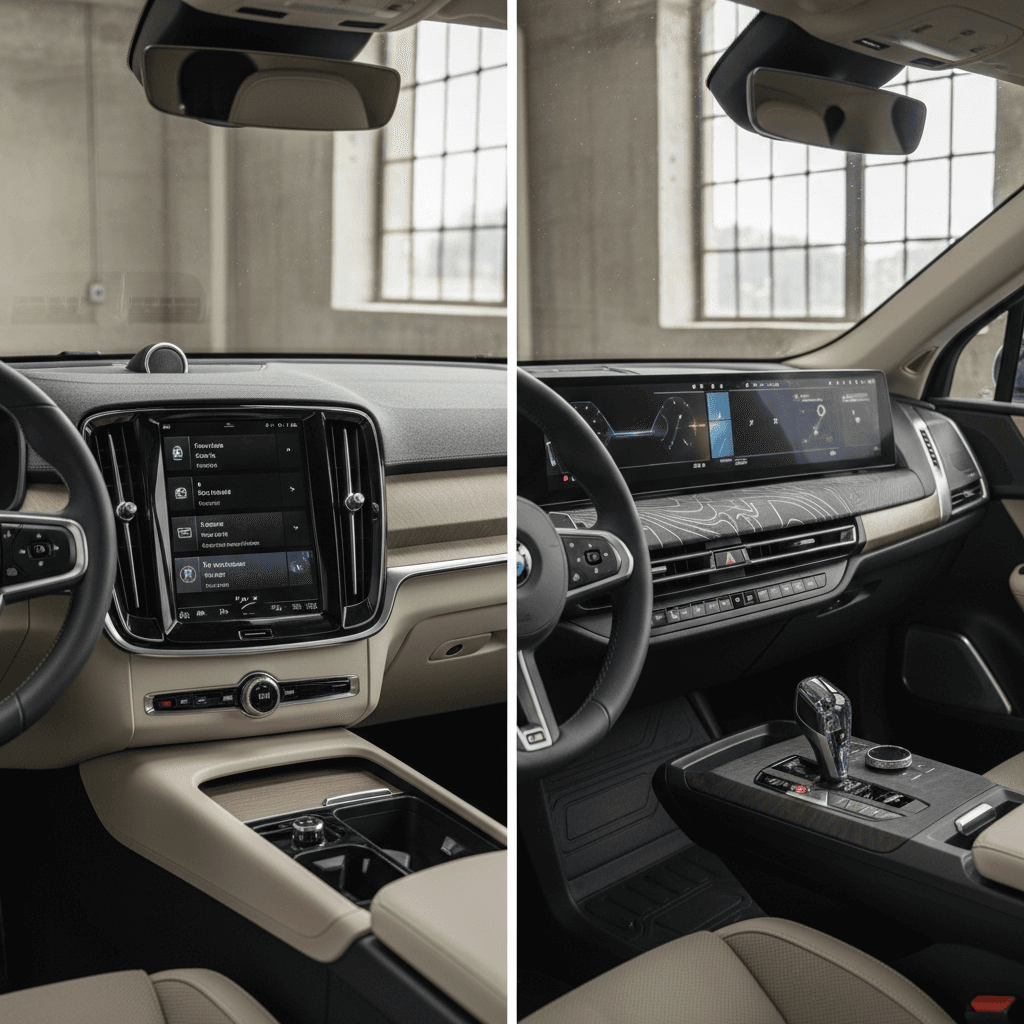
Tech is central to both of these SUVs. They share a Google‑based infotainment backbone, over‑the‑air update capability and extensive camera/radar suites. The EX90 layers on Volvo’s latest safety vision with more sensors and an especially aggressive approach to driver monitoring.
Infotainment & UX
- Both run Android Automotive with Google built‑in, native Google Maps, Assistant and Play Store.
- Polestar 3 skews toward a clean, minimalist interface with slightly fewer menus and a sportier visual theme.
- EX90’s screens and menus mirror the latest Volvos: big tiles, strong focus on safety settings and driver aids.
- Both support over‑the‑air updates, so a used example may have newer features than when it left the factory.
Safety & driver assistance
- Standard suites on both include adaptive cruise, lane‑keeping assistance and automatic emergency braking.
- The EX90 adds extra layers of occupant and driver monitoring, plus more sophisticated sensor coverage aimed at advanced driver‑assist features.
- Early EX90s have experienced some software gremlins in their complex safety stack, with Volvo issuing ongoing updates to improve stability.
- Polestar 3 takes a slightly simpler approach to driver assistance, which can mean fewer false alerts in daily use.
Early‑build software caution
Ownership costs and reliability considerations
Because the Polestar 3 and EX90 are still new to the market, no one has 10 years of reliability data yet. But there are some early‑pattern differences that matter when you’re choosing a used example.
Key ownership questions to ask about any used Polestar 3 or EX90
1. How healthy is the battery?
Ask for a battery‑health report, not just a range estimate from the dash. Recharged’s <strong>Recharged Score</strong> includes independent diagnostics that show you how the pack is aging compared with similar vehicles.
2. What’s the remaining warranty coverage?
Both brands offer multi‑year battery and powertrain coverage. A 1–2‑year‑old used example may still have years of protection left; verify in writing before you buy.
3. Has software been kept up to date?
Over‑the‑air updates can fix bugs and improve features, but only if they’ve been applied. Check that the vehicle is on a recent software version and that update history looks consistent.
4. What’s the service and recall history?
Look for documentation of any recalls or service campaigns, especially on early EX90 builds. Vehicles that have seen regular dealer care tend to have fewer gremlins later.
5. How and where has it been charged?
A mix of home Level 2 and occasional DC fast charging is ideal. Heavy fast‑charge use isn’t a deal‑breaker, but it’s something to factor into your evaluation.
Factor in insurance and tires
How to choose: Used Polestar 3 or Volvo EX90?
Decision roadmap by buyer type
Tech‑savvy couple or empty‑nesters
Prioritize <strong>Polestar 3 Long Range Single Motor</strong> or Dual Motor for the best blend of range and performance.
Look for moderate wheel sizes (20–21 inch) to keep ride quality and tire costs in check.
If you road‑trip often, put extra weight on range and DC‑fast‑charge consistency in owner reviews.
Growing family needing 3 rows
Focus on <strong>Volvo EX90</strong> with seven‑seat configuration; captain’s chairs if you’re frequently accessing the third row.
Test child‑seat fit and third‑row comfort in person; don’t rely on specs alone.
Range matters, but so does sanity, ease of loading kids and cargo may trump the Polestar’s efficiency advantage.
Snow‑belt or mountain‑town drivers
AWD is effectively standard on EX90; for Polestar 3, skip the RWD if you want maximum traction and peace of mind.
Budget for a second set of dedicated winter tires for either vehicle, they’re heavy and powerful, and proper rubber matters.
If you split time between city and ski country, weigh the EX90’s cargo and cabin space against the Polestar’s slightly better efficiency.
Value‑focused luxury shopper
Hunt for a <strong>used Polestar 3</strong> that has taken the brunt of first‑year depreciation but still sits safely within its factory warranty window.
Compare similarly priced EX90s and note mileage: you may find a lower‑mileage Polestar 3 for the same money.
Use a Recharged Score Report to benchmark pricing, battery health and equipment levels before you commit.
How Recharged streamlines the choice
Ready to find your next EV?
Browse VehiclesFAQ: Used Polestar 3 vs Volvo EX90
Frequently asked questions
Bottom line: Which one should you buy used?
Choosing between a used Polestar 3 and a used Volvo EX90 really comes down to people and priorities. If you rarely fill more than two rows, care about longer highway legs and enjoy a more engaging drive, the Polestar 3, especially in its Long Range Single Motor or non‑Performance dual‑motor trims, delivers a compelling blend of efficiency, performance and price on the used market. If you routinely carry six or seven passengers, live in your third row and want every safety bell and whistle Volvo offers, the EX90 is the clear answer even if it costs more and drives a bit less efficiently.
Either way, shopping used lets you let someone else absorb the steepest part of EV depreciation while you enjoy a nearly new luxury electric SUV. Partnering with Recharged gives you data‑backed confidence: Recharged Score battery‑health diagnostics, fair‑market pricing analysis, EV‑savvy financing options and expert guides who live and breathe this technology every day. Do that, and whether you end up in a sleek Polestar 3 or a family‑friendly Volvo EX90, you’ll know you chose the right electric SUV for the way you actually live and drive.