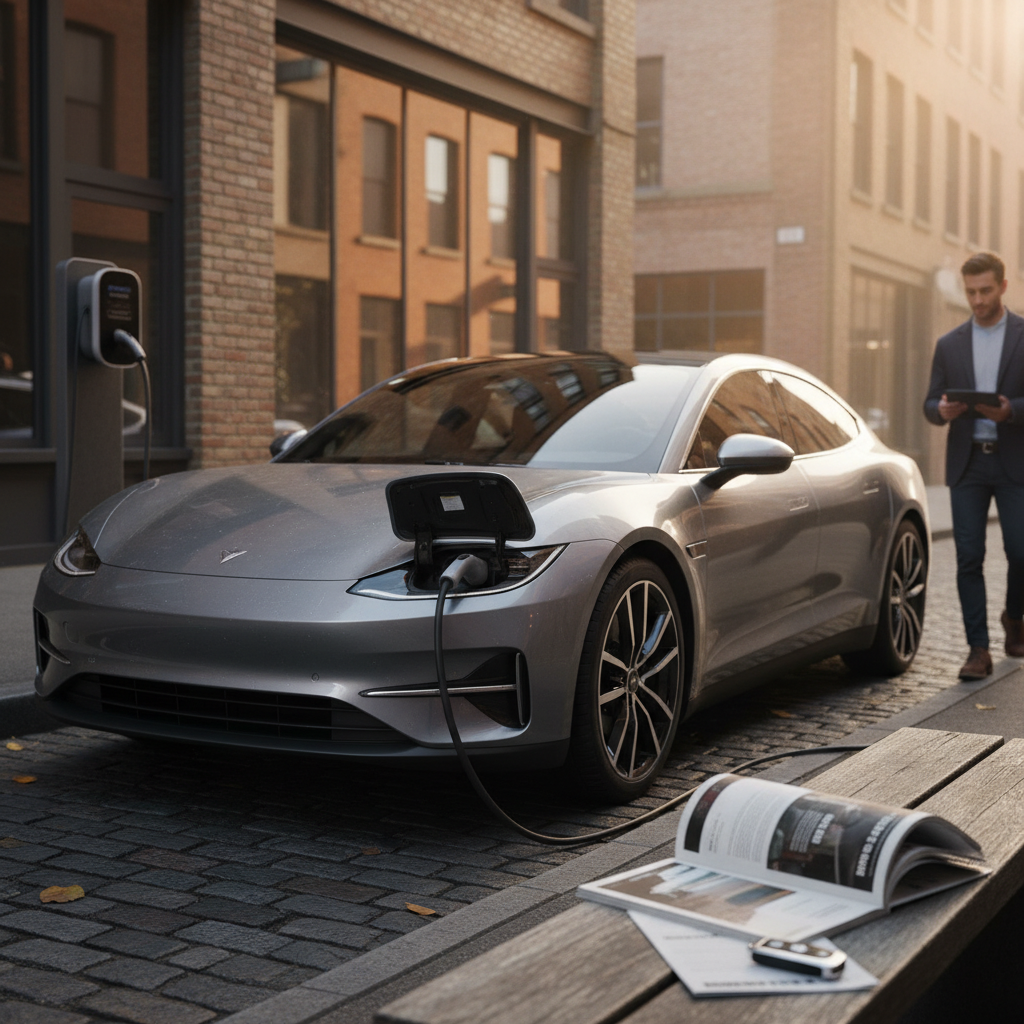
If you’ve ever dreamed about rolling around in a silent, leather-lined electric SUV or a rocket-fast sedan, this is your moment. Used luxury EVs have taken some of the steepest depreciation hits in the car world, which means you can now find a surprising number of used luxury EVs under $40,000, often well under that number, without giving up comfort, tech, or performance.
Why prices dropped so fast
Why used luxury EVs under $40,000 are everywhere right now
The luxury EV depreciation story, in numbers
In plain English: somebody else already ate the brutal first three years of depreciation. You get a car that still feels every bit like a high-end machine, multi-screen interiors, quiet cabins, performance that used to be reserved for sports cars, for the price of a new mainstream crossover.
But don’t let the bargain blind you
What actually counts as a “luxury” EV?
The word “luxury” gets thrown around until it barely means anything. For this guide, we’re talking about EVs from traditional premium brands, Tesla’s larger models, Audi, Jaguar, Mercedes, Volvo, BMW, and trims that offer upscale cabins, advanced driver-assistance, and quiet, refined ride quality. Think of the vehicles that were $60,000–$90,000 new and now live in that $20,000–$40,000 used price band.
- Premium brands: Tesla (Model S and X), Audi, Jaguar, Mercedes-Benz, Volvo, BMW, Genesis and similar.
- Original MSRP typically above $55,000 when new.
- Interior appointments like leather or high-quality synthetic seats, real or convincing trim materials, multi-zone climate control, and strong sound insulation.
- Advanced tech: large infotainment displays, branded audio, adaptive cruise with lane-centering, and multiple drive modes.
Don’t ignore "near‑luxury"
Best used luxury EVs under $40,000: quick shortlist
Where to start shopping
All of these are commonly available under $40K in the U.S. used market as of early 2026, depending on mileage and spec.
Tesla Model S
Tesla Model X
Audi e-tron / Q8 e-tron
Jaguar I-Pace
Mercedes EQE / EQC (where available)
Volvo XC40 Recharge & C40

Tesla Model S & Model X: flagship feel, bargain prices
Why they’re tempting
- Flagship experience: Huge central screen, minimalist cabin, and that quiet, instant-torque shove when you merge.
- Range and Supercharging: Even older cars were designed for road trips, and access to Tesla’s Supercharger network remains a major advantage.
- Performance: Ludicrous-mode cars are usually above $40K, but even standard dual-motor versions are seriously quick.
What $40K actually buys
- For Model S: Earlier Long Range or 75D/85D/90D cars along with mid‑cycle refreshes, typically with six‑figure mileage but still very usable.
- For Model X: Mainly 2016–2018 examples, often with higher mileage, but still three-row family haulers with serious presence.
- Expect real‑world range to land below original EPA numbers, battery health and your climate matter a lot.
Known Tesla pain points to check
This is where a structured battery health check matters. Recharged’s Recharged Score pulls real diagnostic data so you’re not guessing how much of that original range you actually still have. If you’re shopping a used flagship Tesla, don’t skip the numbers just because the test drive feels strong.
Audi e-tron / Q8 e-tron: quiet, classy, and deeply discounted
Audi’s first e-tron SUV is one of the stealth heroes of the used luxury EV world. New, a 2019 e-tron Premium Plus started in the mid‑$70,000s. Today, typical national transaction prices for those 2019 models sit around $19,000–$21,000, depending on mileage and trim. That’s a huge fall for a big, beautifully built SUV.
- Exceptionally quiet and comfortable; if you like your luxury to whisper, this is it.
- Interior quality and ergonomics are classic Audi, intuitive and solid.
- Real‑world range often lands in the 180–220 mile zone for early years, better for updated Q8 e‑tron models.
- Air suspension on many trims gives a soft, almost limo‑like ride.
Which e-tron to target
Jaguar I-Pace: sports-car personality, SUV practicality
The Jaguar I-Pace might be the most emotionally appealing used luxury EV under $40,000. It still looks like a concept car that escaped the auto show stand, and it drives with a playful, eager character you don’t always get in heavy EVs.
2019 Jaguar I-Pace: new vs. used snapshot
How much value you’re getting when you buy an early I-Pace today.
| Trim | Original MSRP | Typical 2026 Used Price Range | Notes |
|---|---|---|---|
| EV400 S | ≈$70,000 | ≈$19,000–$21,000 | Base trim, still very well equipped. |
| EV400 SE | ≈$77,000 | ≈$21,000–$23,000 | Adds more convenience and safety tech. |
| EV400 HSE | ≈$81,000 | ≈$22,000–$25,000 | Top trim with luxury features and upgraded audio. |
| First Edition | ≈$87,000 | ≈$23,000–$27,000 | Limited trim; condition and mileage matter a lot. |
Pricing varies by mileage, condition, and region, but this shows the scale of depreciation on a typical 2019 model year.
The flip side is that some early I-Pace owners have reported software quirks and range that feels modest compared with newer EVs. If you mostly drive a mix of city and suburban miles and can charge at home, that may not matter. If you spend your life at 75 mph, it might.
Don’t skip a professional inspection
Mercedes EQ models: cushy cruisers with fast-falling prices
Mercedes arrived a little later to the EV party, but the EQ lineup, the EQC in earlier years, then EQE and EQS sedans and SUVs, leans hard into the brand’s traditional strengths: quiet, comfort, and cabin ambiance. In 2026, Mercedes cut new EQ pricing by roughly five figures on some models, and used values adjusted in kind. That’s your opening.
- EQE sedan and SUV: Mid‑size luxury EVs with serene cabins and strong driver‑assist tech; used pricing is now routinely under $40,000 for earlier builds and higher-mileage examples.
- EQC (where available): Compact SUV that felt ahead of its time when new, now attractive mainly if you find one at the right price and with solid service history.
- EQS sedan and SUV: True flagships; you’ll mostly see higher‑mileage or earlier production examples flirting with your budget cap, sometimes still above it.
Charging and efficiency reality
Other luxury EVs under $40K worth a look
Second‑tier names that can be first‑rate buys
These may not be the first cars you dreamt about, but they can be smart value plays under $40K.
Volvo XC40 Recharge & C40
BMW i4 and iX3 (where available)
Genesis GV60
Where Recharged fits in
Battery health & range: the part you can’t see in photos
When you’re comparing used luxury EVs under $40K, the single most important thing isn’t the badge. It’s the battery. Range on paper (EPA numbers from the window sticker) assumes a brand‑new pack and near‑perfect conditions. A five‑ or six‑year‑old pack that’s lived a hard life of frequent DC fast charging will not behave like that.
Battery checks you should never skip
1. Ask for real battery data
A seller should be able to show you more than a guess. Look for a recent battery health report, service documentation, or a third‑party diagnostic like the Recharged Score that measures usable capacity and projected range.
2. Compare to original EPA range
Once you know current usable capacity or projected range, compare it to the original EPA figure for that model and year. A modest drop is normal; a huge one is a red flag, or a bargaining chip if you drive short distances.
3. Check fast‑charging history
Lots of DC fast charging isn’t automatically bad, but a car that’s lived its life on road‑trip duty will often show more degradation. Look for vehicles that were primarily charged at home on Level 2 whenever possible.
4. Inspect for software updates
Many luxury EVs have had battery and charging behavior improved (or fixed) via software. Confirm that major updates from Tesla, Audi, Jaguar, Mercedes, or Volvo have been applied.
5. Drive it from a cold start
Range estimates can change dramatically between a warmed‑up pack and a cold one. If possible, test the car after it’s been sitting overnight so you see a realistic initial estimate.
6. Understand remaining warranty
Most luxury EVs launched with 8‑year battery warranties. Figure out exactly how many years and miles are left, and what’s actually covered if the pack degrades or fails.
Never buy blind on a ship‑to‑home deal
What it really costs to own a used luxury EV
The good news is that EVs don’t have oil changes, tune‑ups, or transmissions to blow. The bad news is that when something big does go wrong on a luxury EV, it can get expensive fast. Your job is to understand where the risks and savings really sit.
Where you save money
- Fuel: Electricity is usually cheaper per mile than gasoline, especially if you can charge off‑peak at home.
- Routine maintenance: No oil, plugs, or timing belts. Brake wear is often lower thanks to regenerative braking.
- Depreciation already taken: Buying a $75,000 car for $22,000 means the scariest part of the value drop is behind you.
Where costs can sneak up
- Out‑of‑warranty repairs: Air suspension, power liftgates, complex infotainment systems, and advanced driver‑assist hardware can be pricey to repair.
- Tires: Heavy, powerful EVs eat performance tires quickly. Budget for quality replacements.
- Battery or charging issues: Rare, but if a pack or high‑voltage component fails outside warranty, the number can be eye‑watering. This is where a strong inspection and clear reports matter.
Use warranty and battery data as negotiation tools
How to shop smart for a used luxury EV under $40K
Shopping used luxury EVs is part detective work, part self‑control. The leather, ambient lighting, and acceleration will try to convince you to sign anything. Slow down and work a plan.
Step‑by‑step game plan
1. Start with your real needs, not the badge
List how you actually drive, daily miles, parking situation, family size, road‑trip habits. A Jaguar I-Pace might thrill you, but if you road‑trip 300 miles every other weekend, an Audi Q8 e‑tron or larger‑battery Tesla may fit better.
2. Set a firm, all‑in budget
Include taxes, registration, a fresh set of tires if needed, and a home charging solution. Recharged can help you estimate monthly payments and total cost with transparent financing options.
3. Shortlist 3–5 models
Mix body styles and brands. For example: Tesla Model S, Audi e‑tron, Jaguar I‑Pace, Volvo XC40 Recharge. This keeps you from overpaying for one name when there are similar alternatives.
4. Compare battery health and price fairness
Use tools like the <strong>Recharged Score</strong> to see battery diagnostics, range projections, and whether the asking price sits above, below, or at fair market value for that VIN, mileage, and condition.
5. Get a pre‑purchase inspection
For complex luxury EVs, a qualified EV technician or specialist shop is worth every penny. If you’re buying through Recharged, this inspection work and reporting are baked into the process so you don’t have to coordinate it yourself.
6. Plan your charging life before you sign
Make sure you know where and how you’ll charge, at home, at work, or on public DC fast chargers. If you’re new to EVs, read a solid <a href="/articles/ev-charging-basics">EV charging basics guide</a> before you shop.
How Recharged simplifies the used EV maze
FAQ: Used luxury EVs under $40,000
Frequently asked questions
Bottom line: Who should buy a used luxury EV under $40,000?
If you want your daily drive to feel special, quiet cabins, strong acceleration, real comfort, but don’t want to write an $80,000 check, a used luxury EV under $40,000 is one of the sweetest spots in the car market right now. The trade‑off is that you have to be a little more careful: battery health, remaining warranty, and repair history matter more here than they do on a basic commuter hatch.
The payoff for doing that homework is huge. You end up in a car that still feels like it belongs in a valet line, not a budget lot, without stretching your finances to the breaking point. And if you’d rather not play detective alone, shopping through Recharged folds in verified battery diagnostics, fair‑market pricing, EV‑savvy support, and even nationwide delivery. That way, you get the luxury experience you were chasing, with the transparency you actually need.